

The war in Ukraine has been a breeding ground for new technologies. Some, like today’s explosive-laden, AI-controlled drones, began their lives as civilian hobbies. Others, like Elon Musk’s Starlink network, initially offered global connectivity, but thanks to its low-latency, high-speed internet, it has become a vital dual-use tool for Kyiv’s forces and is used to direct their weaponry against Russian forces. Another shift that the war has revealed is the precarious position of air traffic.
Civilian airports today appear more vulnerable than they have in decades, perhaps ever. The evidence for airport vulnerability was on full display last week when the Houthis, the Iranian-backed rebel faction vying for control over Yemen, attacked Saudi Arabia’s largest airport, launching several salvoes of drones and missiles at the air hub in Riyadh. Over a dozen travelers were killed in the attack, with over a hundred suffering wounds.
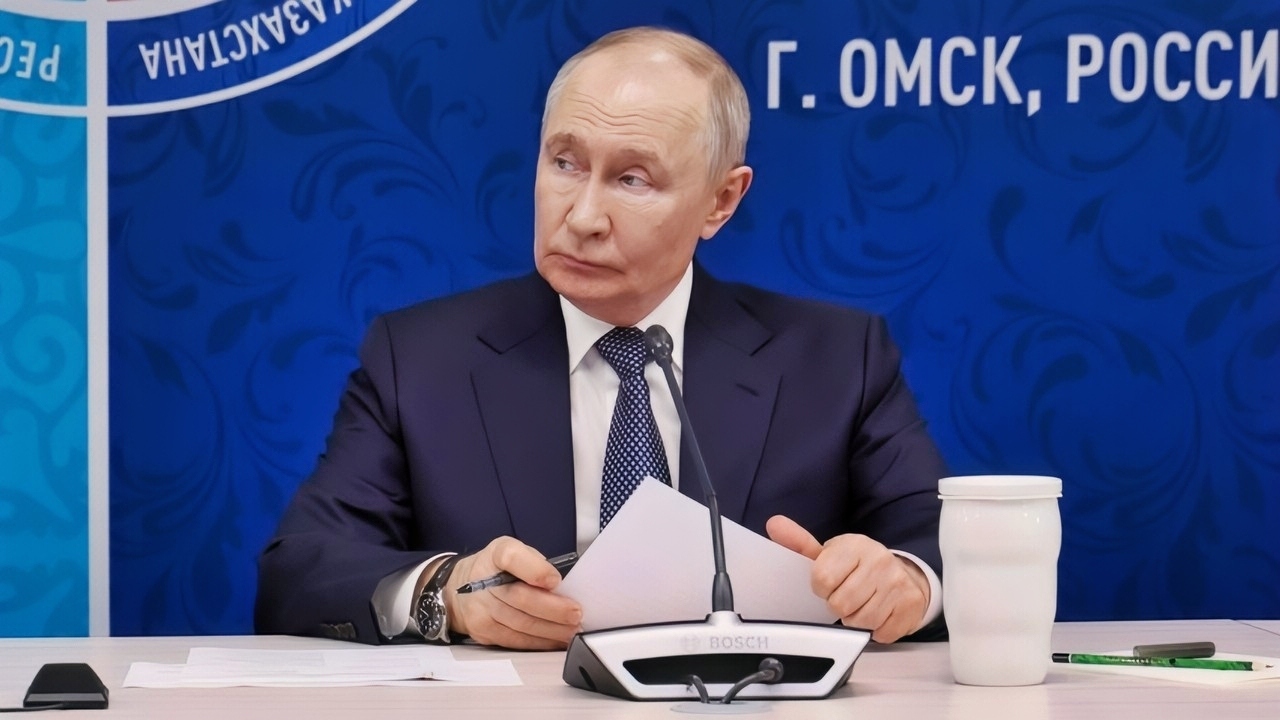
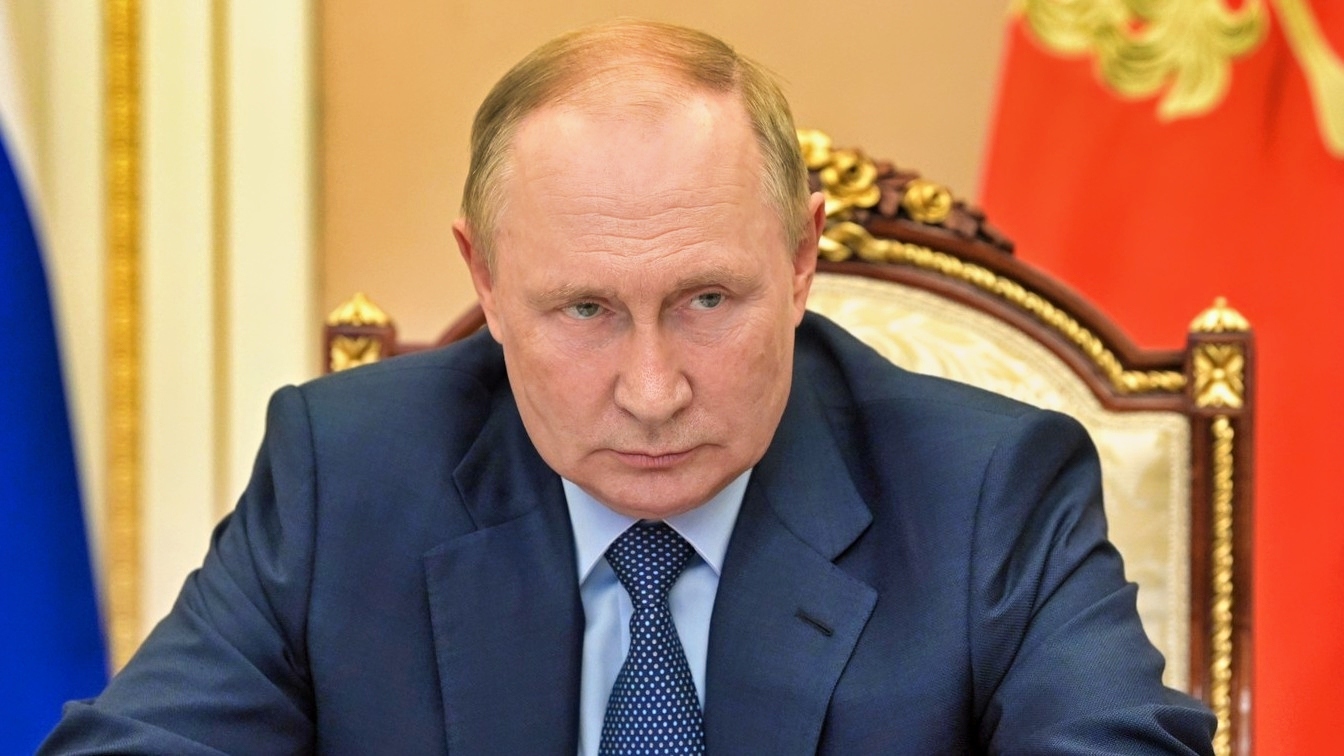
Putin at Conference on July 2026 Creative Commons Photo

Putin in December of 2023 Creative Commons Image
Late last month, United States Air Force bombers left Royal Air Force Base Fairford, where they had previously been stationed. The B-1 Lancer bombers, long-range aircraft that the United States has leveraged to bomb targets in Iran, had, according to local authorities, been the target of an attack by U.K. nationals sympathetic to Iran.
Earlier this summer, Germany’s Leipzig airport, a sizable regional hub in the country’s east, was also the subject of an attack. An explosive-laden FPV drone, not dissimilar to the kind used in the ongoing war in Ukraine, failed to detonate in the vicinity of an airplane destined for Ukraine.
Thanks to the ongoing war in Ukraine, Ukrainian air hubs have been closed for over four and a half years. Russian airports, however, remain open because of the war. Russian President Vladimir Putin was airborne aboard Russia’s presidential plane but couldn’t land in Moscow.
By coincidence, the Russian strongman was returning to Moscow from a trip abroad to Turkmenistan when Ukrainian drones overflew the international airports within Moscow, forcing all four of the air hubs to suspend operations temporarily.
It was, perhaps, a sign of how the war will seemingly continue, irrespective of how much pain Ukraine can inflict upon Russia.
Energy Truce in Tatters?
In an interview with the Financial Times, President Volodymyr Zelenskyy said that Kyiv will no longer avoid hitting Russian energy infrastructure. “The block [on attacking refineries] is out. We’re done,” Ukraine’s president said.
President Zelenskyy hinted that President Trump is drawn to the wealthy and the powerful, both of which describe the Russian leader. “He [Trump] speaks about it openly and loudly that he loves such people and he respects such people. Because for him people who can be leaders 20 years, 30 years, 40 years, it means they can be very strong,” Zelenskyy said.
Zelenskyy’s counterpart in the White House had asked Kyiv to stop hitting Russian energy facilities, ostensibly to help lower fuel prices ahead of American midterm elections next month. Trump went so far as to claim Kyiv and Moscow had agreed to a moratorium and that American firms had a window to buy and ship Russian fuel to the United States.
But while Ukrainian forces temporarily paused their strikes for three days, Russian drones and missiles continued to rain down on Ukraine’s civilian infrastructure, hitting energy, heating, and water facilities around the country as well as ordinary civilian apartment buildings and other facilities of a distinctly non-military nature.
A Pause in Support from Washington
In parallel, the Ukrainian president said the United States seemingly and inexplicably paused early warning air alerts that Ukraine relies on to detect and announce incoming Russian drone and missile attacks.
The Starlink satellite communication terminals Ukraine uses on the frontline had been throttled.
Though Starlink services have since been restored, the Ukrainian president pushed back against claims that a technical glitch caused the interrupted service. “It was not a technical problem; it was the will,” Zelensky said.
Several American officials and another Western official familiar with the matter seemed to support Zelenskyy’s theory. They explained that the White House had notified the United States Department of Defense to slow SpaceX Starshield. However, they did not specify who ordered the slowdown in service for Ukrainian operators.
Prospects for Peace
The temporary lifeline the White House seemingly tossed to the Kremlin certainly comes at Ukraine’s expense.
But there is a growing recognition that despite the success of Ukraine’s bombing campaign against Russian energy facilities, it will be close to impossible to inflict enough pain on the Russian economy to force Vladimir Putin to sue for peace.
Ensconced in the Kremlin and largely insulated from the war’s course, the Russian leader is unlikely to ask for an end to the fighting anytime soon, airport troubles aside.
And while Kyiv’s forces do have an increasingly capable arsenal of long-range weaponry with which to bomb Russia’s energy facilities and its forces, that alone may, unlikely not, be enough — and economic pain alone might not turn the tide decisively in Ukraine’s favor.
About the Author: Caleb Larson
Caleb Larson is an American multiformat journalist based in Berlin, Germany. His work covers the intersection of conflict and society, focusing on American foreign policy and European security. He has reported from Germany, Russia, and the United States. Most recently, he covered the war in Ukraine, reporting extensively on the shifting battle lines in Donbas and the war’s civilian and humanitarian toll. Previously, he worked as a Defense Reporter for POLITICO Europe. You can follow his latest work on X.


