

Known for his imperious nature, the Governor of the Rostov-na-Donu region, Yuri Slyusar, was once one of the most powerful figures in the Russian defense industrial sector.
As the CEO of the United Aircraft-Building Corporation (OAK), he controlled a sprawling empire of aviation design and research centers, production plants, test facilities, and a slew of suppliers spread across eleven time zones.
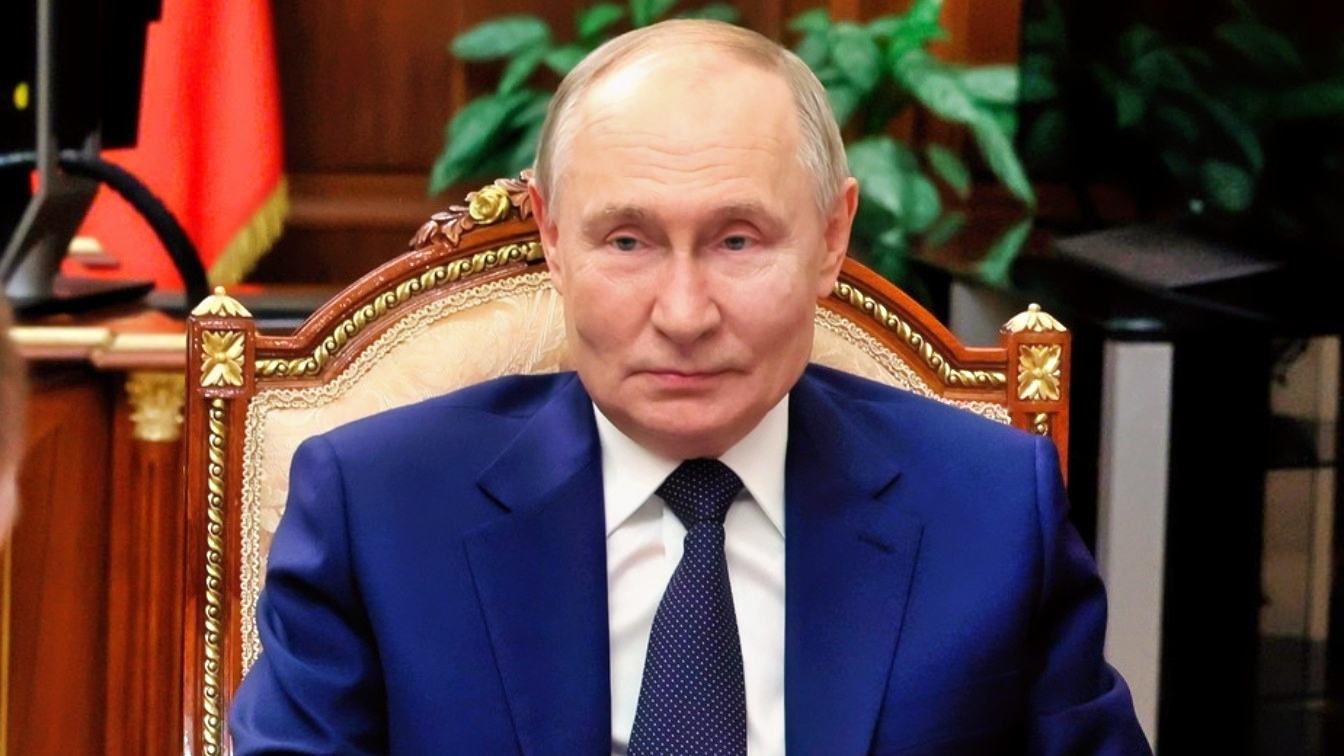
Putin in Important Meeting Russian Federation Photo
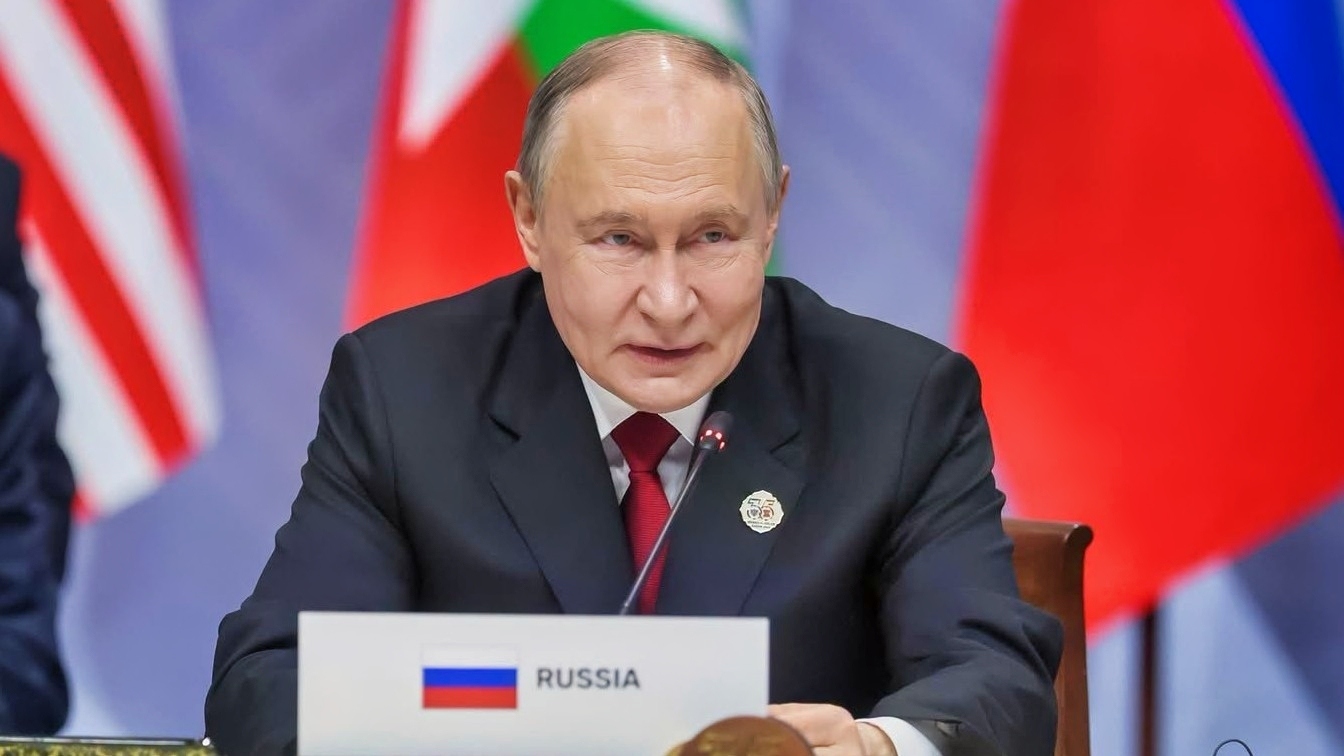
Putin at ASEAN Meeting June 2026 Russian Federation Handout Photo
He left the position in 2025 due to problems in the aviation sector that had caused a marked fall-off in the production of commercial passenger aircraft.
As one expert on the Russian aerospace industry said at the time, “Slyusar knew the blowback for these programs failing would land on him sooner or later – and not on Putin, whose war in Ukraine is responsible for the sanctions that made it impossible for OAK to build these aircraft.”
“Taking this regional Governor’s position was a comfortable exit for Slyusar from an increasingly uncomfortable situation as the head of the nation’s aircraft-building consortium,” he added.
Today, Slyusar might wish he had stayed in Moscow.
Unfriendly memos and criticisms of non-performance from higher-ups being fired at him might be preferable to what was fired at his region last night.
On Monday, 27 July, Ukraine launched a series of overnight drone attacks that targeted Russia’s Rostov Sea Trade Port and a strategic state fuel depot in Udmurtia.
The fuel depot is about 840 miles from the Ukrainian border, according to OSINT analysis. There were also reports of casualties and damage in Rostov-on-Don and Belgorod following these attacks.
Taking Out Port Facilities
Anyone who has ever been involved in war plans of any kind will tell you that port facilities are some of the most strategically important targets in any conflict.
True to standard practices for degrading an adversary’s ability to support military logistics, videos published by local residents on the independent outlet Astra clearly show that the main target of the attack was the Sea Trade Port.
The Rostov Sea Trade Port is part of Russia’s Azov-Black Sea basin and handles international shipping, including foreign-flagged vessels traveling to ports on the Black Sea and harbors along the Mediterranean.
A column of thick smoke – by now a common sight in Russia during these drone wars – was also seen rising from the port’s fourth cargo district on Monday morning following the attack.
Another drone struck a high-rise residential building near the port.
Fires were also reported at several other nearby commercial structures and residential buildings. Slyusar also stated that two persons were killed and five others were injured in the attack.
And a State Oil Depot
Another attack in Russia’s far-off Udmurtia Republic, which is located much further from the Ukraine border, was reported by the Astra channel’s OSINT analysis team.
The Ukrainian drones targeted the Prioritet facility of Russia’s state reserve agency (Rosrezerv), a heavily secured strategic fuel storage site previously known as Gorizont.
This site is a closed and well-guarded strategic facility located near the settlement of Borok in the Kambarsky district.
It serves as a large-scale and long-term emergency storage site for fuel and lubricants.
These petrol products are stored there to support the requirements of the Russian armed forces.
Witnesses say there was a direct hit on the facility’s grounds, followed by a fire.
Ukraine hitting this facility may be evidence of a new phase in the Ukrainians’ previously announced 40-day pressure campaign of drone and missile attacks – a campaign designed to force Russia to the negotiating table.
It is an example of how Ukraine is now “working its way down the strategic assets food chain,” said a former and now retired US intelligence official.
“Borok is a rather obscure spot in the Eastern part of European Russia,” he points out. “There is no visible processing capability – just a storage site of about 30 tanks.
Ukrainian drones and missiles are already targeting Russia’s refineries, loading ports, and transit pipeline facilities on a regular basis.”
“So starting to take out these kinds of facilities may be the opening round of Kyiv targeting the entirety of Russian [oil and fuel] reserves. If so, it is a direct national security threat to the country. If the Kremlin can’t or won’t even defend the country’s strategic oil reserves, there could be some serious implications for Putin and his inner circle.”
About the Author: Reuben F. Johnson
Reuben F. Johnson has thirty-six years of experience analyzing and reporting on foreign weapons systems, defense technologies, and international arms export policy. Johnson is the Director of Research at the Casimir Pulaski Foundation. He is also a survivor of the Russian invasion of Ukraine in February 2022. He worked for years in the American defense industry as a foreign technology analyst and later as a consultant for the U.S. Department of Defense, the Departments of the Navy and Air Force, and the governments of the United Kingdom and Australia. In 2022-2023, he won two awards in a row for his defense reporting. He holds a bachelor’s degree from DePauw University and a master’s degree from Miami University in Ohio, specializing in Soviet and Russian studies. He lives in Warsaw.


