

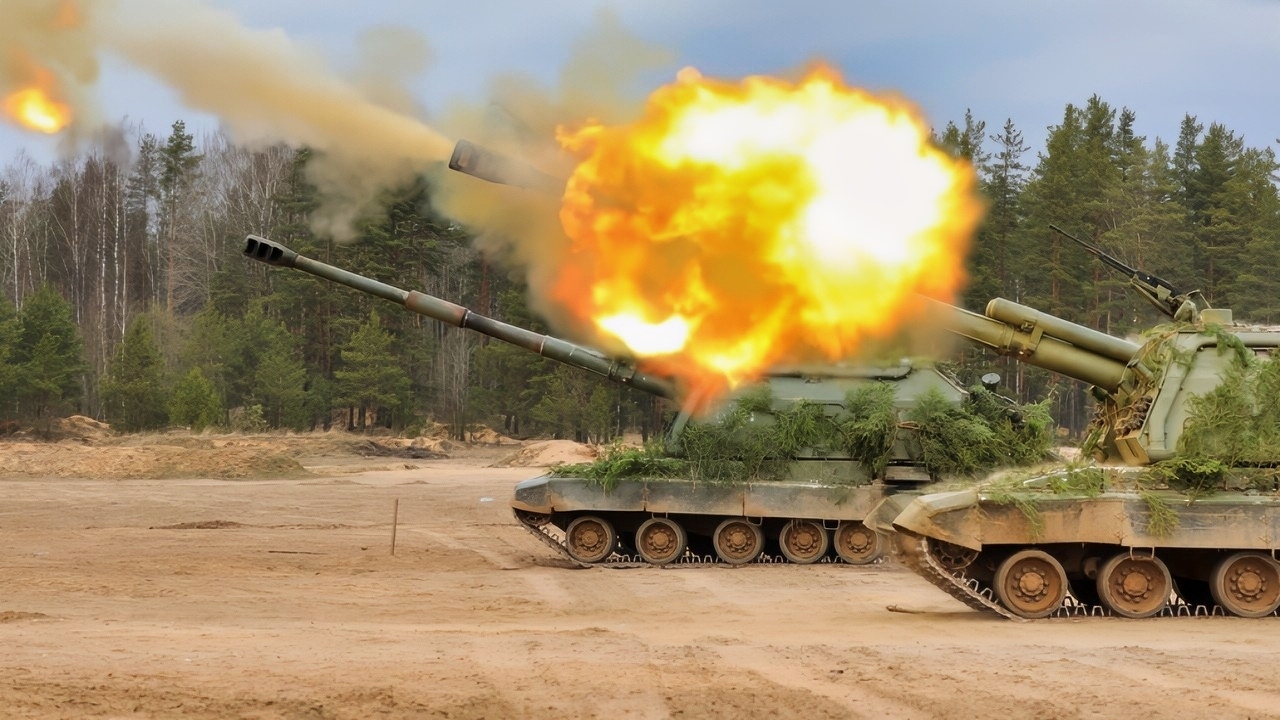
On Monday, Ukraine launched a large-scale drone attack against Russia, supposedly targeting areas in the Moscow region. According to regional authorities, around 400 attack drones were utilized in the attack, with most getting intercepted by air defenses.
Judging by the silence from Zelenskyy, who usually writes a post after successful attacks, nothing of importance was hit during the attack.
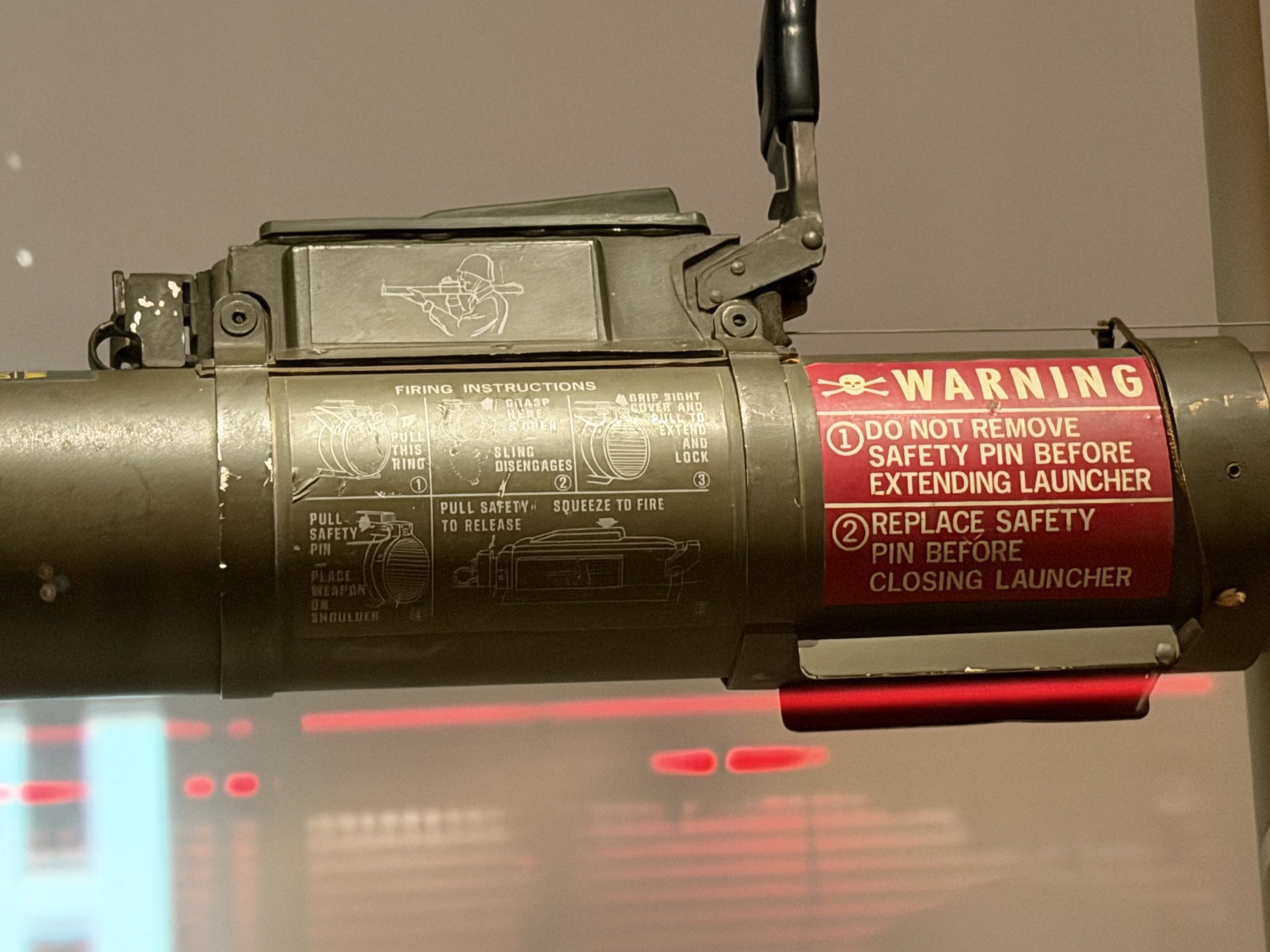
M72 LAW Anti-Tank Weapon. Image Credit: 19FortyFive.com
Either the attack was successfully thwarted, or it was an attempt by Ukraine to exhaust Moscow’s air defenses through repeated saturation attacks.
Regardless, no oil refineries or Wildberries warehouses were struck during the attack.
Another Large Attack Against Moscow
News of the attack was first reported by Moscow’s Mayor, Sergei Sobyanin, who reported that around 400 Ukrainian drones had breached Russian airspace in the Moscow region. “From 20:30 pm to 6:30 am, more than 390 drones flew in the direction of the Moscow region,” Sobyanin wrote. “Most of them were neutralized by air defense forces at distant approaches. 81 enemy UAVs were destroyed on approach to Moscow.” He did not comment on any damage or impacts caused by the attack.
Moscow region Governor Andrei Vorobyov confirmed that a residential area was hit in the town of Chekov some 31 miles from Moscow city, likely from debris, but no one was reported to have been killed or injured.
The Russian Ministry of Defense reported that air defenses had intercepted around 356 drones across the country between Monday night and Tuesday morning.
Some unconfirmed reports initially suggested that a warehouse near a Wildberries logistics center was hit during the attack.
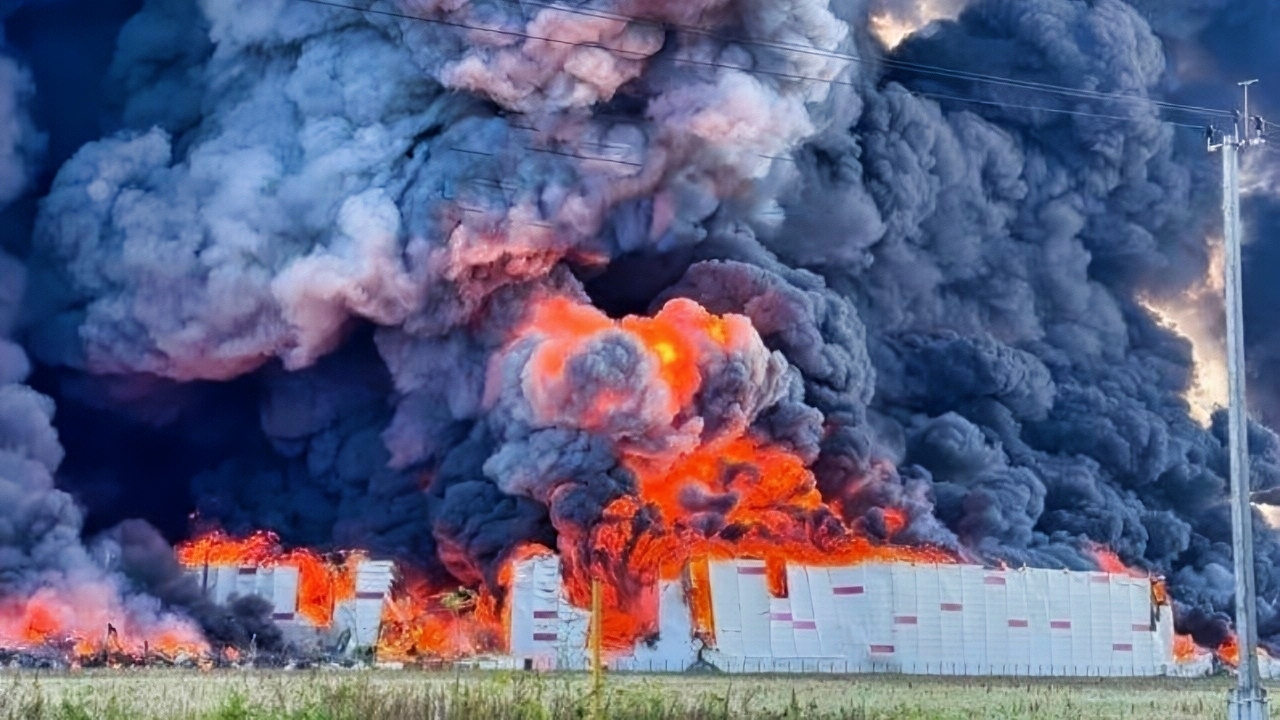
Moscow Warehouse Fire X Screenshot
However, the company stated on Telegram that none of its facilities in the region were hit by any munitions.
Some sources claimed that at least one drone managed to strike the Gidrostal Plant in Checkov, which specializes in the production of construction equipment.
The extent of the damage is as of yet unknown. Meanwhile, an attack against the Belgorod region hit a bus just across the border with Ukraine, injuring 19 passengers, according to regional governor Alexander Shuvayev.
Rethinking Russia’s Air Defense Strategy
Air defenses in the Moscow region seemed to have done their job, successfully repelling the attack. Throughout the past months, Ukraine has launched several large-scale attacks against Moscow, most of which have been successfully intercepted.
However, large gaps remain in Russia’s air defense network, which Ukraine has exploited on several occasions. Russia’s longest-range systems, the S-400 and S-500, are designed primarily for use against more serious threats like ballistic missiles and manned fighter jets.
Systems that can deal with smaller, slower-moving drones, like the Tor or the Pantsir, have a considerably shorter range and are often insufficient to deal with large drone attacks on their own.
Russia has a vast airspace.
It simply does not have enough systems to protect every inch of its skies.
Consequently, the Ministry of Defense has to make difficult choices when deciding which parts of its airspace it chooses to protect. Previously, Russia was able to rely on its vastness to defend itself against Ukrainian attacks.
However, as Kyiv has increased its supply of mid-to-long-range drones, targets that were once unreachable are now easy pickings.
The result is that Moscow has been forced to rethink its air defense strategy. In June, after Ukraine had notably stepped up its drone campaign, Putin declared that Russia would need not only to increase production of air defense systems but also to change its approach when dealing with Ukrainian attacks.
He did not clarify what these measures would look like in practice.
Striking at the Heart of the Issue
One such approach that Russia seems to have taken is the systematic destruction of Ukraine’s industrial base.
For the past several months, Kyiv has been subjected to multiple massive drone/missile attacks, mainly aimed at industrial targets and logistics hubs responsible for the production and assembly of drones.
These attacks succeeded in diminishing Ukraine’s stock of Patriot PAC-3 interceptor missiles, which were responsible for protecting the city against ballistic missiles.
While some small deliveries have been made from Kyiv’s European partners, the city is still vulnerable to large-scale attacks from Moscow.
Interestingly, Russia has toned down its attacks against Kyiv in the last couple of days.
This likely indicates that Moscow is either in the process of replenishing its stock of missiles or it is gearing up for yet another large-scale attack in the near future.
The air component of the war in Ukraine is contested, but still mostly in Moscow’s favor. Ukraine, however, has made considerable progress with its recent development of medium- and long-range attack drones.
This has allowed Kyiv to strike targets deep behind the front lines and cause considerable damage to the Russian economy. Despite this, Russia’s air power is still formidable.
It retains the advantage in both the quantity and quality of its cruise and ballistic missiles and has also made its own advancements in the field of drones, with better automated control and guidance systems.
Both sides will continue to trade blows until a peaceful settlement is reached or one side collapses under the pressure.
About the Author: Isaac Seitz
Isaac Seitz, a Defense Columnist, graduated from Patrick Henry College’s Strategic Intelligence and National Security program. He has also studied Russian at Middlebury Language Schools and has worked as an intelligence Analyst in the private sector.


