

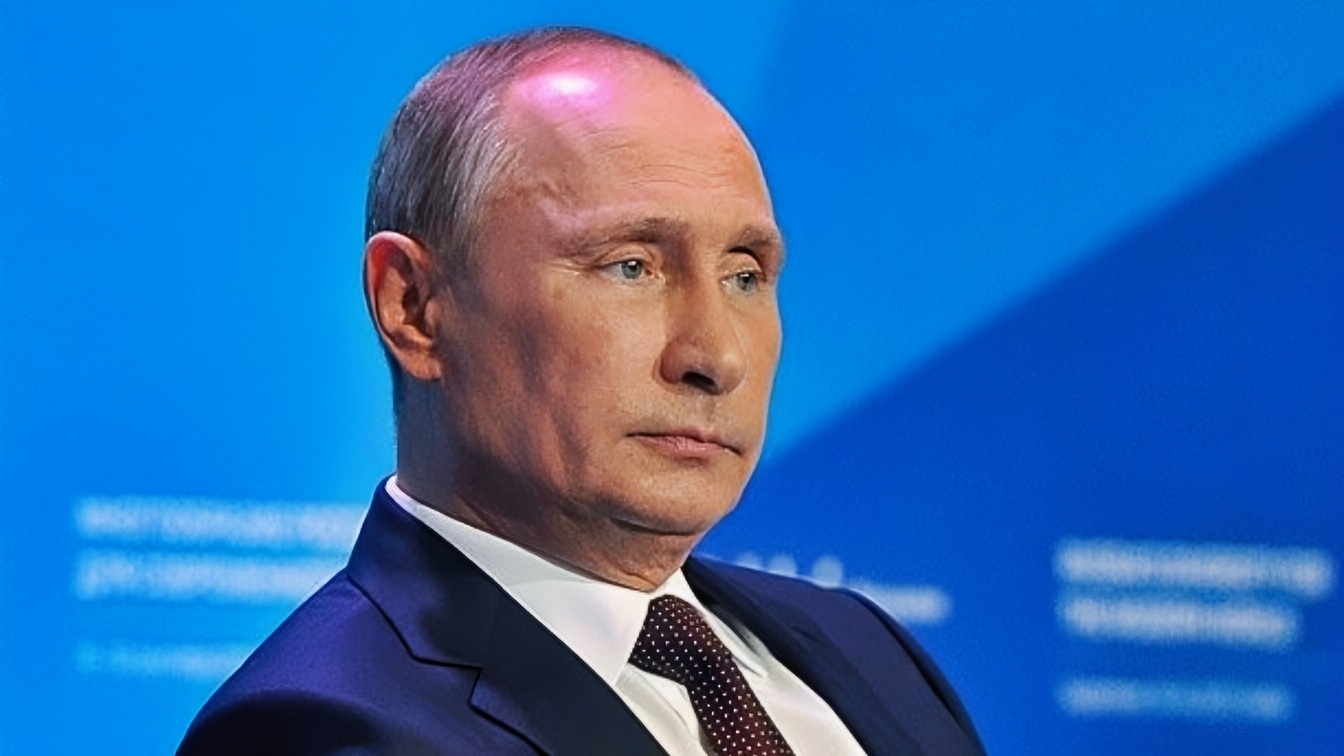
Ukraine Hit 3 Russian Oil Depots And A Shadow Fleet Tanker In One Night: Ukraine says its Security Service struck three Russian oil depots and a sanctioned tanker during coordinated drone operations that targeted Moscow’s fuel network on land and at sea.
The Security Service of Ukraine said its drones reached three petroleum storage facilities in Russia’s Stavropol region, about 600 kilometers from the Ukrainian border. The agency reported fires and explosions involving fuel tanks at all three locations.
Putin in Red Square in 2017 Creative Commons Image.
Ukraine also said a Mamai maritime drone struck the Avero, a Suezmax tanker that Kyiv accuses of carrying Russian crude to China and India while helping Moscow bypass international restrictions. The SBU described the vessel as the fourth Russian-linked shadow fleet tanker it had hit in 10 days. The precise condition of the tanker has not been independently confirmed.
Ukraine’s War and Sanctions database lists the Avero under IMO number 9250737 and says the vessel transported nearly 140,000 tons of Russian crude to India in September 2025. Ukraine imposed sanctions on the tanker in December 2025.
Ukraine Is Expanding Its Campaign Across Russia’s Oil Network
The July 19 operation fits within a broader Ukrainian effort to target every stage of Russia’s fuel system, including refineries, storage depots, tankers, ports, transfer facilities, and shipping corridors.
Ukraine has claimed that low-cost drones damaged or disabled 116 Russian-linked vessels in nine days across the Sea of Azov. That figure has not been independently verified, but Russia has restricted traffic and considered alternative routes as attacks increased.
Putin in January 2019 Russian Federation Image
Another Ukrainian wave reportedly hit more than one-quarter of the vessels present in the Sea of Azov during a four-day period. Even temporary damage matters when commercial ships have to pause, reroute, wait for inspections, or operate under additional protection.
The strategy adds maritime logistics to Ukraine’s refinery campaign. Russia earns money by exporting crude and refined products, but those exports still require storage tanks, pipelines, loading facilities, crews, ports, and tankers. Disrupting any one part of that chain raises costs and creates delays.
Russia Has To Defend Refineries, Depots And Tankers
Ukraine has already struck major facilities far beyond Stavropol. Recent attacks reportedly set two large Russian refineries on fire, including the Salavat complex in Bashkortostan.
A separate strike forced Russia’s largest oil refinery in Omsk to halt major operations, according to industry reporting. The facility sits deep inside Siberia, well beyond the range Moscow once treated as vulnerable to regular Ukrainian attacks.
Ukraine’s longest-range missions have sent drones roughly 1,500 miles to targets inside Russia. Each increase in range expands the number of facilities Russia has to consider protecting.
Moscow has a large inventory of air-defense systems, but it also has an enormous territory and a growing list of exposed targets. Russia has to allocate defenses among military bases, refineries, depots, factories, ports, cities, electrical substations, and shipping facilities.
Ukraine chooses where to concentrate its drones. Russia has to prepare for attacks across all of them.
Crimea’s Fuel And Power Systems Face Continued Pressure
The Stavropol and tanker operations coincided with reported attacks on electrical infrastructure in Russian-occupied Crimea. The Kyiv Post reported that a drone strike caused a fire at the Darsan electrical substation in Yalta, while explosions were also reported around Feodosia, Sudak, and Kerch.
Those reports relied partly on local monitoring channels and have not been independently confirmed. Russian-controlled energy operators have acknowledged power restrictions and blackouts across parts of Crimea after earlier attacks.
The pressure on Crimea also includes fuel. A June analysis reported that occupied Crimea had suspended civilian fuel sales after repeated Ukrainian strikes affected Russian refining and supply capacity.
The peninsula depends on infrastructure connecting it to Russia and on maritime routes through the Black Sea and Sea of Azov. Ukraine’s campaign has increasingly targeted those links rather than limiting operations to individual military platforms.
Ukraine Is Creating A Second Layer Of Pressure On Russian Oil
Western sanctions restrict which companies can buy, insure, finance, and transport Russian oil. Ukraine’s drone campaign places physical pressure on the same system.
Russia has benefited when global oil prices rise, but damaged refineries and disrupted export routes limit how much of that advantage Moscow can collect. A higher market price brings less value when fuel cannot be refined, stored, loaded, or delivered efficiently.
The Avero strike also shows the vulnerability of the shadow fleet. These tankers help Russia move oil outside conventional Western shipping and insurance networks. They still operate through identifiable sea lanes and rely on ports, crews, maintenance, and loading terminals.
Russia has previously committed naval assets to defend sanctioned shipping. In January, Moscow even sent a submarine to monitor a tanker pursued by U.S. forces. Ukraine is now forcing Russia to consider similar protection requirements much closer to home.
The July 19 attacks will not stop Russian oil exports by themselves. They add three more damaged storage sites, another tanker claim, and further pressure on Crimea to a campaign that has already spread across much of Russia’s energy system. Moscow’s problem is no longer one refinery or one port. It is the number of places Ukraine can now reach.
About the Author: Harry J. Kazianis
Harry J. Kazianis (@Grecianformula) was the former Senior Director of National Security Affairs at the Center for the National Interest (CFTNI), a foreign policy think tank founded by Richard Nixon based in Washington, DC. Harry has over a decade of experience in think tanks and national security publishing. His ideas have been published in the NY Times, The Washington Post, The Wall Street Journal, CNN, and many other outlets worldwide. He has held positions at CSIS, the Heritage Foundation, the University of Nottingham, and several other institutions related to national security research and studies. He is the former Executive Editor of the National Interest and the Diplomat. He holds a Master’s degree focusing on international affairs from Harvard University.


