

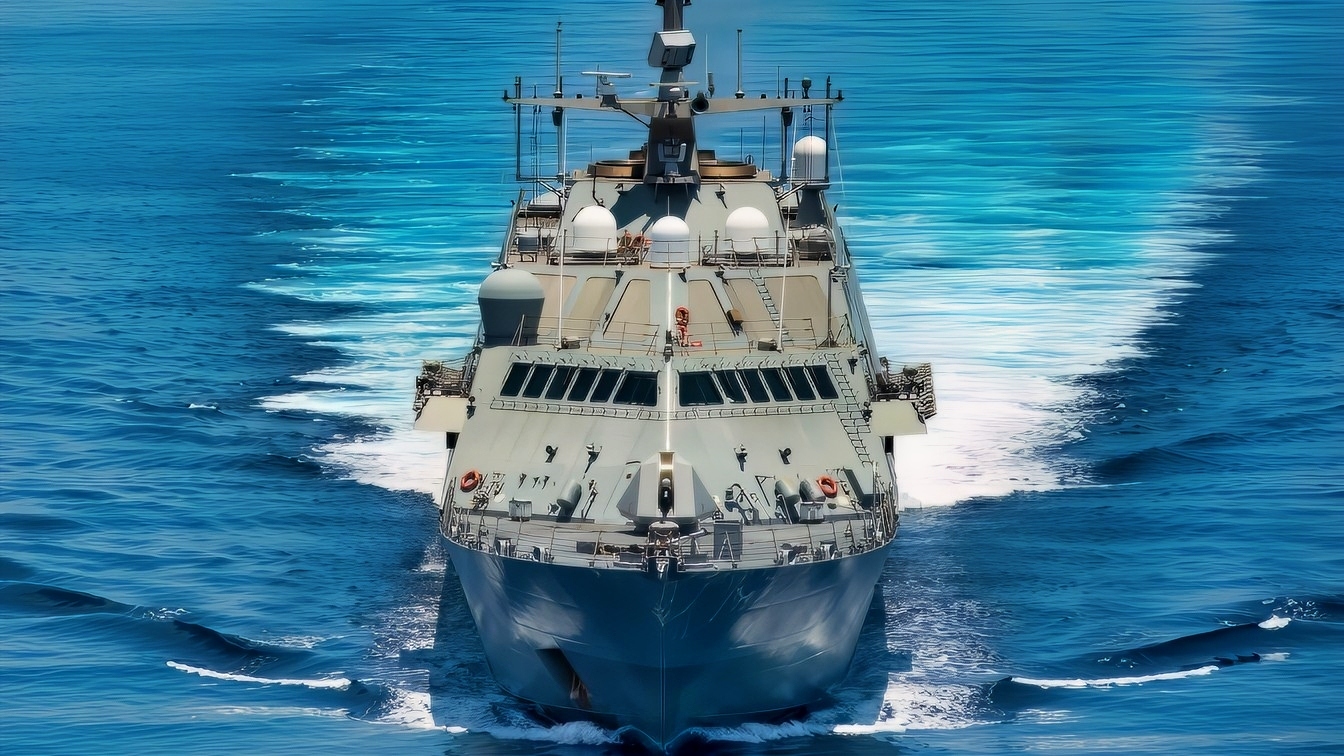
After trying — and failing — to use massive military force to force the Islamic Republic of Iran to collapse (or at least be more compliant with Washington’s wishes) for the last nearly six months, President Donald Trump seems to have walked back from that course of action.
Since the war started, the US military has massively depleted its stockpiles of critical defensive and long-range precision-strike munitions.
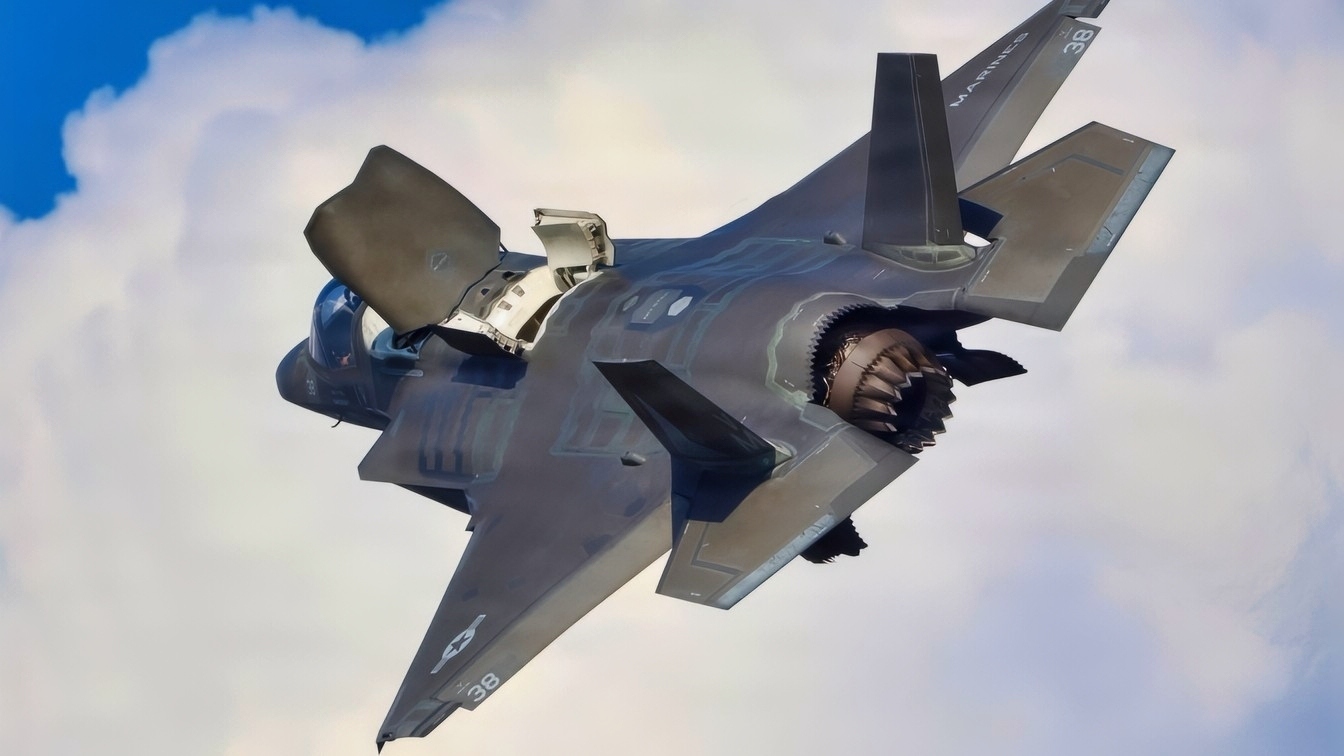
A U.S. Marine Corps F-35B Lightning II aircraft assigned to Marine Fighter Attack Training Squadron (VMFAT) 501 performs a flight demonstration over Washington, D.C., July 4, 2026. The 89th Maintenance Group furnished specialized ground equipment, tools and apron parking locations at nearby Joint Base Andrews, Maryland, to support the staging and execution of VMFAT 501 transient airshow assets during the national Freedom 250 celebration. (U.S. Air Force photo by 1st Lt. Christopher Guerra)
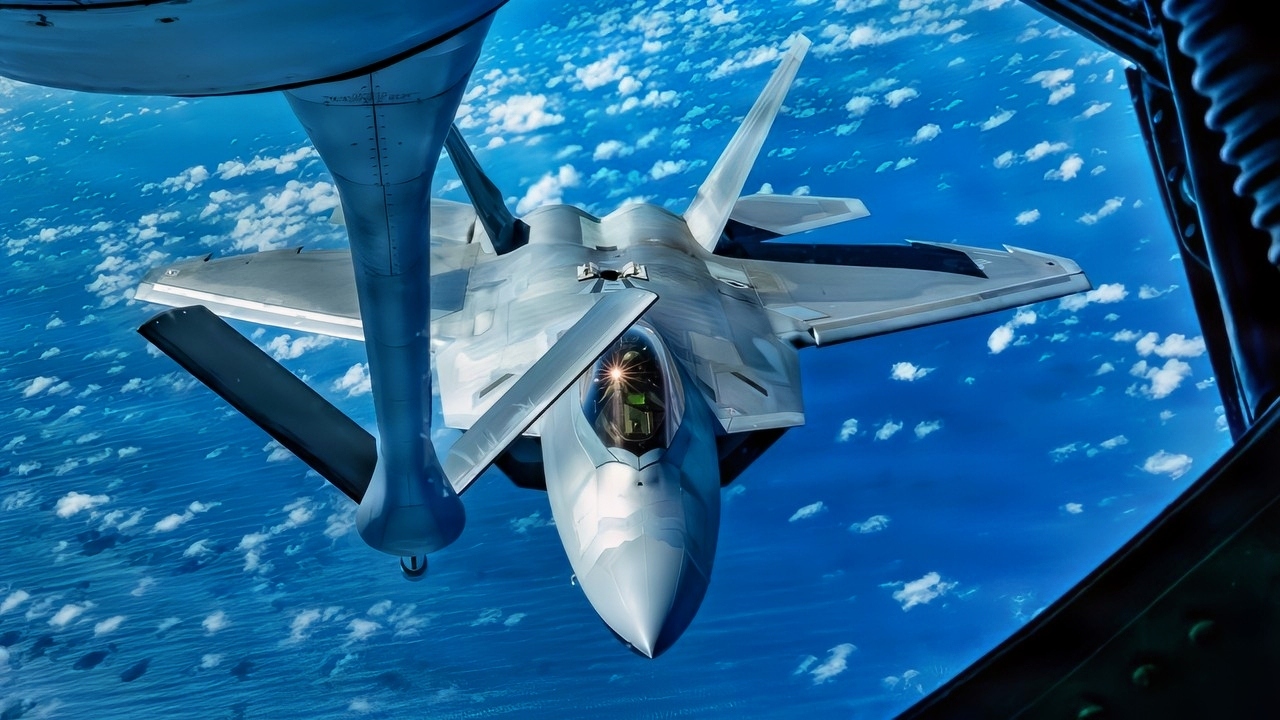
A U.S. Air Force F-22 Raptor assigned to the 27th Expeditionary Fighter Squadron, deployed to Kadena Air Base, Japan, approaches a KC-135 Stratotanker assigned to the 909th Air Refueling Squadron during a training flight over the Pacific Ocean, July 8, 2026. Aerial refueling capabilities extend airborne training time and combat radius, ensuring joint and allied aircraft are postured to maintain regional peace and stability within the Indo-Pacific. (U.S. Air Force photo by Staff Sgt. Erin Currie) 18 WG/PA
The US Navy has struggled to operate anywhere near the contested Strait of Hormuz (SoH), and the air campaign appears to have been inconclusive.
The Goldilocks Zone of Brinkmanship
With the Midterm elections coming up, and the energy markets very much in disarray–with the US Strategic Petroleum Reserve (SPR) being significantly drained–the Trump administration has failed to achieve any of its many strategic objectives in its war with Iran.
Trump appears to recognize this. He also seems to be realizing the limits of US military power. So, the forty-seventh president is scaling back the mission.
Rather than use overwhelming conventional military force (or threaten something worse), Trump is reverting to the age-old American tactic of employing onerous economic war.
“They’re almost out of money!” Wrote President Trump on his Truth Social account over the weekend, referring to Iran.
Trump clearly wants to reduce the active military campaign to both conserve depleted munitions and to protect the vulnerable US economy better.
He doesn’t believe negotiations with Iran can achieve anything substantive.

The guided-missile destroyer USS Donald Cook (DDG 75) steams behind the aircraft carrier USS Theodore Roosevelt (CVN 71) in the Persian Gulf on Jan. 31, 2006. The Roosevelt Carrier Strike Group is conducting maritime security operations in the Persian Gulf.
(DoD photo by Airman Apprentice Nathan Laird, U.S. Navy. (Released))
He knows he cannot escalate (for now) militarily against Iran. Rather than abandon his original goal of forcing the Islamic Republic to either collapse or become truly compliant with his demands, Trump is embracing a Goldilocks strategy: not too much pressure, not too little pressure.
In other words, Trump is reverting to the old strategy he employed during his first term (and other presidents employed) with Iran. It’s a strategy of maximum pressure plus containment.
But that strategy will no longer work. Iran has outmaneuvered the Americans at the strategic level in this case. Many are likening what the president wants to do to what the Americans did to Saddam Hussein’s Iraq throughout the 1990s.
No Going Back
While that may be what Washington dreams of doing, given the control over the vital Strait of Hormuz (SoH) that the Iranians have demonstrated, as well as the Houthi partial blockade of the Strait of Bab el-Mandeb, the idea that the US will be able to restore Iran to its containment via maximum pressure is ridiculous.
The center of gravity in the Iran War is now the SoH. And the world requires that waterway (and the Bab el-Mandeb) to be completely open.
While Iran and Oman are negotiating to potentially reopen the waterway, the Omanis will likely find it difficult to get international shippers to reliably use the SoH if Washington and its partners do not guarantee their commitment to any deal struck between Muscat and Tehran over the Strait.
It doesn’t really matter if the Iranians and Omanis cut a deal.
If America doesn’t go along with it, international shippers, who are akin to fainting goats, won’t go along with the scheme–especially if Iran intends to impose onerous tolls on ships passing through the area.
Washington, at least according to the president, is in no rush to consent to any deal being hatched between Muscat and Tehran that does not restore the SoH to its prewar openness.
And Tehran has made it clear that it will not accept any deal that returns control of the Strait to the so-called international community.
In the meantime, Washington claims that the United States has facilitated the movement of 8 million barrels of oil every night through the southern lane of the SoH (that’s the Omani-controlled lane).
Washington prefers to rely upon that method rather than cede anything diplomatically to the Iranians at this point. Eight million barrels of oil per night might seem like a lot.
Eight Million Barrels Isn’t Enough
For the standards of the SoH, though, it’s a drop in the proverbial bucket. After all, upwards of 21 million barrels of crude oil moved through the Strait per day before the Iran War began on February 28.
And there is much argument among experts as to the veracity of the administration’s claims that eight million barrels have been moved per night, thanks to the US Navy’s assistance, through the southern lane of the SoH.
The bottom line is this: the Americans badly miscalculated the war. It has lasted months rather than days or weeks. There is no real end in sight, largely because Iran performed better than expected and is now trying to exploit the clear strategic victory Tehran enjoys by taking official control over the SoH.
While the Americans are disinclined to permit this, Washington is hamstrung by the reality of its depleted stockpiles and its strained SPR.
Lastly, there was clearly a calculation made within the halls of power in Washington that the country could make it through the contentious Midterm Election cycle by just riding out its SPR.
That calculation might have proven correct had China remained off the global market.
Ever since the Memorandum of Understanding (MoU) collapsed weeks ago, China has returned to global energy markets and begun purchasing large amounts of the strained global supply for itself.
Trump thinks he has several months to squeeze Iran economically and force them back to the table. Instead, Trump has less than 90 days before the entire system seizes from lack of sufficient oil.
To paraphrase an old Taliban saying, America may have all the watches, but the Islamic Republic of Iran clearly has all the time.
About the Author: Brandon J. Weichert
Brandon J. Weichert is Senior National Security Editor. He also manages The Weichert Brief on Substack. Weichert also hosts “National Security Talk” on Rumble. He is the author of four bestselling national security books, the most recent of which is A Disaster of Our Own Making: How the West Lost Ukraine (Encounter Books). Follow him via Twitter/X @WeTheBrandon.


