

Over the last couple of days, the conflict between the U.S. and Iran has subsided after Washington hoped to reach an agreement with Tehran to reopen the Strait of Hormuz. Unfortunately, no such deal materialized. Where many feared that Trump would try to escalate the conflict, it now seems that the U.S. has shifted its policy to wait out the regime in Iran and let the blockade and economic pressures take their toll. Meanwhile, the Islamic Republic has issued a new set of demands that it says the U.S. must meet before vessels are allowed to transit freely through the Strait.
The U.S. is Shifting its Strategy With Iran

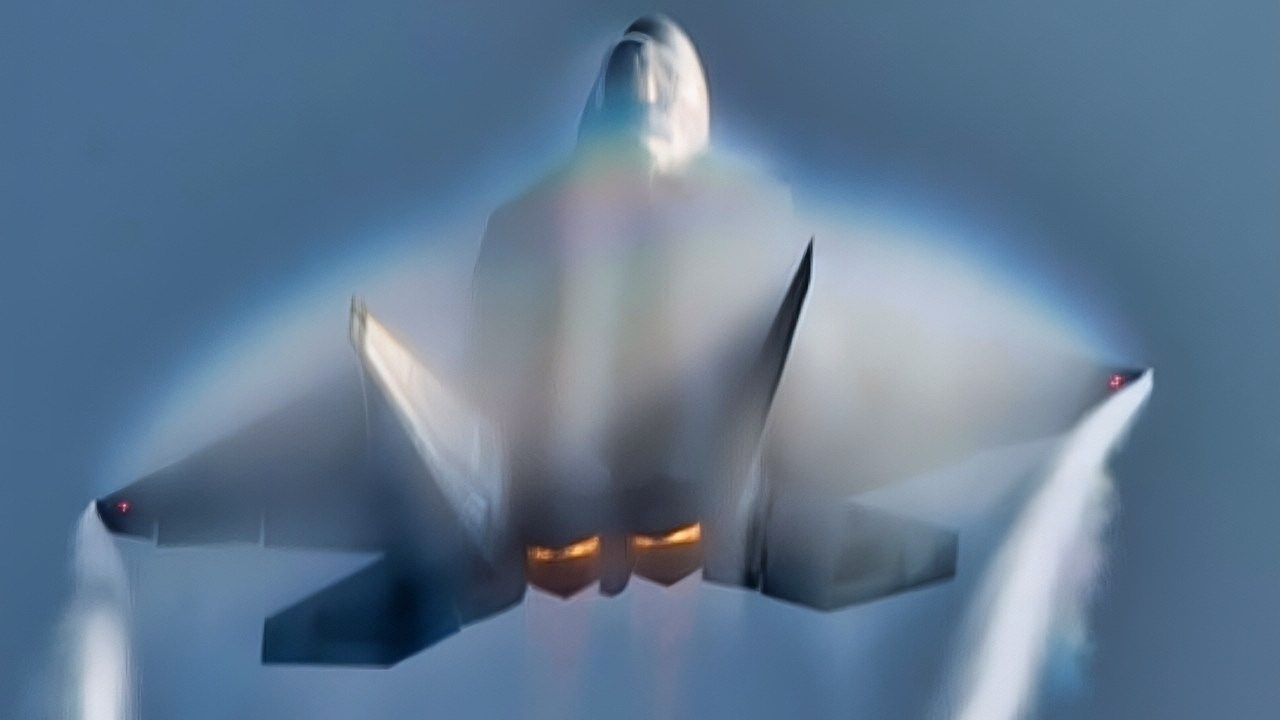
An Air Force F-22 Raptor executes a supersonic fly by over the flight deck of the aircraft carrier USS John C. Stennis. John C. Stennis is participating in Northern Edge 2009, a joint exercise focusing on detecting and tracking units at sea, in the air and on land.
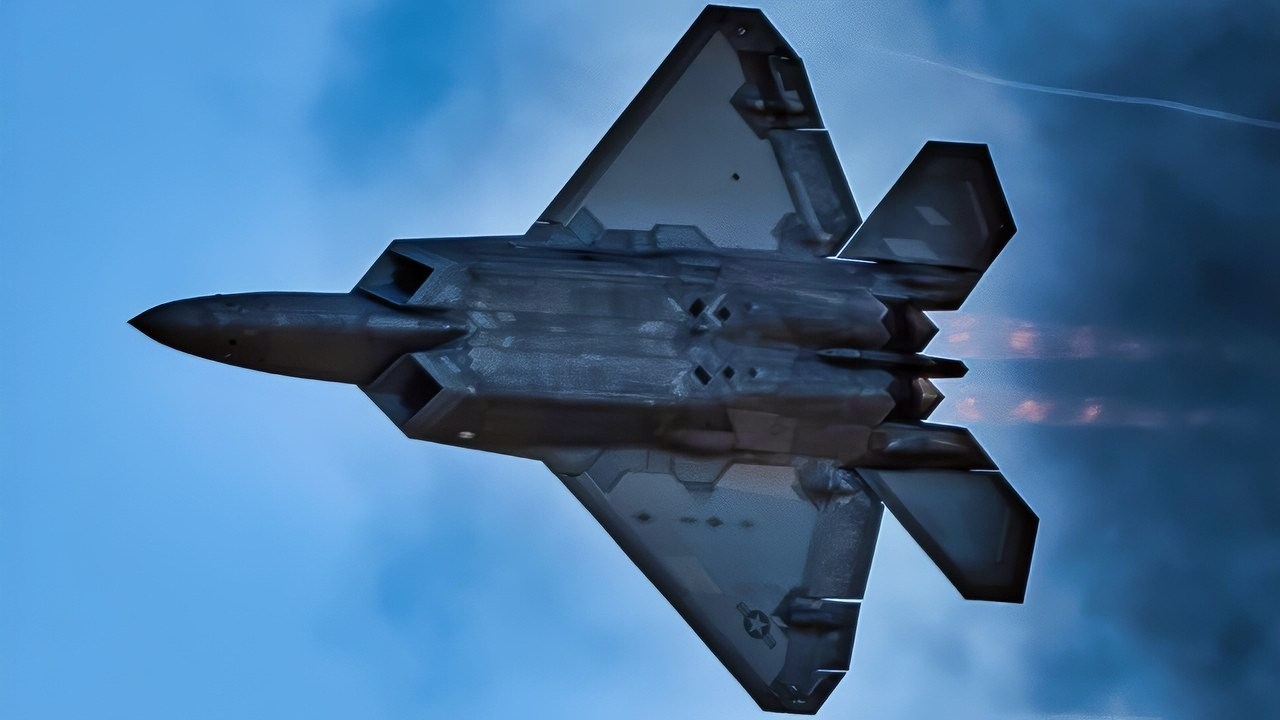
U.S. Air Force Lt. Col. Paul Lopez, F-22 Demo Team commander, flies through smoke during the Thunder over South Georgia Air Show at Moody Air Force Base, Ga., Nov. 2, 2019. Founded in 2007, the F-22 Raptor Demonstration Team showcases the unique capabilities of the world’s premier 5th-generation fighter aircraft. (U.S. Air Force photo by 2nd Lt. Sam Eckholm)
Last week, President Trump was threatening to unleash the largest military attacks since WWII; now it appears the U.S. is adopting a more hands-off approach to the conflict. The President told Axios on Sunday that the U.S. would instead try to wait out the Islamic Republic and let the economic pressures work their magic. “We are low-keying it,” Trump told the outlet in a phone call. “We are only semi-negotiating with them. We are just watching Iran with its huge inflation and the fact they have no money,” the President continued, “It will work out. It always works out. It’s like a chess game.” Since the outbreak of the war, the U.S. has caused immense damage to the military and civilian infrastructure throughout the country. Iran, whose economy was struggling under immense sanctions prior to the conflict, is facing a bleak long-term outlook.
However, some experts doubt whether the U.S.’s new hands-off strategy will be more effective than direct military action. According to Mohammad Eslami, a researcher at Tehran University, the regime has already demonstrated remarkable resilience in the face of massive economic pressures.
Tehran managed to weather the sanctions imposed by the Obama administration and the harsh maximum-pressure campaign implemented during Trump’s first term. Now, Eslami argues, despite the added pressures of the war, the regime is still unlikely to acquiesce to Trump’s demands. “Trump thought that if he declares a naval blockade on Iran, the Iranian economy will collapse in a number of days,” Eslami said to NBC. The current pause in the conflict allows Tehran to rebuild and restock its supplies in case the war resurges.
Reopening the Strait of Hormuz
While negotiations between the U.S. and Iran have, by all reports, stalled out completely, talks between Iran and Oman have continued. Oman has served as one of many mediators in the conflict and has also contested Iran’s legal control over the Strait of Hormuz.
According to Iran’s Foreign Ministry, the two countries were closing in on a settlement that would resolve the issue of the Strait’s management. Over the last month, proposals have been made to divide ownership between Iran and Oman, with Iran controlling traffic in one direction and Oman controlling traffic in the other. While the exact details are not yet public, both countries have thus far been enthusiastic about the state of negotiations.
At the same time, the Islamic Republic recently published a new list of demands for the U.S. to meet before the Strait can be fully reopened.
The U.S. must withdraw its naval blockade, pay Iran damages for the war, unfreeze Iranian assets, lift sanctions on Tehran, and permanently end the conflict against Iran and its regional allies, the secretary of Iran’s Supreme National Security Council on Iranian state media.
Despite the positive talks with Oman, the regime insists that it cannot reopen the Strait until Washington meets its demands. “We are still at war, and as long as the American naval blockade continues and America’s other violations of the memorandum of understanding are not addressed, the strait will not be reopened,” spokesperson Esmail Baghaei said during a press briefing.
Which Side Will Cave First?
The war is currently in an awkward state. Neither side seems to be talking directly with each other anymore, nor does either side have the military means to force the other into a concession.
The war with Iran follows an interesting pattern that starts with intense violence and is then followed by an awkward pause for negotiations, only for the fighting to resume and intensify.
Currently, the conflict is on pause as both sides catch their breath, but neither side seems all that willing to talk to each other. The U.S. continues to maintain a large military presence in the Middle East while Tehran continues to exercise its control over the Strait by striking commercial vessels.
More than five months into the war, pressure is mounting on both sides to reach a peace settlement as quickly as possible. In Iran, the economy is still reeling after U.S. airstrikes against critical infrastructure and declining oil exports, which are a sizable portion of the country’s GDP, have only exacerbated Tehran’s economic woes. In the U.S., however, the war remains largely unpopular.
With Midterm Elections a few months away, Trump’s political opponents are already decrying the war effort to gain popular support. With inflation continuing to rise and gas prices still high, the public can only accept so much before they express their frustrations at the ballot box. Pressures are high for both sides. The question is who will fold first?
About the Author: Isaac Seitz
Isaac Seitz, a Defense Columnist, graduated from Patrick Henry College’s Strategic Intelligence and National Security program. He has also studied Russian at Middlebury Language Schools and has worked as an intelligence Analyst in the private sector.


