

Key Points and Summary – The F-35 is rapidly becoming NATO’s default fighter, with European air forces buying in for its unmatched stealth, sensors, and interoperability.
-Yet as the fleet grows, unease is rising over cost, readiness, and—above all—sovereignty.

Capt. Kristin “BEO” Wolfe, F-35A Lightning II Demonstration Team pilot and commander, flies during an airshow demonstration practice Mar. 5, 2020, at Hill Air Force Base, Utah. The team will make its first of 20 appearances at the Yuma Air Show, Mar. 13-14, 2020, at Marine Corps Air Station, Yuma, Ariz. (U.S. Air Force photo by Cynthia Griggs)
-High operating expenses, parts shortages, and mediocre mission-capable rates are painful, but manageable.
-More worrying to many governments is that the F-35’s software, mission data, upgrades, and even weapons integration are all controlled through U.S.-run systems.
-In an era when Donald Trump questions NATO commitments, Europe is increasingly asking whether relying on an American-controlled fighter for core airpower poses a strategic risk it can’t ignore.
The Real Reason Europe Is Reconsidering the F-35
Lockheed Martin’s F-35 is becoming the backbone of NATO’s airpower, with more European governments opting to purchase the jet to replace aging fleets and standardize with the United States.
Yet even as the program expands, political debate around the fighter is also beginning to shift.
Concerns about rising costs, delays in spare part shipments, and long-term dependence on U.S. software and supply chains are now shaping procurement discussions across the continent.
The result is effectively contradictory: planners are increasingly acknowledging that the F-35 is the most capable and modern fighter in the world, but operating it entails accepting a degree of dependency on the United States that some European governments find uncomfortable.
It’s a problem that has now even reached Canada.
Most major Western powers operate the aircraft. Outside of the United States, it is used by the air forces of the United Kingdom, Italy, the Netherlands, Norway, and Denmark.
Belgium also welcomed its first F-35 deliveries at Florennes Air Base on October 13, 2025. Finland, meanwhile, is awaiting 64 F-35A units after the aircraft won in a competition with Boeing’s F/A-18E/F Super Hornet and the Saab Gripen, and Poland also agreed to purchase 32 of airframes in 2020. Switzerland also selected the fighter in a competition in 2021.
The F-35 is also in operation outside of Europe, notably in Israel, Japan, South Korea, Australia, and Singapore.
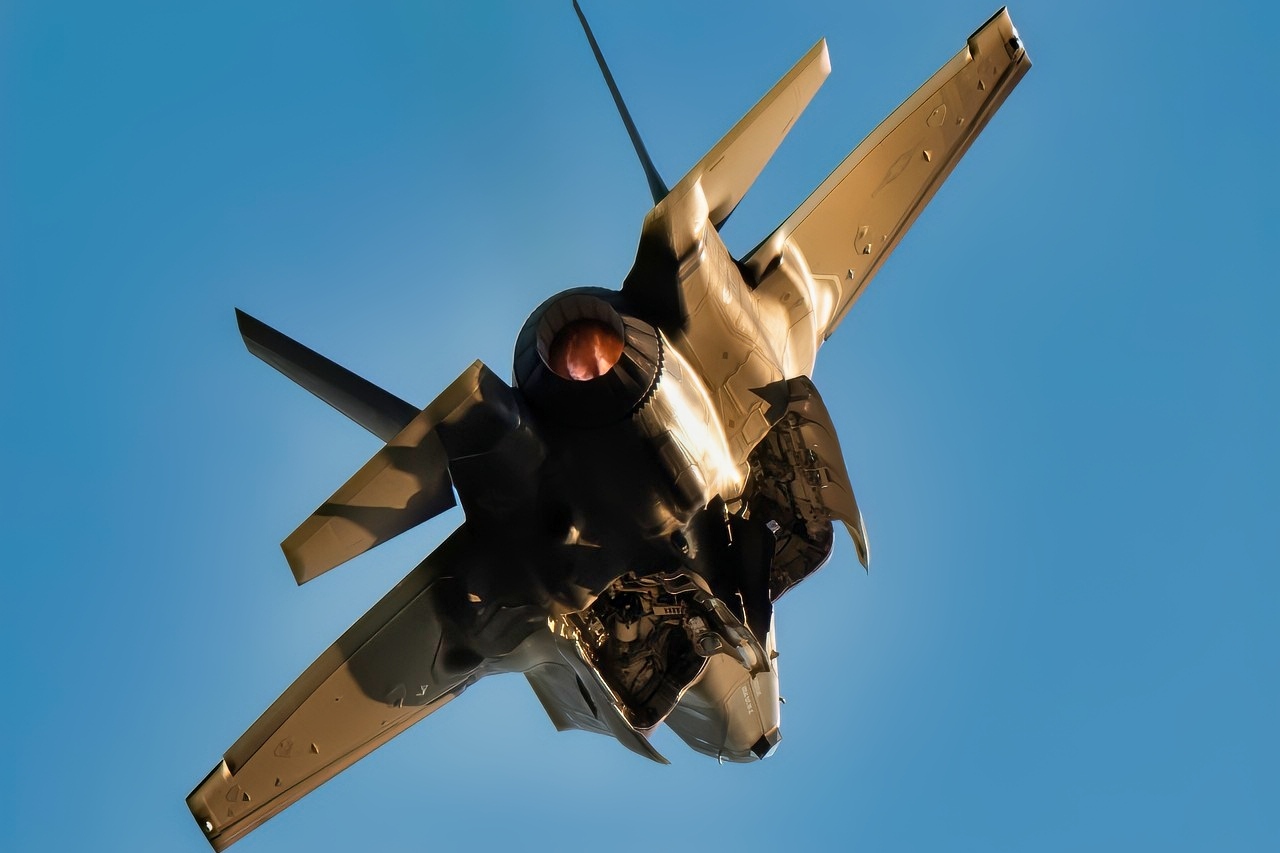
U.S. Air Force Major Kristin “BEO” Wolfe, F-35A Lightning ll Demonstration Team pilot and commander, flies during sunset over Mathers Airport, Calif., Sept. 24th, 2021, at the California Capital Airshow. The team consists of approximately 15 total Airmen to include the pilot and commander, pilot safety officers, superintendent, team chief, maintenance Airmen, aircrew flight equipment specialists, and public affairs personnel. (U.S. Air Force photo by Staff Sgt. Thomas Barley)
It’s clever just how broadly the aircraft has been embedded into Western alliances at this point.
But the political tone in Europe is beginning to change as costs related to the platform increase – and it was already pricey.
The U.S. Government Accountability Office notes that the F-35A’s cost per flight hour is approximately $33,600, which is well above the Pentagon’s target of $25,000.
It’s also several times as much as the cost per flight hour of Saab’s competitive Gripen platform.
And while acquisition costs remain politically tolerable for most European governments – the F-35 is by far the best fighter in the world, after all – sustainment is creating some friction.
In 2023, for example, a government watchdog report revealed that F-35 fighter jets were only mission capable some 55 percent of the time, due in part to maintenance delays and supply issues. Global spare parts shortages and backlogs at depots and repair facilities are also cited as reasons for F-35 readiness issues, alongside persistent delays in the international supply chain, all of which reduce availability for partner nations operating the F-35.
These financial and logistical problems matter, but they’re not necessarily the core reason several European governments are now reassessing their long-term dependence on these aircraft.
The more profound concern here is sovereignty; the F-35 is a software-driven platform whose performance depends on continuously updated, tightly controlled mission data libraries, and a mission system that routes directly through U.S. infrastructure. For European operators of the platform, all of this creates a strategic vulnerability – even though the U.S. is an ally.
A sophisticated fighter becomes far less independent when its software, diagnostics, upgrades and even some of its sensor capabilities and calibrations depend on decisions being made in Washington.

A U.S. F-35A Lightning II departs after conducting aerial refueling with a KC-10 Extender from the 908th Expeditionary Air Refueling Squadron, June 11, 2019 at an undisclosed location. The fifth generation fighter provides the pilot with comprehensive situational awareness in a sphere around the aircraft for missile and aircraft warnings, day and night vision, extended range detection and precision targeting against air and ground threats, granting the U.S. Air Force and its allies’ air superiority. (U.S. Air Force photo by Staff Sgt. Keifer Bowes)
The actions of the current U.S. President, Donald Trump, have arguably worsened that situation.
Trump has repeatedly suggested that the United States should not defend NATO members who do not meet spending targets, and has even hinted at the possibility of a U.S. withdrawal from NATO entirely.
And while it likely won’t happen, it certainly could – and that’s enough for European leaders to reconsider their options in the long term.
While a major U.S.-Europe rupture certainly seems unlikely in the near term, European defense ministries are increasingly planning for scenarios like this – and would be foolish not to.
The Big Problem for Europe
The structure of the F-35 program gives the United States leverage even without any deliberate political action.
The decisions made around how the program works weren’t necessarily designed to provide this advantage, and even if they were, it doesn’t really matter to Europe: the fact is that it exists.
The fighter’s mission systems, for example, require regular software updates delivered through the Operational Data Integrated Network (ODIN) logistics network. Neither partner nations nor contractors can independently generate or deploy these updates, making the U.S. the sole authority over mission-system modifications and improvements to the platform’s threat library.
Outside of software, spare parts – physical components for the plane – also flow through a U.S.-managed global pool of suppliers that prioritize requests based on overall program needs rather than national preference.
It means that countries are not able to stockpile their own supply of major components independently without American approval so that repairs will be made according to American priorities, not European ones.

The 187th Fighter Wing unveiled the new Alabama Air National Guard’s F-35 Lightning II fighter jet during an event at Dannelly Field, Alabama, today. The red tails are a historic tribute to the Tuskegee Red Tails, the famed WWII squadron, which lives on as the 100th Fighter Squadron within the wing. “The red tail you will see is a reminder to all that through excellence we will overcome any obstacle and threat regardless of gender, race, or religion, “ said Col. Brian Vaughn, the wing’s commander, during the ceremony. “We are all here for the same mission: to protect our nation, defend our constitution, and to form a more perfect union as the Tuskegee Airmen did.” (U.S. Air Force photo by Tech. Sgt. William Blankenship)
And then there’s the matter of weapons integration, which is also controlled by U.S. export decisions. Any new missile, bomb, targeting pod, or electronic-warfare system will require American certification and testing before it can be used.
If Washington denies permission, or even just delays integration, the aircraft cannot employ it. Period.
That has been a consistent point of debate in Europe over whether future domestically made weapons could be integrated without U.S. approval.
Europe isn’t abandoning the F-35, but its leaders are considering alternatives. Planners now accept that its strengths come with a strategic cost: long-term dependence on a U.S. s supply chain that Washington ultimately controls.
The question now is whether that cost is worth it for Europe in the long term.
About the Author:
Jack Buckby is a British author, counter-extremism researcher, and journalist based in New York who writes frequently for National Security Journal. Reporting on the U.K., Europe, and the U.S., he analyzes and understands left-wing and right-wing radicalization and reports on Western governments’ approaches to the pressing issues of today. His books and research papers explore these themes and propose pragmatic solutions to our increasingly polarized society. His latest book is The Truth Teller: RFK Jr. and the Case for a Post-Partisan Presidency.


Lonpfrb
November 30, 2025 at 12:31 pm
Europe sees that This US is unreliable. Germany and UK won’t tolerate that. France will say CDG Told you so.
Europe must take the initiative in European NATO command to send the American staff home and lead for the interests of all European people. Maga will claim they saved taxpayers money ..
There can be no influence for a country that will not uphold Article 5, especially no membership veto for USA. USAF interoperability is
They said they won’t support Article 5 so European NATO countries will take that duty and decide what security guarantees will be given to Ukraine.
We already started with Joint Expeditionary Force and Enhanced Forward Presence.
🇸🇪🇳🇴🇩🇰🇫🇮🇪🇪🇱🇻🇱🇹🇳🇱🇬🇧🇩🇪
Slava Ukraine 🇺🇦
Slava Heroyam 🇺🇦
#WeAreNATO
#vpdfo #FDJT
Herranton
December 1, 2025 at 8:52 am
Do it then. Take control of your own destiny. Your mad the USA isn’t getting involved? These things are happening IN EUROPE. The first response needs to come from Europe. But for whatever reason the USA is expected to fix it while Europe sits and watches us spend money. That isn’t sovereignty.
And now your mad at the USA? Lol…for what? Not picking up the tab YET AGAIN.
The USA is more than willing to help IF you help yourself first. But as much as I can’t stand the orange orangutan in the white house, he’s right on this one. We can’t afford to police the world anymore. And I don’t know why you would want us to in the first place.
I mean, youre not screwing the USA by dealing with your own problems. You know how dumb that sounds.
Mario Ricci
December 1, 2025 at 9:56 am
Look at those flags.
Apart from Germany and the UK only midget countries are present, mainly Ukraine neighbours. France, Italy, Spain etc are missing: ask yourselves why…
Roger Ferguson
December 5, 2025 at 9:28 am
The UK is too deeply embedded within US industry to pivot away.
Plus, no UK government will want to fall foul of any US administration, regardless of who it is. Especially right now.
There is consternation here around getting non US weapons fitted to the F35B. In service date for Meteor missile getting back til 2030s.
However, GCAP will be as independent as it gets. That’s something to look forward to.
David Collishaw
December 5, 2025 at 4:18 pm
Europe has been sold a lemon in the flying piano.
It’s not fast, agile or stealthy. It cannot fight.
It has good sensors and that’s it.