

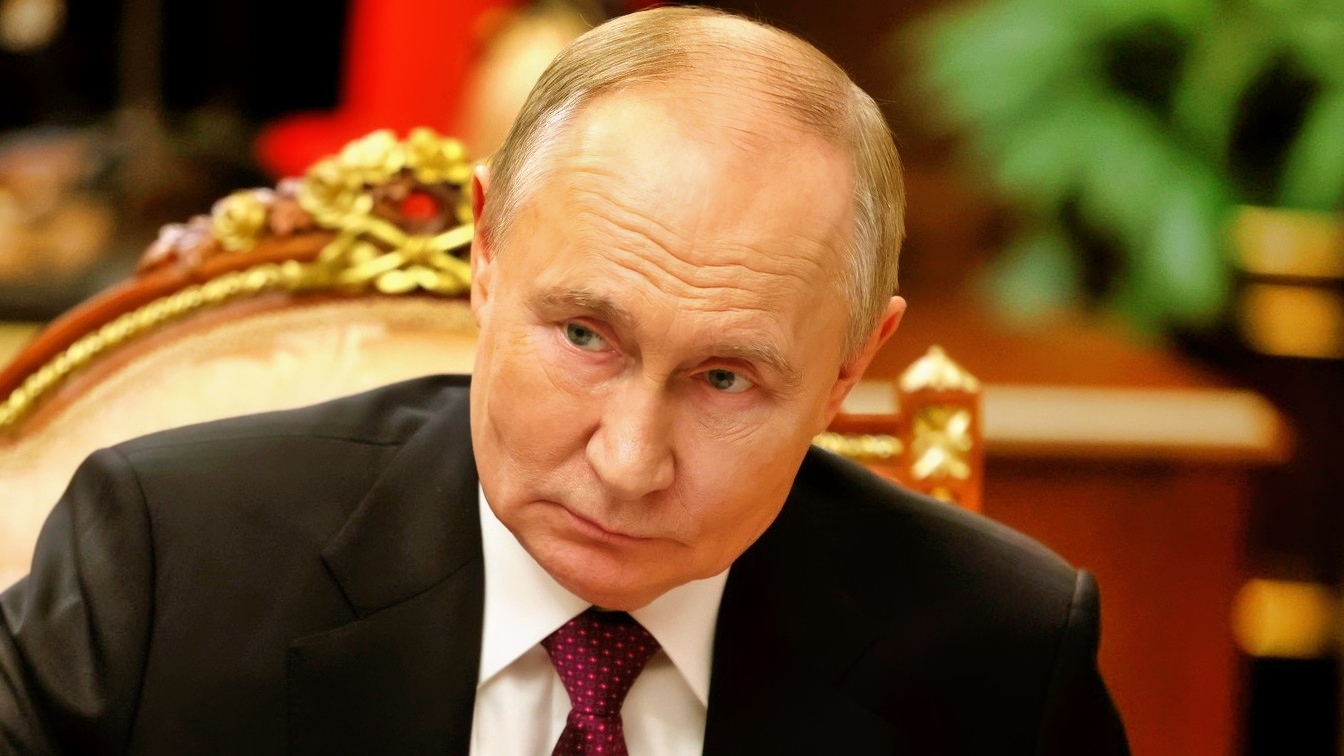
The morning of October 7th, local time, marked the 74th birthday of Russia’s President Vladimir Putin and also the start of Russia’s annual air campaign against Ukraine’s energy infrastructure.
Throughout the night, Russia launched the first of what is likely many missile attacks against Kyiv’s critical heating infrastructure, ahead of the incoming winter.

T-90M from Russia. Image Credit: Creative Commons.

T-72 Russian Tank. Image Credit: Creative Commons.
The attack utilized more than 70 missiles of various types and dozens of attack drones.
Since summer, Ukraine has braced for the inevitable winter air campaign, preparing for an especially hard winter.
Now that the campaign has begun, Kyiv is scrambling to secure as many resources as possible to keep the lights on and the heat on.
Another Large Russian Missile Attack
During the attack, a missile, possibly a Kh-101 cruise missile, struck a residential building in the town of Pryluky in the northern Chernihiv region.
The blast killed at least 24 people and injured about 50 others, children included.
Footage of the attack shows a missile impacting the apartment, subsequently collapsing the entire building and trapping the residents under the rubble. “Today, on Putin’s birthday, the Russian Army ‘presented’ him with the destruction of a residential block in Pryluky,” President Zelenskyy wrote on social media.
“The Russians know very well that they are striking ordinary cities, ordinary life. It is an absolutely deliberate choice of terror.”
It is unknown whether Russia deliberately intended to hit the residential building.
“The Ukrainian people are not going to give up, because it’s about Ukraine’s survival as a nation and as a state,” said Ukraine’s Foreign Minister, Andrii Sybiha.
He stated that Russia was resorting to terror tactics to force Ukraine to capitulate, adding that the country will not falter in the face of Moscow’s attacks.
Russia’s constant missile attacks have increasingly disrupted the lives of thousands of ordinary Ukrainian citizens.
One woman in Dnipro told local news that her auto parts workshop had been struck for the sixth time.
“The explosion happened around three in the morning. We were sleeping at home. Everyone was scared; probably the whole city heard it. We will restore the shop and continue to work,” she said.
Russia’s “Winter Campaign” Begins
Throughout the attack, Russia used roughly 70 missiles of all types, including 16 ballistic missiles, four Zircon hypersonic cruise missiles, and 47 jet-powered one-way UAVs.
The attack hit 11 regions, with Kyiv, Dnipro, Kremenchuk, and Oleksandriya most affected.
The main targets were power-generating facilities.
The attack hit the hydroelectric power plant in Kremenchuk, the Trypillya thermal power plant, multiple substations, and other unspecified targets across Ukraine.
The Russian Ministry of Defense claimed it struck “Ukrainian defense industry enterprises” aiding the production and assembly of drones.
Recently, Russia has widened the scope of its aerial campaign to include bridges.
Last night, Russian KAB glide bombs targeted the Vantovyy bridge in Zaporizhzhia City. Although it is unknown how many bombs actually hit their target, the bridge was temporarily closed.
Over the last few days, Russia has targeted major bridges across Ukraine, including the Pivnichnyi (northern) and Pivdennyi (southern) bridges in Kyiv.
While no major bridges have been destroyed, the attacks have already caused major disruptions and gridlock in Kyiv, especially during active hours.
Russia’s Foreign Ministry issued a formal warning to all foreign citizens, including diplomats, to leave Kyiv as Russia continues its major missile attacks against the Ukrainian capital.
Ukraine’s Struggle to Defend Itself
During the attack, Ukraine shot down four of the ten ballistic missiles aimed at Kyiv.
Despite this, Zelenskyy admitted the country still urgently needs air defense systems to strengthen its defenses against Russia’s more advanced missiles. “Air defense packages for us right now are a vital necessity,” he said.
Strangely, Ukraine’s air defenses struggled against regular cruise missiles, which are much easier to shoot down.
According to OSINT reports, only around 10 of the 48 Kh-101 cruise missiles were intercepted, mainly by fighter jets.
Interceptions against Kalibr cruise missiles were much higher, with the Ukrainian Air Force reporting that nine out of 12 missiles were successfully intercepted.
About half of Ukraine’s F-16 fleet, vital to the country’s air defenses, is currently unavailable for maintenance.
This may explain the unusually low interception rate of Kh-101 missiles.
Last night’s attack was likely the first of many missile attacks as part of Russia’s renewed campaign against Ukrainian infrastructure.
Unfortunately, Kyiv still lacks the air defenses needed to adequately protect its most valuable installations. In 2026, most of Ukraine’s PAC-3 interceptor missile deliveries have come from its European partners, often in small quantities.
Ukraine has also received deliveries of NASAMS air defense systems from Europe.
NASAMS is designed to intercept cruise missiles, fixed-wing aircraft, and UAVs, but not ballistic missiles.
The Patriot air defense system remains one of the few systems that can reliably intercept Russia’s ballistic missiles, and unfortunately, it is the scarcest.
About the Author: Isaac Seitz
Isaac Seitz, a Defense Columnist, graduated from Patrick Henry College’s Strategic Intelligence and National Security program. He has also studied Russian at Middlebury Language Schools and has worked as an intelligence Analyst in the private sector.


