


American Vice President JD Vance told Reuters the United States won’t budge on its demands of Iran, insisting that the country must give up its nuclear ambitions if a conclusion to the ongoing war is to be found and that Washington is not entirely certain who is in charge of the country.
With no end in sight to the seven-month war, Republicans see the price of fuel as a potential liability ahead of the midterm election next month. Although Brent crude, a global benchmark for oil prices, is lower than its peak earlier this spring after the start of military operations against Iran, prices remain elevated compared to prewar levels.
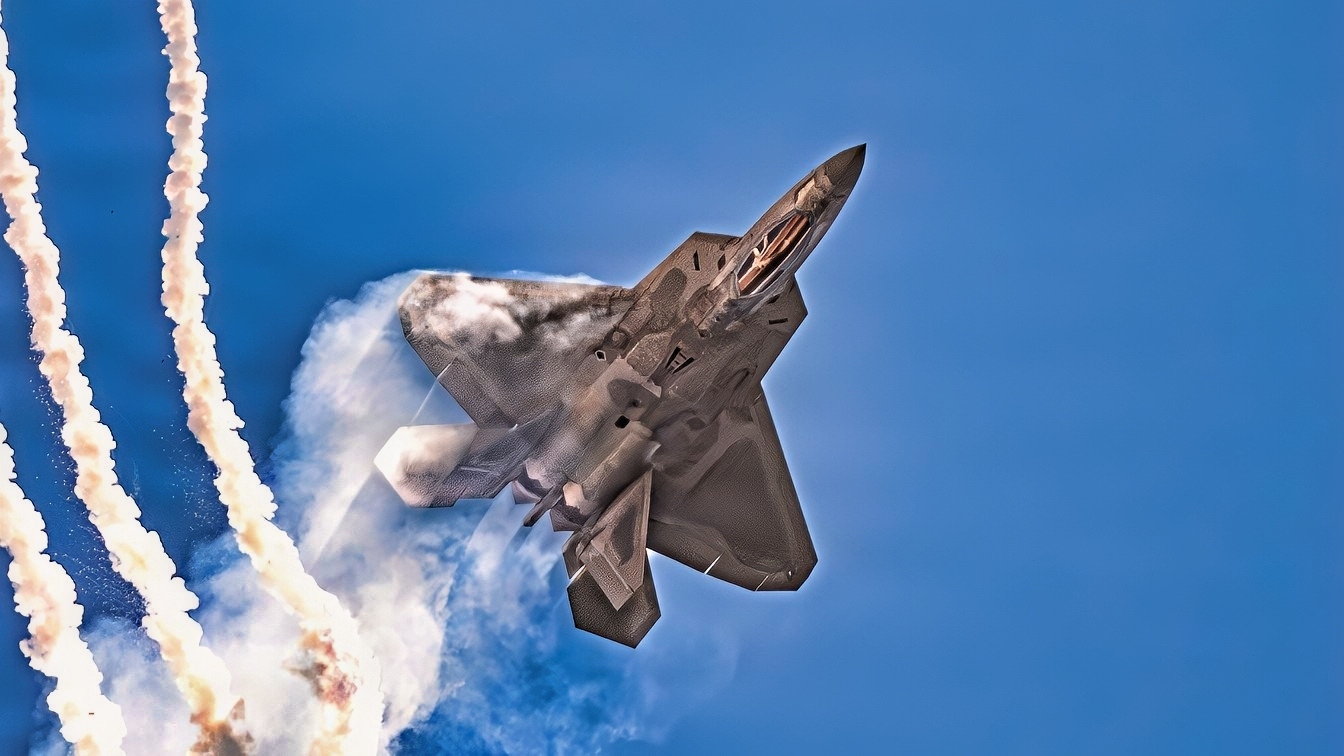
U.S. Air Force Capt. Nick “Laz” Le Tourneau, pilot and commander of the F-22 Raptor Aerial Demonstration Team, performs an aerial demonstration at Air Dot Show Tour Fort Lauderdale, Florida, May 9, 2026. Capt. Le Tourneau showcased the unmatched capabilities of the F-22 by performing a series of combat maneuvers. (U.S. Air Force photo by Staff Sgt. Mary Bowers)
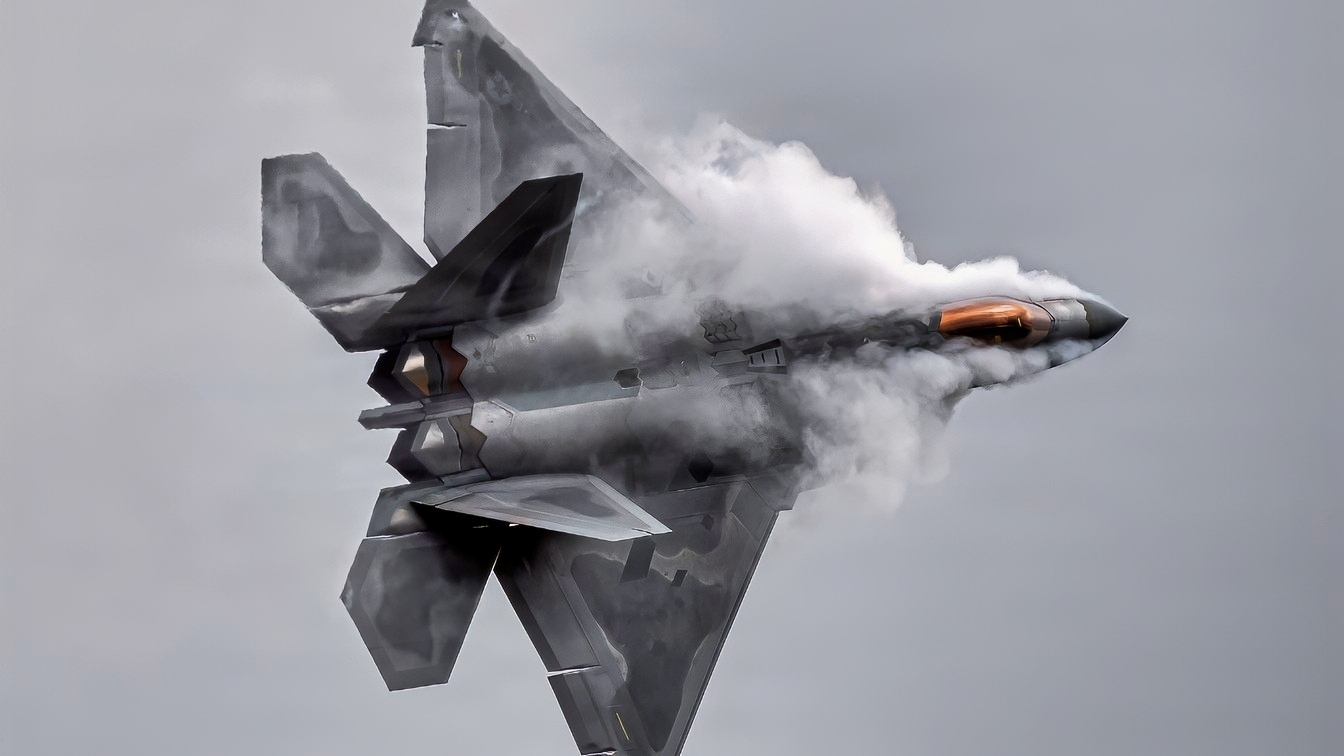
U.S. Air Force Capt. Samuel “RaZZ” Larson, F-22 Raptor Aerial Demonstration Team pilot and commander, performs at the United States Air Force Academy, Colorado Springs, CO, April 14th, 2023. The F-22 Raptor Aerial Demonstration showcases the unmatched maneuverability of the airframe by executing a series of combat maneuvers to inspire Americans and their allies, and deter foreign adversaries. (U.S. Air Force video by Staff Sgt. Michael Bowman)
No Nuclear Weapons
Speaking to reporters following an Alaska campaign event, Vance said that a precondition to any lasting agreement with Iran would require the country to forswear its pursuit of nuclear weapons and a definitive end to the country’s nuclear ambitions, both of a civilian and military nature.
“If you don’t want a nuclear weapon, then why do you need 60% enriched fuel? And if you want to show commitment to not building a nuclear weapon, don’t build highly enriched fuel. That’s a very basic threshold issue,” Vance said.
“I think if they want to show a commitment to not building a nuclear weapon, they would do something meaningful on their enrichment capacity.”
American and Iranian negotiating teams have exchanged proposals and plans to end the war multiple times. And while Vance, notionally the lead negotiator with Iran on behalf of the president, struck a provisional deal with his Iranian counterparts early in the summer, that agreement proved short-lived and unraveled soon after it was agreed upon.
It is unclear what the terms of a future agreement, if any, would include. But Vance was unequivocal about results. “We’re not going to trade words for actions,” he said.
Though Iran strenuously denies it has pursued the development of nuclear weapons, it is widely seen as disingenuous. Iran has previously enriched Uranium to 60 percent, which is significantly more enriched than would be needed for a civilian nuclear energy program and approaches the 90 percent enrichment threshold needed for weapons-grade nuclear material.
Who is Sitting at the Negotiating Table?
According to the Vice President, it is not entirely clear to whom the Iranian negotiating team in Tehran reports.
The opening salvo of Operation Epic Fury, as the ongoing campaign is known, killed Iran’s Supreme Leader Ayatollah Ali Khamenei in a massive leadership decapitation strike carried out jointly with Israel. The strikes also killed much of Iran’s senior military leadership.
But the country’s leadership structure has proven surprisingly resilient, and the strikes did not result in a loosening of Iran’s theocratic leadership, let alone a toppling of the regime. Mojtaba Khamenei, the son of Khamenei, is notionally the current Supreme Leader, but he is believed to have been severely injured in the airstrikes that killed his father.
It is unclear whether he is physically or mentally capable of making decisions for the country, or whether someone—or a group of people—is making decisions in the name of the Supreme Leader.
Further complicating matters is the Islamic Revolutionary Guard Corps, the quasi-independent military force that operates in parallel to the Iranian military, which has made decisions independently, firing on ships transiting the Strait of Hormuz on occasion and in contradiction to public agreements Iran’s political leadership has struck.
“One of the things we picked up on is it’s not totally clear how their country makes decisions,” Vance explained.
Oil Flowing Steady
Oil exports from Iran’s Gulf country neighbors have picked up significantly, even though Iran continues to attack some ships attempting to run through the Strait of Hormuz.
Recent data from Kpler, a trade intelligence platform, shows that crude oil volumes exiting the Gulf are around their prewar levels, at 18.5 million barrels per day, and will likely increase well into the end of next year — showing that a negotiated settlement to the conflict is no longer a necessary precondition to resuming oil flows and stabilizing global energy prices.
The United States Navy has seemingly parried Iranian thrusts at the Strait with relative, if not total, impunity.
Though Iran had mined the Strait, demining efforts as well as a concerted campaign to eliminate Iran’s ability to fire on shipping vessels have severely blunted the Islamic theocracy’s ability to stopper that vital maritime bottleneck and exert severe economic pressure on the world.
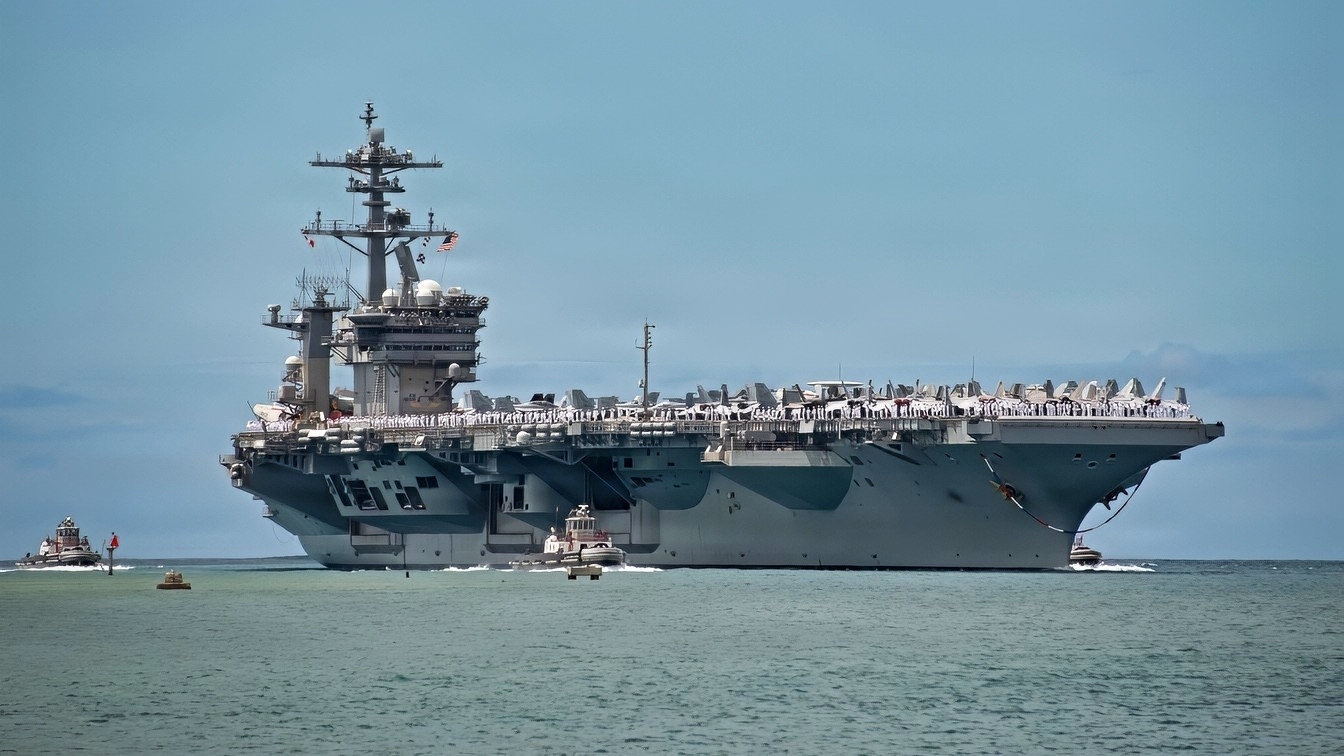
Nimitz-class aircraft carrier USS Theodore Roosevelt (CVN 71) arrives at Joint Base Pearl Harbor-Hickam, Hawaii, to participate in Exercise Rim of the Pacific 2026, June 23, 2026. Thirty-one nations, more than 36 surface ships, 5 submarines, 15 national land forces, more than 206 aircraft and 25,000 personnel are participating in RIMPAC in and around the Hawaiian Islands, June 24 to July 31. The world’s largest international maritime exercise, RIMPAC provides a unique training opportunity while fostering and sustaining cooperative relationships among participants critical to ensuring the safety of sea lanes and security on the world’s oceans. RIMPAC 2026 is the 30th exercise in the series that began in 1971. (U.S. Navy photo by Mass Communication Specialist 1st Class Erik Melgar)
Ship-to-ship oil transfers just outside the Strait, and, in tandem, the Saudi East-West Pipeline, which delivers oil by land to the country’s Yanbu port on the Red Sea, bypassing the Strait of Hormuz entirely, have proven viable, if incomplete, alternatives to Hormuz. The G7 countries also decided to collectively release 100 million barrels of oil to ensure supply security and cool oil prices.
Together, these measures have prevented the massive, sustained oil price spikes many forecasters predicted in the early days of the conflict.
Still, it is not clear how long those measures will remain viable.
About the Author: Caleb Larson
Caleb Larson is an American multiformat journalist based in Berlin, Germany. His work covers the intersection of conflict and society, focusing on American foreign policy and European security. He has reported from Germany, Russia, and the United States. Most recently, he covered the war in Ukraine, reporting extensively on the shifting battle lines in Donbas and writing about its civilian and humanitarian toll. Previously, he worked as a Defense Reporter for POLITICO Europe. You can follow his latest work on X.


