


Pete Hegseth has served as Secretary of Defense—or, as he calls it, “Secretary of War”—since Donald Trump began his second term.
In his first term, however, Trump had much more turnover at the Pentagon.
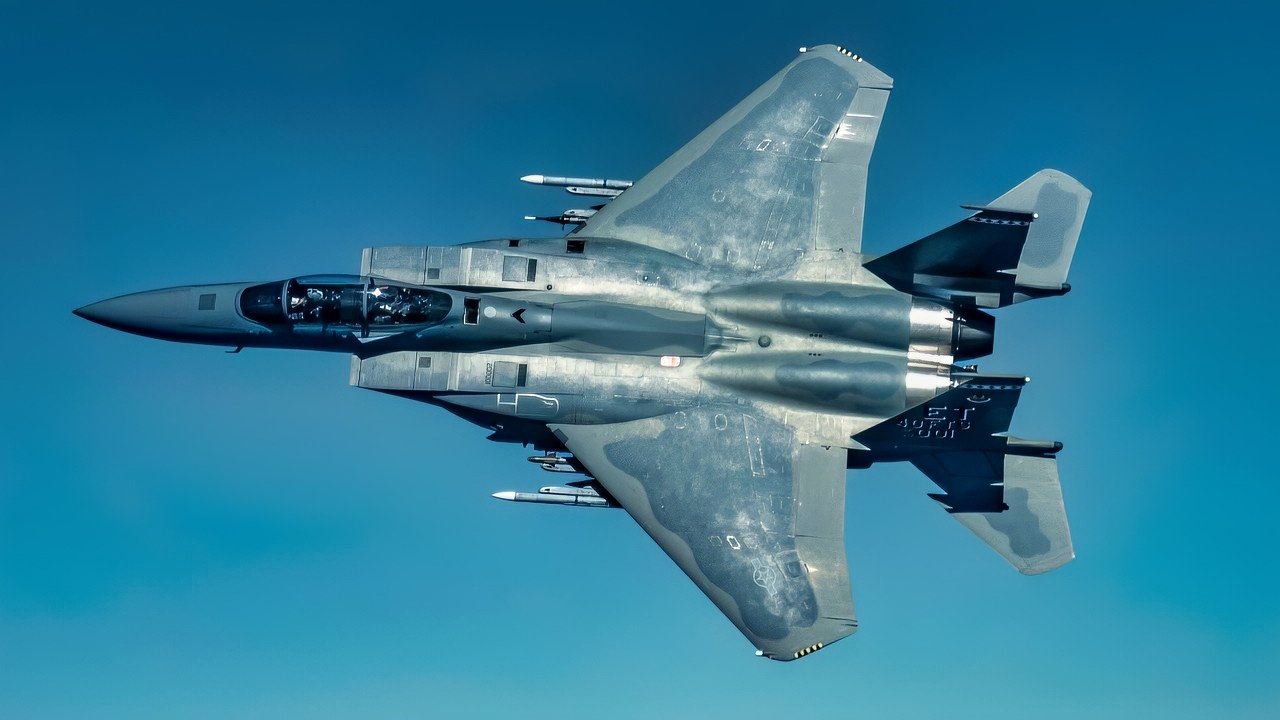
U.S. Air Force Lt. Col. Richard Turner, 40th Flight Test Squadron commander flies 40 FLTS Senior Enlisted Leader, MSgt Tristan McIntire during a test sortie in the F-15EX Eagle II over the Gulf of Mexico on Jun. 14, 2022. Assigned to the 96th Test Wing at Eglin Air Force Base, Fla., the F-15EX Eagle II is the Air Force’s newest 4th generation fighter being tested at the 40 FLTS. (U.S. Air Force photo by Tech. Sgt. John McRell)
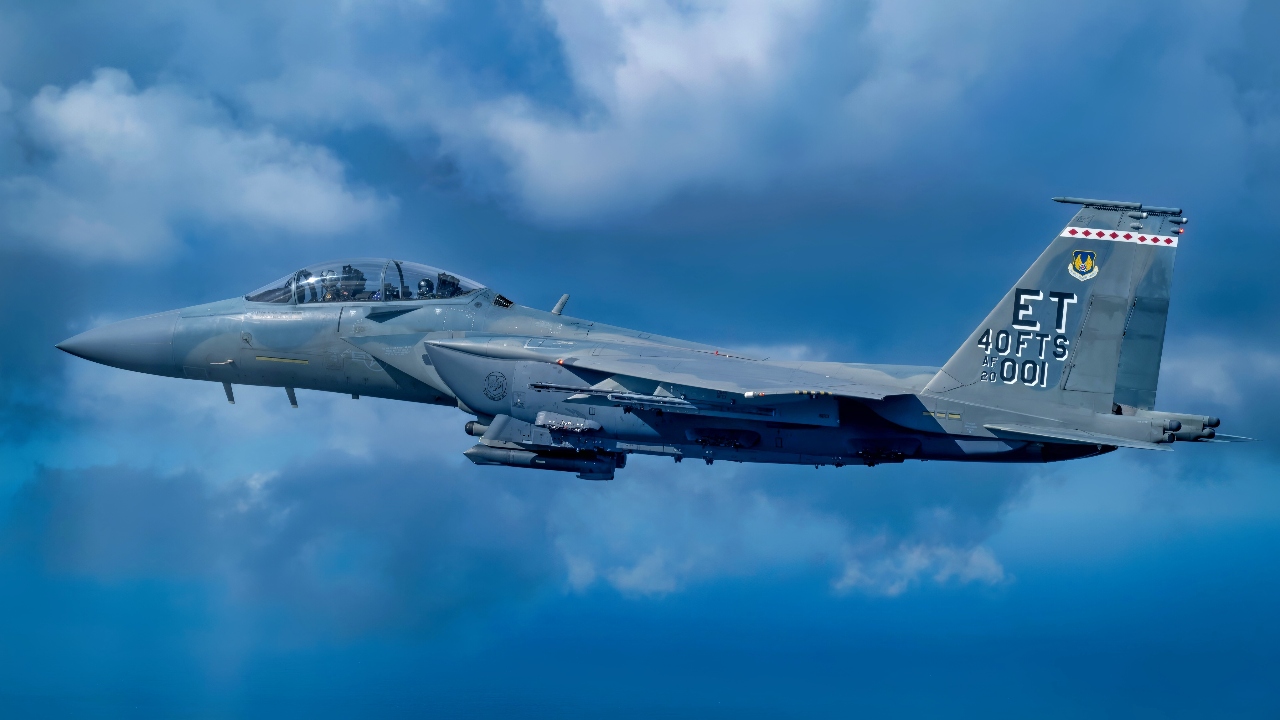
A U.S. Air Force F-15EX Eagle II fighter jet assigned to Eglin Air Force Base, Florida, flies near Jacksonville, Florida, Nov. 2, 2024. Airmen from the 40th Flight Test Squadron and 96th Aircraft Maintenance Unit supported a flyover for the annual Florida-Georgia college football game. (U.S. Air Force photo by Staff Sgt. Blake Wiles)
James Mattis was the secretary for the first two years, followed by multiple acting secretaries.
Mark Esper, however, was the only post-Mattis Defense Secretary in Trump’s first term to gain confirmation, although Trump fired Esper days after the 2020 election for refusing to go along with Trump’s lies about having lost that election.
The following January, two days before the January 6 riot, Esper joined the nine other living Defense Secretaries in writing a Washington Post op-ed, declaring the election over and that “the time for questioning the results has passed.”
So that likely hasn’t earned Esper a spot on Trump’s Christmas card list, nor will some new comments from Esper about Trump’s Iran adventure.
Esper vs. Trump
According to CNBC, Esper, at a conference this week, expressed his worry that the war in Iran could go on well into next year, if not for years after that, and that the war had become a distraction from China, which he sees as the greatest adversary of the U.S.
Esper made these comments during a panel discussion at the LSEG and Eurasia Group’s GZERO Summit in London.
Later, on the sidelines of the event, Esper told CNBC that he does not see the war ending in the “foreseeable future” and that the current status quo, in which the U.S. maintains a blockade, could continue. “Occasional outbursts from either side” could continue for a long time.
On the panel, CNBC reported, the former Pentagon chief said he thinks Trump will need to find a resolution that returns the Strait of Hormuz to the pre-war status quo and reaches an agreement on Iran’s nuclear program that is better than the Obama-era JCPOA.
“I think that’s going to be very difficult too,” Esper said.
Esper’s View on Iran
According to CNBC, Esper, during his time in the top job at the Pentagon between July 2019 and November 2020, favored the “economic strangulation” of Iran.
The killing of IRGC leader and Iranian Major General Qassem Soleimani, in January of 2020, took place during Esper’s time as Secretary of Defense, and Esper had warned the day before that the U.S. might take preemptive action against activities by Iran-backed militias in Iraq.
In July, Esper said in a television interview that the Iranians were pushing to get as much as they could in peace negotiations before the November midterm elections, assuming full-scale military conflict would pick up again after the election.
“His hand will become freer after the election for sure, and the Iranians know that,” Esper said of the president.
Trump himself has said in recent weeks that he would likely resume military action against Iran once the election is over.
However, a series of reports this week said Trump is also considering launching an attack before November to deliver a victory and bring down gas prices.
Trump had threatened to “annihilate” Iran in a speech before the UN General Assembly late last month.
However, Trump explicitly promised in a social media post on Thursday afternoon that, in fact, he would not attack Iran again before the midterm elections.
He added that the U.S. and Iran are “having productive discussions.” He added that the U.S. blockade near the Strait of Hormuz will “remain in full force and effect.”
Focus on China Instead
But Esper’s major concern, as expressed in the CNBC interview, was that the Iran war served as a distraction from China, which he called America’s “greatest adversary.”
China, Esper added, is “the lurking threat out there that we’re not paying attention to,” while the United States focuses on Iran and the Middle East and Europe focuses on Russia.
He called for the U.S. to team up with its allies in Europe and Asia to “focus” on China through economic and diplomatic means, not just military.
About the Author: Stephen Silver
Stephen Silver is an award-winning journalist, essayist, and film critic, and contributor to the Philadelphia Inquirer, the Jewish Telegraphic Agency, Broad Street Review, and Splice Today. The co-founder of the Philadelphia Film Critics Circle, Stephen lives in suburban Philadelphia with his wife and two sons. For over a decade, Stephen has written thousands of articles on politics, national security, technology, and the economy. Follow him on X (formerly Twitter) at @StephenSilver, and subscribe to his Substack newsletter.


