


Key Points and Summary – Block 4 and Tech Refresh 3 are critical upgrades meant to keep the F-35 relevant for decades.
-Even with delays, the software drop matters because each release builds on the last, expanding sensors, targeting, networking, and computing.
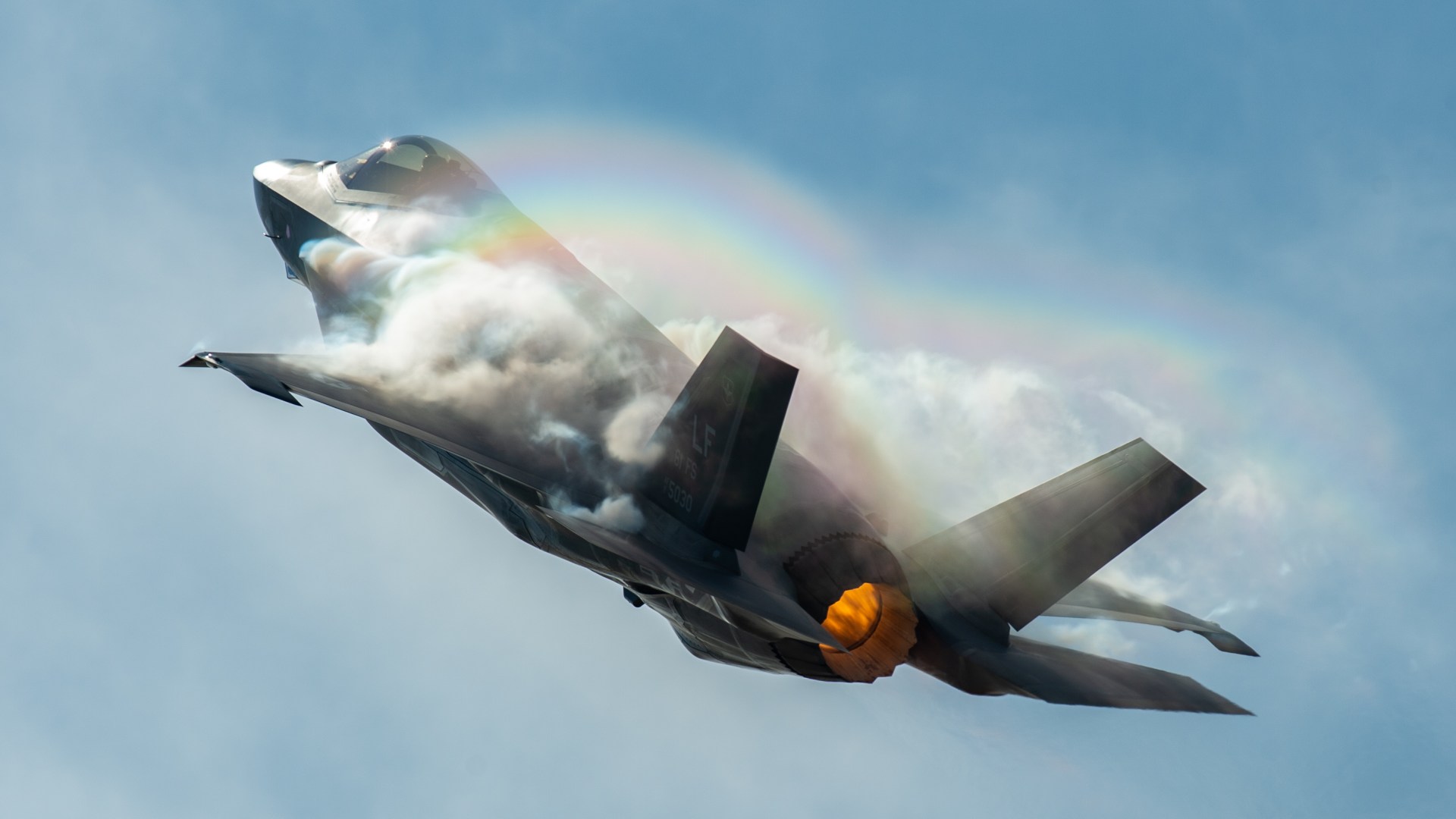
Capt. Andrew “Dojo” Olson, F-35 Heritage Flight Team pilot and commander performs a vertical climb in an F-35A Lightning II during the Bell Fort Worth Alliance Air Show Oct. 14, 2018, in Fort Worth, Texas. The F-35A Lightning II’s F-135 single-engine contains 43,000 pounds of thrust. (U.S. Air Force photo by Senior Airman Alexander Cook)
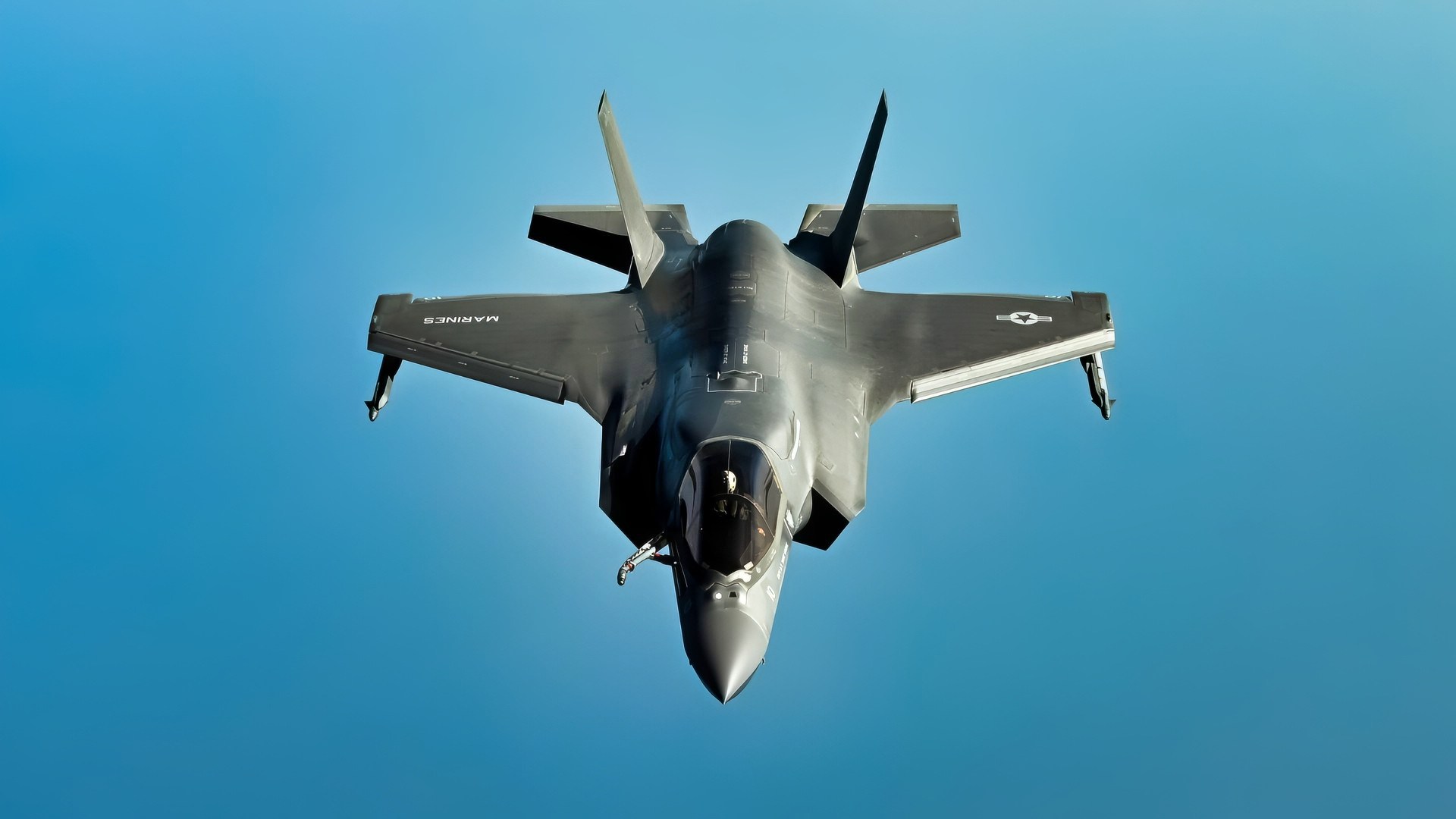
A U.S. Marine Corps F-35B Lightning II resumes a combat air patrol after aerial refueling with a U.S. Air Force KC-135 Stratotanker over the U.S. Central Command area of responsibility, Sept. 19, 2025. More than a fighter jet, the F-35’s ability to collect, analyze and share data, is a powerful force multiplier that enhances all airborne, surface and ground-based assets in the battlespace. (U.S. Air Force photo by Senior Airman Keegan Putman)
-Block 4 is meant to unlock new weapons: AIM-260 JATM for longer-range air combat, AARGM-ER for standoff suppression of enemy air defenses, and the GBU-53/B Stormbreaker with a tri-mode seeker and in-flight retargeting.
-It also adds the Sidekick rack, raising internal missile capacity from four to six on some variants, supporting operations into the 2070s and preserving stealth while adding resilience and punch.
Stormbreaker, AIM-260, AARGM-ER: The Weapons Block 4 Is Built to Unlock
The anticipated arrival of the F-35s’ Block 4 software upgrade will bring new targeting capability, sensing range, networking, and lethality in a manner that could be paradigm-changing.
Yet, arrival delays could lead one to question the utility of actually completing or finalizing the upgrade across the entire fleet.
However, even if the Block 4 Tech Refresh 3 improvements arrive later than hoped, they remain extremely critical to the platform’s future.
Software drops are iterative, meaning each new integrated package builds upon and advances the previous one; therefore, completing the Block 4 drop is critical to the future stability and performance of the F-35.
The Pentagon hopes to fly its F-35 variants well into the 2070s, something that seems realistic given the extent to which new software, sensing, weapons, and computing enhancements can ensure the platform remains relevant, or even superior, to evolving rival threats.
F-35 Software Drops
Incremental software drops for the F-35 have been a defining element of the 5th-generation aircraft’s maturation and modernization over several decades. Each new software configuration has progressively expanded the jet’s weapons envelope, sensing capabilities, and overall performance.

U.S. Air Force Airman 1st Class Jacob Taylor, a dedicated crew chief assigned to the 48th Fighter Wing, communicates with an F-35 Lightning II pilot,during Point Blank 22-3, at Royal Air Force Lakenheath, England, June 23, 2022. Point Blank is a recurring joint training exercise designed to enhance tactical proficiency and interoperability with NATO allies and partners. (U.S. Air Force photo by Senior Airman Koby I. Saunders)
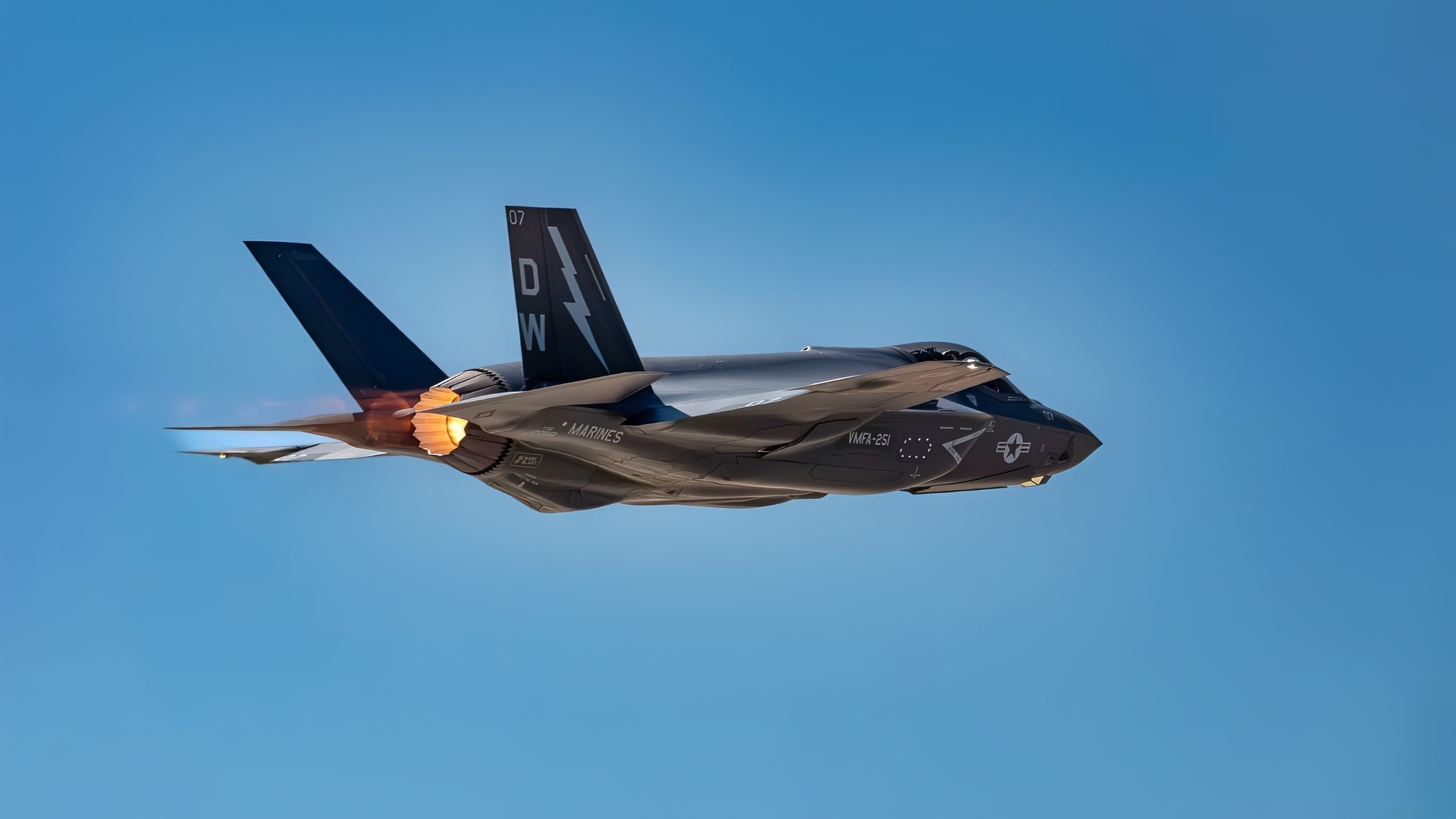
A U.S. Marine Corps F-35C Lightning II assigned to Marine Fighter Attack Squadron 251 (VMFA-251), Marine Corps Air Station Cherry Point, North Carolina, takes off for a mission in support of Red Flag-Nellis Marine Fighter Attack Squadron 251 (VMFA-251), 2nd Marine Aircraft Wing, Marine Corps Air Station Cherry Point, North Carolina 25-3 from Nellis Air Force Base, Nevada, July 22, 2025. Red Flag, strengthens join-force readiness through integration in realistic combat scenarios, enhancing interoperability and rapid-response capabilities. (U.S. Air Force photo by William R. Lewis)
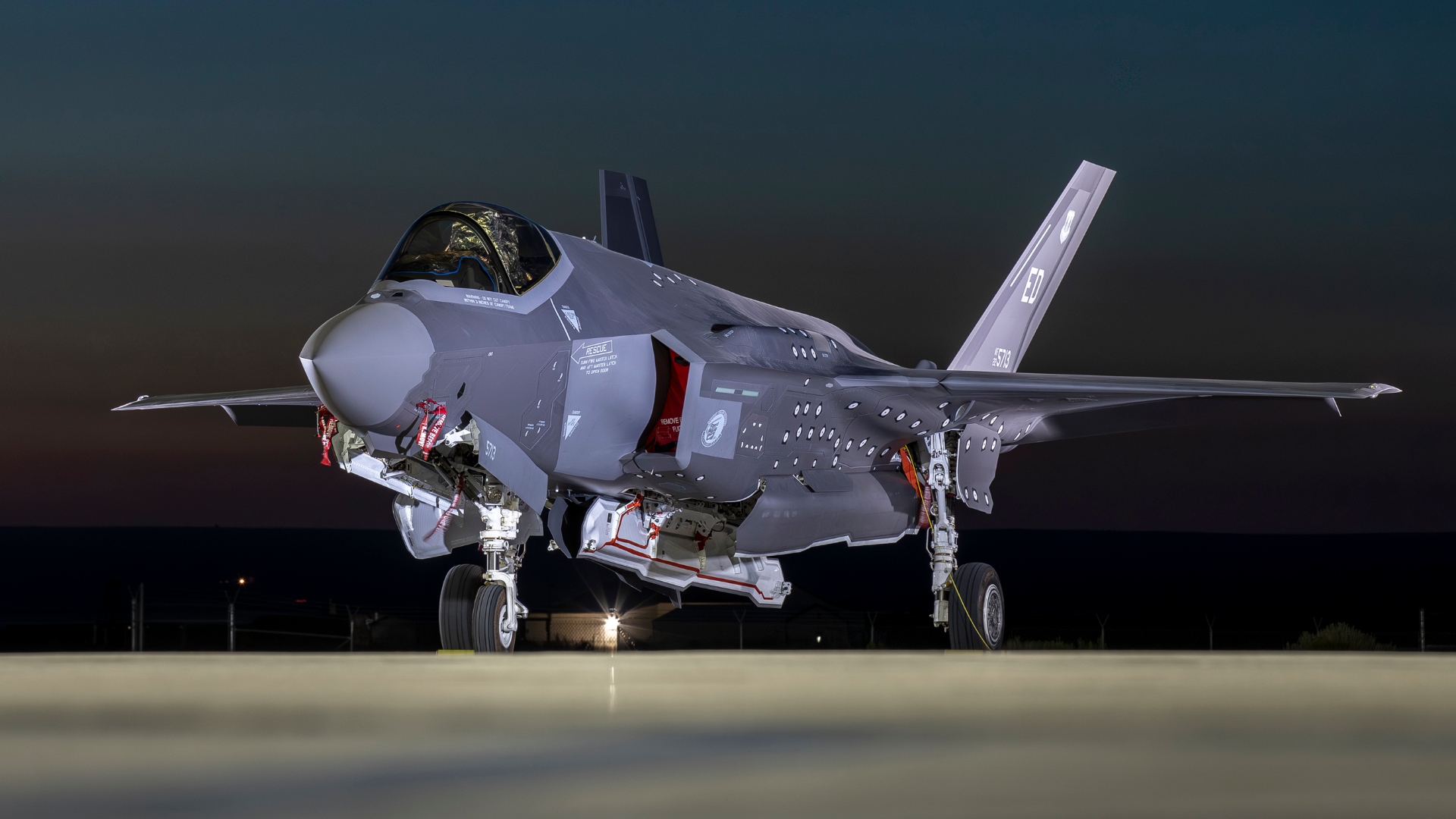
The 461st FLTS, F-35 Integrated Test Force, at Edwards Air Force Base in California received a newly instrumented F-35A aircraft. The unique airframe will boost flight and mission sciences testing for the warfighter at a critical time during developmental test. “This new aircraft arrives at a crucial time, supporting intensive testing of TR-3 software upgrades and next-generation weapons integration.” says Lt. Col. Daniel Prudhomme, F-35 ITF director. “As the world’s only F-35A capable of evaluating both mission systems and flight sciences, this new asset is key for rapidly fielding advanced capabilities to the warfighter.” (Courtesy photo)
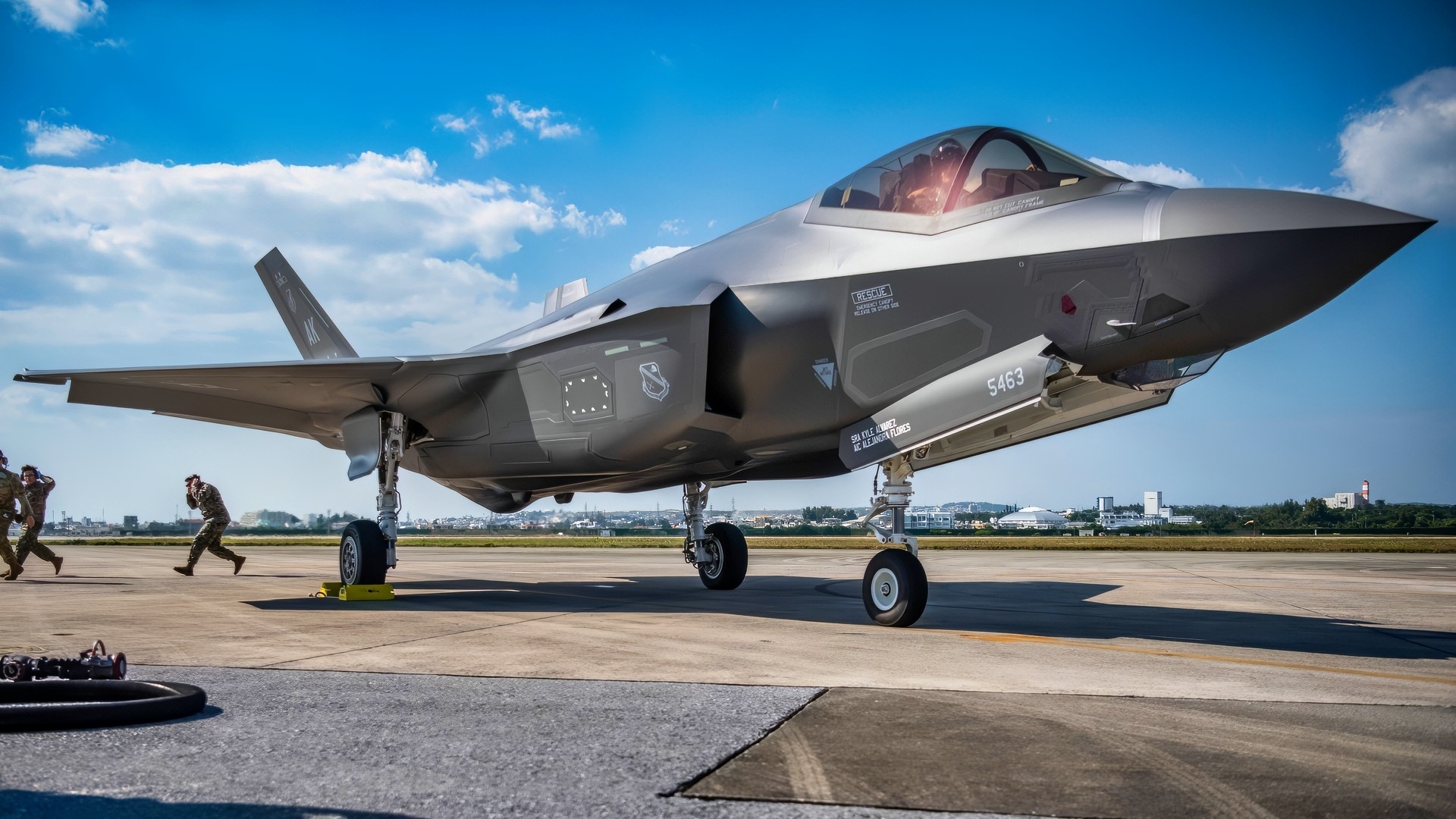
A U.S. Airman and two U.S. Marines support an F-35A Lightning II during joint hot pit refueling training at Kadena Air Base, Japan, March 10, 2022. Hot pit refueling uses a single-point refuel pump, which allows an aircraft to be rapidly refueled immediately after landing, while the engine is running. This cuts down on response time and ensures the mission can be completed anytime, anywhere. (U.S. Air Force photo by Airman 1st Class Anna Nolte)
Yet the most recent, and highly critical, Block 4 software upgrade could almost redefine the platform’s capabilities.
The success and implementation of Block 4 hinge on the continued production of a technological upgrade to the F-35, referred to as Tech-Refresh 3, which introduces new generations of computer processing power into the jet. Over the years, new software “drops” have enabled the F-35 to fire new weapons. Block 4 in particular enables the F-35 to fire weapons such as the new ultra-high-tech, long-range AIM-260 Joint Advanced Tactical Missile.
This air-to-air and air-to-ground attack weapon is more precise, less detectable, more lethal, and has a longer range than the existing AIM-120 AMRAAM, as it was engineered specifically to address the changing threat equation.
Many details of the AIM-260 are not publicly available for security reasons, yet its arrival could prove critical to the continued relevance of the F-35.
As has been the case throughout the multi-year trajectory of the F-35, software drops, adaptations, interfaces, and fire control specs are needed to accommodate new generations of weapons as they appear, so a delay in integrating Block 4 means the AIM-260 simply will not fire from the F-35.
Stormbreaker & AARGM-ER
Block 4 also enables the F-35 to fire the AGM-88G Advanced Anti-Radiation Guided Missile – ER, a significant air-attack weapon engineered to identify and destroy ground-based enemy air defenses emitting an electronic signature.
The ER, or extended-range, component of this is highly significant, as it enables a manned fighter jet to target and attack air defenses from a safer standoff range.
The most significant impact of Block 4, however, likely pertains to a critically important weapon known as the Stormbreaker, a guided air-dropped bomb capable of tracking and destroying targets at ranges up to 40 nautical miles.
In development for many years by Raytheon, the Stormbreaker incorporates a now-famous “tri-mode seeker,” which enables RF, laser, or all-weather millimeter-wave guidance and targeting.
The weapon is also engineered with a two-way data link enabling retargeting and in-flight adjustments. Tactically speaking, the GBU-53/B Stormbreaker can track a moving target through fog or weather obscurants from great distances and adjust course as needed.
This much-anticipated weapon will greatly expand the F-35’s attack capabilities in dynamic, modern threat environments.
Block 4 also increases the overall size of the weapons arsenal with which the F-35A and F-35C can fly by adding a “Sidekick” weapons rack, expanding the jets’ internal weapons-carrying capacity from four to six missiles.
About the Author: Kris Osborn
Kris Osborn is the President of Warrior Maven – Center for Military Modernization. Osborn previously served at the Pentagon as a highly qualified expert in the Office of the Assistant Secretary of the Army—Acquisition, Logistics & Technology. Osborn has also worked as an anchor and on-air military specialist at national TV networks. He has appeared as a guest military expert on Fox News, MSNBC, The Military Channel, and The History Channel. He also has a Masters Degree in Comparative Literature from Columbia University.


