

Oil shipments through the embattled Strait of Hormuz appear to be increasing even as Iran insists it has full control over the waterway, as Gulf producers now use a nightly convoy organized and protected by the U.S. military and vessels sail without tracking signals.
While the current situation appears to be unsustainable, with Iran threatening to escalate strikes, a combination of methods, including ship-to-ship transfers, is helping keep millions of barrels moving out of the strait and onto world markets.
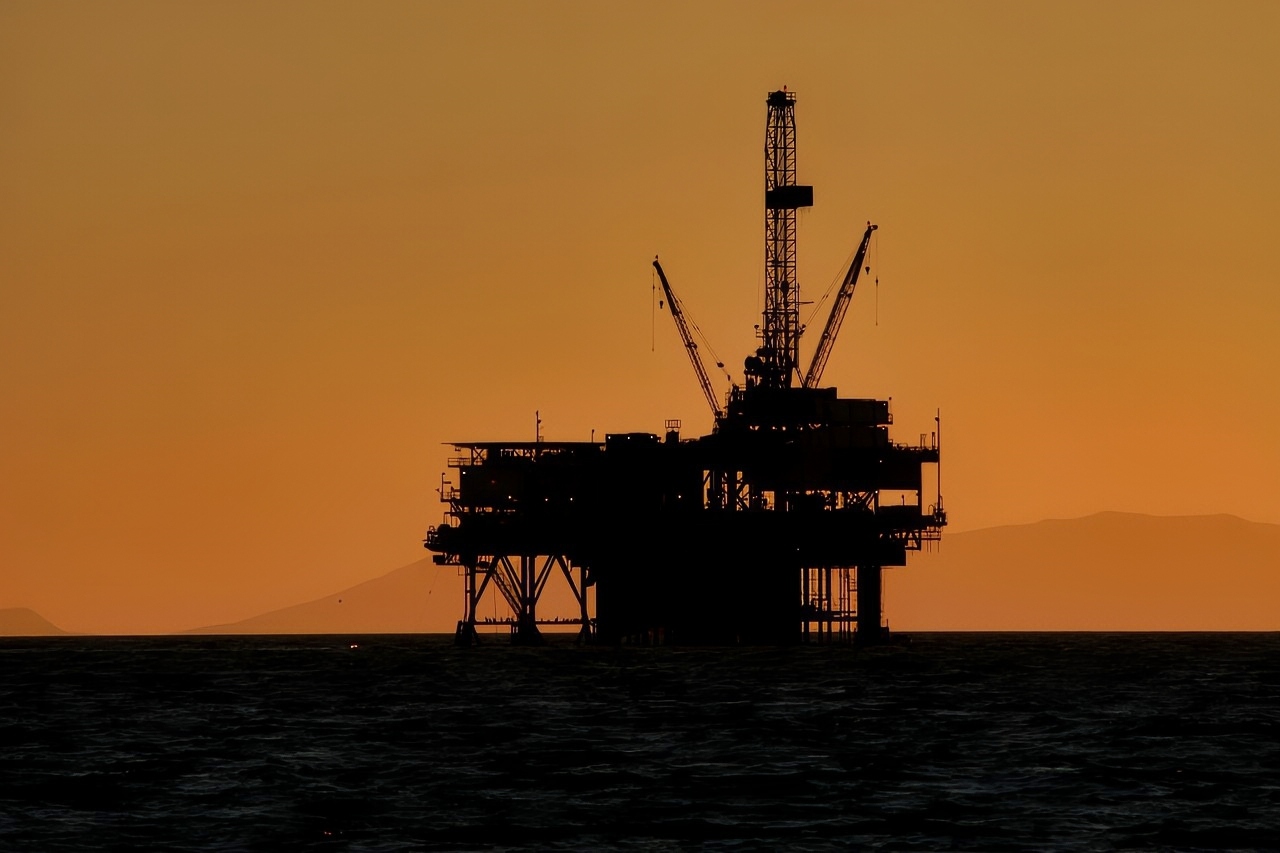
Oil Platform. Image Credit: Creative Commons.

Generic Oil Tanker Image. Image Credit: Creative Commons.
Oil Is Moving Again – For Now
Importantly, the recovery is far from a return to normal, but it does prove that the U.S. military and partners in the Gulf are helping keep oil moving even as Iran uses every military capability at its disposal to disrupt the global economy.
Enough crude now appears to be escaping the Persian Gulf to help prevent the severe global shortage that was feared when Iran began restricting the waterway earlier in the year.
Saudi Arabia, the United Arab Emirates, Iraq, Kuwait, and Qatar are all finding ways to move supplies, even as Iran escalates and even as Yemen’s Houthis disrupt shipments through the Bab el-Mandeb Strait.
The latest U.S. figures suggest the recovery has accelerated significantly in August.
On Friday, August 21, U.S. Energy Secretary Chris Wright said more than 15 million barrels of oil and petroleum products had moved through Hormuz on Tuesday, August 18, with assistance from the U.S. military.
He said that the seven-day average had risen above 8 million barrels per day, compared to an average of around 20 million barrels per day before the war.
Those figures, however, are disputed. Independent shipping data shows a different story, and claims made by Wright and the Trump administration are difficult to fully confirm.
Kpler data suggests that roughly five million barrels per day have recently been moving through Hormuz, and other satellite tracking analysts have indicated that the number of ships moving through the Strait of Hormuz doesn’t match Washington’s claims.
The discrepancy is also complicated by ships switching off their Automatic Identification System (AIS) transponders while crossing the strait, meaning some vessels cannot be observed through regular tracking data.
But even Kpler’s visible data does show substantial movement.
During the week ending Friday, August 21, the firm recorded 103 commodity vessels entering the Strait of Hormuz and 89 leaving.
Sixteen vessels also crossed on Friday, followed by 13 on Saturday and another four on Sunday, with tankers accounting for 45% of the traffic recorded during the week.
It means that while Hormuz remains severely disrupted, it is no longer functioning as if Iran is blocking traffic, oil is moving as a result of an American convoy and an urgent need to keep the global economy moving.
The American Secret Corridor
The U.S. convoy is more sophisticated than simply escorting tankers through Hormuz with U.S. warships.
Two U.S. officials told Axios on August 19 that a task force operating from Fort Bragg, North Carolina, is coordinating the movement of as many as 20 tankers each night through a southern channel close to Oman, including empty vessels entering the Gulf to collect oil.
The operation came after a roughly two-week American military campaign that struck Iranian radars and maritime surveillance systems.
While that campaign failed to bring Iran back to the negotiating table, it did make it possible to establish the new route and protect ships moving through the nightly convoy.
On Friday, August 21, U.S. officials also said that the operation had expanded further, with three sources telling Axios that roughly 40 tankers moved into or out of Hormuz through the southern deep-water channel – a route that Iran says is unauthorized.
About 16 million barrels of oil are said to have left the Gulf that night. However, the figures cannot be independently verified and are substantially higher than commercial ship-tracking data suggests.
Other Methods
But that’s not the only method. Gulf producers are also using ship-to-ship transfers outside of the most dangerous waters.
Chinese state-owned shipping companies have largely avoided Hormuz since late July, and are instead relying on cargoes being transferred offshore near Fujairah and Oman to vessels willing to make the dangerous crossing.
Traders also face a powerful financial incentive to take that risk. TotalEnergies CEO Patrick Pouyanne explained during an energy conference in Stavanger, Norway, on Monday, August 24, that oil trapped inside the Gulf is being sold at unusually steep discounts because getting it through Hormuz has become so difficult.
Iraqi and Qatari crude that would ordinarily sell much closer to international prices can now be bought for as little as $50 to $60 per barrel, even as Brent crude trades above $90.
That creates an opportunity and an incentive for companies willing to accept that danger and travel through the Strait of Hormuz, taking advantage of the U.S. convoy.
For now, it means that oil is moving – but there’s no telling what happens next. Without a lasting deal, the global oil trade is likely to see periods of uncertainty, price volatility, convoys, protected routes, and alternative supply routes.
About the Author: Jack Buckby
Jack Buckby is a British researcher and analyst specializing in defense and national security, based in New York. His work focuses on military capability, procurement, and strategic competition, producing and editing analysis for policy and defense audiences. He brings extensive editorial experience, with a career output spanning over 1,000 articles at 19FortyFive and National Security Journal, and has previously authored books and papers on extremism and deradicalization.


