


Summary and Key Points: The YF-23 Black Widow II remains the most debated “what-if” in aviation history, not for its specs, but for its philosophy.
-While the F-22 Raptor offered an evolutionary path for the Air Force, the YF-23 was a sixth-generation concept born thirty years too early.

YF-23 Black Widow II July 2025 National Security Journal
-It prioritized stealth and speed over dogfighting maneuverability, assuming a networked battlespace that didn’t yet exist in 1991.
-Dr. Andrew Latham argues that rejecting the YF-23 was a deferral of inevitable change—a decision that now haunts the NGAD program as the U.S. finally faces the “uncomfortable tradeoffs” the Black Widow first signaled.
–National Security Journal visited both remaining YF-23 fighters on display at various museums. We present photos from those visits last year.
Why the YF-23 Black Widow II was Actually a 6th-Gen Fighter in a 4th-Gen World
For thirty years, the YF-23 Black Widow II has lingered in American defense writing as an unresolved grievance.
The argument is familiar and endlessly recycled. The aircraft was widely seen as sleeker, harder to detect, and oriented toward a future style of air combat rather than the style of the moment. From that point of departure emerged the standard lament: the Air Force chose comfort over vision, selecting the platform that performed best on the metrics of the moment rather than the needs of the future.

YF-23 photo from National Security Journal.

YF-23 Back End. Image by Harry J. Kazianis/National Security Journal. Taken back in July 2025 at USAF Museum.
That reading is emotionally satisfying, but analytically thin. It reduces one of the most consequential procurement decisions of the post–Cold War era to a matter of taste.
The more revealing question is why the YF-23 continues to provoke debate long after its competitors entered service and then quietly aged. The reason is that the YF-23 was never just competing in a fly-off. It brought with it a philosophy of air superiority that clashed with the Air Force’s approach to force structure, long-term global deployments and the nature of decisive airpower. What was rejected was more than an airframe, it was a way of thinking about future air warfare.
An Aircraft Built Around a Different Idea of Air Dominance
The YF-23 is best understood as an aircraft designed around a quiet but consequential shift in how aerial combat was expected to unfold. Its defining features were not aimed at winning within the traditional grammar of fighter aviation.
They pointed toward dominance achieved before contact, rather than superiority asserted through maneuver once contact occurred. Speed, range, and low observability were treated less as enhancements to a fighter’s dogfighting toolkit than as the conditions that made such combat irrelevant in the first place.
This reflected an assumption that control of the battlespace would hinge on who detected whom first and who could strike without revealing position. The aircraft’s design and propulsion choices prioritized sustained presence in contested airspace over close-in flexibility. Engagement was assumed to occur at a distance, with survivability flowing from denial of targeting opportunities rather than from the ability to out-turn an opponent.

YF-23A Black Widow Outside. Taken by Harry J. Kazianis for National Security Journal on August 16, 2025.

YF-23A Side View Western Museum of Flight. Image by National Security Journal.
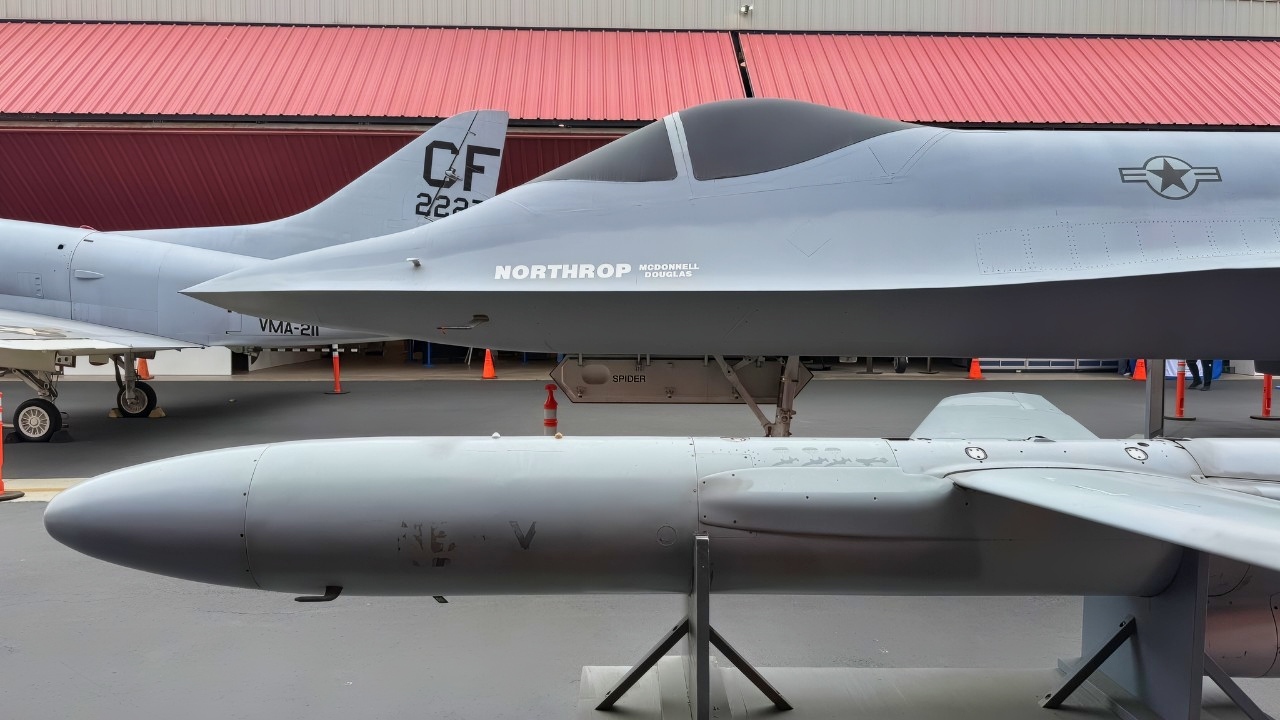
YF-23A Black Widow II Stealth Fighter in Torrance
Flying Blind: Sixth-Generation Assumptions Without Sixth-Generation Support
The fatal flaw of the YF-23 was not that it aimed at the wrong future, but that it arrived there too early. It embodied assumptions about air combat that the military had not yet built the systems, concepts, or habits needed to sustain.
It subscribed to concepts later associated with sixth-generation aircraft, but lacked the ecosystem around it to make those concepts function. The aircraft expected the battlespace of the future would be enabled by long-range sensing, deep strike capabilities, and persistence in denied airspace. What it did not have was a means to disseminate awareness, manage uncertainty, or share risk with anyone other than the pilot.
When Lockheed and Northrop competed for the Advanced Tactical Fighter contract, air dominance was still understood as something the pilot generated directly in the cockpit under intense time pressure.
The YF-23 assumed that much of that burden would soon shift to off-board networks and enabling systems, and did so well before the Pentagon was ready to accept that change.
This placed the YF-23 on a wager the Air Force was not yet prepared to make: that air dominance could rest on systems and connections beyond the pilot’s direct control.
Because those enabling capabilities had not been fielded, the aircraft’s logic appeared premature rather than prescient. It was built for a form of combat that would emerge later, but in 1991, it had no supporting cast.
The YF-23 Would Have Forced Change Upon the Air Force
Embracing the YF-23 wouldn’t have entailed merely making tweaks at the margins of the air combat ecosystem.
Doing so would have forced the Air Force to fundamentally change how it conceived airpower—that is, how air superiority was generated, sustained, and employed in support of joint campaigns.
The aircraft’s operational logic demanded operations farther into enemy territory and for longer periods. This challenged traditional notions of basing, tanker support, and sortie rates that have defined American airpower since the Cold War.

YF-23A Black Widow II National Security Journal Photo. Taken at the Western Museum of Flight by Harry J. Kazianis on August 16, 2025.
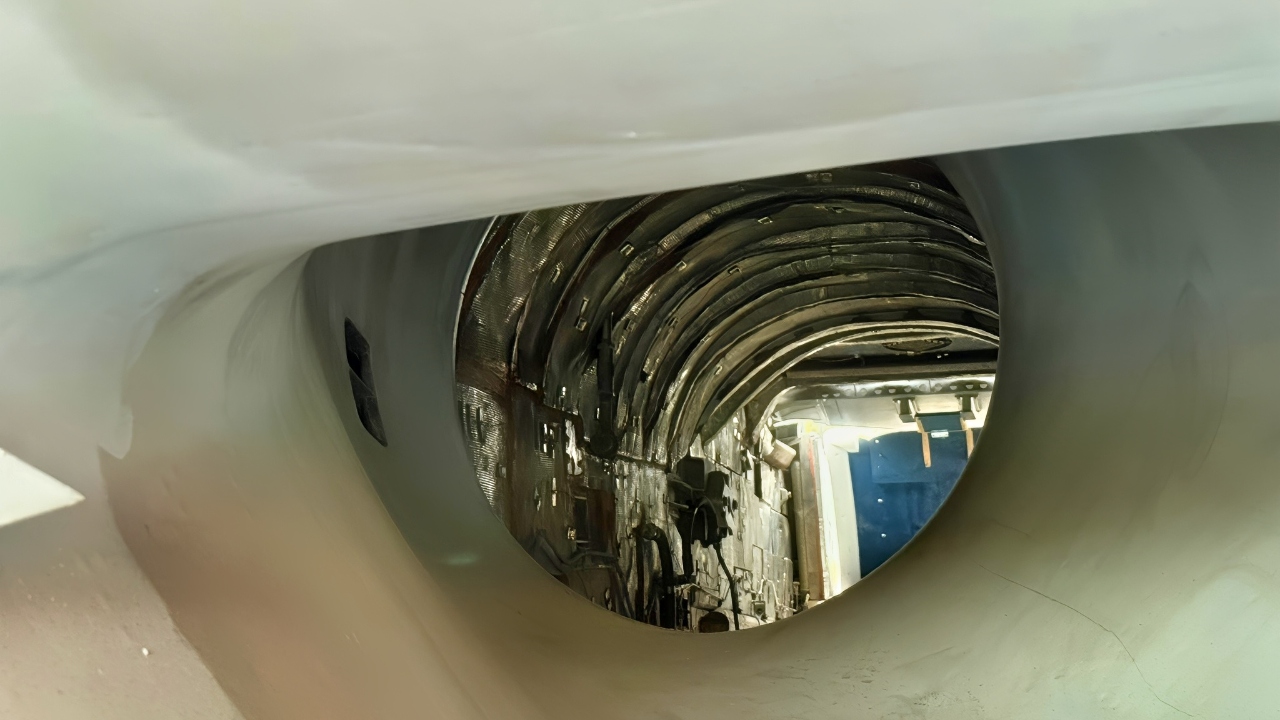
This photo was taken looking inside a YF-23A Black Widow II where the engine was removed. Photo: National Security Journal.
The YF-23 would also have altered the balance between quality and quantity.
Its advantages suggested a force emphasizing penetration and loiter, rather than a jack-of-all-trades platform that could perform every mission acceptably.
The practical impact of these questions was that selecting the YF-23 would have forced change upon the institution rather than the technology. Doctrine, training, and sustainment concepts would need to adapt to the aircraft rather than struggle to catch up.
Faced with declining budgets and an the uncertain future of air operations, that kind of disruption was too costly for the Air Force to stomach.
The F-22 as the Manageable Future
Against this backdrop, the F-22 was not simply the safer aircraft. It was the safer choice for an Air Force that still understood air dominance through familiar habits of thought.
The Raptor fit an institutional worldview in which superiority flowed from tactical excellence, forward basing remained viable, and control of the air could be exercised through a platform that felt recognizably like a fighter, even as it incorporated new technologies.
The F-22 offered continuity where the YF-23 implied rupture. Its strengths aligned with existing training pipelines, command relationships, and sustainment practices. Stealth enhanced survivability, but did not redefine it. Supercruise extended reach, but did not upend assumptions about basing or tanker support.
That manageability mattered. The Air Force could integrate the F-22 without rethinking how it generated sorties, organized deployments, or explained airpower to civilian leadership.
It allowed the service to modernize without destabilizing itself. In a period marked by budget pressure and strategic ambiguity, that balance carried real weight. The decision reflected not a failure of imagination, but a preference for a future that could be absorbed rather than one that demanded immediate reinvention.
Strategic Prematurity, Not Strategic Error
Taken together, the YF-23 decision looks less like a mistake than a deferral. The aircraft did not fail because it misunderstood where air combat was headed.
It failed because it forced a reckoning that the Air Force could postpone without immediate penalty.
Its assumptions pointed toward a form of air dominance that required new ways of managing distance, exposure, and operational risk.
That difference matters. The Air Force did not cling to tradition out of blind or nostalgic loyalty. It made a calculation about timing. The YF-23 asked the service to invest in a future still anchored by systems, concepts, and ways of working that hadn’t been built yet. Without those pillars of support, the aircraft’s potential became institutional stress rather than an operational advantage.
The YF-23’s Long Shadow Over NGAD
What makes the YF-23 newly relevant is not renewed interest in lost prototypes, but the return of the same questions in a less forgiving strategic environment. The Air Force’s current push toward a next-generation family of systems confronts constraints that echo those the YF-23 once exposed. Distance matters more. Basing is less secure. Sustainment is no longer a background concern that can be solved after the fact.
NGAD is difficult for reasons that extend well beyond engineering challenges. It presses the service to adopt a more distributed conception of air dominance, treating platforms as nodes rather than stand-alone solutions.
The difference now is timing. The strategic environment no longer allows delay without cost. The Air Force can no longer rely on forward access or uncontested logistics to compensate for conceptual hesitation. In that sense, the YF-23 reads less like an alternate history than an early warning that went unheeded.
The Lesson the YF-23 Still Teaches
The YF-23 endures because it points to a recurring problem in how military power is built. Advanced designs do more than meet requirements. They encode assumptions about how wars will be fought, what risks are acceptable, and which institutions will be asked to change.
That is the real legacy of the Black Widow. It did not lose because it lacked technical promise. It lost because it implied a future that would have forced the Air Force to confront uncomfortable tradeoffs before the service had the tools, confidence, or incentives to do so. The decision to set it aside bought time. It also delayed adaptation.
That is why the debate keeps resurfacing. The argument is not really about which aircraft should have won. It is about how often institutions postpone difficult change until strategic reality removes the option.
About the Author: Dr. Andrew Latham
Andrew Latham is a non-resident fellow at Defense Priorities and a professor of international relations and political theory at Macalester College in Saint Paul, MN. You can follow him on X: @aakatham.


