

There’s much confusion dominating the international news and economics scene, as the Strait of Hormuz, one of the world’s seven major oil transit chokepoints, remains blockaded.
On the one hand, oil prices were spiking, and inflation rates are, predictably, increasing.

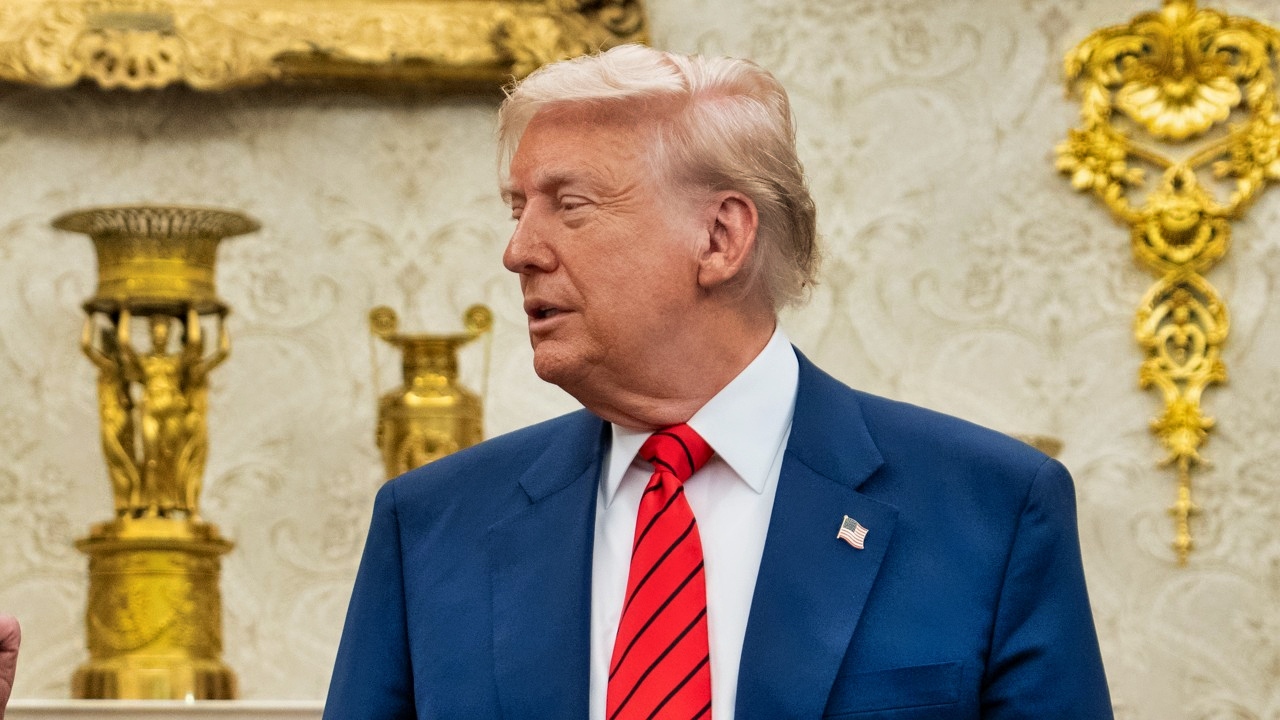
President Donald Trump holds a Cabinet meeting, Wednesday, April 30, 2025, in the Cabinet Room. (Official White House Photo by Molly Riley)

President Donald Trump delivers remarks at a National Day of Prayer event, Thursday, May 1, 2025, in the White House Rose Garden. (Official White House Photo by Molly Riley)
On the other hand, though, gas prices at the pump here in the United States are low considering the situation while the stock market continues its historic rally.
And, in many places, the price for gas has fallen recently.
What Are Gas Prices Dropping?
So, what gives?
The delusional thinking dominating the markets is part of why all of us get a momentary reprieve from the escalating cost of gas at the pump.
You see, the markets have yet to accept that there is unlikely to be a true peace deal crafted between the United States and the Islamic Republic of Iran. There isn’t even likely to be a true ceasefire. Instead, the conflict is on its way to a managed, frozen conflict. Even in that scenario, though, the markets would prefer continued hostilities.
So, the markets remain convinced that some form of enduring end of hostilities will occur and the Strait of Hormuz will reopen.
Of course, energy prices have already increased significantly enough that consumers in America have adjusted their energy demand. They’re driving less and using less oil because of the increased prices.
The Market is Running on the Fumes of Hope and Buffers
Meanwhile, the energy markets are running on fumes, as producers in places like Saudi Arabia rapidly shift their exports to waterways outside the Strait of Hormuz, such as the Red Sea, and the US essentially drains its strategic stockpiles to keep prices low.
All these moves are artificially deflating oil prices. At some point, though, American buffers for oil prices will reach what’s known as “tank bottom,” which many experts claim will hit as soon as the week of July Fourth.
Plus, with the Iran War merely frozen rather than over, at some point, Iran’s proxies in Yemen, the Houthis, could easily close down the Red Sea and the Strait of Bab el-Mandeb, thereby ending Saudi Arabia’s access to alternative energy transit routes.
These outcomes would spike oil prices overnight and end the delusional thinking of the markets and politicians. What the blessed lull in rising gas prices following Memorial Day indicates is that traders are not pricing in the absolute worst-case scenario anymore.
This belief is, unfortunately, a mistake.
There is no indication yet that the Strait of Hormuz will reopen, nor is there any proof that a real ceasefire exists in the Middle East. What’s more, there is little evidence showing that the Iranians will surrender the de facto operational control they’ve enjoyed over the Strait of Hormuz since the United States and Israel initiated this war of choice.
The question that the markets, the politicians, and the media are all focused on answering is what the spot market and near-term price movements will look like. But the bigger concern must be what the global petroleum inventories look like. Those buffers that many oil experts, including the heads of America’s largest energy firms, are saying will reach “tank bottom” as early as next month.
Reuters reported earlier this week that inventories remain tight despite the recent price declines. Per the Reuters piece, markets are still sensitive to any negative developments in the Strait of Hormuz.
As we’re seeing right now, the buffers can moderate price spikes at the pump. And thank goodness for those of us who do a lot of driving, that moderation is happening. America’s inventory is diverse and large. It is not, however, infinite. This observation is precisely the point that the oil executives of America made to the president earlier this week.
Once those buffers disappear–and they assuredly will–price movements become unpredictable and violent.
Why the Stock Market Isn’t Panicking
As long as investors believe that the war will eventually end, that the Strait of Hormuz will reopen soon to the way it was before the war.
The current disruption to energy flows from the Middle East is temporary rather than structural; markets will not price in the reality we are all facing today. What’s more, the president and his team will continue laboring under the false notion that “everything will work out.”
Sure, in the long run, workarounds will emerge, and new technologies that enable local energy production and energy from other sources will arrive. As John Maynard Keynes used to say, though, “In the long run we’ll all be dead.”
The Risk
The danger is that gasoline prices are sending a misleading signal. Prices are lower today than they were a few weeks ago. However, Brent crude remains around mid-$90s per barrel. US crude inventories are tightening at an alarming rate. Refiners are shifting production toward higher-margin fuels such as jet fuel, which could tighten gasoline supplies later this summer, too.
Basically, energy analysts are wrong, and they continue to reward normalcy bias. It’s not helping that the president is feeding the markets a line of manure to keep them strung along so that he doesn’t have to deal with the political fallout of a total market collapse. Markets should reflect reality. Instead, markets today reflect the mercurial whims and mass delusions of an American political elite that has gotten the United States stuck in another endless, unwinnable Mideast war.
Bottom Line
Falling gas prices are not evidence that the energy crisis is over. If anything, they are the equivalent of passing through the eye of a hurricane. A momentary calm before the whirlwind and chaos of the remaining elements of the storm pass through. They’re also a reflection of the market analysts who want so badly to believe that President Trump and his team have a plan for victory in the Middle East and for reopening the Strait of Hormuz, no muss, no fuss.
If, however, the Strait of Hormuz remains constrained through the summer, with inventories cratering, today’s modest relief at the pump will be merely a reprieve in a growing, nastier economic storm.
The market is pricing in eventual normalization.
To evoke the painful, bitter memories of the pandemic, there is no return to normal. We’ve entered a new normal. One in which the world must become accustomed to not having access to the Strait of Hormuz, or a world in which everyone must simply accept Iranian control over the Strait and, therefore, pay the regime in Tehran gobs of money in the form of service and transit fees to use the essential waterway.
In either event, prices will remain well above the historical high. And that’s bad news for every American.
About the Author: Brandon J. Weichert
Brandon J. Weichert is Senior National Security Editor. He also manages The Weichert Brief on Substack. Weichert hosts “National Security Talk” on Rumble, too. He is the author of four bestselling national security books, the most recent of which is A Disaster of Our Own Making: How the West Lost Ukraine (Encounter Books). Follow him via Twitter/X @WeTheBrandon.


