

According to a recent article published on July 15th in The New Yorker, the tide of the war in Ukraine has shifted in favor of Kyiv.
Whereas Moscow has enjoyed dominant superiority in the realm of long-range strike capabilities, recent advancements in Ukrainian drone and missile capabilities have allowed Kyiv to bridge the gap and bring the war to Moscow.
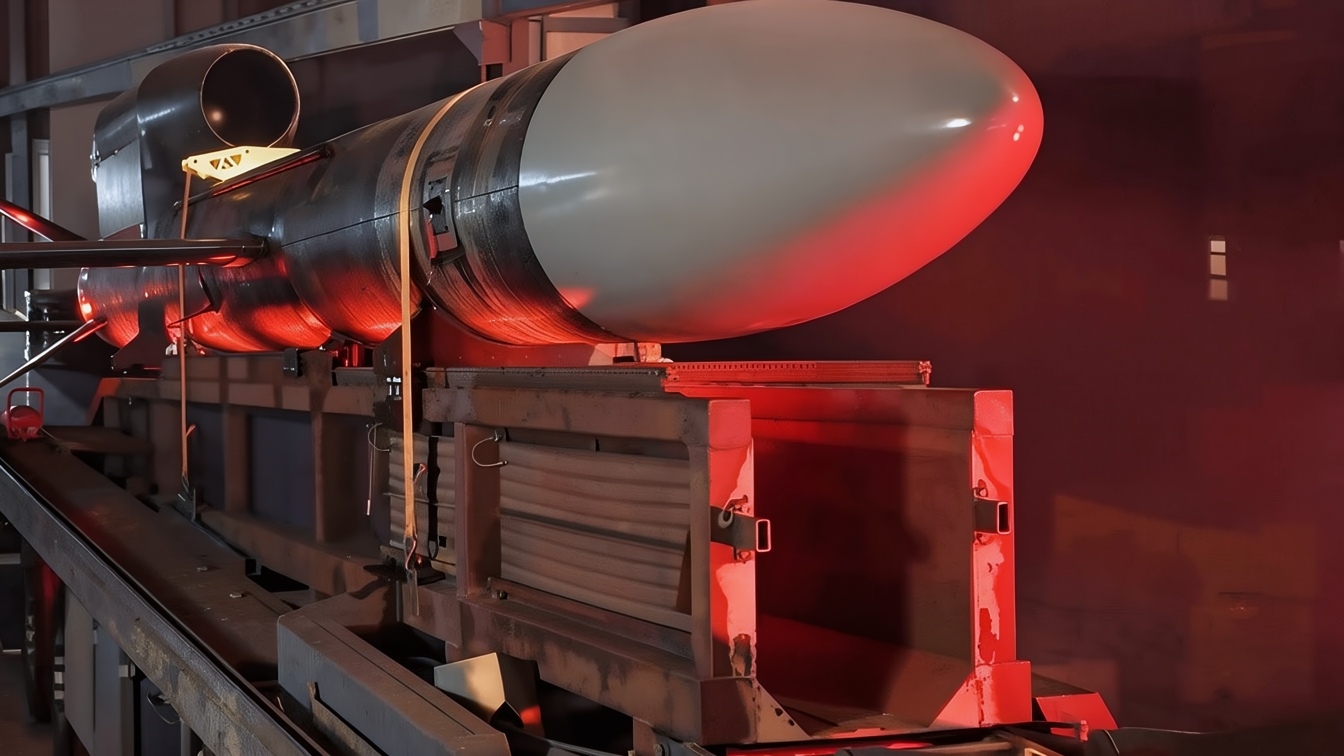
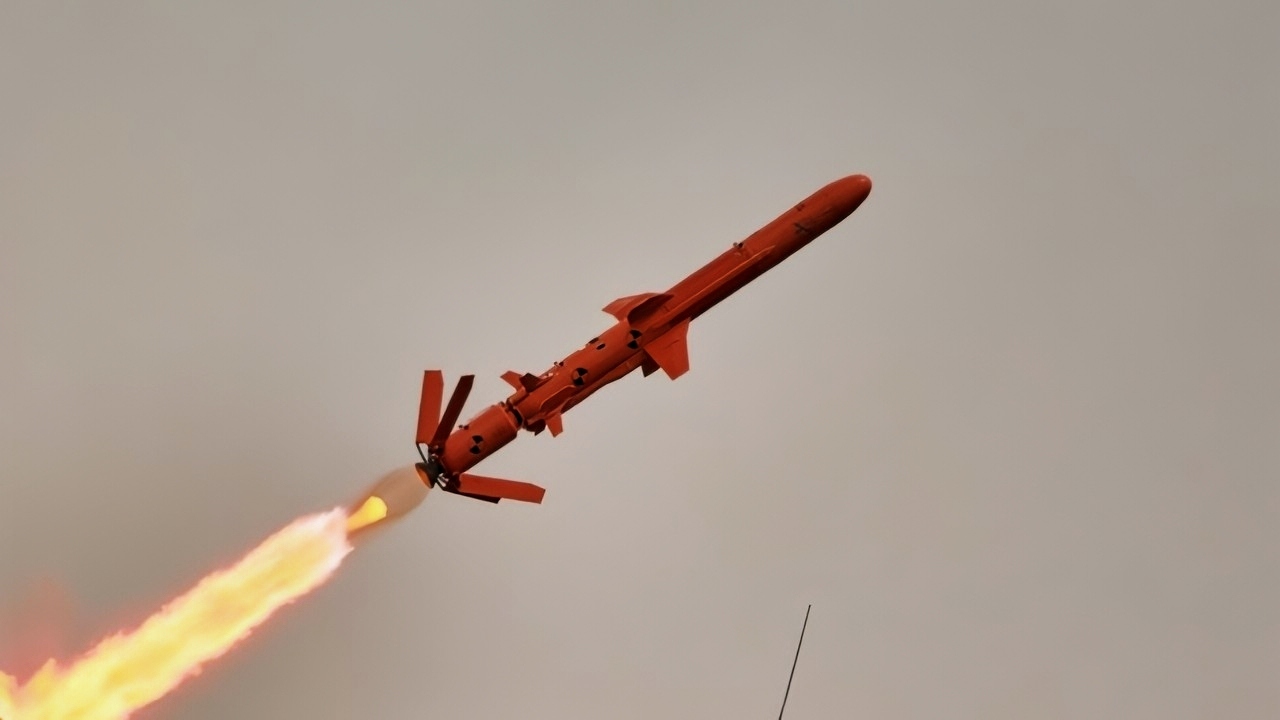
Ukraine Cruise Missile 2026. Image Credit: Creative Commons.
Recent strikes on fuel refineries throughout Russia have caused significant economic damage to Moscow, threatening the stability that Putin has spent decades building.
These recent successes have caused a change in attitude in the West. President Trump, who was initially dismissive of Zelensky, described his relationship with the Ukrainian President in positive terms and gave Kyiv his blessing to produce Patriot Interceptors directly.
Is the Tide Turning in Ukraine?
A key factor enabling this new shift is the recent advances in long-range strike capabilities in Ukraine. Prior to 2025, Kyiv had no means to strike deep behind enemy lines or on Russian territory.
Despite receiving medium-range cruise missiles from the West, the Biden administration forbade Ukraine from using them on Russian territory, fearing any escalation from Putin. Germany, meanwhile, decided against transferring Taurus cruise missiles to Kyiv, a stance it still holds to this day.
Consequently, the Ukrainians had no choice but to build their own long-range strike capabilities.
These domestic efforts were bankrolled by the West.
Germany set aside 300 million euros to develop Ukrainian deep-strike capabilities, while the Netherlands pledged an additional 500 million euros for domestic weapons development.
More recently, the European Commission pledged to allocate around 4 billion euros to the development of advanced drone technology in Ukraine.
While material support from the U.S. has stagnated since Trump’s second term, the U.S. has continued to share intelligence with Kyiv, which has been a key enabler of its long-range strike campaign against Russia. “For strikes at a long distance, you have to calculate flight paths, altitude, how to bypass air defense along the way,” Mykola Bielieskov, a defense analyst in Kyiv, said. “And for this we still very much need the U.S.”
Ukraine’s New Long-Range Strike Capabilities
The fruits of these labors began to manifest in 2025 with the FP-1 and FP-2 medium-range drones.
The FP-1, developed by Fire Point, Ukraine’s largest domestic drone manufacturer, has been in operation for many years, but with the huge influx of Western funds, production has been increasing rapidly.
The development that drew the most headlines, however, was the FP-5 Flamingo cruise missile.
With a warhead weighing around two and a half thousand pounds and a range of around 2,000 miles, this domestically produced cruise missile was a much-needed addition to Ukraine’s arsenal of long-range strike weapons.
The article also attributes this new shift in momentum to the appointment of Mykhailo Fedorov as Defense Minister of Ukraine, who has shifted Ukraine’s battlefield tactics to strike targets well behind the line of contact.
The results of this new campaign have been covered in detail by pretty much every Western publication. Russia is now experiencing a fuel shortage, logistics are being targeted in the Russian rear, and tankers in the Sea of Azov are being targeted by Ukrainian drones.
As a result, the mood in Russia has soured towards the war, and Western officials are more sure than ever about Ukraine’s prospects in the war.
Too Early to Celebrate
There are a couple of issues with the article from The New Yorker.
It, like many other analyses from the West, places far too much emphasis on long-range strike capabilities while omitting many important details.
Undoubtedly, long-range strike capabilities are important, but they do not decide the outcome of modern wars. Russia has been striking Kyiv and every other major Ukrainian city for the past four years, including oil refineries, industrial centers, and energy infrastructure, and yet Ukraine shows no signs of capitulating anytime soon.
Yet for some reason, analysts expect Russia to capitulate despite having many more resources and being led by a dictator who has little regard for the mood of the general population.
This opinion was echoed by Ukraine’s former commander-in-chief, Valerii Zaluzhnyi, whom I have referenced many times at this point.
“Ukraine’s increasingly effective strikes against Russian logistics and critical infrastructure have imposed real costs on Moscow,” he writes. “But these attacks are expensive, technologically demanding and ultimately reciprocal.
Russia retains the ability to strike back with equal or greater force. Neither side can rely on this form of warfare to produce a decisive strategic outcome.” While Ukraine’s advances in long-range capabilities should not be ignored, it would be wrong, or, as Zaluzhnyi claims, even dangerous, to insist that these capabilities alone can win the war.
A Rough Battle Still Ahead
Ukraine has indeed turned the tide of the war, only if you ignore the many alarm bells currently ringing in Ukraine.
Fedorov, the visionary reform-minded Defense Minister, has just been ousted from his post after serving only six months in office.
This move has been met with widespread opposition among average Ukrainians, who have taken to the streets to protest Zelensky’s decision.
The country faces a critical manpower shortage, with a sizable portion of its population living abroad and little willingness to return.
Meanwhile, draft dodgers are common among the country’s fighting-age males, as conscription officers continue to snatch people off the street to man the front lines.
Make no mistake. Despite the long lines at Russian gas stations, despite the discontentment among the population, despite the strikes on refineries or cargo ships, the war in Ukraine is not ending soon.
Ukraine still has an uphill battle to fight and has a long way to go before it is able to remove the Russians from its soil.
This is not to demean Ukraine’s advancements, but rather, the goal is to provide a more realistic assessment of what is actually going on in Ukraine.
The situation is not lost, but it is nowhere near as rosy as many analysts seem to believe.
About the Author: Isaac Seitz
Isaac Seitz, a Defense Columnist, graduated from Patrick Henry College’s Strategic Intelligence and National Security program. He has also studied Russian at Middlebury Language Schools and has worked as an intelligence Analyst in the private sector.


