


The X-32 was an experimental demonstrator aircraft built by Boeing to compete in the Joint Strike Fighter (JSF) competition. We have spent a lot of time visiting the only two of these fighters ever built, and, as a bonus, included pictures of those X-32 visits from last summer.
The aircraft competed against and lost to the Lockheed Martin X-35. Today, the X-32 is remembered primarily for its titanically ugly appearance.
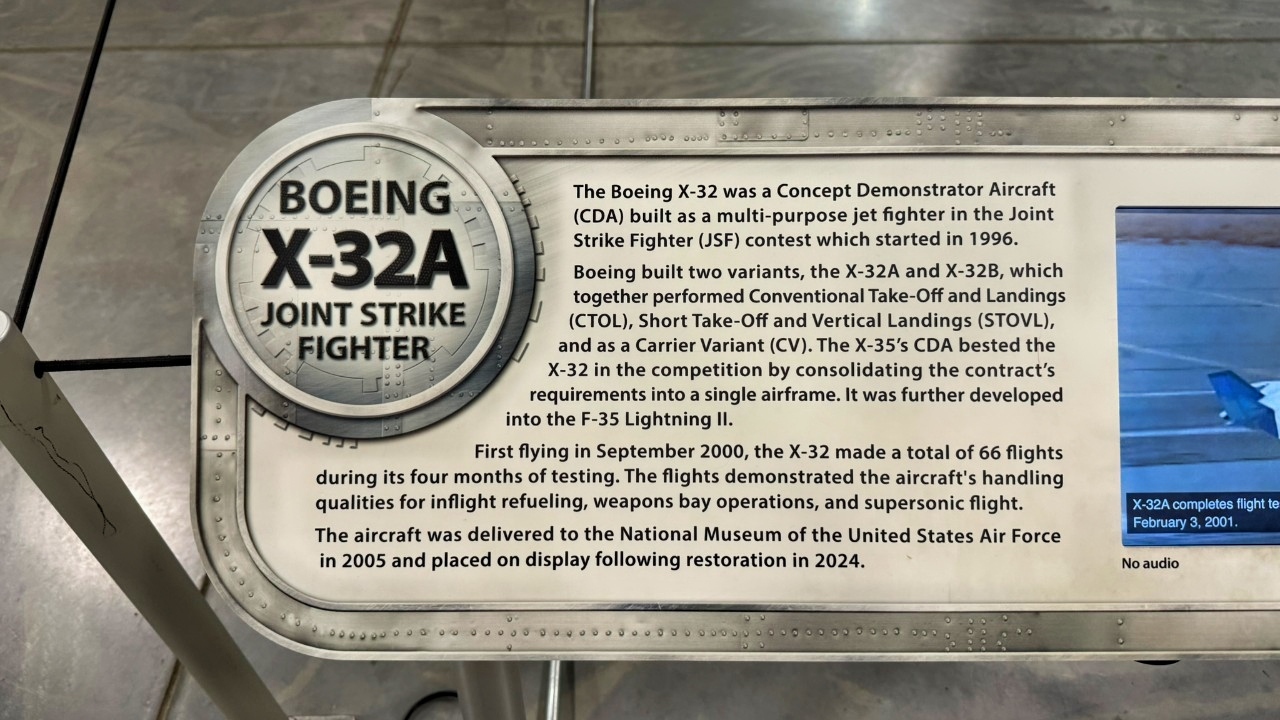
Boeing X-32 Fighter at USAF Museum July 2025. Image Credit: National Security Journal.
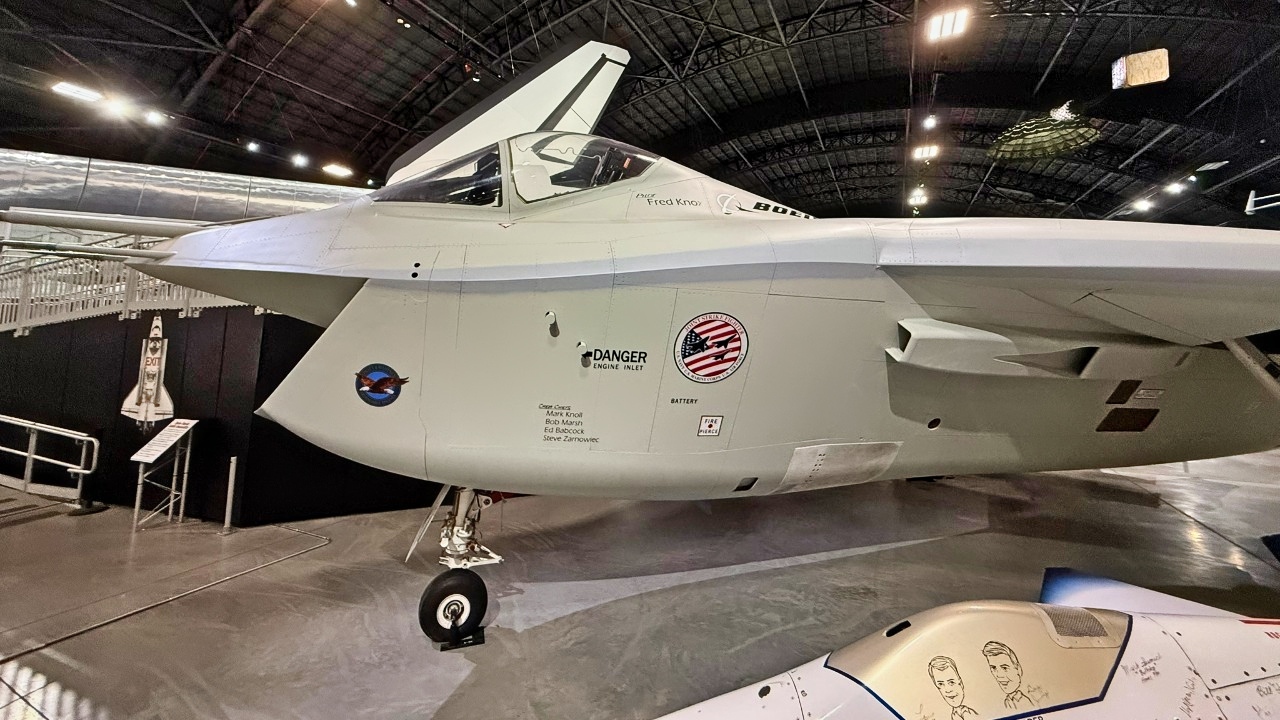
Boeing X-32 Fighter USAF Museum Dayton, Ohio. Image Credit: National Security Journal.
In order to accommodate the JSF’s STOVL requirement, the aircraft utilized a large chin-mounted air intake, which gave it the unsightly appearance of a frog-like mouth.
While the fighter has become something of a meme, the aircraft still offered qualities of its own, even if its physical appearance left much to be desired.
The X-32: What the Test Pilot Had to Say
U.S. Navy Commander Philip “Rowdy” Yates served as a test pilot for the X-32 throughout the JSF competition.
By the time the competition had started, he had already accrued more than 2,000 test flight hours on F-14s and F-18s and had performed more than 300 landings on aircraft carriers.
Yates was selected by Boeing as one of the primary test pilots for the X-32, which he considered to be a dream come true. “I don’t know how to say it any better than just that it was the highlight of my career.” He said. After completing the program, Yates would share his thoughts on the aircraft and the program on the PBS program NOVA.
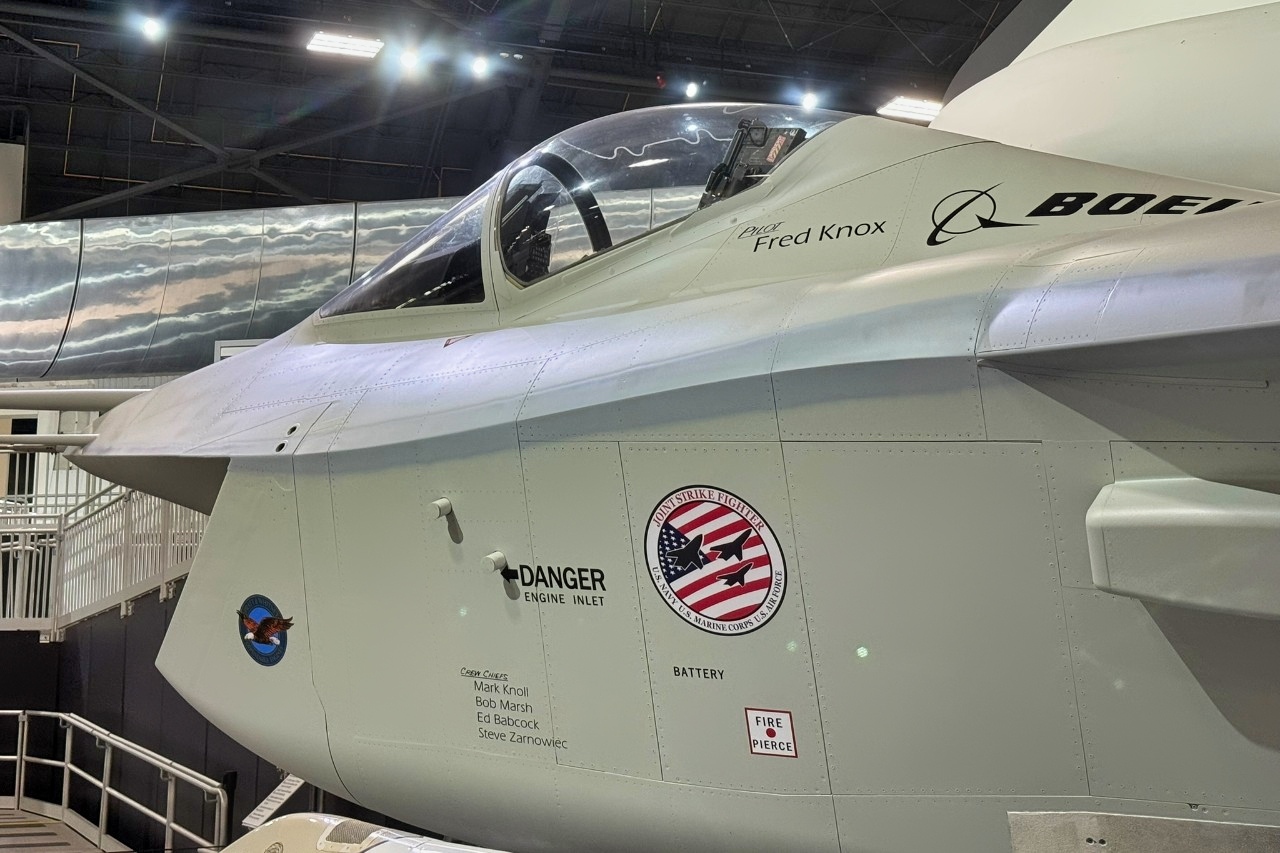
Boeing X-32 Fighter from USAF National Security Journal Original Photo. Taken July 20, 2025.

X-32 and YF-23 Together at U.S. Air Force Museum. Image: National Security Journal.
When describing the aircraft itself, Yates noted that X-32 handled particularly well.
Boeing’s designers derived a lot of the X-32 control laws from the F-18,” He said. “So to some extent it was just like flying an F-18. There were differences, of course, but either because it was like the F-18 or because of the time I spent in the simulator, it seemed familiar. I thought, ‘Okay, I know what I’ve got here.’” Yates further added that the aircraft’s handling would have been ideal for carrier operations.
STOVL Shortcomings
According to Yates, the X-32’s STOVL capabilities left quite a bit to be desired, especially compared to the X-35. That was a big deal,” Yates said. “That was probably the one where we kicked the dirt a little bit and said ‘damn.’”
Unlike the X-35, which could seamlessly transition between its STOVL configuration and supersonic flight, the X-32 required maintenance before it could fly in STOVL mode. Yates further added that the X-35’s STOVL capabilities were “much more technologically advanced.”
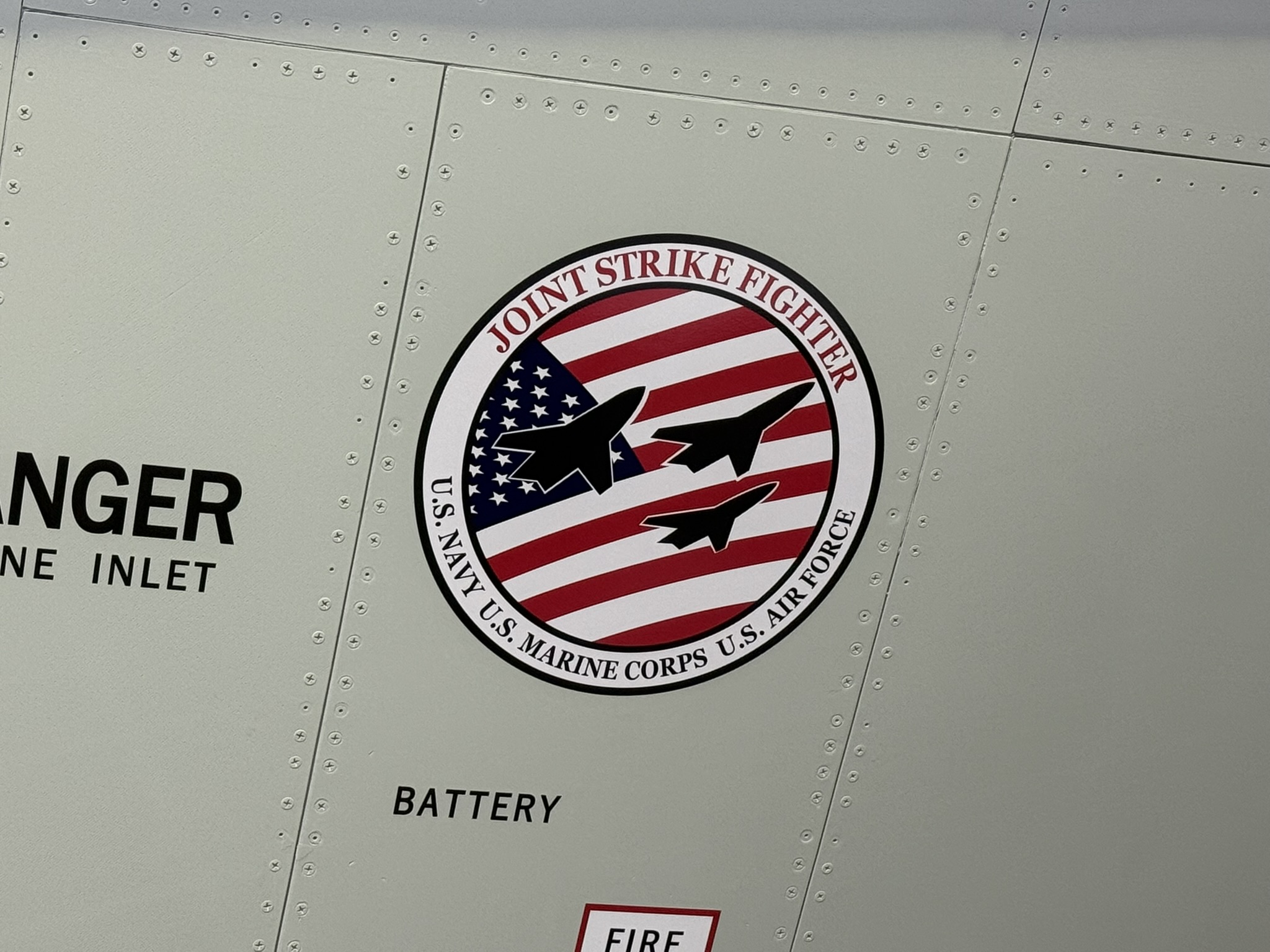
Boeing X-32 National Security Journal Photo. Taken on 7/19/2025.
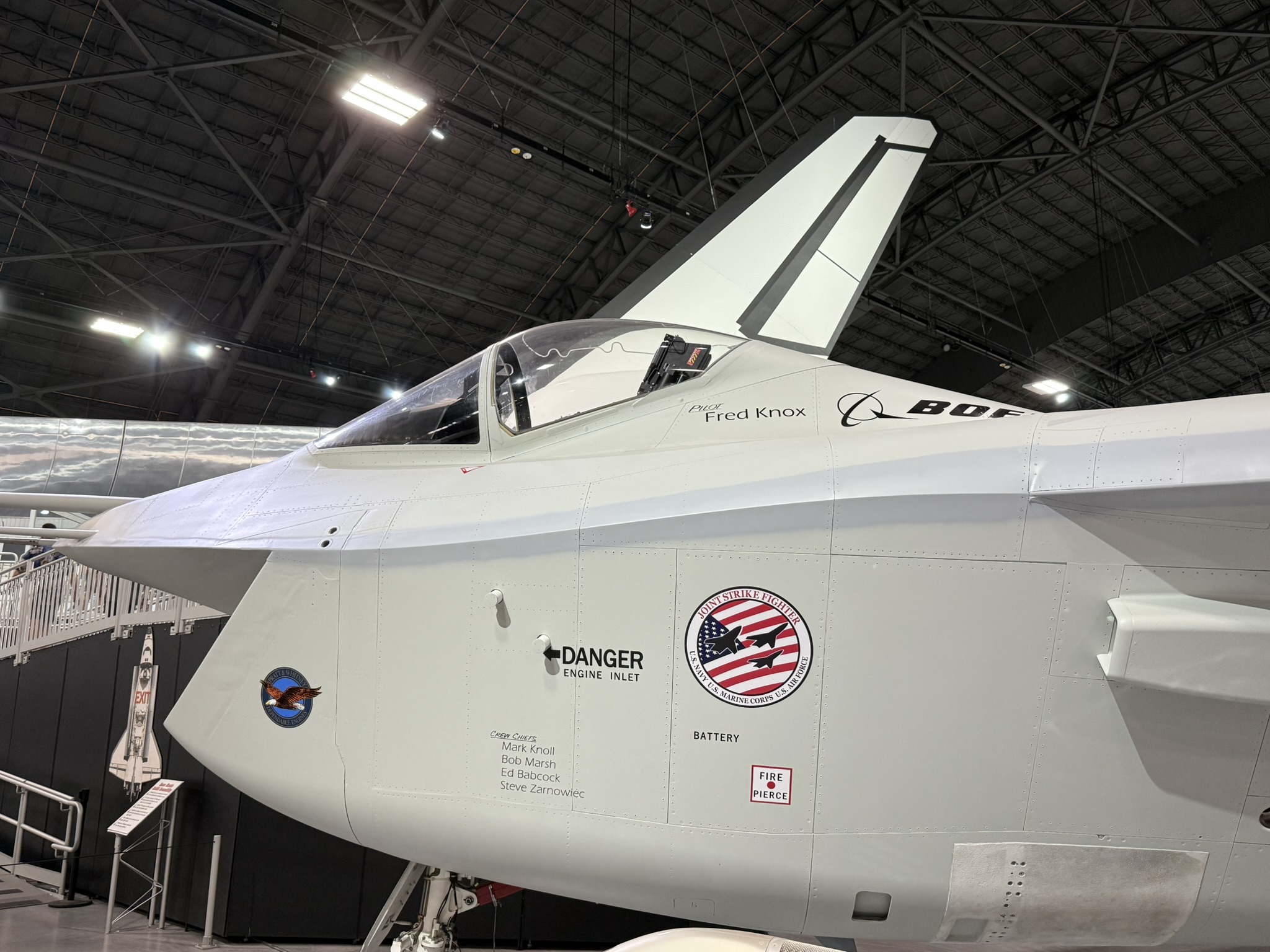
Boeing X-32 National Security Journal Photo. Taken on 7/19/2025.
For vertical lift, the X-35 featured a separate 48-inch lift fan fed by an intake behind the cockpit that redirected cool air from above the aircraft to below it. X-32, on the other hand, adopted a Harrier-like approach, relying primarily on thrust vectoring and using thrust and roll posts for stability.
Unfortunately, this design configuration drew hot aircraft exhaust back into the air intake, leading to overheating. “That was one place where we said, ‘hmm, Lockheed has an advantage from a performance standpoint,’” Yates would later recall in an interview.
Why X-32 Ultimately Lost the JSF Competition
When asked why he thought the fighter lost the JSF competition, Yates offered several reasons. First, it was because Lockheed Martin’s design was more complete than the X-32. He explained that Boeing’s design was “not their proposed final design. Lockheed’s was. And the fact that the Lockheed design had performed better than the Boeing design.”
The final proposal that Boeing delivered to the Air Force differed significantly from the demonstrator aircraft. It had a more conventional wing layout rather than the delta wing of the X-32 demonstrator.
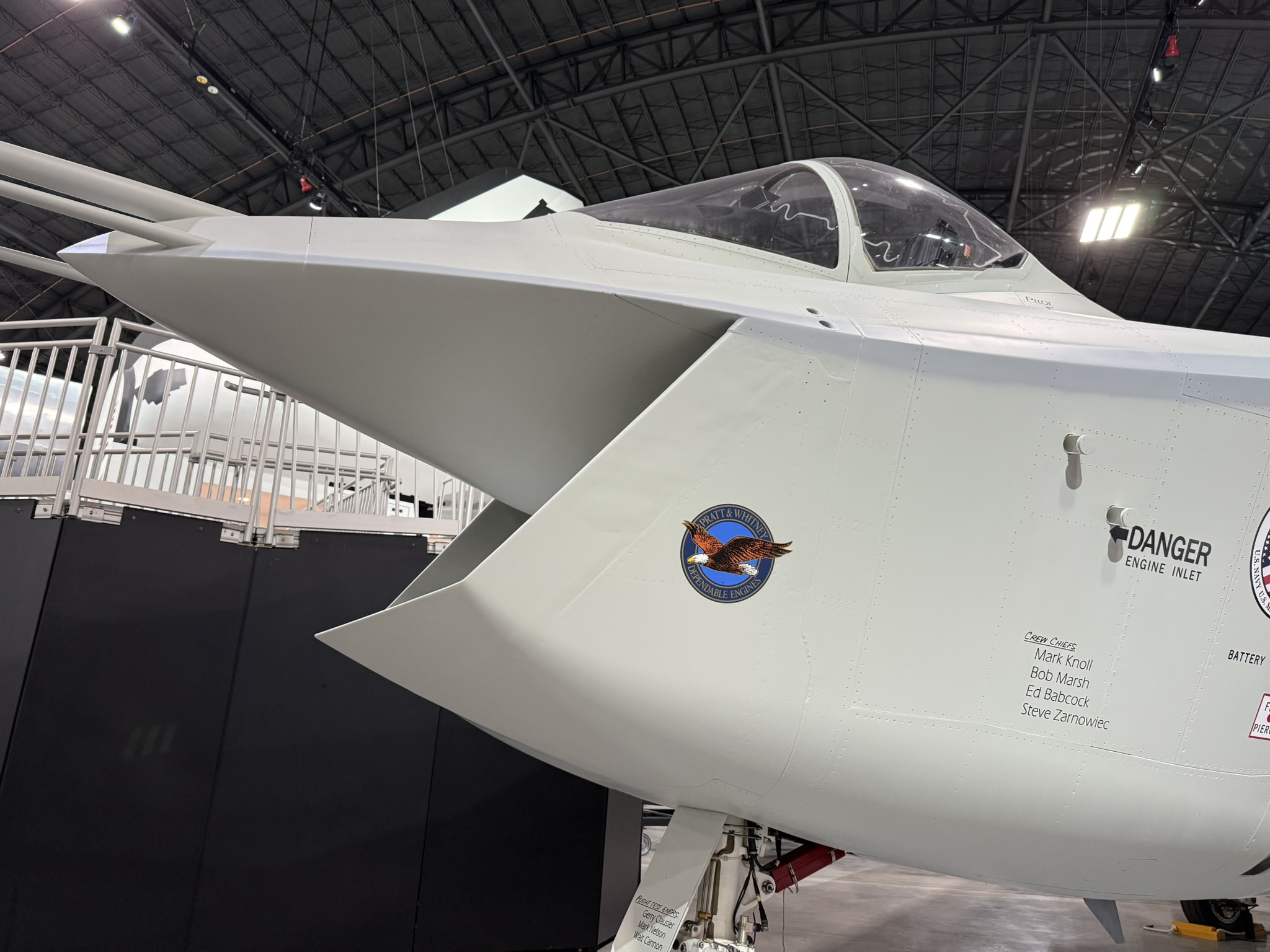
Boeing X-32 National Security Journal Photo. Taken on 7/19/2025.
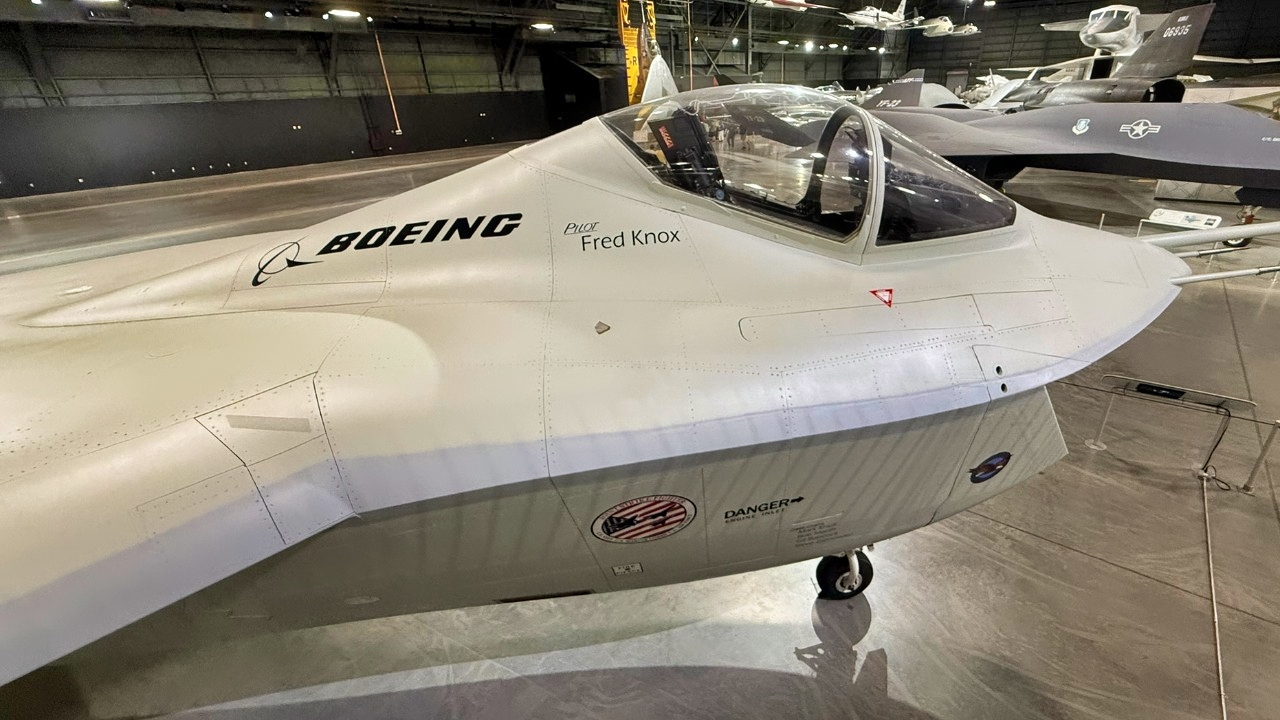
Boeing X-32 National Security Journal Photo.
Meanwhile, the X-35, aside from a few minor adjustments, was more or less exactly what was proposed to the Air Force.
Lockheed’s design was much more mature and did not require the overhauls that Boeing’s proposal demanded.
There was, of course, the matter of aesthetics as well. “The X-35 looked more like a fighter than the X-32,” Yates admitted. “And while you might say it looked like an A-7, compared to the X-35, the X-32 was not an aesthetically pleasing or typical fighter-looking aircraft. Boeing knew they had a problem with that, if you will, and to address it, they had a little mantra that said ‘look, you’re taking it to war, not to the senior prom.’ That got a lot of traction.”
While the aircraft looks cool from a top-down perspective, even Boeing had to admit it was not as aesthetically pleasing as Lockheed’s proposal.
Looks were not a deciding factor, but they did play a role, and ever since, the fighter has been described as one of the ugliest-looking fighter jets in history.
About the Author: Isaac Seitz
Isaac Seitz, a Defense Columnist, graduated from Patrick Henry College’s Strategic Intelligence and National Security program. He has also studied Russian at Middlebury Language Schools and has worked as an intelligence Analyst in the private sector.


