

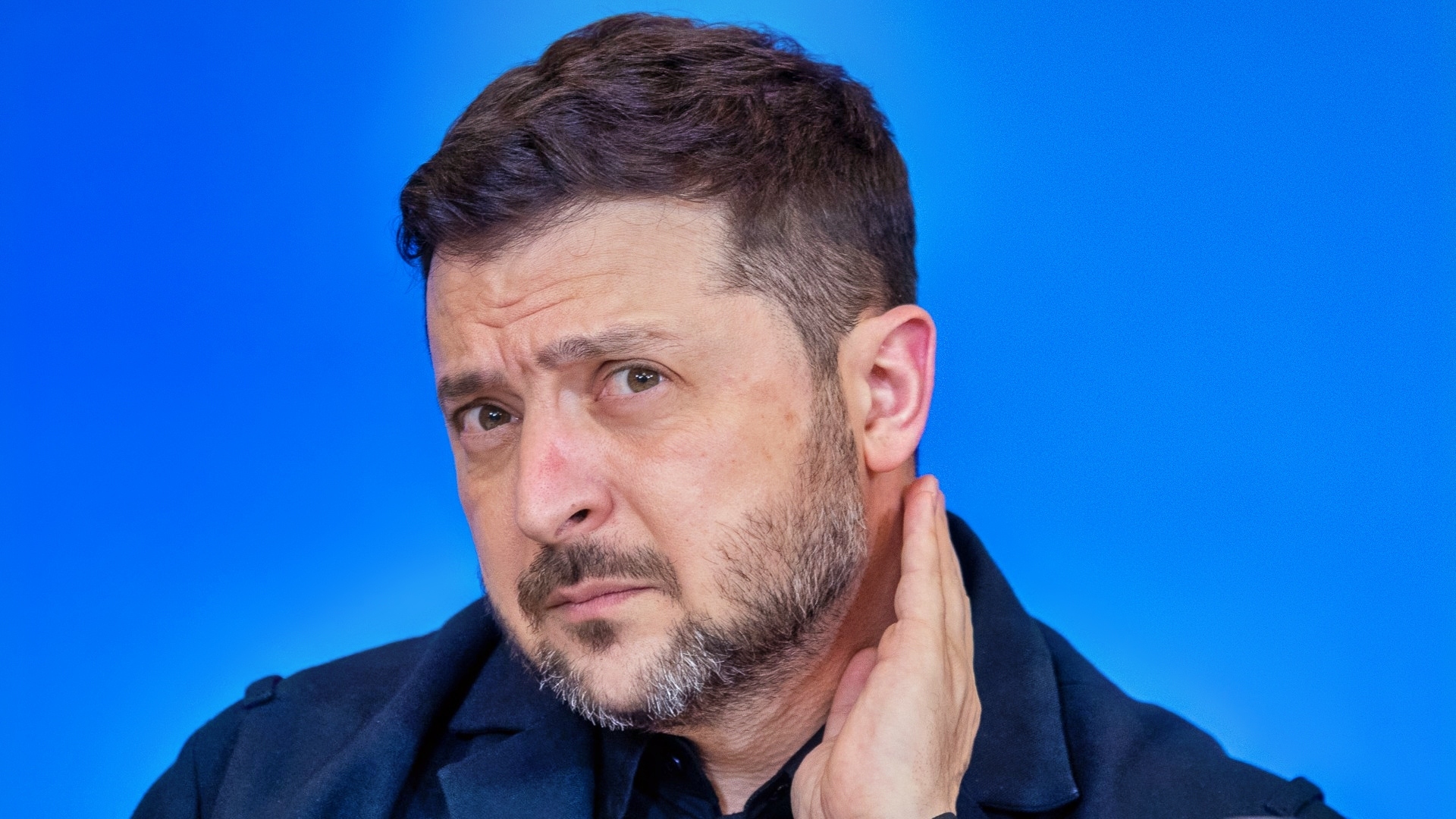
Zelensky Fired Ukraine’s Popular Defense Minister. Now Protesters Want His Top General Gone – President Volodymyr Zelensky is trying to contain a military and political crisis after dismissing Defense Minister Mykhailo Fedorov, a popular reformer identified with Ukraine’s drone program and procurement changes. A New York Times report on the dispute said Zelensky was weighing further changes as public anger shifted toward Gen. Oleksandr Syrskyi, commander in chief of Ukraine’s armed forces.
Zelensky removed Fedorov during a broader government reshuffle after only six months in the defense post. Reuters reported that Fedorov accused Syrskyi of blocking ministry initiatives and dividing the country, while Syrskyi defended his wartime record and urged officials to focus on the fighting.
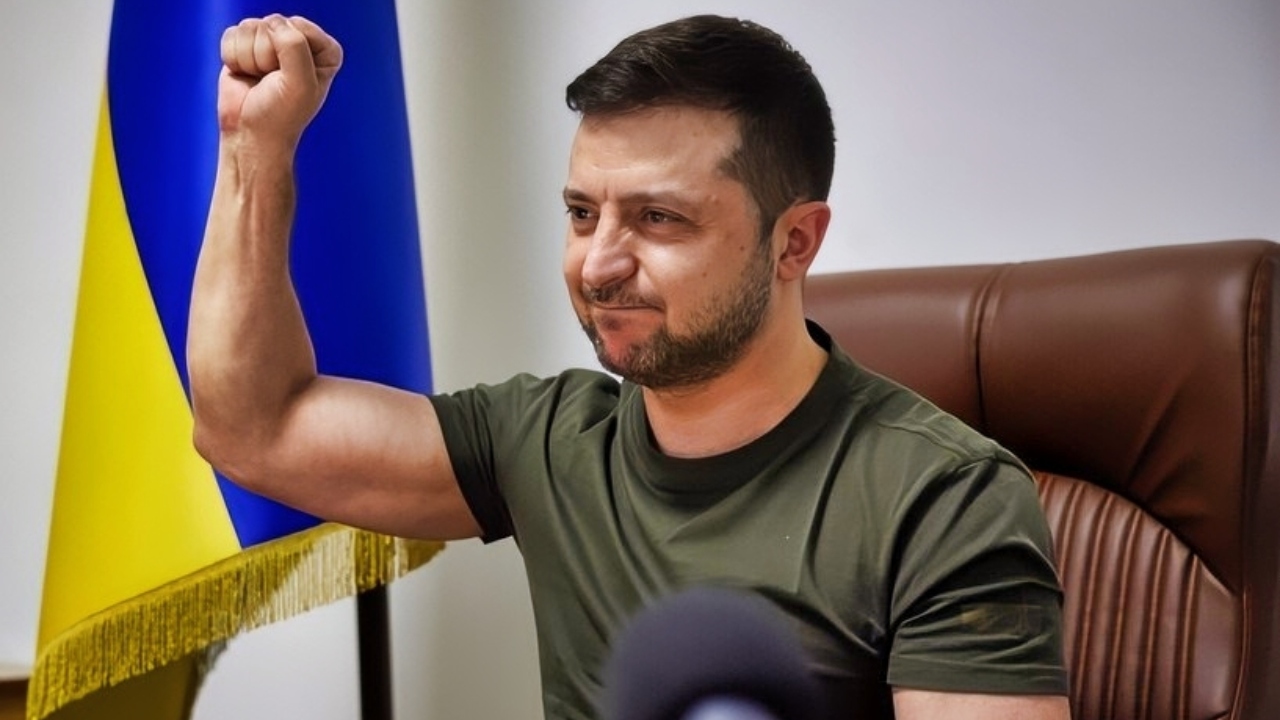
Zelensky Speaking in UK Ukraine Government Photo
The dispute moved quickly beyond the cabinet. Thousands demonstrated in Kyiv and other cities, first demanding Fedorov’s return and later calling for Syrskyi’s dismissal. In a July 18 address, Zelensky said he had spoken at length with both men and that decisions concerning the army would follow consultations, according to his official statement.
Ukraine is meanwhile operating under acting Defense Minister Yevhenii Khmara. The Defense Ministry said Khmara had been instructed to continue reform, expand technology-enabled strikes, fund combat brigades directly, increase drone supplies, and preserve agreements with foreign partners.
Zelensky Is Trying to Contain a Military Rift
Fedorov represented civilian management, digital systems, faster procurement, and the effort to scale effective drone units. Syrskyi controls the formal chain of command and carries responsibility for holding a front extending more than 1,000 kilometers against a larger Russian force.
Zelensky said the two sides had failed to achieve unity before Fedorov’s dismissal. The backlash has made the decision harder to contain. A Ukrainian report estimated that about 10,000 people joined a July 18 protest in Kyiv, including veterans demanding continued technological reform and changes in the senior command.
The response reflects the importance of the campaign Fedorov helped build against Russia. Ukraine has compensated for shortages in troops, aircraft, and ammunition by connecting civilian technology firms, military units, digital targeting systems, and mass drone production.
Fedorov Became the Public Face of Ukraine’s Drone War
Fedorov used his final Defense Ministry briefing to list 22 achievements, including support for drone-assault units, competitive procurement, direct supply arrangements for brigades, and expanded missile and drone production. The ministry published his official record on July 16.
Fedorov said the ministry had procured more drones in four months than during the previous year, begun regular deliveries to combat brigades, and raised drone and cruise-missile interception rates. Those are government claims, but they help explain why the dismissal became a debate over the conduct of the war rather than an ordinary cabinet change.
His supporters point to initiatives that restricted Russian access to Starlink and directed more drones toward effective units. Ukraine has also shifted toward targeting Russian drone operators and support networks.
The same approach has carried the war deep into Russia. Ukrainian drones have reached industrial targets 1,500 miles from the border and made attacks on Moscow a recurring air-defense requirement. Those operations seek to disrupt oil revenue, logistics, and military production.
Yevhenii Khmara Preserves the Technological Direction
Khmara’s appointment suggests Zelensky does not intend to abandon the technology-centered strategy. The president said the former commander of the Security Service’s Alpha unit had overseen long-range operations. The Associated Press described Khmara as an architect of Operation Spiderweb, the 2025 attack on Russian strategic air bases.
His permanent appointment still faces legal and political hurdles. Ukrainian law requires the defense minister to be a civilian, and parliament is not scheduled to return from recess until mid-August. Khmara will also need broad support after a reshuffle that triggered public and military backlash.
He inherits the same institutional conflict. New systems still have to work through brigades, command staffs, logistics, personnel assignments, and battlefield priorities. The long-range campaign has already forced Russia to divide air defenses between the front and domestic infrastructure. Preserving that pressure requires cooperation between the ministry and General Staff.
Ukraine Needs Unity Without Reversing Reform
Zelensky must settle the dispute without creating another break in military leadership. Reinstating Fedorov would weaken the reshuffle. Removing Syrskyi could disrupt command during intensified Russian ballistic attacks and continued pressure in eastern Ukraine. Leaving both decisions unchanged could prolong protests and deepen criticism within the armed forces.
Any settlement will have to preserve Fedorov’s reforms, define Khmara’s authority clearly, and restore a workable relationship with the General Staff. Ukraine’s ability to hit Moscow on repeated nights has shown the value of sustained long-range drone operations. That capability depends on institutions rather than one minister.
As of July 20, Zelensky had announced consultations but no final decision on Syrskyi. The immediate test is whether Khmara can keep the drone and procurement programs moving while restoring cooperation with the senior command. The dispute now measures whether Kyiv can reform its military during the war without losing unity at the top.
About the Author: Harry J. Kazianis
Harry J. Kazianis (@Grecianformula) was the former Senior Director of National Security Affairs at the Center for the National Interest (CFTNI), a foreign policy think tank founded by Richard Nixon based in Washington, DC. Harry has over a decade of experience in think tanks and national security publishing. His ideas have been published in the NY Times, The Washington Post, The Wall Street Journal, CNN, and many other outlets worldwide. He has held positions at CSIS, the Heritage Foundation, the University of Nottingham, and several other institutions related to national security research and studies. He is the former Executive Editor of the National Interest and the Diplomat. He holds a Master’s degree focusing on international affairs from Harvard University.


