

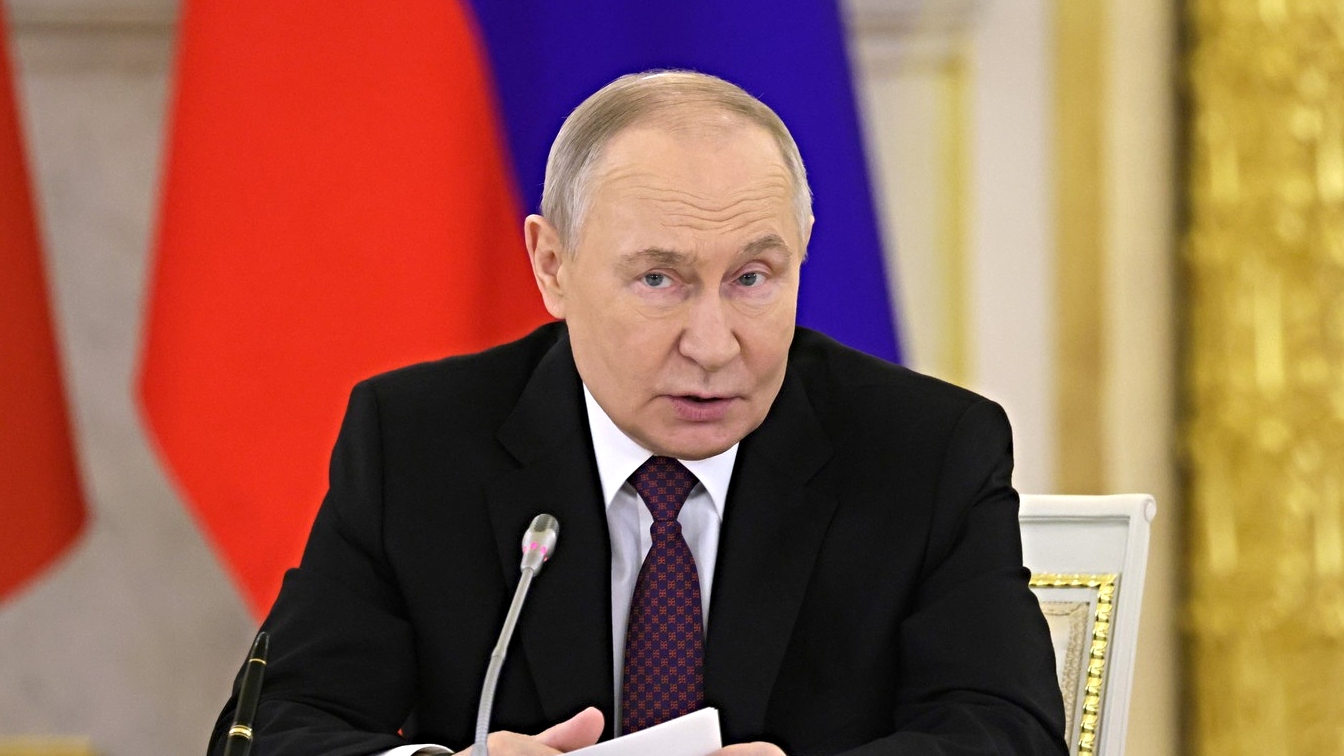
Ukraine launched another large-scale overnight drone attack targeting Moscow and other regions deep inside Russia.
According to Moscow Mayor Sergey Sobyanin, more than 300 drones headed toward the Moscow region overnight. Russia’s Defense Ministry claimed that 375 drones were intercepted nationwide.
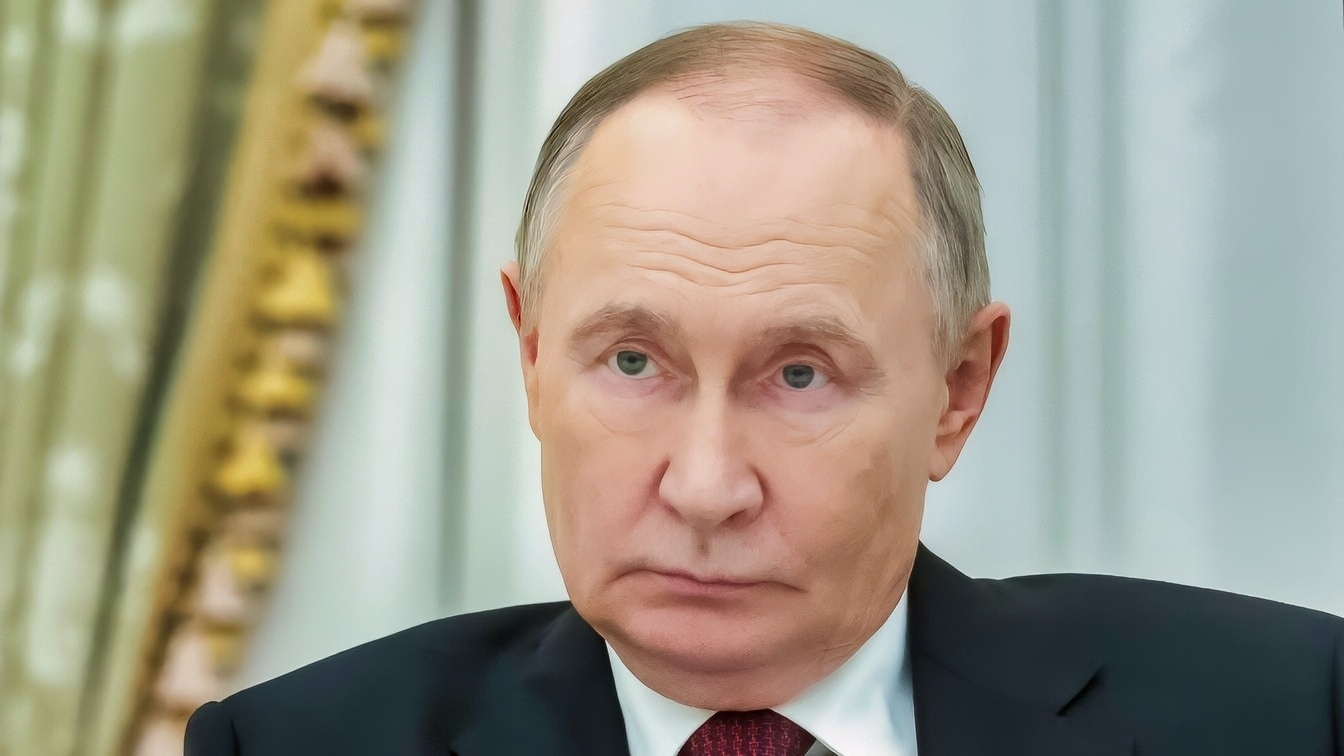
Putin in 2025 Russian Government Photo
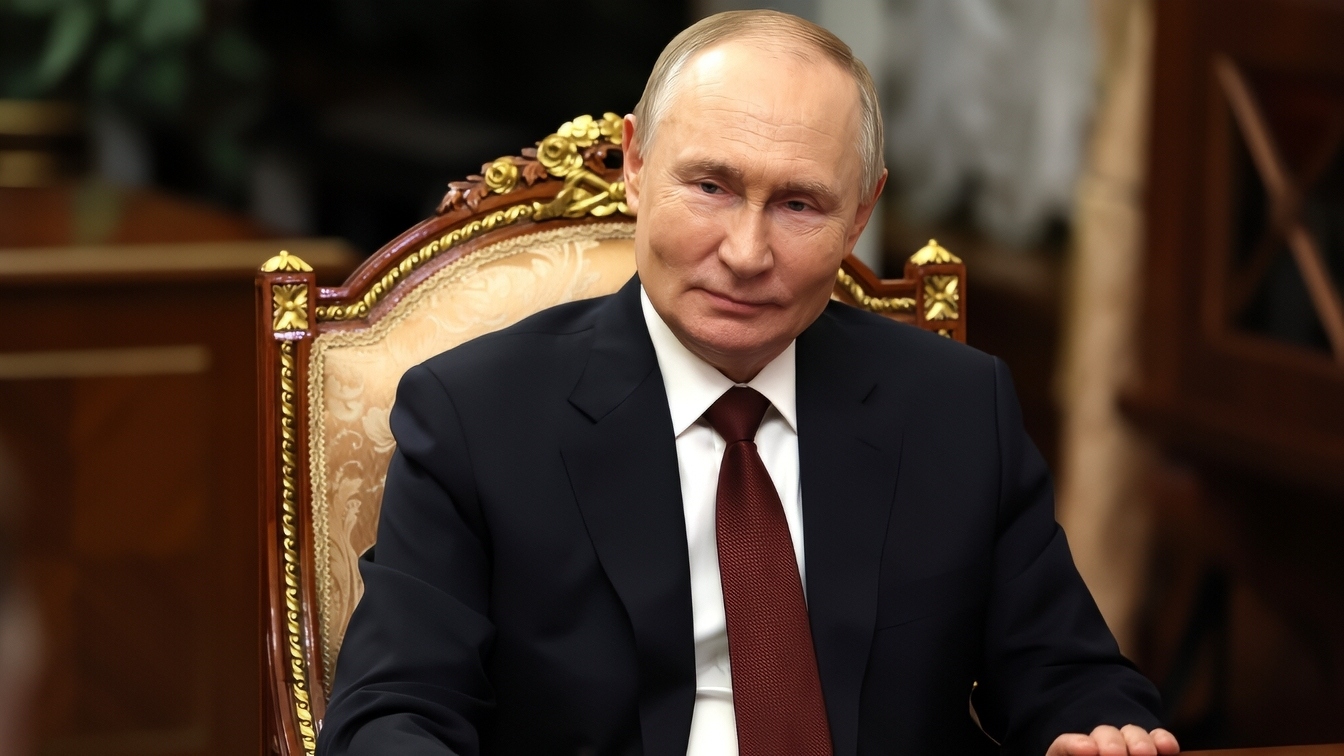
Putin in a Meeting. Russian Federation Photo.
While the figures cannot be independently verified, the scale illustrates how Ukraine’s long-range strike campaign has expanded dramatically during 2026.
The campaign is another example of Ukraine’s efforts to impose economic and political costs on Russia for continuing the war.
The Overnight Attack
Ukraine launched over 200 drones toward Sobyanin in the Moscow region. Ten drones were destroyed on final approach.
The Russian MOD claims that 375 drones were intercepted, with attacks spanning 18 Russian regions including Crimea, the Black Sea, and the Sea of Azov.
Temporary flight restrictions (TFRs) were placed across Moscow and several regional airports, constituting a significant disruption that extended well beyond military targets.
Ukraine has increasingly described its long-range strikes as “long-range sanctions.” The goal isn’t to destroy Moscow—Ukraine recognizes that isn’t plausible.
Instead, the goal is simply to pressure Russia economically and complicate its logistics, to disrupt military operations and force Russia to make difficult defensive decisions, i.e., whether to stack defensive measures on the front or protect interior refineries. By targeting refineries, fuel depots, airfields, and logistics hubs, Ukraine has forced Russia to pick and choose what to defend.
The drone campaign has, in part, negated the advantage of Russia’s strategic depth.
Citing the Numbers
ABC analysts cited that 1,420 Ukrainian drones have reportedly been intercepted approaching Moscow so far in 2026.
That represents a significant uptick over 2025, where just 734 drones were intercepted approaching Moscow over the course of the entire calendar year.
The figures aren’t verified, but regardless of the exact numbers, the pace and frequency of attacks have clearly increased by a substantial margin.
Ukraine seems to be expanding production, improving its long-range drone capability, and growing its operational confidence. The result has been a persistent and consequential campaign against interior Russian targets.
High Value Targets
Ukraine has reportedly struck Engels-2 Air Base, an important target as the home to Russia’s strategic bomber fleet including the Tu-95 and Tu-160. These long-range aviation assets are involved in missile attacks against Ukraine. And even if the Ukrainian strikes fail to destroy the Russian aircraft, repeated attacks force dispersal, increasing the maintenance burden and complicating sortie generation. Again, the attacks force Russia into a decision of whether to marshal additional air defense resources to the airfield.
But even if Russia were to divert resources, stopping drones isn’t simple. Unlike ballistic missiles, drones are relatively cheap, low-flying, have small radar signatures—and often launch in large-number saturation attacks. Accordingly, Russian air defenses face a difficult task—they must detect, identify, track, and engage numerous targets simultaneously. Every drone also forces interceptor launches, radar usage, personnel, and command-and-control resources. Even interceptions impose costs.
Russia Reciprocates
Russia isn’t sitting by passively; it is continuing its own strike campaign. Russia simultaneously launched 18 missiles and 146 drones.
Ukraine says 12 of the missiles were intercepted while 129 of the drones were intercepted or suppressed. Impacts occurred across multiple Ukrainian regions.
In Kyiv, two fatalities were reported along with several injuries. This illustrates that both countries increasingly rely on long-range precision attacks well behind the front.
With both sides striking repeatedly, the campaign increasingly resembles an attrition contest. Ukraine appears intent on demonstrating that it can reach anywhere within Russia, forcing Moscow to spread air-defense assets across enormous territory while creating recurrent disruptions to aviation and infrastructure.
The ongoing attacks also increase political pressure on the Kremlin, bringing harm and consequence directly to Russian territory and its people.
In sum, the drone campaign illustrates how inexpensive, mass-produced unmanned systems have become central to modern warfare.
Rather than seeking decisive battlefield victories through a single strike, Ukraine appears focused on sustained pressure.
More than four years into the war, the conflict is still evolving, and increasingly becoming a contest of long-range strikes.
About the Author: Harrison Kass
Harrison Kass is a writer and attorney focused on national security, technology, and political culture. His work has appeared in Tablet, City Journal, The Hill, The Spectator, and The Cipher Brief. He holds a JD from the University of Oregon and a master’s in Global & Joint Program Studies from NYU. More at harrisonkass.com.


