

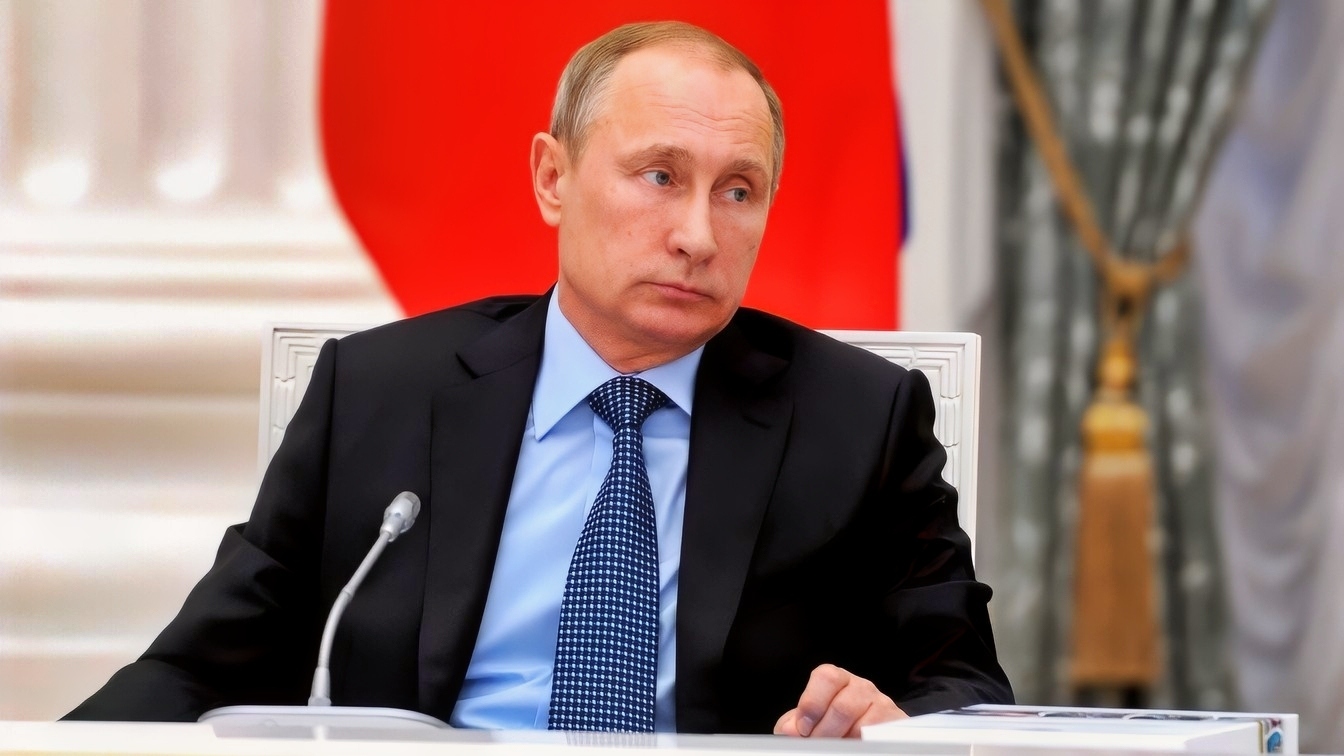
Moscow Launches Another Vicious Retaliatory Missile Attack on Kyiv: On 3 July, Russian President Vladimir Putin announced that Moscow’s large-scale missile attacks against Ukraine “must continue.” Like most of the former KGB Lt. Col.’s statements that call for senseless destruction and murder, they almost always come true.
In the early hours of 30 July, Russia launched a wave of ballistic missile attacks across Ukraine. Multiple explosions were reported in the capital, Kyiv, only hours after Ukrainian President Volodymyr Zelensky had warned that Russia was preparing another large-scale attack against Ukraine.
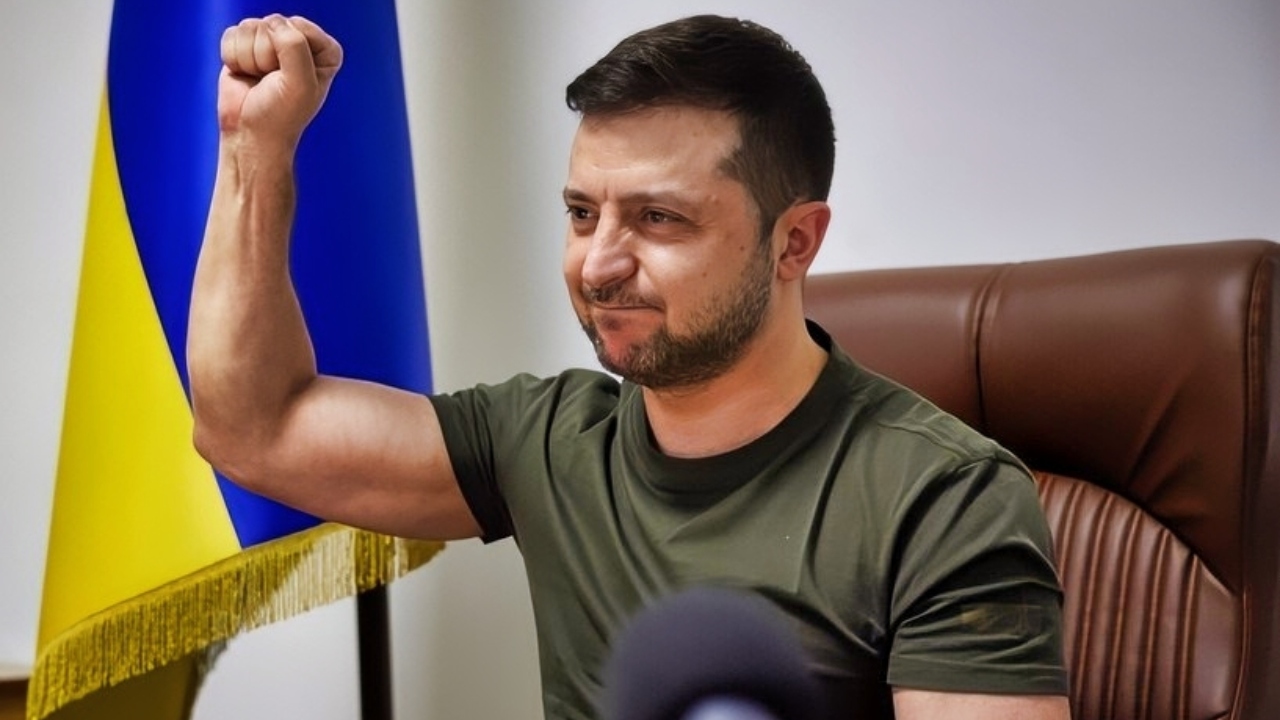
Zelensky Speaking in UK Ukraine Government Photo
The local military administration in the capital has now reported that one person has been killed and that non-residential properties in Kyiv’s Sviatoshynskyi and Obolonskyi districts are on fire – this, according to Mayor Vitali Klitschko. These buildings are burning, as is typical for these attacks, after falling and burning missile debris landed on the sites
Explosions were heard in Kyiv beginning at 0118 hours local time (1818 hours US EDT), according to Kyiv Independent journalists reporting from the ground. The Ukrainian Air Force (PSU) had earlier warned of ballistic missiles headed toward the city of Dnipro and later Kryvyi Rih, Zelensky’s hometown. In addition, another high-speed target that had been launched from the Russian side of the border in the Kharkiv Oblast was moving in the direction of Dnipro.
A residential area in Kryvyi Rih was reportedly hit by the Russian attack, and officials are now stating that many people, including children, are believed to be trapped beneath the rubble of a residential building.
Early Warning
As an example of the effectiveness of Ukraine’s intelligence service, President Volodymyr Zelensky had warned earlier on 29 July that his special services had information that Russia was preparing to carry out a massive attack that very night.
Writing on his X account, the Ukrainian President stated, “The Russians prepared a massive attack several days ago, and there is a high probability that the strike will be carried out tonight. Please, in all regions of Ukraine, pay attention to air raid alerts today and take care of yourselves,” he added.
Ukraine’s capital has been increasingly targeted by missile attacks throughout the Spring and summer of 2026. Assessments of Putin’s strategy are that as his military continues to fail in making any gains on the battlefield, he increases his missile attacks on civilian targets in an effort he believes will break the morale of the Ukrainian population.
Moscow has now decided that this is the new tactic that must be applied since its full-scale land invasion of Ukraine has stalled and shows no chance of achieving any major gains on the ground.
The idea is that they must use missile and drone assaults to overwhelm Ukraine’s overextended air defenses.
Primary targets must be large residential buildings and famous cultural sites, such as the destruction visited at the UNESCO site of the Kyivska Lavra back in June.
Not Enough Interceptors
Ukraine has retaliated with increasing numbers of deep strikes against Russia’s oil industry and military facilities.
Ukraine’s drone army has even crossed the at-one-time unthinkable red line of attacking major cities like Moscow and St. Petersburg.
These drone and missile attacks by Ukraine on cities and facilities that Putin’s General Staff once told him were untouchable have had a measurable effect on the population – as well as the elite circles in Moscow – that are causing them to call for the war to be stopped.
But the dilemma that increasingly plagues Ukraine’s military is that it simply does not have enough interceptor missiles for its US-made Patriot air and missile defense system batteries. There is a worldwide shortage of these missiles due to sustained US and Israeli operations in the Middle East. Current anemic production levels for these missiles will not increase to the levels required for years – probably not until well after the war is over.
On 28 July, President Volodymyr Zelenskiy met with US President Donald Trump at the White House to discuss obtaining more interceptor missiles and potentially reviving the peace process between Russia and Ukraine. The two presidents said afterward that their conversation was productive and another sign that the White House has adopted a more positive and supportive orientation towards Kyiv.
In a television interview following the meeting, Zelensky described Putin as someone who lost the initiative in the war with Ukraine, but stubbornly continues to prosecute the war and refuses to agree to any form of a ceasefire.
About the Author: Reuben F. Johnson
Reuben F. Johnson has thirty-six years of experience analyzing and reporting on foreign weapons systems, defense technologies, and international arms export policy. Johnson is the Director of Research at the Casimir Pulaski Foundation. He is also a survivor of the Russian invasion of Ukraine in February 2022. He worked for years in the American defense industry as a foreign technology analyst and later as a consultant for the U.S. Department of Defense, the Departments of the Navy and Air Force, and the governments of the United Kingdom and Australia. In 2022-2023, he won two awards in a row for his defense reporting. He holds a bachelor’s degree from DePauw University and a master’s degree from Miami University in Ohio, specializing in Soviet and Russian studies. He lives in Warsaw.


