

On paper, Vladimir Putin is a modestly compensated public servant. The Kremlin’s official disclosures list his annual salary at roughly $140,000. His declared personal assets — a small apartment in St. Petersburg, three Russian cars, a Soviet-era trailer — would not be out of place in the financial filings of a mid-career American mayor. The official record describes a Russian president living, more or less, like a retired schoolteacher. The off-paper estimates tell a fundamentally different story.
Putin Is a Thief, and Russia Is the Victim
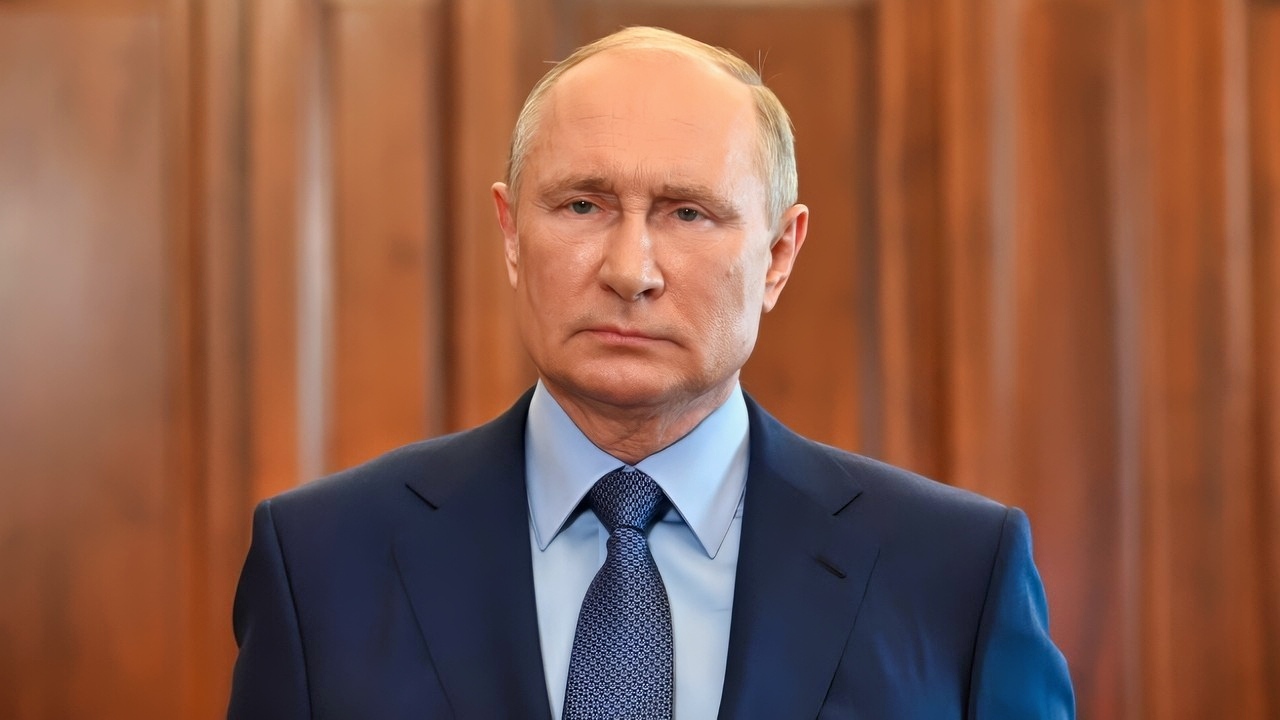
Putin Back in June 2021. Image Credit: Creative Commons.
The off-paper estimates tell a fundamentally different story. Western financial analysts, former Russian government insiders, opposition investigators, and U.S. Senate testimony place Putin’s actual net worth somewhere between $70 billion and $200 billion — a range that, at its upper end, would put the Russian president roughly on par with the world’s top-10 wealthiest individuals, though no longer competing with Elon Musk for the top spot. Musk’s net worth crossed $800 billion in early 2026, reaching $839 billion on the most recent Forbes list — putting Musk in a category of his own and reducing Putin’s high-end estimate to roughly one-quarter of the world’s largest personal fortune.
The wealth, if the estimates are accurate, was not earned. It was extracted from Russian state companies, from the country’s oil and gas exports, from the oligarchs who learned in 2003 that opposing Putin meant prison and supporting him meant keeping half their fortunes intact.
The Range Of The Estimates
The most-cited figure comes from Bill Browder — the American-born financier who was, before 2005, the largest foreign investor in Russia. Browder’s hedge fund Hermitage Capital Management exposed substantial Russian state-company corruption across the early 2000s. After his Russian tax adviser Sergei Magnitsky died in pretrial detention in 2009 under circumstances Browder has called murder, Browder became the most prominent Western advocate for sanctions against the Russian state.
In 2017 testimony before the U.S. Senate Judiciary Committee, Browder estimated Putin’s net worth at $200 billion. The figure was not built from a direct accounting of Putin’s personal holdings — those holdings are buried in offshore structures and proxy ownerships that no Western analyst can fully unwind. Browder’s number was derived from the wealth of the Russian oligarchs known to be in Putin’s inner circle, applied against Browder’s understanding of how Putin had structured his arrangement with those oligarchs.
Swedish economist Anders Åslund offered a more conservative estimate in 2022 — somewhere between $100 billion and $130 billion. Åslund’s calculation looked at Putin’s oligarch confidants, whose individual fortunes range from approximately $500 million to $2 billion each, and assumed Putin controlled meaningful portions of those holdings through trust relationships and informal arrangements.
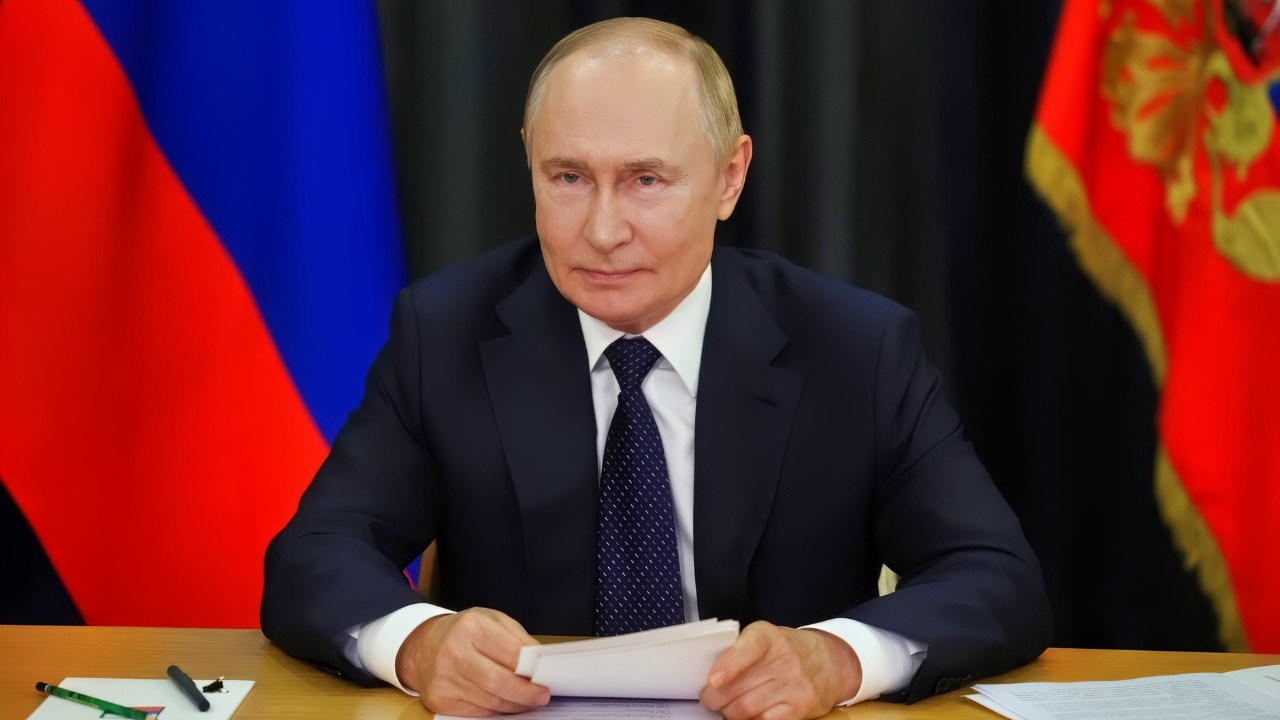
Putin in August 2025. Image Credit: Creative Commons.

Putin in 2019. Image Credit: Creative Commons.
The lower end of the credible estimate range, around $70 billion, reflects the difficulty of verifying any of these claims with the kind of documentary evidence that financial reporting normally requires. Putin’s actual wealth is held through a network of trusted intermediaries — family members, longtime friends, oligarchs whose own fortunes are dependent on continued Kremlin favor — that has been deliberately constructed to make direct attribution impossible.
For context on what those numbers actually mean: Putin at $200 billion would sit somewhere around the wealth of Larry Page, Sergey Brin, or Jeff Bezos in current Forbes rankings — extraordinarily wealthy by any standard, but no longer competitive with Musk’s $800-billion-plus fortune. At the lower $70 billion estimate, Putin would still place him among the world’s 30 richest people. What every credible analyst agrees on is that the official $140,000 salary figure is a fiction.
The 2003 Turning Point
The mechanism that produced Putin’s wealth is, by most accounts, a single political event repeated on a large scale.
In October 2003, Russian authorities arrested Mikhail Khodorkovsky, at the time the richest man in Russia and the principal shareholder of Yukos Oil, one of the world’s largest petroleum companies. Khodorkovsky was charged with fraud and tax evasion. The actual offense, according to widespread Western and Russian opposition consensus, was political: Khodorkovsky had been funding opposition parties, publicly criticizing the Kremlin, and positioning himself as a potential political rival.
Khodorkovsky was convicted, sentenced to nine years, and saw Yukos dismembered and absorbed primarily into state-controlled Rosneft. He spent 10 years in Siberian prison camps before being pardoned and exiled in 2013.
The message to the rest of the Russian oligarch class was unambiguous. Khodorkovsky was the first warning. The rest of the oligarchs absorbed it. The arrangement that emerged across the following years — described in detail in Browder’s Senate testimony — was simple. Russian oligarchs could keep approximately half of what they made. The other half belonged to Vladimir Putin. Not to the Russian state. Not to the presidential administration. Personally to Putin.
The arrangement, if Browder’s framing is accurate, makes Putin the largest oligarch in Russia by definition — extracting wealth from every major Russian commercial enterprise without ever holding a publicly disclosed ownership stake in any of them. The hidden assets are held by oligarchs who serve as custodians of Putin’s share of their fortunes. The cobweb of bank accounts, offshore holdings, and shell-company structures surrounding the arrangement has resisted every Western financial intelligence effort to fully map it.
The Palace
The single most documented piece of Putin’s hidden wealth is the Black Sea palace at Gelendzhik — a 190,500-square-foot residence near the Krasnodar resort town that has become the focal point of Russian opposition investigations into Putin’s personal corruption.
The palace was first publicly disclosed in 2010 by Sergei Kolesnikov, a Russian businessman who fled the country after publishing an open letter to then-President Dmitry Medvedev describing the construction project he had been overseeing. Kolesnikov alleged that the palace had been commissioned by Putin and financed through approximately $1 billion in illegally diverted state funds.
The most comprehensive investigation came from Alexei Navalny’s Anti-Corruption Foundation in January 2021 — released the day after Navalny had been ordered into pretrial detention upon his return to Russia from medical treatment in Germany following his Novichok poisoning. The FBK report estimated the palace’s total construction cost at approximately $1.35 billion. The investigation included a detailed floor plan obtained from a former contractor, comparative interior photographs, and documented connections between the construction financing and companies controlled by members of Putin’s inner circle.
The palace, according to the investigation, includes a church, a 2,500-square-meter greenhouse, an amphitheater, multiple residential buildings, a casino, an ice hockey rink, and an underground tunnel leading to a private dock on the Black Sea. An FSB-enforced no-fly zone covers the property. Fishing in the adjacent coastal waters is prohibited.
After the Navalny investigation was published, Russian oligarch Arkady Rotenberg — a longtime Putin friend dating back to their childhood judo practice in St. Petersburg — publicly claimed ownership of the palace. The claim was widely interpreted as a Kremlin damage-control maneuver intended to provide legal cover rather than a credible transfer of ownership. The Anti-Corruption Foundation’s subsequent investigations have continued to document state-company financing flowing to the property under the cover of fictional service contracts.
A second palace was uncovered in December 2025 — this one at Cape Aya in occupied Crimea, near Sevastopol. The site was originally purchased in 2007 by the family of former Ukrainian president Viktor Yanukovych. After Russia annexed Crimea in 2014, the unfinished complex was transferred to the Presidential Property Management Department and rebuilt at an estimated cost of roughly 10 billion rubles using state budget and offshore funds — the same pattern of financing that produced the original Gelendzhik palace.
Why The Number Is Probably Higher
The credible Western estimates of Putin’s wealth all share a structural limitation. They count what can be plausibly attributed — the oligarch holdings believed to be controlled on Putin’s behalf, the real estate that opposition investigations have documented, the luxury watches, yachts, and aircraft that can be visually inventoried.
They do not count what cannot be seen — the offshore accounts that no one has yet penetrated, the gold and precious metals reportedly stockpiled in private vaults, the cash holdings that operate outside any conventional financial system, the investments held under family member names and intermediary structures that have not yet been disclosed.
Forbes magazine’s policy for its annual billionaire rankings explicitly excludes dictators whose fortunes derive from political positions rather than legitimate business operations. Putin’s omission from the Forbes list across his entire presidency is widely understood within Western financial journalism to reflect that policy rather than any conclusion that Putin lacks the asset base to qualify.
The estimates that place Putin’s wealth at $200 billion are the upper bound of what Western analysts have been willing to publicly defend with the available evidence. The actual figure — if it could ever be verified — may be substantially higher.
What is not in dispute is that the wealth came from somewhere. Russia is a country of roughly 144 million people with an average annual income of about $14,000. Putin’s personal fortune, even at the conservative $70 billion estimate, exceeds the combined annual income of every Russian citizen.
Whatever Vladimir Putin actually owns, he did not earn it. The Russian people did.
About the Author: Harry J. Kazianis
Harry J. Kazianis (@Grecianformula) was the former Senior Director of National Security Affairs at the Center for the National Interest (CFTNI), a foreign policy think tank founded by Richard Nixon based in Washington, DC. Harry has over a decade of experience in think tanks and national security publishing. His ideas have been published in the NY Times, The Washington Post, The Wall Street Journal, CNN, and many other outlets worldwide. He has held positions at CSIS, the Heritage Foundation, the University of Nottingham, and several other institutions related to national security research and studies. He is the former Executive Editor of the National Interest and the Diplomat. He holds a Master’s degree focusing on international affairs from Harvard University.


D3F1ANT
May 24, 2026 at 11:27 am
Don’t forget the other side of the SAME coin: Zelenskyyyyy sure amassed a LOT of America’s wealth for himself, and his cronies…
Dooyle
May 24, 2026 at 1:46 pm
Assuming that the numerous western accusers (who btw are the most unrivalled Lucifers on Earth) are correct, and putin has a personal fortune of $200 bil, then how MUCH does xi jinping have in his personal hoard.
Probably $5 trillion.
Or about a quarter of china’s gdp.
Xi is one of the most corrupt leaders on Earth. Putin is merely a small fish, compared to xi.
Russia has long been a target of the west, along with china, and the reason is simple, extremely simple.
Both countries don’t allow the US to station its military on their soil, and this is considered the greatest offence, or greatest wrongdoing. Greatest transgression in living memory.
The west today is full of their own putins, particularly that dark shady actions like influence peddling and lobbying are perfectly legit. And these usually involve fast flowing rivers of money.
At the end of the day, oligarchs are present everywhere, even in the west.
To forestall them, world leaders in the future must be chosen by a series of intelligent humanoid robots who can put them to the test, grill them, grade their skills and knowledge and their integrity and honesty.
Not by voting and certainly not by political campaigning and surely not by current ‘democratic’ methods which involve a lot of lobbying.
Like somebody who once said,”Take that log out of your eye, before you criticise the speck seen on others.”
pagar
May 24, 2026 at 2:37 pm
Vladimir Putin has betrayed his own country.
How.
By holding various stupid sports events like the 2014 winter Olympics and 2018 world cup.
By investing and keeping Russian liquid assets in western countries, instead of buying and keeping gold.
By failing to defeat the nazis of the 21st century.
Putin has even failed to upgrade Russia’s military equipment, its current batch of MBTs broadly still unchanged from the ones used in the 1990s Chechen wars.
Putin has also failed to upgrade russia’s strategic weaponry, instead concentrating on the ISS, which is just extremely extremely dumb and stupid.
Putin must go, the hard way, or the easy way.
Dennis Makowski
May 24, 2026 at 3:04 pm
That’s why Trump loves Putin. He is a perfect example of how much a leader of a country can STEAL
xi-xi-xi
May 24, 2026 at 4:02 pm
Question: Why did kamala harris get trounced in the nov 2024 election.
Answer: Kamala failed to project the true face of herself as a real bona fide candidate to the american public.
Kamala just couldn’t distance jerself from genocide joe’s b.o. in foreign policy.
Kamala failed to openly oppose the US-backed genocidal war against the gaza people, and the western-backed genocidal pogrom against ethnic russians in ukraine.
Kamala failed totally on both counts, and the american public took note.
She failed to break away free from biden’s noxious b.o. (bureaucratic oligarchy) and she ended up getting trounced by donald ‘files’ trump.