

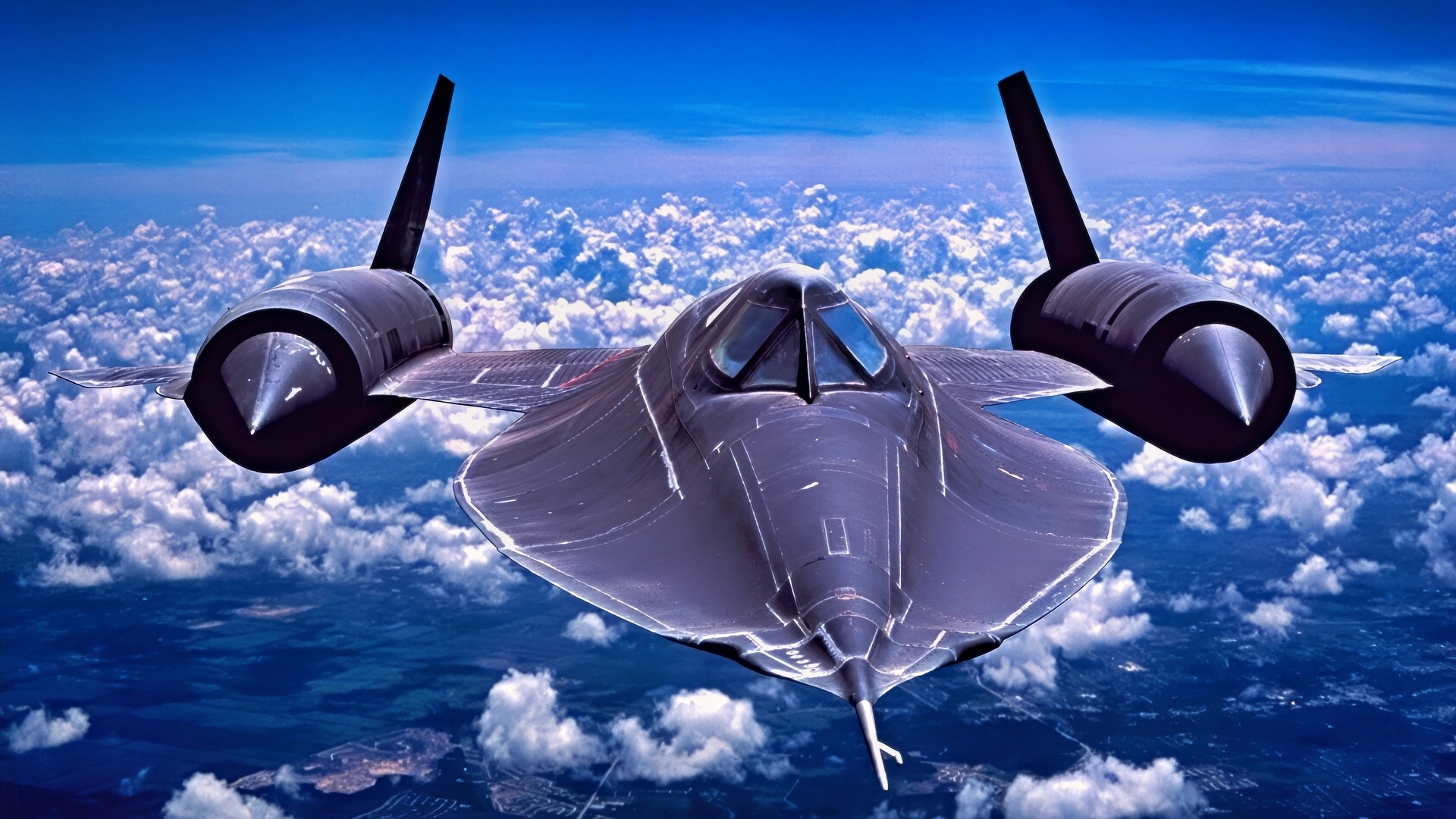
On March 6, 1990, U.S. Air Force pilot Lt. Col. Ed Yielding and Reconnaissance Systems Officer Joseph Vida flew an SR-71 Blackbird on its retirement flight. The aircraft departed Palmdale, California. Its destination: the Smithsonian Museum in Washington, DC. The flight covered roughly 2,300 miles. Time elapsed: 64 minutes and 20 seconds. Average speed: 2,124 MPH at over 80,000 feet altitude. On the same flight, the SR-71 also broke records between Kansas City and Washington, and between St. Louis and Cincinnati. Commercial airliners cover the same coast-to-coast route in approximately 5 hours. The record has never been broken since then.
The SR-71 Blackbird Made History At The End Of Its Career

SR-71 Side Angle National Security Journal Original Photo.
The SR-71 Blackbird was one of America’s most iconic planes ever designed. Used as a supersonic, high-altitude, deep-penetration surveillance aircraft during the latter stages of the Cold War, the SR-71 broke multiple records.
One of those incredible records was made on the plane’s final flight on March 6, 1990. Rather than quietly retiring the storied airplane, the United States Air Force wanted to send the aircraft off with style.
So, the Air Force told the SR-71 crew in Palmdale, Calif., to ferry the bird from its base in the Golden State to the Smithsonian Museum in Washington, D.C., where the plane would be put on display.
The crew of the SR-71 at Edwards Air Force Base in California responded with their typical aplomb, navigating the alien-looking aircraft from the West Coast of the United States to the nation’s capital on the East Coast–breaking an assortment of records along the way.
The Blackbird’s Final Run Across America Broke All the Records
US Air Force pilots Lt. Col. Ed Yielding and Reconnaissance Systems Officer Joseph Vida believed their beloved SR-71 deserved a grand sendoff. That is precisely what the crew gave their all-black, angular craft. Among the records broken on that final flight was the astonishing record of flying from Los Angeles to Washington, D.C.–without stopping–– in just 64 minutes, 20 seconds at an average speed of roughly 2,124 miles per hour.
Let’s put that timeline into perspective. It usually takes commercial airlines around five hours to fly that route.
The SR-71 did that in just over an hour while cruising above 80,000 feet. To put a cherry on top of this aeronautical scoop of ice cream, that same flight broke records for travel times between Kansas City and Washington, St. Louis and Cincinnati, as well as beating any previous record in flight times between the West and East Coasts of the United States.
The SR-71 Was Built Like Nothing Else on Earth
Manufactured by Lockheed Skunk Works, the SR-71 Blackbird carried a crew of two and was powered by two Pratt & Whitney J58 turbojet/ramjet hybrids. These powerful engines produced a maximum speed of 2,193 mph (more than Mach 3).
In emergencies, however, it has been claimed that the SR-71 could reach speeds above Mach 3.4 (though that was never confirmed).
Blackbird had a service ceiling of around 85,000 feet and an impressive range of around 3,200 miles before needing to refuel.
An SR-71 had a maximum takeoff weight of about 170,000 pounds and an empty weight of about 67,500 pounds. The plane was made primarily of titanium. Blackbird was not as stealthy as modern stealth planes (it lacked modern radar-absorbent materials on its hull to deflect radar).
Where the SR-71 excelled was in its ability to outrun enemy air defenses. Soviet air defenses often knew the SR-71 was in their airspace. But the Soviets couldn’t reliably stop US penetrations of Soviet airspace when the Americans employed the SR-71 Blackbird.
The Plane Literally Expanded While Flying at Mach 3
One of the key, albeit underappreciated, aspects of the SR-71 was that its titanium hull expanded when the aircraft flew at supersonic speeds at high altitudes over enemy territory. Air friction at those speeds created a plasma bubble around the plane.
Essentially, the heat generated by the flight operation of the SR-71 was so significant that the airframe would expand several inches during flight.
Because of the airframe’s expansion, Blackbirds leaked fuel on the runway before takeoff, as the structure was only fully sealed once traveling at those fast speeds and the airframe became superheated.
While visiting the Blackbird museum at Edwards Air Force Base in 2022, one of the former pilots told me that most Blackbird crews never bothered that their beloved bird leaked essential fuel on the tarmac or that the plane was never fully sealed unless it was in flight.
To those Blackbird crews, who just confirmed to them that the SR-71 was a pure flying machine, so much so that when they weren’t flying, they were literally falling apart.
The Blackbird Still Has No True Replacement
The SR-71 remains the fastest air-breathing manned aircraft ever operationally fielded. These birds are one of the highest-flying operational aircraft ever built, too. And, Blackbird has been dubbed the greatest reconnaissance aircraft in history.
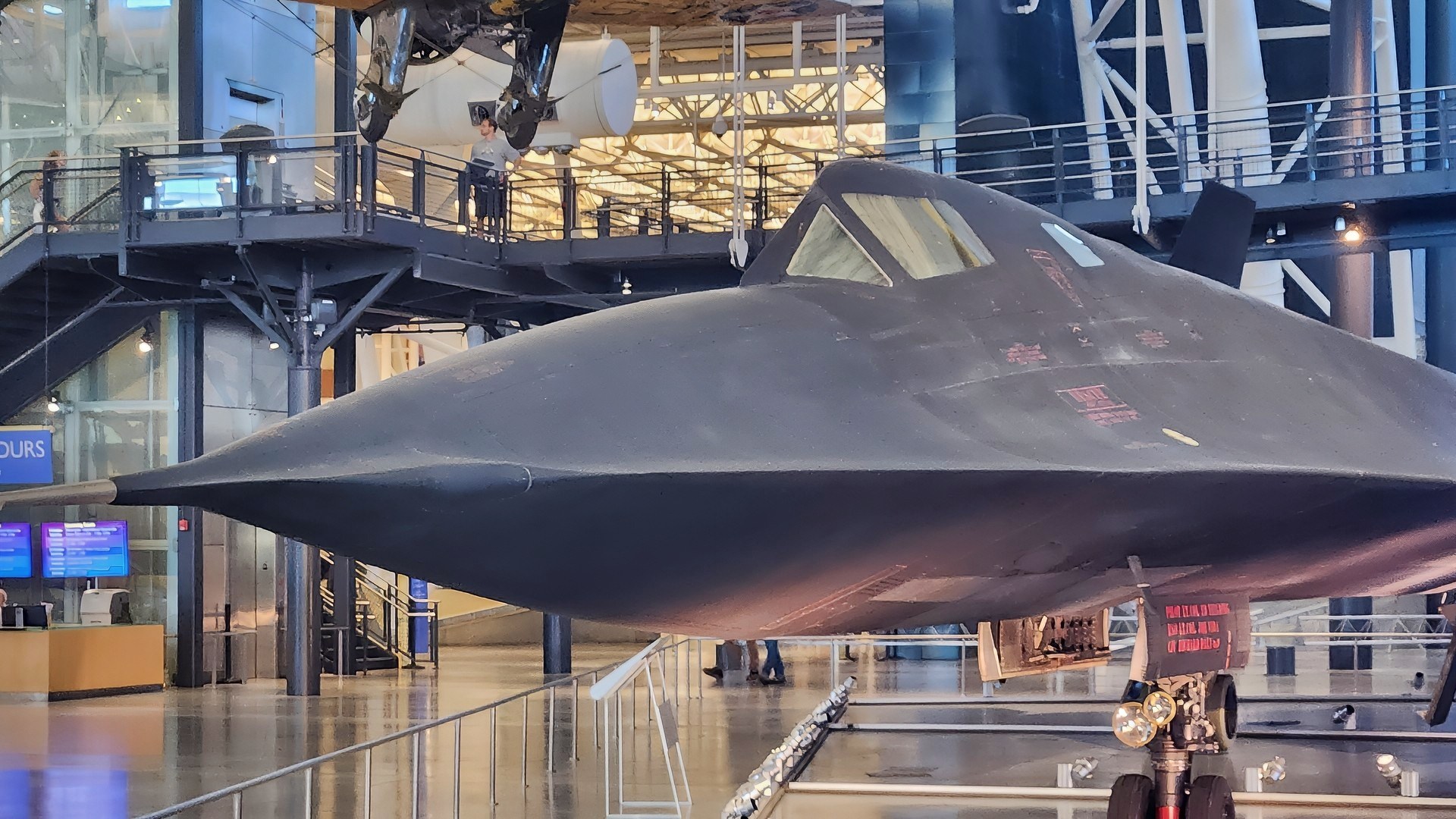
SR-71 Blackbird National Security Journal Photo Collection.
On its retirement flight from Los Angeles to Washington, D.C., the Blackbird did not go quietly into that good night. It screamed across the United States at Mach 3, breaking every record imaginable, landed in Washington, and basically told Air Force policymakers: have fun trying to find a replacement for me.
About the Author: Brandon J. Weichert
Brandon J. Weichert is a Senior National Security Editor. Recently, Weichert became the editor of the “NatSec Guy” section at Emerald. TV. He was previously the senior national security editor at The National Interest. Weichert hosts The National Security Hour on iHeartRadio, where he discusses national security policy every Wednesday at 8 p.m. Eastern. He hosts a companion show on Rumble entitled “National Security Talk.” Weichert consults regularly with various government institutions and private organizations on geopolitical issues. His writings have appeared in numerous publications, among them Popular Mechanics, National Review, MSN, and The American Spectator. And his books include Winning Space: How America Remains a Superpower, Biohacked: China’s Race to Control Life, and The Shadow War: Iran’s Quest for Supremacy. Weichert’s newest book, A Disaster of Our Own Making: How the West Lost Ukraine, is available for purchase at any bookstore. Follow him via Twitter/X @WeTheBrandon.


