

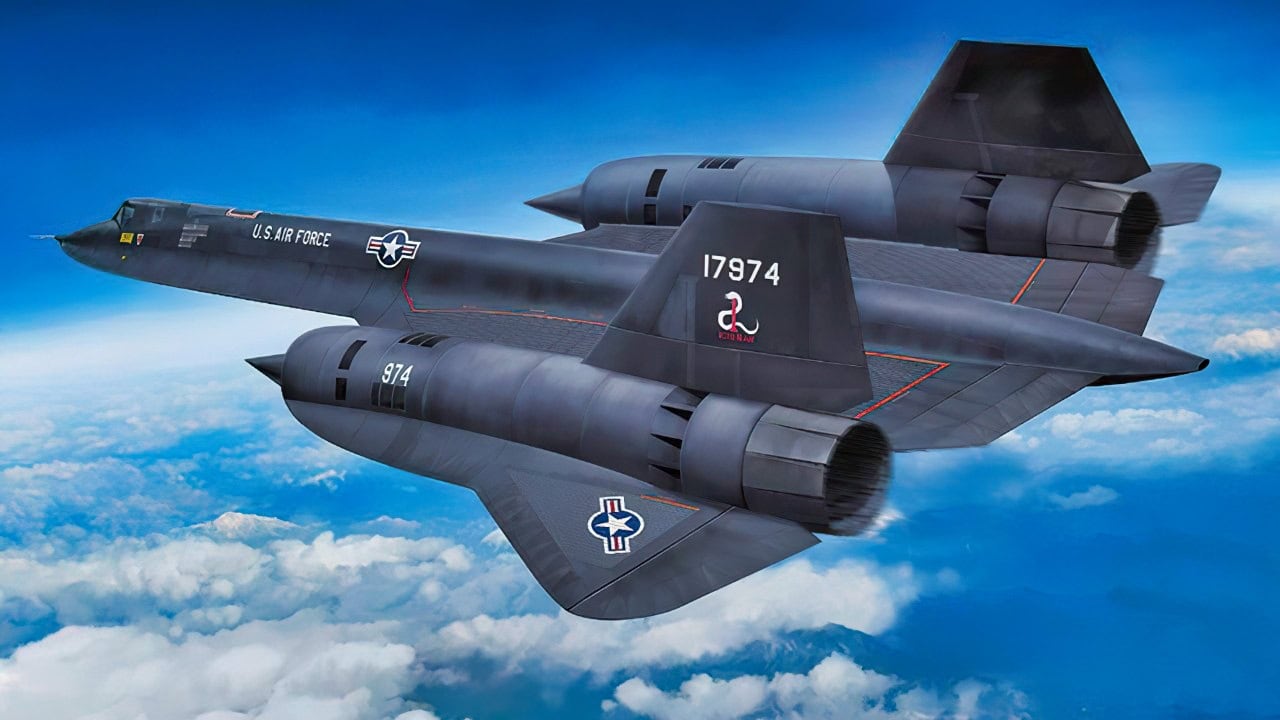
In the early 1980s, Lockheed’s Skunk Works proposed converting the SR-71 Blackbird — the Mach 3+ reconnaissance aircraft that flew above 80,000 feet and was never shot down — into the SR-71 I, an offensive long-range interceptor designed to hunt Soviet AWACS aircraft and intercept Tu-95 Bear and Tu-160 Blackjack strategic bombers before they could reach U.S. airspace. The conversion would have added four AIM-120 AMRAAM missiles in modified internal bays, a modified F/A-18 Hornet AN/APG-65 radar with 100-nautical-mile detection range, and an engagement range of about 80 nautical miles per shot. The Reagan administration ultimately passed on the program — modification costs were prohibitive, the F-15 and F-14 Tomcat were absorbing the air-defense mission, and the Soviet bomber threat was perceived to be declining.
The SR-71 Blackbird Almost Had a New Role – Bomber Killer
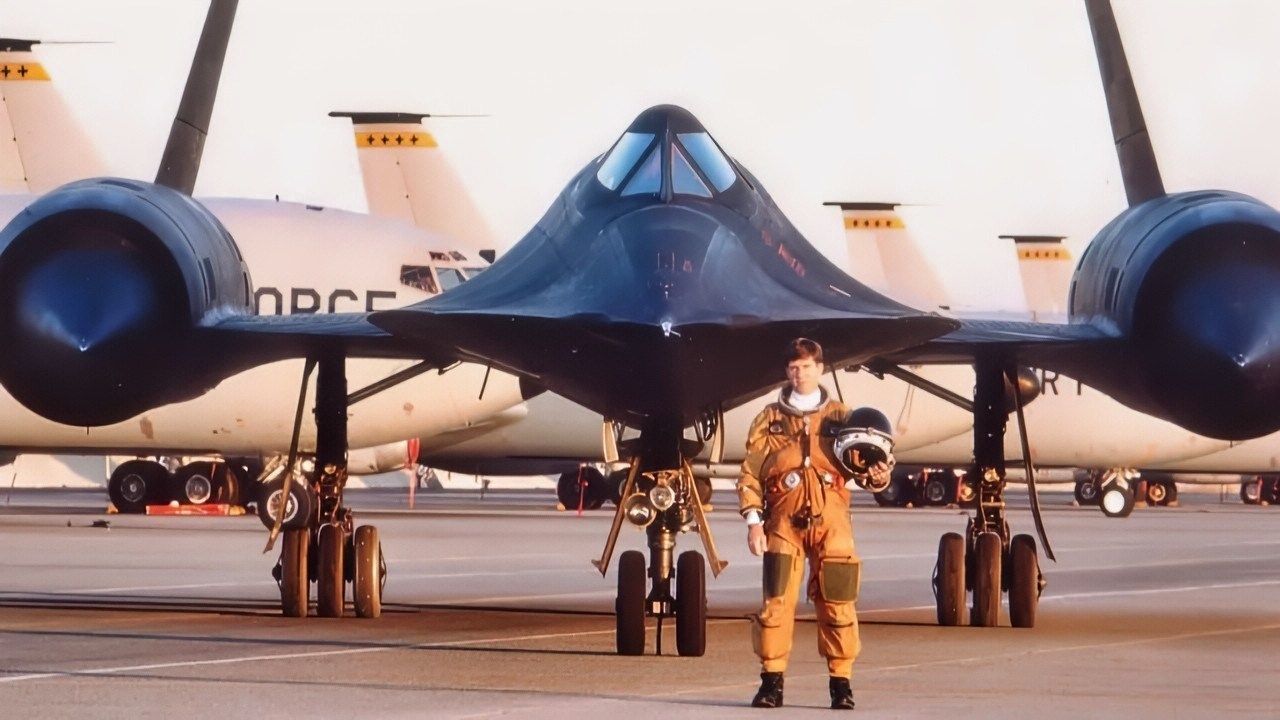
SR-71 and Pilot Creative Commons Image
When the United States military and intelligence community needed a high-speed, long-range spy plane, Lockheed Martin answered the call by producing the SR-71 Blackbird. To this day, decades after it was taken out of commission, the SR-71 still holds some of the world’s best flight records.
The Birth of a Legend
That’s pretty amazing for a plane that first took wing in 1964.
The SR-71 came before the age of stealth, so it relied on speed to avoid detection while spying on America’s enemies during the Cold War.
Flying above 80,000 feet while cruising at more than Mach 3, the SR-71 was never shot down on a mission. But the SR-71 lacked weapons. Its mission was surveillance, and its only defenses were speed and altitude.
From Spy to Killer: The SR-71 I Concept
In the early 1980s, as the Reagan administration took office and sought innovative ways to counter the Soviet menace during the Cold War, Lockheed Martin devised a daring concept to modernize the SR-71.

Tu-95. Image Credit: Creative Commons.

Tu-95 Bomber Russian Air Force. Image Credit: Creative Commons.
Rather than keeping the high-flying, remarkably fast SR-71 as merely a spy plane, Lockheed recommended converting the Blackbird into a high-speed, long-range interceptor called the SR-71 I.The recommendation was to reorient the proposed SR-71 I mission set from passive surveillance only to hunting Soviet Air Force AWACS aircraft. Lockheed also wanted the SR-71 I to intercept the USSR’s strategic bombers before they could reach American airspace. So, Lockheed was proposing to upend the Blackbird’s entire design philosophy by converting it into an offensive, deep-strike air dominance warplane.
The Tech That Made It Possible
Lockheed’s proposed design change to the legendary SR-71 was not merely a response to the politics of the Reagan era. Technological innovations in the defense sector made such plans possible. Specifically, the creation of one of America’s earliest “fire-and-forget” missiles, the AIM-120 AMRAAM, was a game-changing development.
Because the AIM-120 AMRAAM could track targets independently after launch, and this new missile allowed for multiple simultaneous engagements, designers began to believe that pairing them with the proposed SR-71 would turn this plane into the world’s most lethal interceptor.
In fact, defense engineers planned to add internal missile bays to the SR-71 I. These bays would likely have held four AIM-120s, modified to fit the Blackbird’s cramped interior. These upgrades would have given the SR-71 an engagement range of about 80 nautical miles.
Other advances also occurred in the US arsenal around this time.
The F/A-18 Hornet employed the AN/APG-65 radar, which completely revolutionized the way the US conducted air warfare. This system was modified to fit inside the SR-71’s nose and had a detection range of about 100 nautical miles for large targets. So, the Blackbird would have been able to find and kill targets rather than just observe them. Paired with the AIM-120, this would have given the SR-71 air dominance over its Soviet rivals.
Not the First Attempt: Enter the YF-12
It must be stressed that the SR-71 was not a dogfighter. It was designed to hunt Soviet AWACS and to blind Soviet air defenses. The SR-71 I would then have attacked Tu-95 Bear and Tu-160 Blackjack nuclear bombers before they could have entered US airspace. The plan was to have the SR-71 decapitate the enemy’s kill chain before the battle even began.
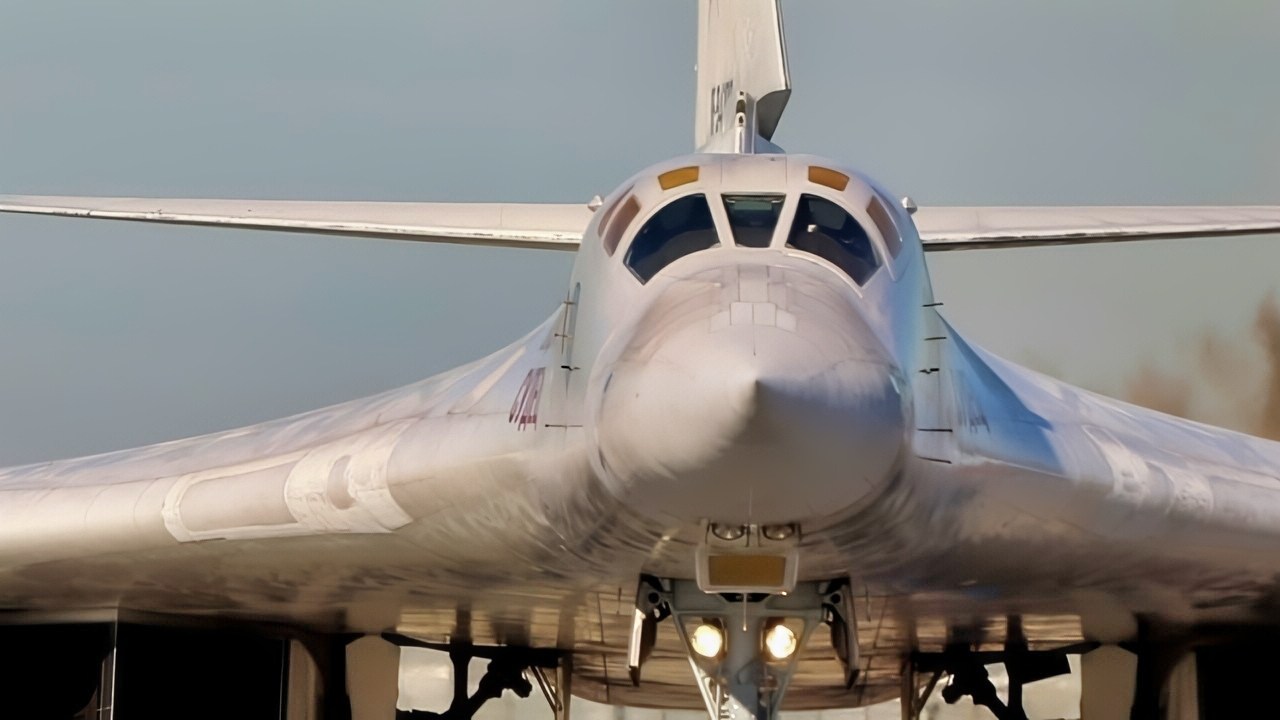
Tu-160 Up Close. Image Credit: Creative Commons.

Tu-160 bomber Creative Commons Image
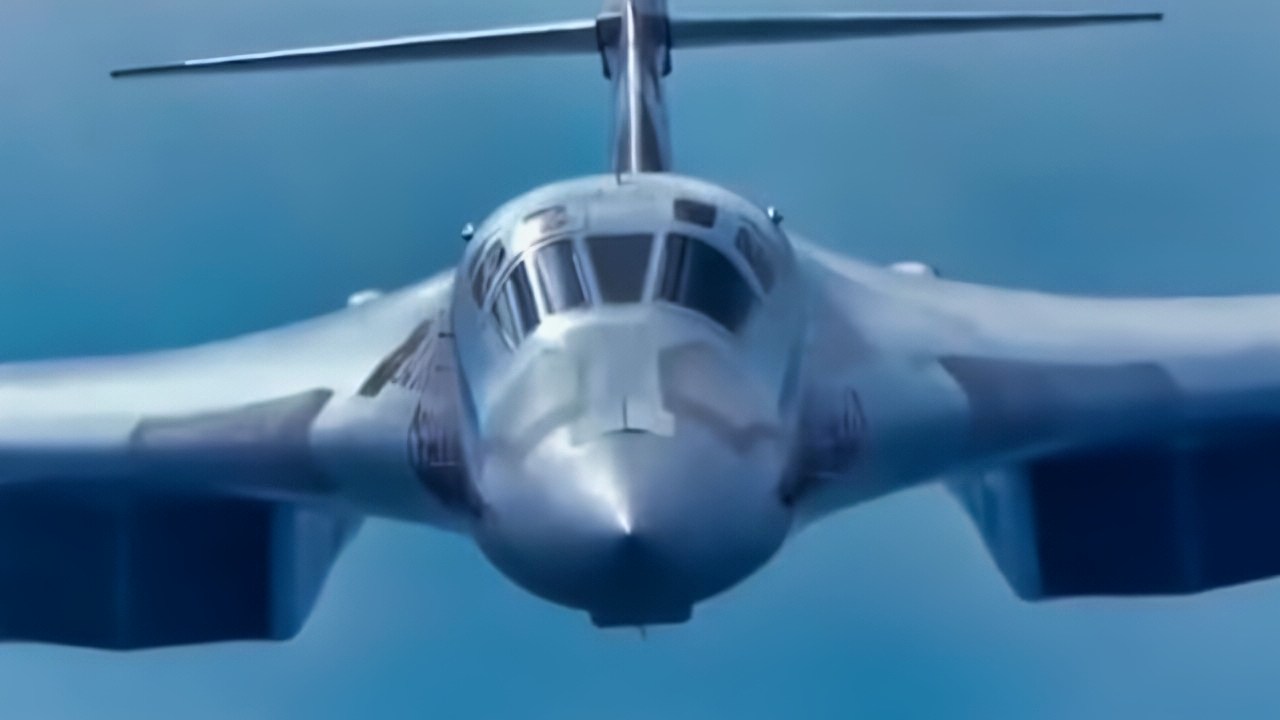
Tu-160 Bomber. Image Credit: Creative Commons.
A previous attempt to create such a high-speed interceptor was undertaken by Lockheed with the YF-12. That was essentially a weaponized version of the SR-71, capable of carrying long-range missiles and designed to intercept Soviet bombers.
The SR-71 was Lockheed’s second attempt to create such a long-range interceptor, updated, of course, for the modern missile age.
Why the SR-71 I Never Flew
Even though this was a phenomenal concept that would likely have extended the SR-71’s lifespan, the project’s cost and complexity were simply too daunting. The SR-71 was already insanely expensive to operate.
Modifying it into an interceptor would have further increased costs. Plus, the US shifted toward fighters such as the F-15 and the F-14 Tomcat. The US military also moved toward an AWACS-centric, layered air defense concept.
As always, the SR-71 was competing against the growing sophistication of satellites. Its original surveillance mission was under constant threat, and with other, cheaper plans to enhance US air defenses underway, the SR-71 would have become redundant. There was less need for a Mach 3 interceptor roaming globally. At least, that’s what the Pentagon told itself.
Ultimately, given those changes and the fact that the Soviet Union was plateauing by the time Lockheed proposed the SR-71 I during the Reagan administration, there was never any real chance the SR-71 I would have taken flight.
A Weapon the US Might Wish It Had Today
That’s too bad.
As it turns out, the US possessing a Mach 3+ missile truck designed to hunt enemy radar planes and bombers before they even got close to US territory would have been very helpful in today’s strategic environment, where stealth matters less and high-speed matters more.
About the Author: Brandon J. Weichert
Brandon J. Weichert is the Senior National Security Editor at 19FortyFive.com. Recently, Weichert became the editor of the “NatSec Guy” section at Emerald. TV. He was previously the senior national security editor at The National Interest. Weichert is the host of The National Security Hour on iHeartRadio, where he discusses national security policy every Wednesday at 8 pm Eastern. He hosts a companion show on Rumble entitled “National Security Talk.” Weichert consults regularly with various government institutions and private organizations on geopolitical issues. His writings have appeared in numerous publications, among them Popular Mechanics, National Review, MSN, and The American Spectator. And his books include Winning Space: How America Remains a Superpower, Biohacked: China’s Race to Control Life, and The Shadow War: Iran’s Quest for Supremacy. Weichert’s newest book, A Disaster of Our Own Making: How the West Lost Ukraine, is available for purchase wherever books are sold. He can be followed via Twitter/X @WeTheBrandon.


