


America’s Naval Shipyards Run on WWII-Era Infrastructure — The CBO Says Labor Shortages Will Persist for the Next 25 Years
About 40 percent of all US Navy attack submarines are out of service due to maintenance delays, according to the US Naval Institute’s report.
In essence, nearly half of the Navy’s essential underwater strike capability has been sidelined during peacetime.
This isn’t caused by a major war, but by ongoing neglect from the US government toward America’s critical naval shipyards.

SILVERDALE, Wash. (Oct. 27, 2025) Ohio-class ballistic missile submarine USS Pennsylvania (SSBN 735) arrives at Naval Base Kitsap-Bangor following routine operations at sea, Oct. 27, 2025. Pennsylvania is assigned to Commander, Submarine Group (SUBGRU) 9, which exercises operational and administrative control authority for assigned submarine commands and units in the Pacific Northwest providing oversight for shipboard training, personnel, supply and material readiness of SSBNs and their crews. SUBGRU-9 is also responsible for nuclear submarines undergoing conversion or overhaul at Puget Sound Naval Shipyard in Bremerton. (U.S. Navy photo by Mass Communication Specialist 1st Class Ryan Riley).
Major Failures at America’s Shipyards
This is a major strategic failure for the US Navy, given that America’s submarines are its most survivable warfighting asset. More importantly, the submarines are vital to any conflict with China that arises in the Indo-Pacific.
Add in the ongoing Iran War, in which the United States desperately needs deep strike capabilities that systems like the Ohio-class and Virginia-class attack submarines provide; having an insufficient number of these systems is simply unacceptable.
With that Middle East conflict underway, there is also the chance that Beijing decides now is the time to act boldly against one of its neighbors, requiring the deployment of US submarines to the region.
Under current conditions, considering the US Navy’s global operational pace, having nearly half of America’s attack submarines sidelined will result in a strategic setback somewhere.
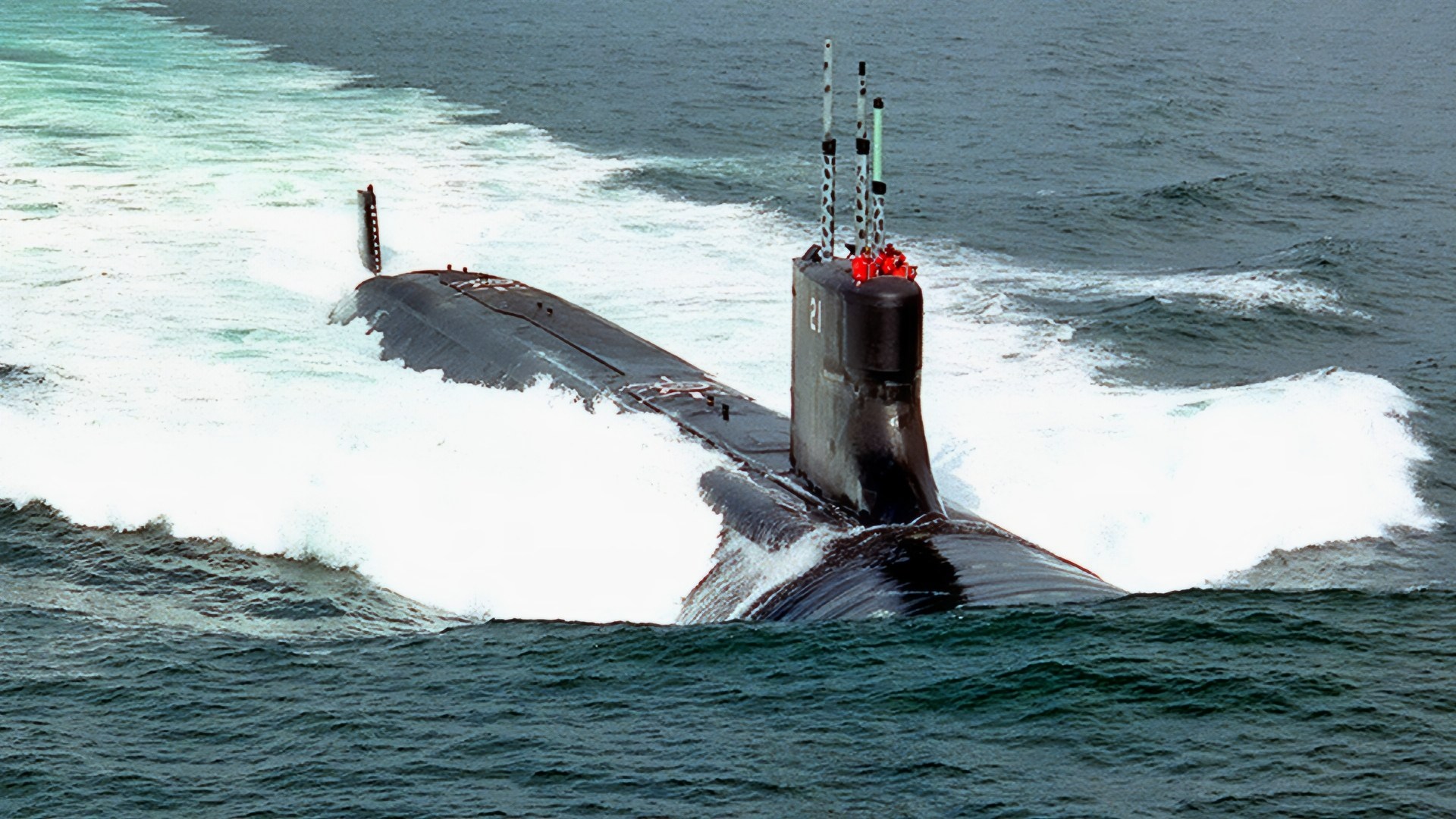
Seawolf-Class Submarine. Image Credit: Creative Commons.
There is one main reason why nearly half of the Navy’s attack submarines are idle in port, awaiting maintenance: the United States currently has only four public shipyards. These shipyards are old, overloaded, and understaffed.
The Congressional Budget Office (CBO) released a report showing how demand for work has exceeded capacity.
Indeed, labor shortages at America’s few naval shipyards have lasted for decades.
Even more concerning, the infrastructure for these shipyards dates to World War II designs. They haven’t been significantly updated or made more efficient in 80 years.
Oh, and the deindustrialization craze that really took off in the 1970s left America with too few shipyards. As a result, there isn’t enough capacity to maintain America’s submarine fleet, causing those submarines to wait years before entering maintenance.
When Scheduled Maintenance is Deferred
The purpose of scheduled maintenance is to prevent the natural wear and tear our submarines endure during their service life from becoming catastrophic.
However, the American submarine force is now missing scheduled maintenance stops because there are no workers available to repair the ships, and there are not enough slips at the shipyards to quickly repair and redeploy these submarines.

(Sept.9, 2011) The Virginia-class submarine Pre-Commissioning Unit (PCU) California (SSN 781) gets underway from Naval Station Norfolk to conduct weapons systems acceptance trials. California is the eighth Virginia-class submarine and is scheduled to be commissioned Oct. 29. (U.S. Navy photo by Mass Communication Specialist 2nd Class William Jamieson/Released)
You have a growing crisis at the shipyards, where there aren’t enough resources to repair America’s essential attack submarines quickly. As a result, maintenance gets delayed.
Then more submarines require maintenance, but there isn’t enough space at the shipyards (or enough workers), leading to a maintenance death spiral. Submarines on deployment have their time at sea extended, which exhausts crews, causes additional damage from prolonged wear and tear, and reduces the overall submarine force’s readiness and numbers—creating significant capability gaps.
And that’s all before a major war begins.
Labor Shortages at America’s Shipyards
The US has faced labor shortages in its shipyards for years. But the CBO goes further, estimating that demand for workers will exceed supply over the next 25 years. This ongoing worker deficit amounts to hundreds of thousands of workdays each year.
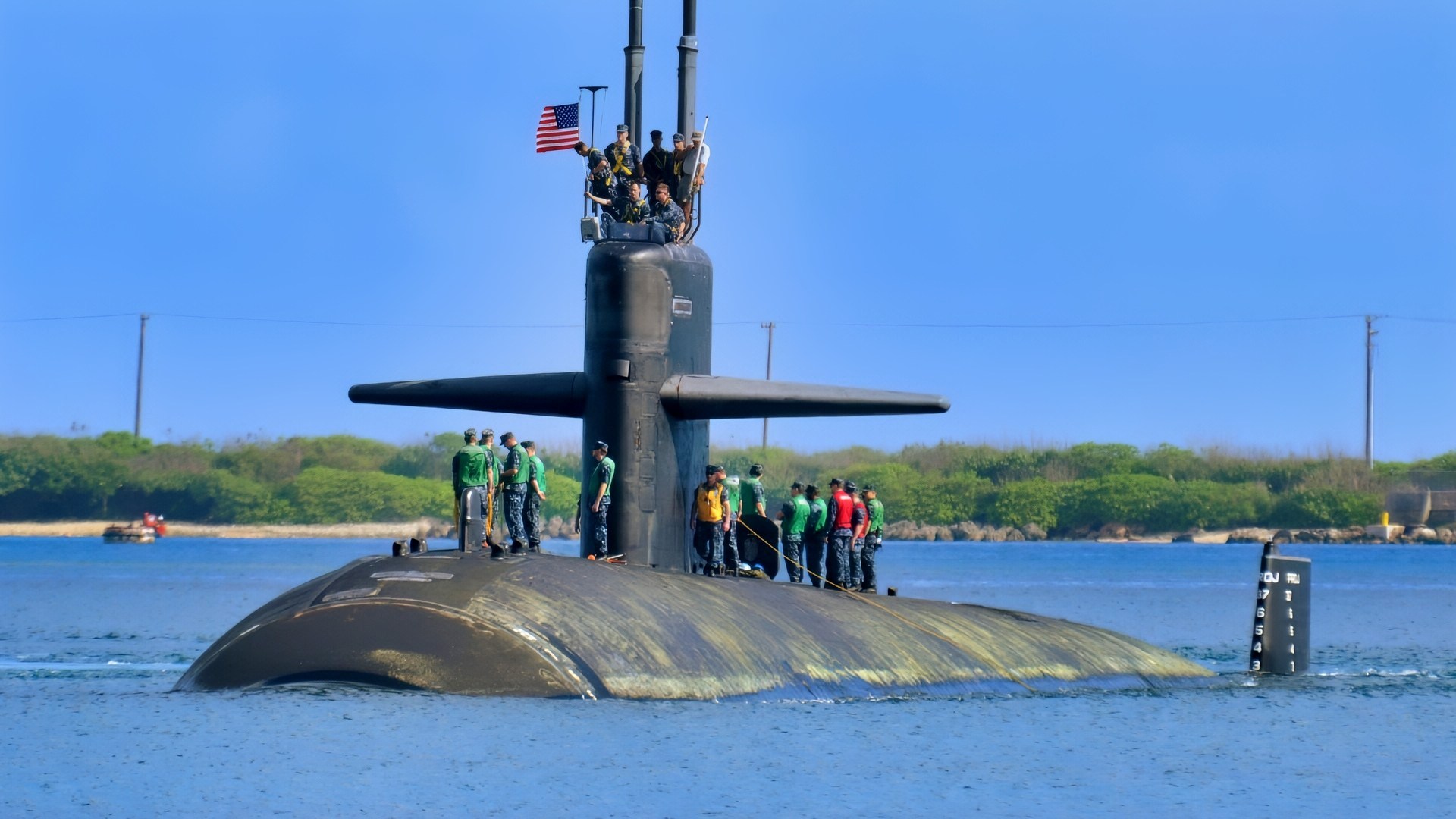
130507-N-LS794-045
POLARIS POINT, Guam (May 7, 2013) The Los Angeles-class attack submarine USS Albuquerque (SSN 706) arrives in Apra Harbor, Guam, to conduct maintenance and liberty. Albuquerque is conducting operations in the U.S. 7th Fleet area of responsibility. (U.S. Navy photo by Mass Communication Specialist 1st Class Jeffrey Jay Price/Released)
When the Cold War ended, Washington believed we’d never need a large Navy again. As a result, Congress and the Pentagon began hollowing out America’s shipyards, suppliers, and the skilled trades pipeline. Over many years, these issues have built up.
Then you must acknowledge that modern nuclear submarines are vastly more complex than non-nuclear ones. America’s entire fleet is nuclear-powered. The Navy enforces stricter safety protocols during upgrades to these systems; repairs take longer and require more labor.
Additionally, the United States has only a limited number of nuclear-certified facilities. As a result, even temporary issues like dock closures can have ripple effects across the entire fleet.
Losing the War in the Shipyards
Adding to this is the inappropriateness of having a nearly $1 trillion defense budget while experiencing reduced capabilities as a result.

(Dec. 10, 2010) The Los Angeles-class attack submarine USS Houston (SSN 713) takes part in a photo exercise as part of Keen Sword 2011. Keen Sword is a joint, bilateral exercise designed to strengthen Japan-U.S. military operations. (U.S. Navy photo by Mass Communication Specialist 3rd Class Casey H. Kyhl)
So, the US Navy isn’t losing submarines in war. They’re losing them in drydock. To make matters worse for America, in a high-tempo conflict where submarines will be the tip of any American missile, like one with China, the side that builds, repairs, and deploys its submarines faster will win. China has key advantages over the United States under current conditions.
About the Author: Brandon J. Weichert
Brandon J. Weichert is the Senior National Security Editor at 19FortyFive.com. Recently, Weichert became the editor of the “NatSec Guy” section at Emerald. TV. He was previously the senior national security editor at The National Interest. Weichert is the host of The National Security Hour on iHeartRadio, where he discusses national security policy every Wednesday at 8 pm Eastern. He hosts a companion show on Rumble entitled “National Security Talk.” Weichert consults regularly with various government institutions and private organizations on geopolitical issues. His writings have appeared in numerous publications, among them Popular Mechanics, National Review, MSN, and The American Spectator. And his books include Winning Space: How America Remains a Superpower, Biohacked: China’s Race to Control Life, and The Shadow War: Iran’s Quest for Supremacy. Weichert’s newest book, A Disaster of Our Own Making: How the West Lost Ukraine, is available for purchase wherever books are sold. He can be followed via Twitter/X @WeTheBrandon.


John King
April 5, 2026 at 3:29 pm
As someone who worked Navy budgets at the top of money food chain (including Navy operation and maintenance (aircraft, ship, submarine, weapons, equipment, base operations) and weapons (missiles, torpedoes, guns, ammunition, satellites) appropriations), my personal assessment is that the underlying problem is in two areas. One, like all military departments, the admirals and generals prefer to buy new and expensive state-of-the-art toys rather fixing and maintaining their current stuff. This fixation extends into Congress, which is lobbied by defense contractors do keep their production lines full. Rather than just adding money to the Pentagon budget, fixing this imbalance to buy less new stuff and fixing more current inventory. Two, the dysfunctional “capitalist free market” business construct that separates the public and private sectors. This failure squarely on successive Navy executive and military leadership, required a “whole of industry” approach to national security, where DoD should have assessed and directly invested on a time-phased basis in defense infrastructure (facilities, equipment and people) to ensure full capacity existed. Direct cash or amortizable private investment is the typical approach in the private sector. But this obsession with public/private separation in acquiring goods and services is a total failure of not only imagination and business acumen. It’s basic negligence, with the ultimate and current result that the U.S. National Defense Strategy (NDS) is hollow because the stated force structure required to execute it is substantially below the desired levels.
Patrick
April 5, 2026 at 5:29 pm
At the peak of the Cold War spending in the 80s, I was on boats that visited 3 shipyards. All were shut down decades ago.
Try Peace
April 5, 2026 at 7:25 pm
Warmongers always use the imaginary threat posed by China as the excuse for more military spending. The only empire which is making unprovoked attacks on other countries is the United States of Israel.