


Misawa Air Base in northern Japan is about to get a serious upgrade. The Pentagon is replacing the 36 F-16 Fighting Falcons currently flying out of the installation with 48 brand-new F-35A Lightning II stealth fighters—a permanent deployment of America’s most advanced tactical aircraft along the first island chain. The move comes as the Trump administration sharpens its Indo-Pacific posture against China, North Korea, and Russia, and as Japan’s own defense modernization accelerates. With JASDF F-35As already operating from Misawa, the U.S. is doubling down on stealth airpower in a region where every minute of warning matters.
F-35A Coming to Japan to Deter China
If the United States ever goes back to war in East Asia—whether against China, North Korea and/or Russia—the F-22 Raptor and F-35 Lightning II will be key aerial assets in the endeavor.
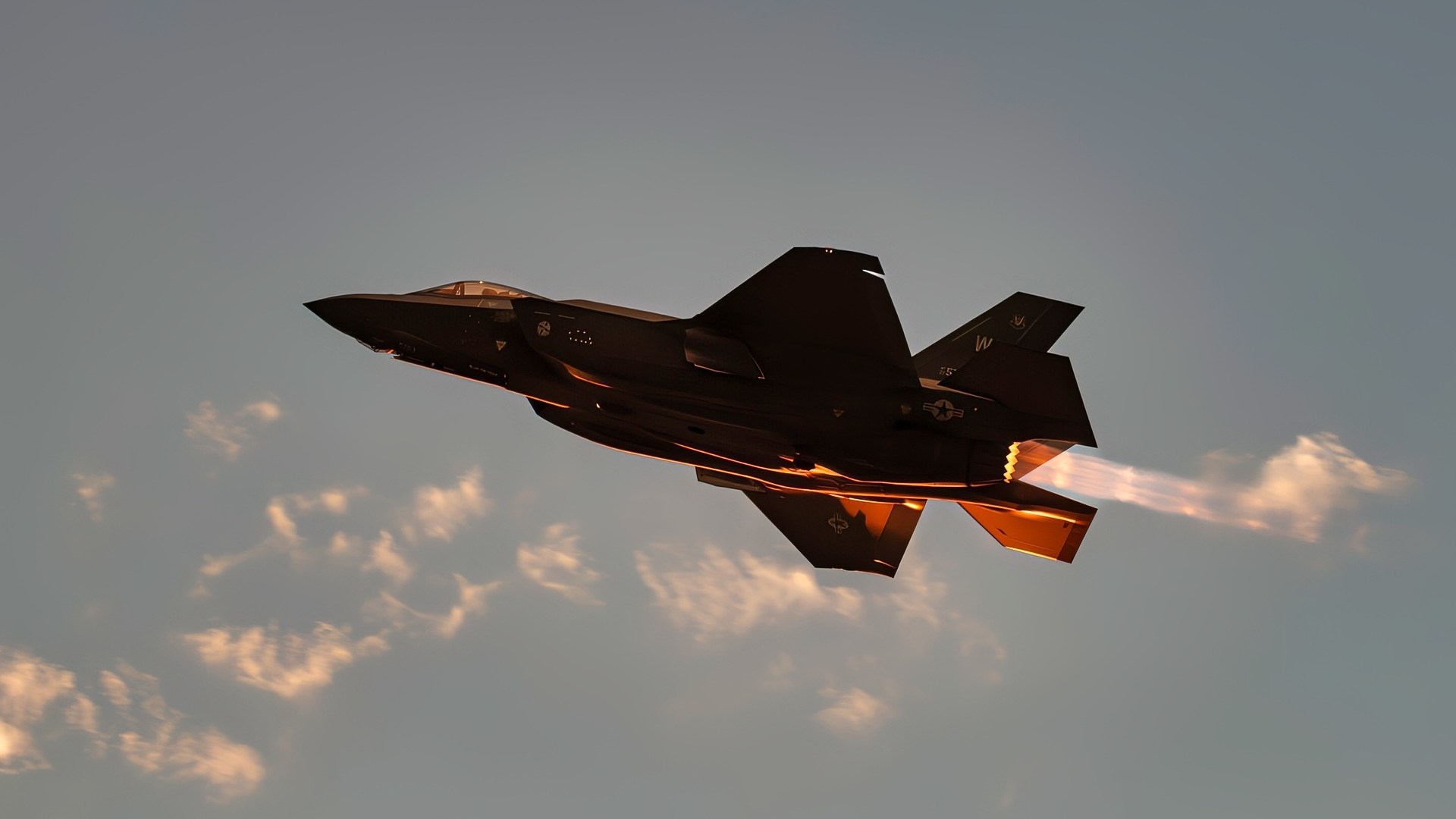
A U.S. Air Force F-35A Lightning II takes off for a mission during U.S. Air Force Weapons School Integration (WSINT) at Nellis Air Force Base, Nevada, June 4, 2025. WSINT is a graduate-level training event that combines multi-domain assets in large-force scenarios, enabling U.S. Air Force and joint service members to hone tactical expertise and integrate advanced capabilities in a dynamic threat environment. (U.S. Air Force photo by William R. Lewis)
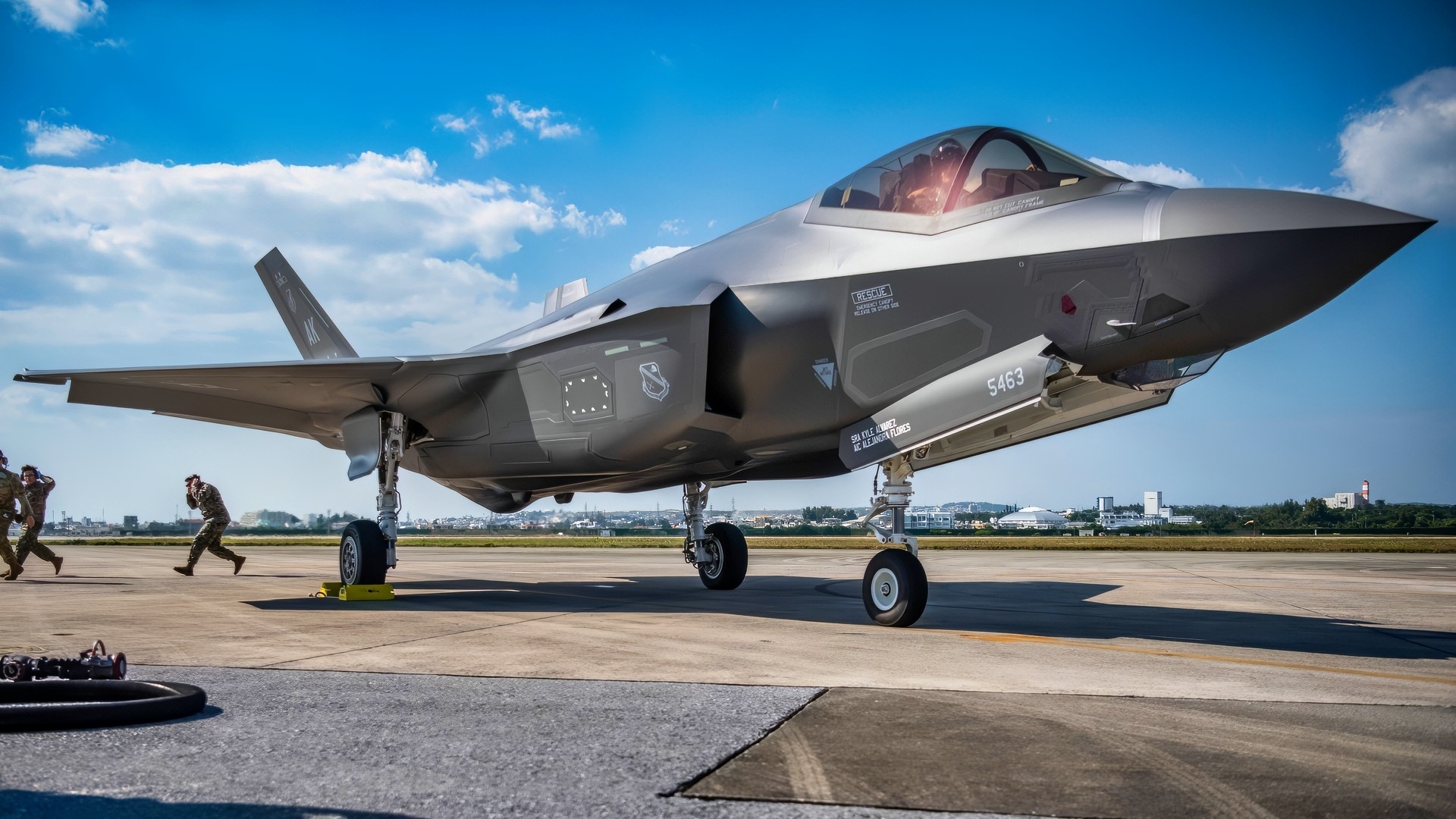
A U.S. Airman and two U.S. Marines support an F-35A Lightning II during joint hot pit refueling training at Kadena Air Base, Japan, March 10, 2022. Hot pit refueling uses a single-point refuel pump, which allows an aircraft to be rapidly refueled immediately after landing, while the engine is running. This cuts down on response time and ensures the mission can be completed anytime, anywhere. (U.S. Air Force photo by Airman 1st Class Anna Nolte)
And a key U.S. ally in any Indo-Pacific regional war will be Japan. Accordingly, a major Japan Air Self-Defense Force (JASDF) base will now host the F-35.
The Basics: F-35A Is On the Way
A few months back, Newsweek reporter Ryan Chan had the details:
“The United States is preparing Misawa Air Base, one of its major military outposts in Japan for projecting air power, to support the future hosting of stealth fighter aircraft. As part of a plan announced in July 2024 to modernize its Japan-based tactical aircraft, the Pentagon has decided to deploy 48 F-35A jets, capable of evading radar detection, to Misawa to replace 36 older F-16 jets with greater capacity and capability.”
For good measure, the U.S. Navy and Marine Corps variants of the F-35—the F-35C and F-35B, respectively—have been posted at Marine Corps Air Station Iwakuni.
Significance of F-35
This announced upgrade of U.S. airpower in Japan comes shortly after the Trump administration’s U.S. national security strategy called for a military buildup to counter aggression along the first island chain, which runs from Japan to the Philippines through Taiwan.

A crew chief from the 158th Fighter Wing taxis an F-35 II Lightning in for rapid refueling and rearming, July 24, 2025, at Westover Air Reserve Base, Chicopee, Mass.
During the D-ICT exercise, F-15’s from the 104th Fighter Wing and F35’s from the 158th Fighter Wing received simultaneous rapid rearming and refueling from the 103AW C-130H Hercules with all engines running. Performing these D-ICT exercises helps aircraft quickly return to their mission and highlights our ability to distribute and operate from anywhere. (U.S. Air National Guard Photo by Jay Hewitt)

F-35A Lightning II’s from the 34th Fighter Squadron at Hill Air Force Base, Utah, land at Royal Air Force Lakenheath, England, April 15, 2017. The aircraft arrival marks the first F-35A fighter training deployment to the U.S. European Command area of responsibility. (U.S. Air Force photo/Tech. Sgt. Matthew Plew)
As U.S. Secretary of Defense Pete Hegseth said during a meeting with Japanese Defense Minister Shinjiro Koizumi at the Pentagon earlier this month, “[We] talk about America first, yes, but it doesn’t mean America alone. It means [working] with our friends [who] are investing [and] standing with us. And that’s how we bring peace through strength around the world [and] here in our hemisphere.”
Meanwhile, a U.S. Air Force spokesperson said that, “In permanently assigning its most advanced tactical aircraft in Japan, [the Pentagon] will bolster regional deterrence and significantly improve its response capabilities.”
Misawa Air Base already hosts two of the JASDF’s F-35A units, so it makes good sense for it to host U.S.-owned Lightning IIs.
About Misawa AB and the U.S. Air Force: I Have Been There
Misawa Air Base is in Aomori Prefecture, which is the northernmost part of the main island of Honshu, bordered by the Hokkaido Strait. It is located 684 kilometers north of Tokyo—about a six-hour drive by car or a two-hour commute via bullet train.
I spent quite a bit of time at Misawa Air Base as a private military contractor assigned to Japan from September 2014 to April 2015.
Though my job duties were performed at the Shariki Communication Site in Tsugaru City, Misawa was our main support base, where we went for our administrative and logistical needs.
I got to see my fair share of U.S. F-16s and JASDF Mitsubishi F-2 Viper Zeros taking off and landing there. (And oh yeah, the off-post restaurants run by the local civilian populace were pretty top-notch too.)
The Way Forward: F-35A Fighters Should Make China Concerned
It remains unclear when Misawa will receive its first F-35As, but in the meantime, the base is continuing routine aircraft operations.
Recently released official images showed F-16s participating in a training exercise earlier this year despite snow and extreme cold.
Presumably, once the Lightning IIs arrive in-country, they will be assigned to the 35th Fighter Wing, which operates and maintains two squadrons—the 13th and 14th Fighter Squadrons—of F-16CM (C and D models) Block 50 Fighting Falcons.
It also remains to be seen whether the U.S. will deploy additional assets, such as the F-22 and/or the B-21 Raider sixth-generation stealth bomber aircraft in Misawa—or at other JASDF airbases such as Kadena or Yokota—amid tensions in the first island chain.
About the Author: Christian D. Orr, Defense Expert
Christian D. Orr is a Senior Defense Editor. He is a former Air Force Security Forces officer, Federal law enforcement officer, and private military contractor (with assignments worked in Iraq, the United Arab Emirates, Kosovo, Japan, Germany, and the Pentagon). Chris holds a B.A. in International Relations from the University of Southern California (USC) and an M.A. in Intelligence Studies (concentration in Terrorism Studies) from American Military University (AMU). He is also the author of the newly published book “Five Decades of a Fabulous Firearm: Celebrating the 50th Anniversary of the Beretta 92 Pistol Series.”


