

The U.S. Air Force announced in May that the B-52 Commercial Engine Replacement Program completed its Critical Design Review, clearing Boeing to begin converting the first two B-52H bombers into the upgraded B-52J configuration later this year. Rolls-Royce will supply eight F-130 engines per aircraft to replace the Pratt and Whitney TF-33s that have powered the bomber since the Cold War. The Air Force has warned the TF-33 becomes unsustainable beyond 2030. The first two converted aircraft will test at Edwards Air Force Base before fleet-wide conversion. The B-52J will also receive an AESA radar derived from the F/A-18E/F Super Hornet’s AN/APG-79.
The B-52J Bomber Looks Unstoppable
The U.S. Air Force announced earlier in May that the B-52 Commercial Engine Replacement Program (CERP) had completed its Critical Design Review, allowing Boeing to begin converting the first two B-52H bombers into the upgraded B-52J configuration later this year.
The effort is being managed by the Air Force Life Cycle Management Center at Tinker Air Force Base in Oklahoma, with Boeing overseeing aircraft integration in San Antonio, Texas, and Rolls-Royce supplying the new F-130 engines that will replace the bomber’s aging Pratt & Whitney TF-33 engines.
Once modified, the first two aircraft will undergo extensive testing at Edwards Air Force Base in California before the Air Force begins upgrading the remainder of the fleet.
The program is one of the largest modernization efforts currently underway for the Air Force’s bomber fleet and is part of a Pentagon strategy to maintain long-range strike capacity amid growing tensions with China and Russia.
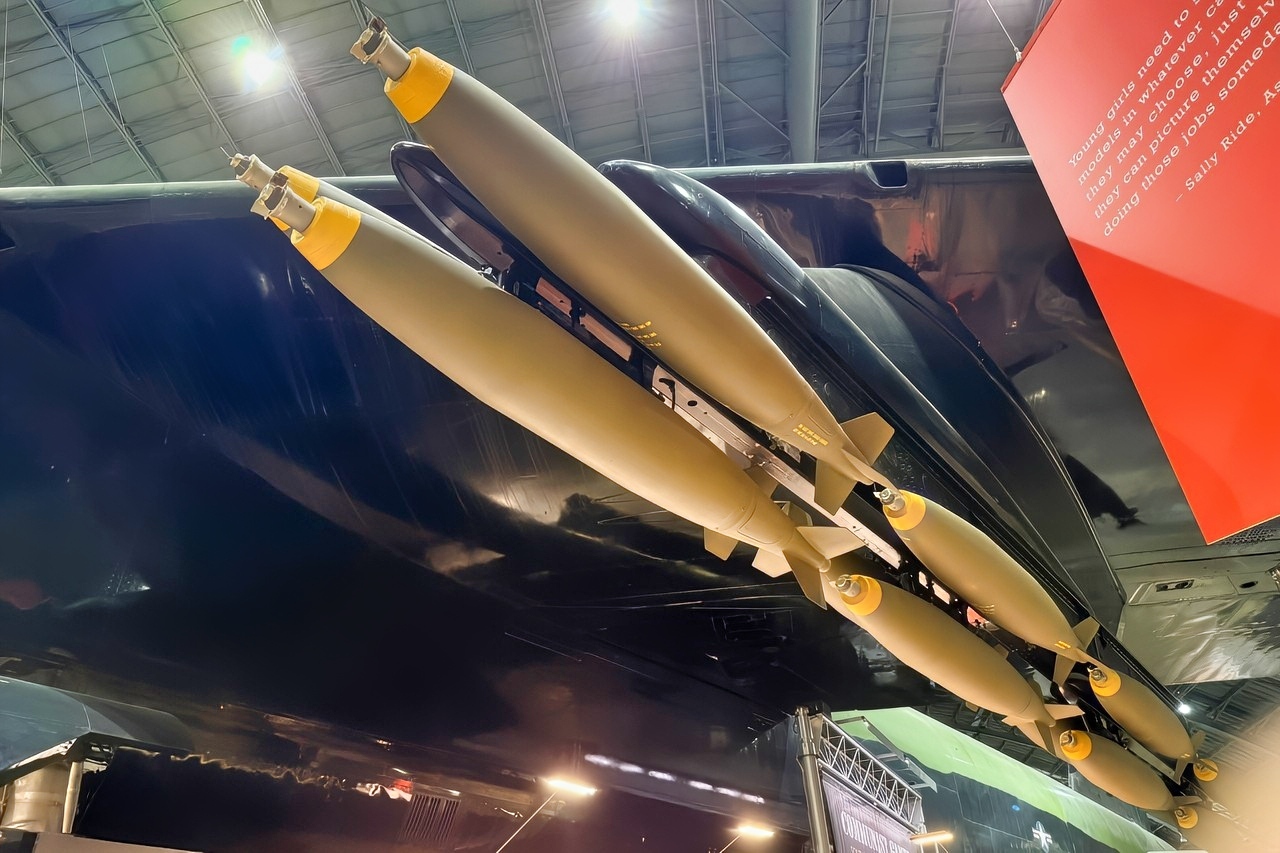
B-52 Bomber Bombs Ready to Go. Image Credit: National Security Journal.
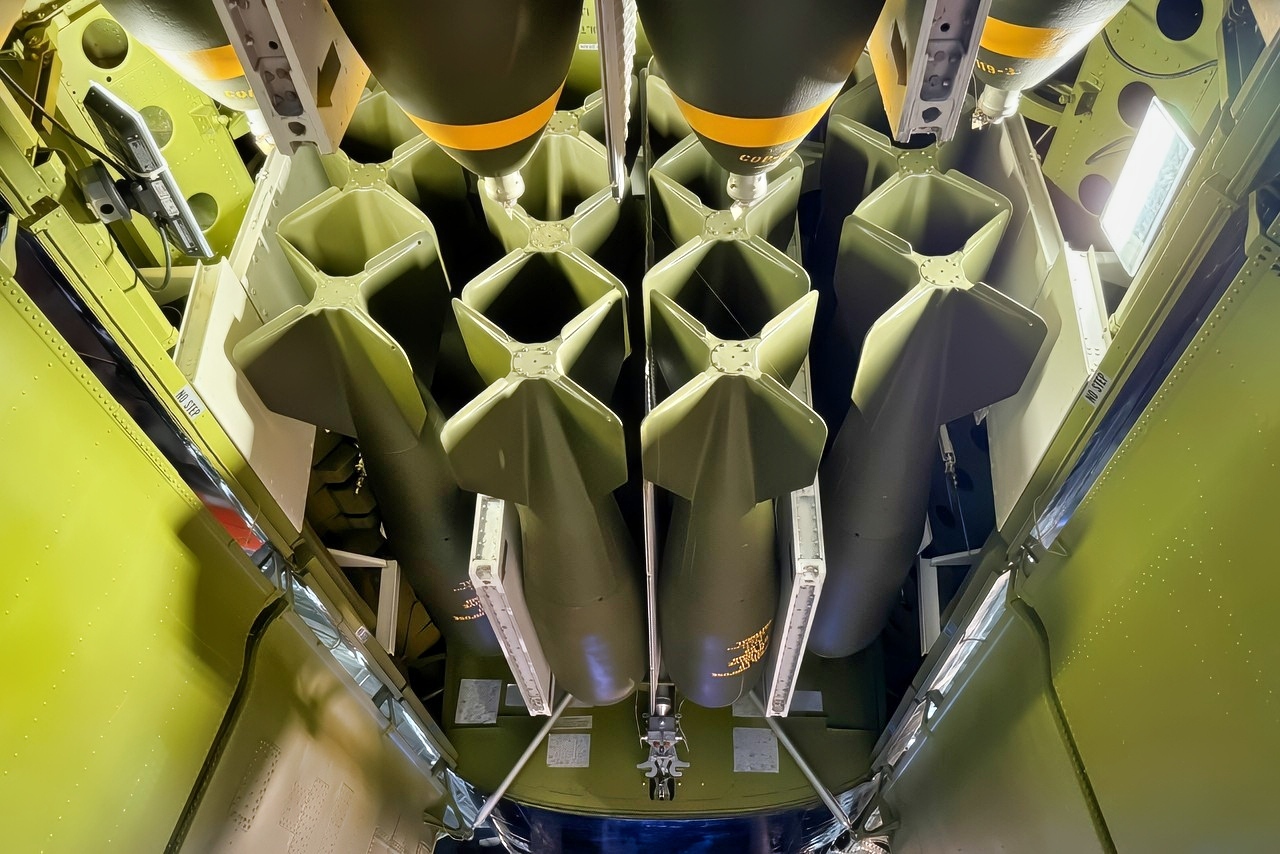
Bombs Inside the B-52 Bomber. Photo taken by Harry J. Kazianis/National Security Journal.

B-52D Bomber at USAF Museum. Image Credit: National Security Journal.
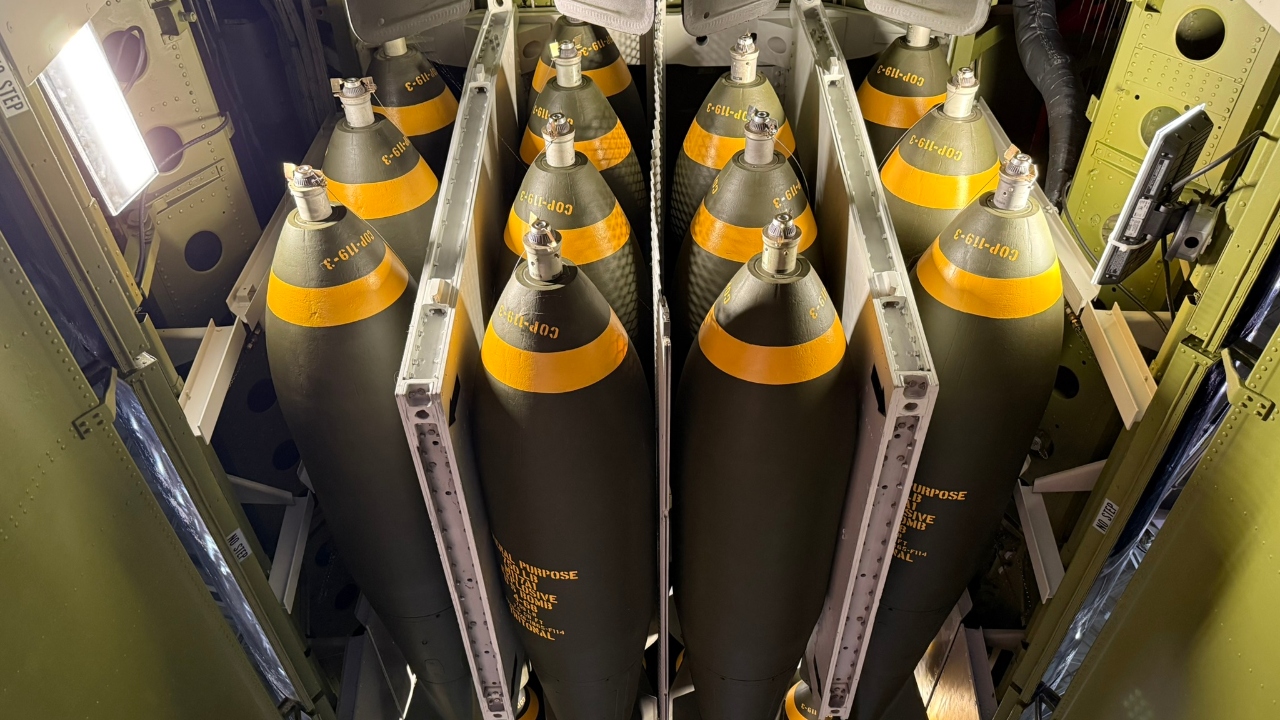
B-52 Bomber Bombs. Image Credit: National Security Journal.
While the newer B-21 Raider is beginning to enter service, the Air Force still sees the B-52 as an essential platform because of its enormous payload capacity, lower operating costs for certain missions, and ability to carry both conventional and nuclear weapons across intercontinental distances.
The B-52’s Engines Are On Their Way Out
The B-52H fleet still relies on TF33 engines originally introduced during the Cold War.
The Air Force has repeatedly warned that the engines are becoming increasingly difficult and expensive to maintain as spare parts become harder to obtain and sustainment burdens rise. Officials have stated the TF33s will become “unsustainable” beyond 2030 without replacement.
The Air Force launched the Commercial Engine Replacement Program in 2018, and ultimately chose Rolls-Royce’s F130 engine in 2021 following a competition with GE Aviation and Pratt & Whitney.
The F130 is derived from the BR725 commercial engine already used on aircraft such as the Gulfstream G650 and military variants, including the C-37 and E-11A BACN aircraft.
Rolls-Royce has spent years conducting testing on the engine for B-52 operations, including altitude and operability testing at the Arnold Engineering Development Complex in Tennessee and dual-pod testing at NASA’s Stennis Space Center. Under the program, each B-52 is set to receive eight new F130 engines, with upgraded aircraft redesignated as the B-52J.

A U.S. Air Force B-52 Stratofortress, assigned to the 5th Bomb Wing, conducts aerial refueling with a KC-135 Stratotanker, assigned the 350th Expeditionary Air Refueling Squadron, June 14, 2024 during a presence patrol mission over the U.S. Central Command area of responsibility. The B-52 is capable of flying at high subsonic speeds, at altitudes of up to 50,000 feet, within the atmospheric tropopause, with worldwide precision navigation capability, providing a unique rapid response to senior coalition leaders globally. (U.S. Air Force photo by Tech Sgt. Ashley Sokolov)

A B-52H Stratofortress assigned to the 419th Flight Test Squadron is undergoes pre-flight procedures at Edwards Air Force Base, California, Aug. 8. The aircraft conducted a captive-carry flight test of the AGM-183A Air-launched Rapid Response Weapon Instrumented Measurement Vehicle 2 at the Point Mugu Sea Range off the Southern California coast. (Air Force photo by Giancarlo Casem)

A U.S. Air Force B-52H Stratofortress assigned to the 2nd Bomb Wing prepares to depart for a Bomber Task Force mission at Barksdale Air Force Base, La., May 18, 2025. These bomber missions are representative of the U.S. commitment to our allies and enhancing regional security. (U.S. Air Force photo by Airman 1st Class Jaiyah Lewis)
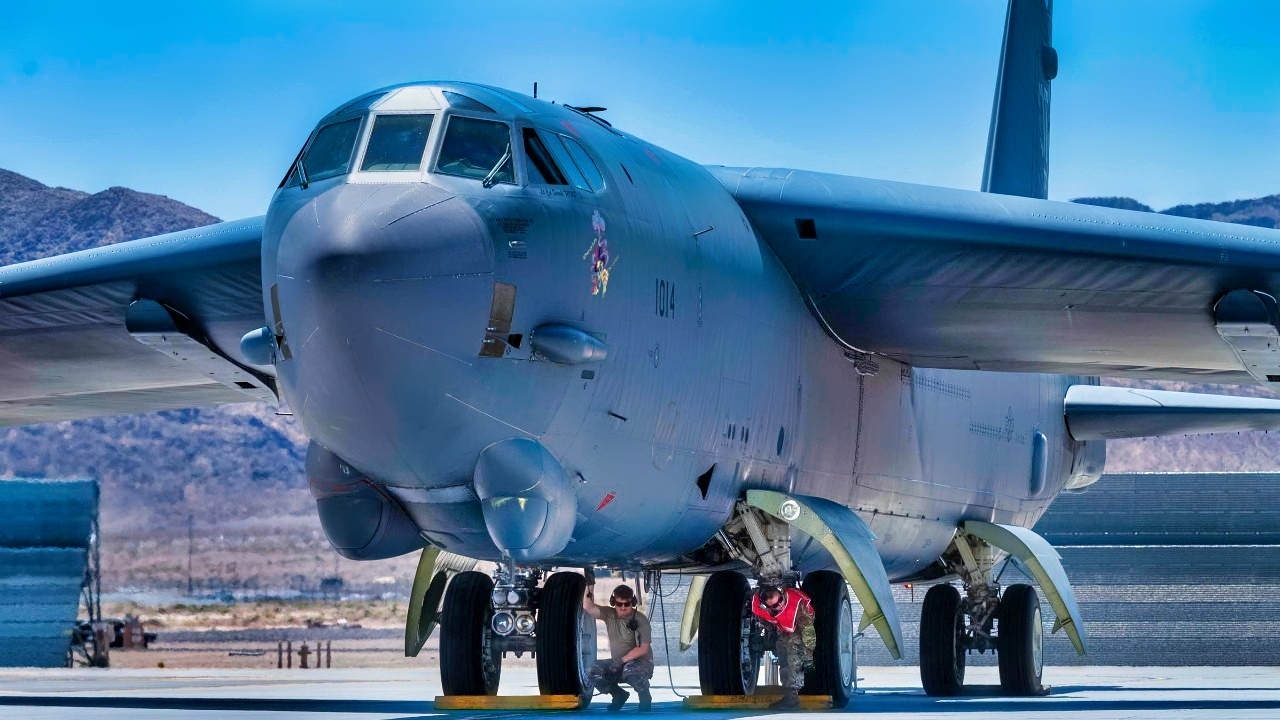
U.S. Air Force Tech. Sgt. Jacob Durham, left, and Staff Sgt. Kenneth Garris, crew chiefs assigned to the 307th Aircraft Maintenance Squadron, Barksdale Air Force Base, Louisiana, prepare to launch a B-52H Stratofortress in support of U.S. Air Force Weapons School Integration (WSINT) at Nellis Air Force Base, Nevada, June 3, 2025. WSINT serves as the culminating exercise for U.S. Air Force Weapons School students, bringing together air, space, and cyber forces in realistic, mission-critical training scenarios that mirror the complexities of modern warfare. (U.S. Air Force photo by William R. Lewis)
The Critical Design Review
The completion of the Critical Design Review marks the transition from engineering and planning to actual aircraft modification work. During the review process, engineers and specialists from the Air Force, Boeing, and Rolls-Royce conducted a comprehensive assessment of the full system design to ensure it met operational and technical requirements before production began.
Lt. Col. Tim Cleaver, the program manager for CERP, described the review as the moment the effort shifts from a design concept into something that can now be physically built and, ultimately, fielded.
“This CERP critical design review is the culmination of an enormous amount of engineering and integration work from Boeing, Rolls-Royce, and the Air Force that will enable the B-52J to remain in the fight for future generations,” Cleaver said.
“It’s that point that you go from having a concept turned into a design, to then turning that design into something physical—something that we will test and field for Air Force Global Strike Command,” he added.
Boeing is already manufacturing and procuring components for the first aircraft modifications, which will begin at the company’s San Antonio facility later this year. The first two modified aircraft will serve as dedicated B-52J test platforms before the Air Force begins converting the broader fleet.
The program is ongoing, but it has not been entirely smooth. The re-engining effort has experienced delays and cost growth in recent years, with reporting indicating the schedule slipped after Boeing needed additional redesign work and testing to resolve integration challenges.
The Upgrade Is About More Than Fuel Efficiency
Although replacing the TF33 engines solves an immediate sustainment problem, the modernization effort is also intended to transform the B-52 into a more capable long-range strike platform for future conflicts.
The new engines are expected to improve fuel efficiency, reduce maintenance demands, extend operational range, and lower long-term sustainment costs. The aircraft will also gain significantly more onboard electrical power through new generators attached to each engine.

A U.S. Air Force B-52H Stratofortress flies a show of presence mission over the U.S. Central Command area of responsibility, Feb. 20, 2025. Strategic bombers contribute to stability in the CENTCOM theater by demonstrating the credibility, capability, and readiness of the U.S. bomber force, which is critical to deterring attacks against the U.S. and its allies and partners. (U.S. Air Force photo by Staff Sgt. Jackson Manske)
The additional electrical capacity is also important because the Air Force is equipping the bomber with modern radar and communications systems, as well as electronic warfare capabilities.
The B-52 is receiving a new AESA radar derived from the F/A-18E/F Super Hornet’s AN/APG-79 system.
The bomber is also expected to play a major role in carrying future stand-off weapons, including long-range cruise missiles and hypersonic weapons.
Why the Air Force Still Needs the B-52
The fact that the B-52, which first entered service in 1955, is still being upgraded is remarkable.
It is a testament to the capabilities of this aging but well-built platform, and it reflects that the Air Force still requires a bomber capable of carrying enormous payloads over long distances, particularly in a potential conflict in the Indo-Pacific.
China’s growing anti-access and area-denial network has increased pressure on the Air Force to field aircraft capable of operating from long distances while carrying large numbers of standoff weapons.
The B-52 remains part of the U.S. nuclear triad and continues to conduct bomber task force deployments and deterrence operations. The aircraft also regularly participates in NATO exercises such as Astral Knight alongside allied fighters, including the F-35 and F-16.
MORE – China Has Thousands of Missiles to Point at Navy Aircraft Carriers
MORE – Canada’s F-35 Purchase Could Get Squashed
About the Author: Jack Buckby
Jack Buckby is a British researcher and analyst specializing in defense and national security, based in New York. His work focuses on military capability, procurement, and strategic competition, producing and editing analysis for policy and defense audiences. He brings extensive editorial experience, with a career output spanning over 1,000 articles at 19FortyFive and National Security Journal, and has previously authored books and papers on extremism and deradicalization.


