


When the Royal Canadian Air Force announced it was opening a competition to replace its aging CF-18 fighters in 2017, the need was to purchase 88 fighter aircraft to fulfill its requirements for the next several decades.
Among the competitors vying for the role of Canada’s next fighter were the Lockheed Martin F-35, a fifth-generation stealth fighter, the Saab JAS-39 Gripen, and the Boeing F/A-18 Super Hornet.

An F/A-18F Super Hornet, attached to Strike Fighter Squadron (VFA) 195, taxis on the flight deck of Nimitz-class aircraft carrier USS George Washington (CVN 73) while underway in the Celebes Sea, Nov. 29, 2025. George Washington is the U.S. Navy’s premier forward-deployed aircraft carrier, a long-standing symbol of the United States’ commitment to maintaining a free and open Indo-Pacific region, while operating alongside allies and partners across the U.S. Navy’s largest numbered fleet. (U.S. Navy photo by Mass Communication Specialist 2nd Class Tyler Crowley)

A U.S. Navy F/A-18E Super Hornet aircraft assigned to Strike Fighter Squadron (VFA) 14 participates in an air power demonstration near the aircraft carrier USS John C. Stennis (CVN 74) April 24, 2013, in the Pacific Ocean. The John C. Stennis Carrier Strike Group was returning from an eight-month deployment to the U.S. 5th Fleet and U.S. 7th Fleet areas of responsibility. (U.S. Navy photo by Mass Communication Specialist Seaman Apprentice Ignacio D. Perez/Released)
Dassault Aviation was involved in the competition for the Rafale but withdrew early in November 2018.
However, in late 2021, the Canadian government issued a statement noting that the Boeing F/A-18 Super Hornet was culled from the competition in what it called a “key milestone in the process to replace Canada’s fighter jets,” saying that the two remaining candidates in the competition were the Saab Gripen E and the Lockheed Martin F-35A Lightning II.
The Royal Canadian Air Force (RCAF) hopes to eventually (still pending in December 2025) receive a total of 88 fighters, with deliveries beginning “as early as 2025.” The RCAF presently has some 75 CF-18A/B+ jets and is planning to add 18 former Royal Australian Air Force (RAAF) F/A-18A/B Hornets to that fleet in the near term, as a stopgap measure.
F/A-18 Super Hornet: Boeing Ousted Over Lawsuit In the US
The War Zone contacted Boeing at the time for a comment regarding Canada’s decision and received a reply.
“We are disappointed and deeply concerned by Canada’s announcement that the U.S. Government-Boeing F/A-18 Super Hornet proposal will not be included in the next phase of Canada’s Future Fighter Capability procurement process.

An F/A-18 Super Hornet from Naval Air Station Oceana, Virginia, performs an aerial demonstration over Rickenbacker International Airport, Ohio, June 16, 2024, as part of the Columbus Air Show. This year’s event featured more than 20 military and civilian planes, including a KC-135 Stratotanker from the 121st Air Refueling Wing, which served as the base of operations for military aircraft participating in the show. (U.S. Air National Guard photo by Senior Airman Ivy Thomas)

An F/A-18C Hornet, assigned to the “Stingers” of Strike Fighter Squadron 113, transits over the haze of southern Afghanistan. VFA 113, part of Carrier Air Wing 14 aboard the aircraft carrier USS Ronald Reagan is supporting Operation Enduring Freedom. The mission of CVW 14 is to protect the people of Afghanistan and to support coalition forces. Ronald Reagan is currently deployed to the U.S. 5th Fleet area of operations. Operations in the U.S. 5th Fleet area of operations are focused on reassuring regional partners of the United States’ commitment to security, which promotes stability and global prosperity.

Aviation Boatswain’s Mate (Equipment) 3rd Class Mark Ruiz, assigned to Air Department aboard the world’s largest aircraft carrier, USS Gerald R. Ford (CVN 78), prepares a Carrier Air Wing 8 F/A-18E Super Hornet attached to Strike Fighter Squadron 37 for launch on the flight deck, Aug. 1, 2025. Gerald R. Ford, a first-in-class aircraft carrier and deployed flagship of Carrier Strike Group Twelve, is on a scheduled deployment in the U.S. 6th Fleet area of operations to support the warfighting effectiveness, lethality and readiness of U.S. Naval Forces Europe-Africa, and defend U.S., Allied and partner interests in the region. (U.S. Navy photo by Mass Communication Specialist 2nd Class Mariano Lopez)
“The F/A-18 Super Hornet Block III offers proven capability and interoperability to the U.S. and its allies, as well as brings unmatched capability and lifecycle value to the Royal Canadian Air Force and a robust industrial/economic package that would deliver 250,000 jobs and CAD $61 billion to Canada’s economy [around US $47.6 billion at the then rate of conversion].
“We are working with the U.S. and Canadian governments to understand the decision better and looking for the earliest date to request a debrief to determine our path forward then.”
Canadian Auditors Skewer The Australia F/A-18 Purchase
Less than three months after the U.S. government signed off on Australia’s sale of 25 F/A-18A/B aircraft to the Royal Canadian Air Force, the Office of the Auditor General of Canada, which reports directly to the country’s House of Commons, released a report that panned the move.
“We found that Canada’s [existing] fighter force could not meet the government’s new operational requirement, which is to have enough aircraft ready each day to meet the highest NORAD alert level and Canada’s NATO commitment at the same time,” the Auditor General’s report stated.
“The fighter force could not meet the requirement because National Defense was already experiencing a shortage in personnel, and the CF-18 was old and increasingly hard to maintain.”
What Led To Canada’s Decision To Cut Boeing’s F/A-18?
Canada’s government decided to eliminate the Super Hornet’s bid primarily due to a trade dispute initiated by Boeing against the Canadian company Bombardier.
Bombardier and Delta Airlines made a deal to sell 75 CSeries light airliners to Delta, and Boeing then filed a formal complaint.
Boeing alleged foreign government subsidies and other unfair business practices had given Bombardier an unfair advantage and accused it of “dumping” the aircraft into the U.S. market at an artificially low price.
“We have obviously been looking at the Super Hornet aircraft from Boeing as a potential significant procurement of our new fighter jets,” Canadian Prime Minister Trudeau said back in the fall of 2017.
“But we won’t do business with a company that’s busy trying to sue us and put our aerospace workers out of business.”
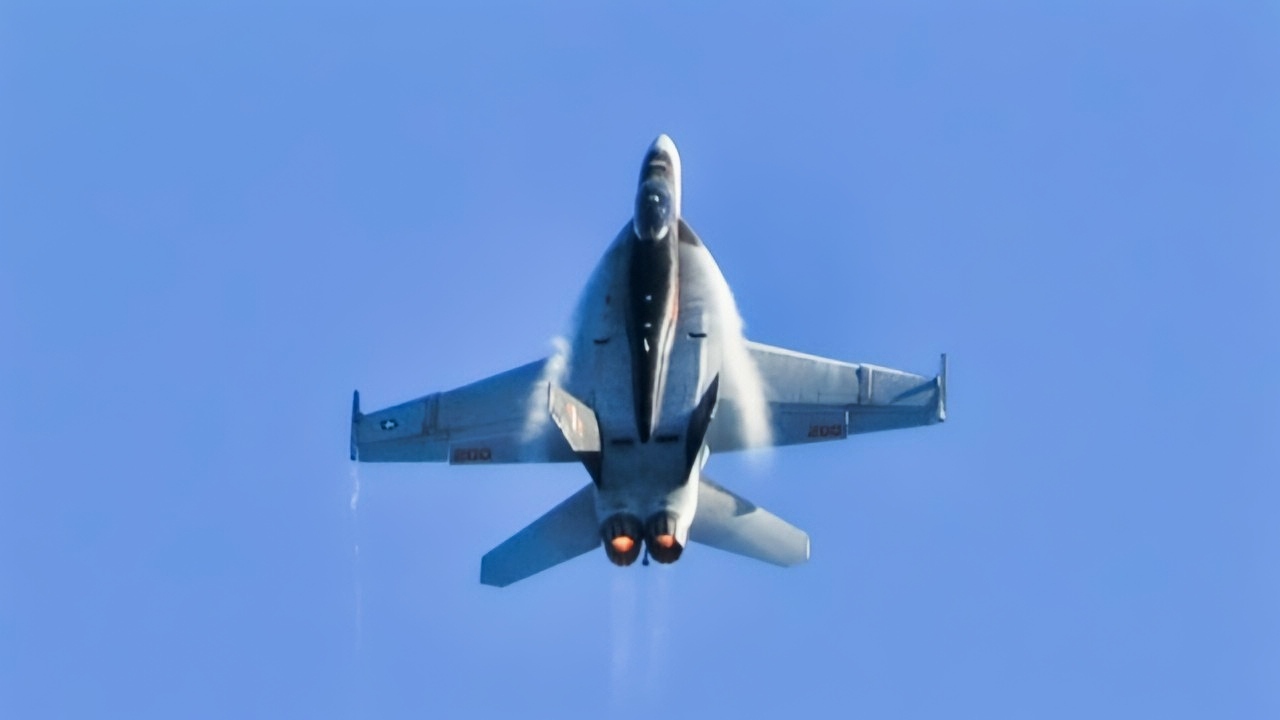
A U.S. Navy F/A-18E Super Hornet aircraft assigned to Strike Fighter Squadron (VFA) 147 performs maneuvers above the aircraft carrier USS Nimitz (CVN 68) during the departure of Carrier Air Wing (CVW) 11 Dec. 10, 2013, in the Pacific Ocean. CVW-11 fixed wing aircraft flew off the Nimitz to return home after being deployed to the U.S. 5th, 6th and 7th Fleet areas of responsibility. (U.S. Navy photo by Mass Communication Specialist Seaman Apprentice Kelly M. Agee/Released)
Boeing lost the case when the US International Trade Commission ruled against the aerospace giant in 2018.
However, Boeing’s actions soured Canada-U.S. trade relations, and Canada responded by implementing a rule that made it a significant disadvantage for any company harming its economic interests to win future contracts, effectively disqualifying the Super Hornet from further consideration for its permanent fleet replacement.
Additionally, some internal Canadian government and military assessments raised questions about the Royal Canadian Air Force’s (RCAF) readiness to operate a new fleet and whether the Super Hornet met all its requirements.
Political Fallout From The Boeing Lawsuit
Canada’s government responded by creating a new procurement policy that would penalize companies that had harmed Canada’s economic interests. This rule directly impacted the Super Hornet, making it ineligible for the permanent fleet competition, the BBC reported.
Readiness and requirements were also factors in Canada’s decision. Before the cancellation, some government assessments suggested the RCAF had more pressing needs, such as more technicians and pilots, rather than a new fleet. There were also reports that the Super Hornet did not meet specific requirements in the permanent fleet competition, though these specific requirements were not publicly released.

(Jan 31, 2009) An F/A-18 Super Hornet assigned to the “Tomcatters” of Strike Fighter Squadron (VFA) 31 launches from the flight deck of USS Theodore Roosevelt (CVN 71). The Nimitz-class aircraft carrier and embarked Carrier Air Wing (CVW) 8 are operating in the 5th Fleet area of responsibility and are focused on reassuring regional partners of the United States’ commitment to security, which promotes stability and global prosperity (U.S. Navy photo by Mass Communication Specialist 3rd Class Jonathan Snyder/Released)
Competition and Cost Factors
The Super Hornet was one of three aircraft competing to replace the aging CF-18 fleet. While the trade dispute was the primary reason for its disqualification, the evaluation criteria included factors beyond just cost.
The F-35 is clearly the better aircraft, and the US Navy chose it to replace the F/A-18 Hornet.
The Super Hornet is a larger, heavier “bomb truck” with more internal fuel and payload capacity. At the same time, the Gripen is a more agile, cost-effective multi-role fighter with lower operating costs and a smaller logistical footprint.
Key advantages for the Super Hornet include a larger payload, whereas the Gripen excels in maneuverability, lower maintenance, and advanced electronic warfare capabilities.
About the Author: Steve Balestrieri
Steve Balestrieri is a National Security Columnist. He served as a US Army Special Forces NCO and Warrant Officer. In addition to writing on defense, he covers the NFL for PatsFans.com and is a member of the Pro Football Writers of America (PFWA). His work was regularly featured in many military publications.


