

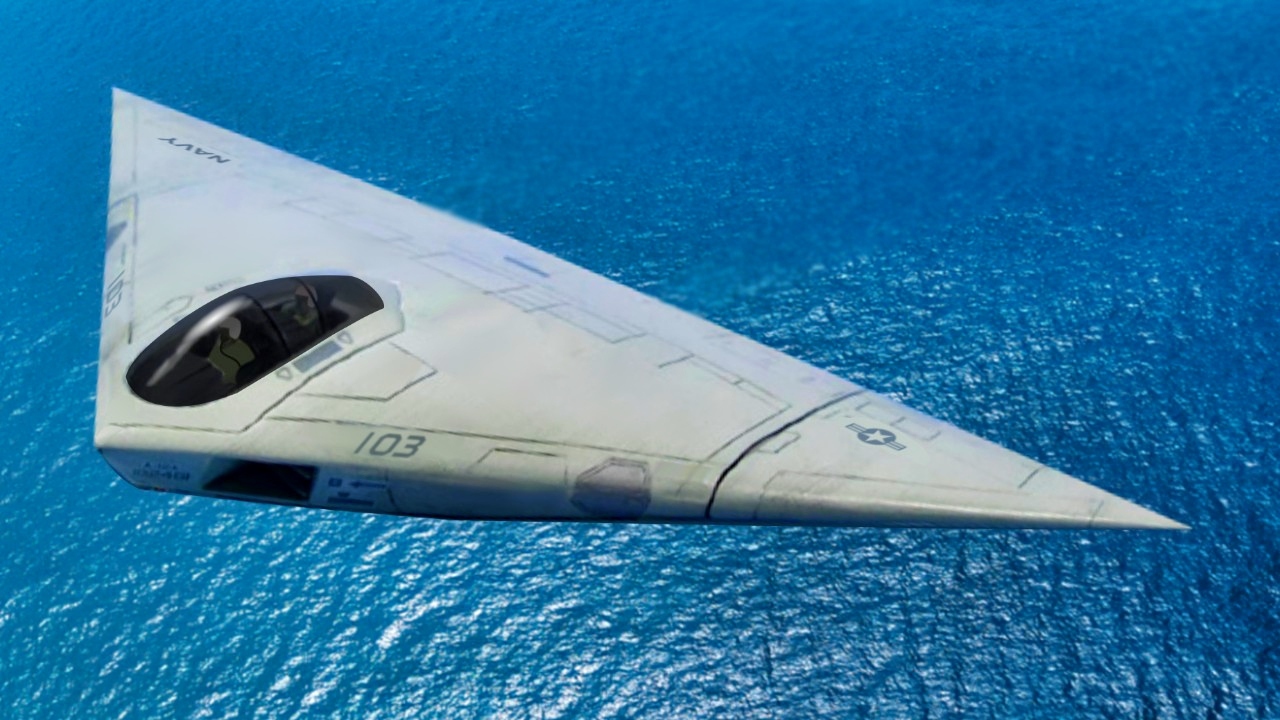
The Pentagon spent $5 billion developing a carrier-based stealth bomber shaped like a triangle — nicknamed ‘The Flying Dorito’ — before Dick Cheney killed the program because nobody could tell him what it would cost. The Navy, Marines, and Air Force wanted a combined 1,258 aircraft; they got zero, the largest contract cancellation in Pentagon history, and a legal battle that lasted 30 years.
The A-12 Avenger II: The Rise and Crash Landing
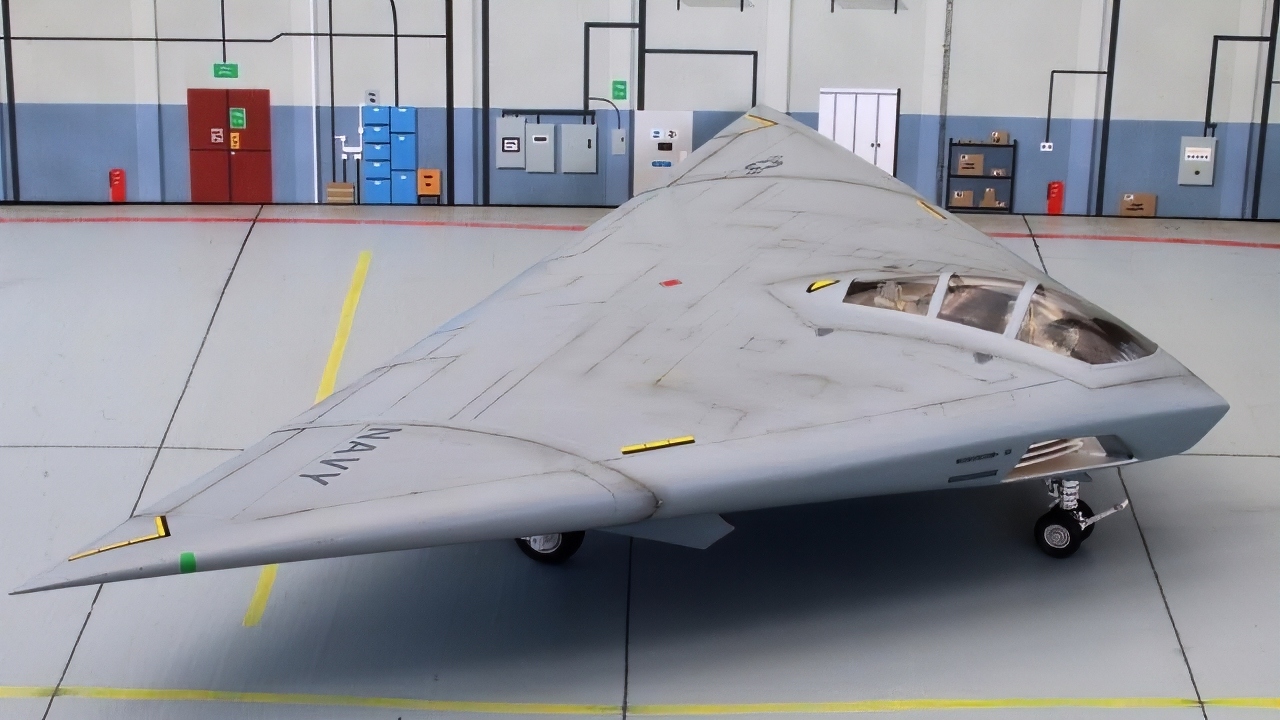
A-12 Avenger II Flying Dorito. Image Credit: Creative Commons.
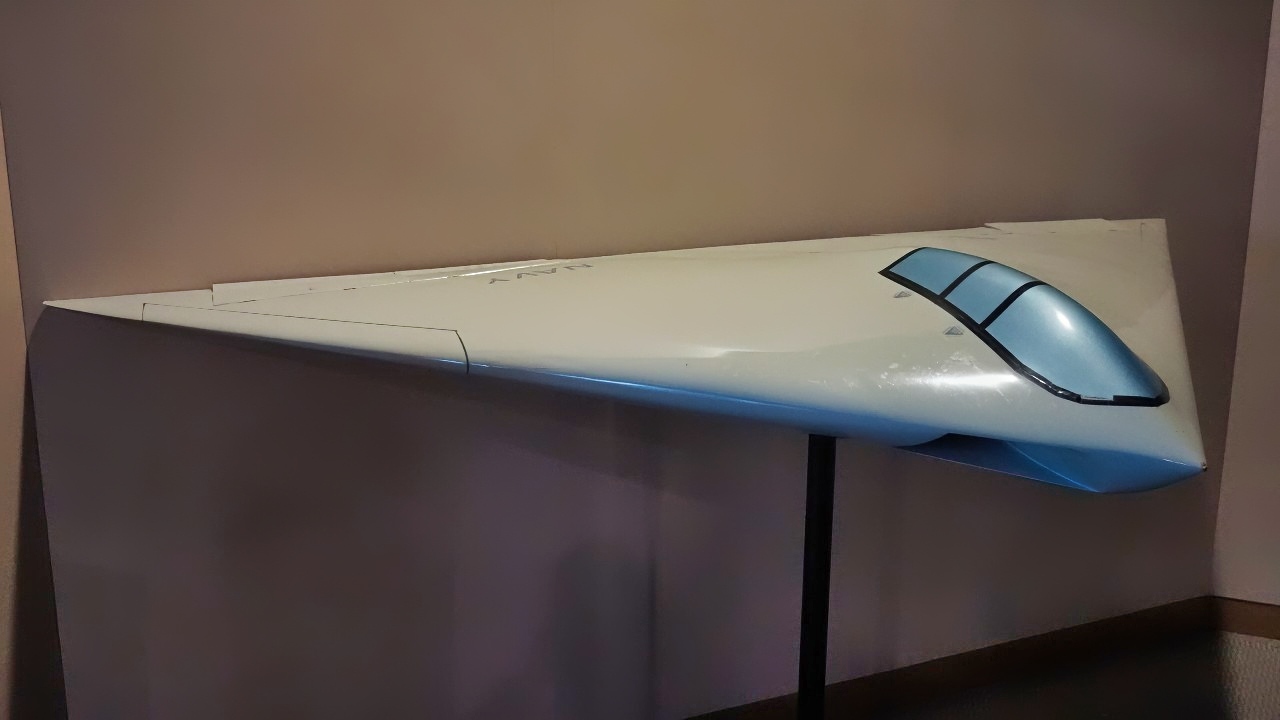
A-12 Avenger II Model. Image Credit: Creative Commons.
The A-12 Avenger II was a planned attack aircraft that was in development for a long time, cost a lot of money, but ultimately never went forward. Its story represents a long and complex saga that straddled the 1980s and 1990s.
According to the Fort Worth Aviation Museum’s account of the aircraft’s history, $5 billion was spent on the project, which never reached production.
The Advanced Tactical Aircraft (ATA) Program
In 1983, during Ronald Reagan’s first term, the Navy launched the Advanced Tactical Aircraft (ATA) program. The goal, the museum page says, was to “develop a replacement for the Grumman A-6 Intruder using stealth technology.” The following year, both McDonnell Douglas / General Dynamics and Northrop / Grumman / Vought were awarded design contracts, with McDonnell Douglas/General Dynamics chosen as the winner in 1988.
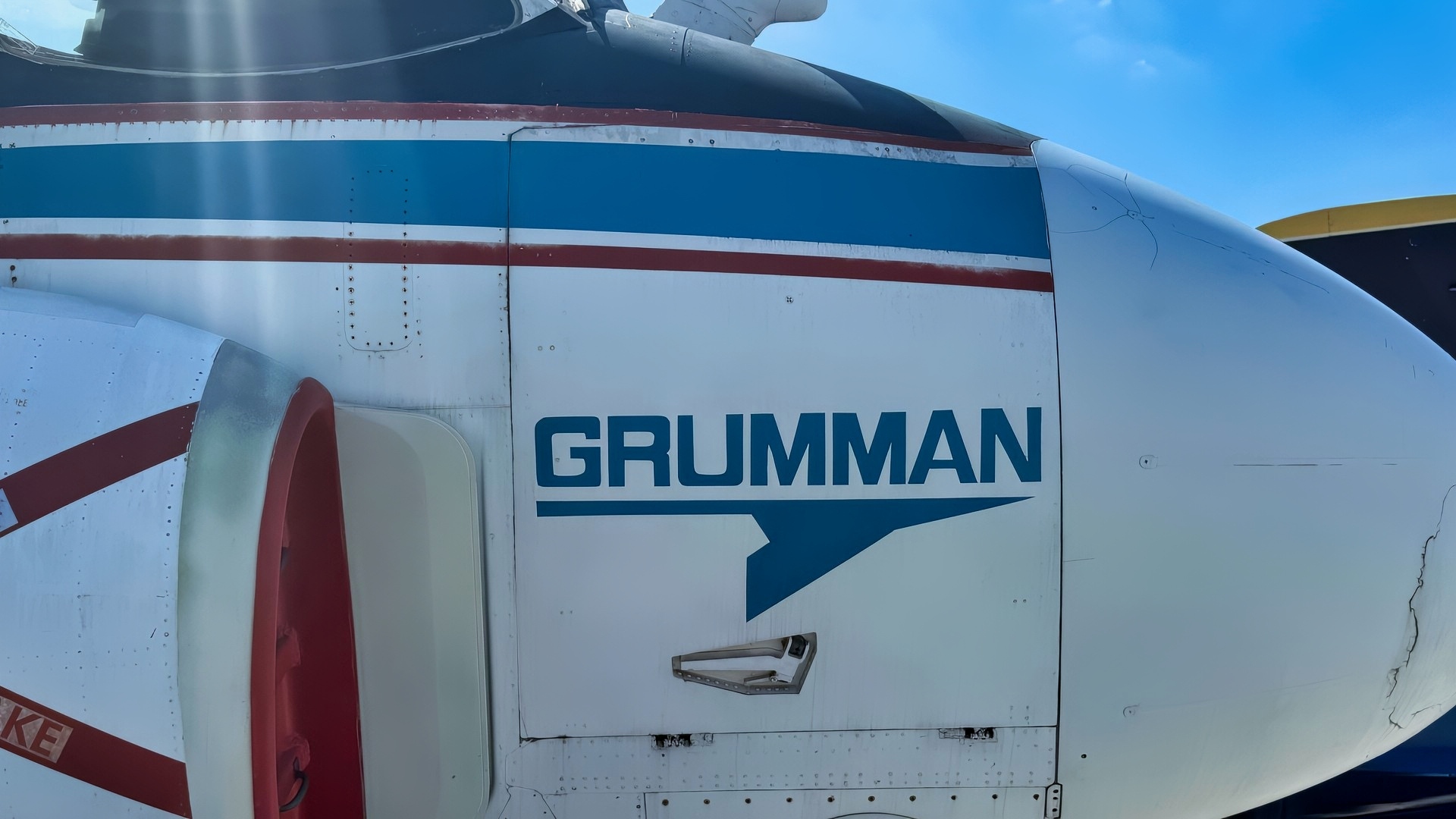
Side of A-6 Intruder. Image Credit: National Security Journal.
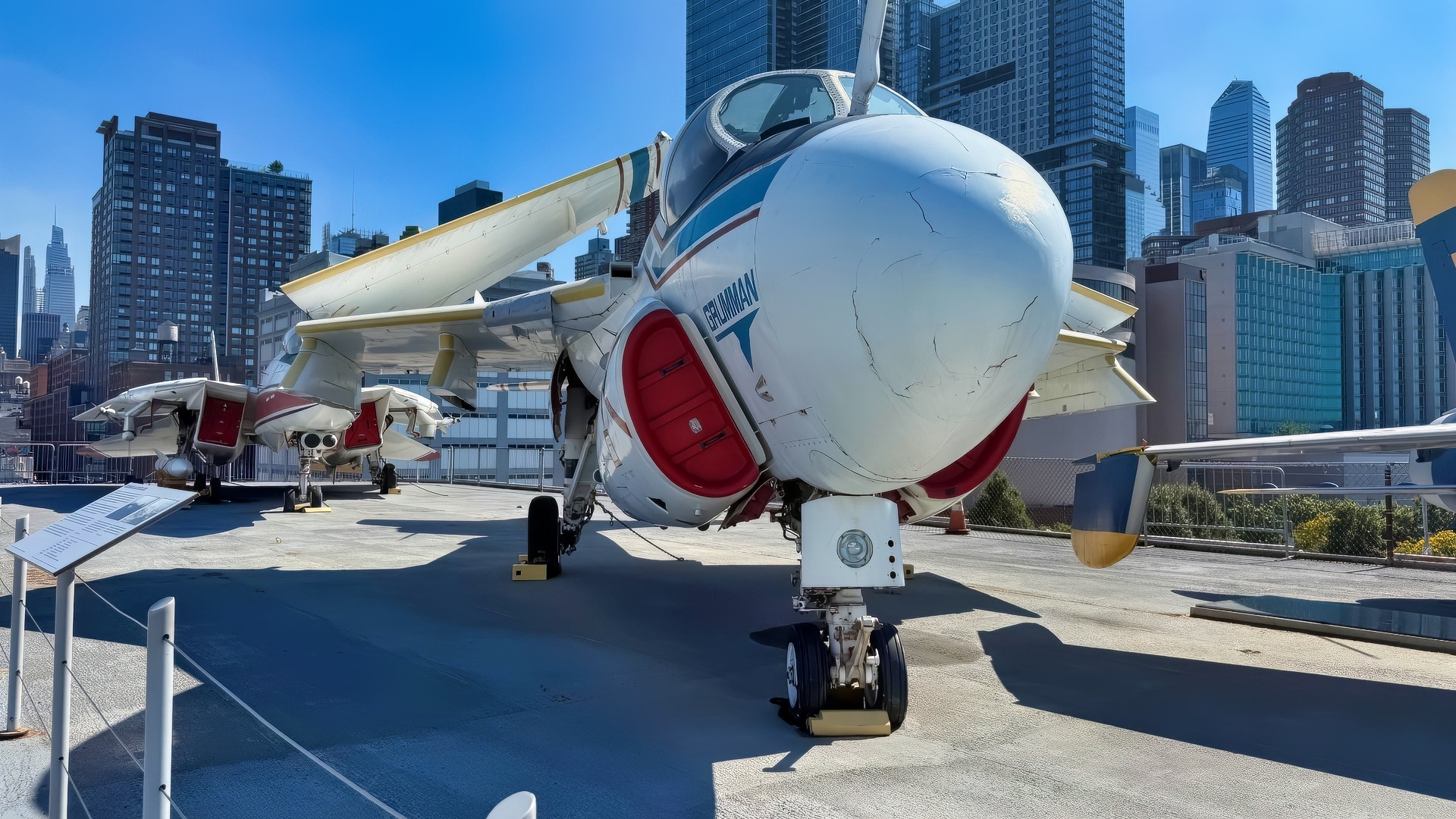
A-6 Intruder National Security Journal Photo. Image By Jack Buckby Taken on September 18, 2025.

A-6 Intruder National Security Journal Photo. Taken on September 18, 2025.
The goal was to take flight in 1990. It got the Avenger II name, after the TBM Avenger plane, also from Grumman, that flew in World War II.
The plan was for the Pentagon to buy a lot of them. Per the Aviation Museum, “the Navy wanted 620 A-12s, the Marines wanted 238, and the Air Force considered 400 A-12 variants.”
What It Looked Like
According to Sandboxx, the A-12 Avenger had a triangular shape, earning it the nickname “the Flying Dorito.”
“Intended to serve aboard carriers, the A-12 Avenger II was to be slightly more than 37 feet long, with a wingspan of a few inches more than 70 feet,” the Sandboxx story said. “These dimensions would have made the A-12 significantly shorter than the nearly 55-foot-long Intruder, while boasting a far wider wingspan that extended just far enough to allow two A-12s to sit side-by-side on adjacent catapults on a carrier flight deck.”
However, the project soon ran into the sort of trouble that would ultimately doom it.
The Trouble With the Avenger
“As with many new technologies, delays and cost increases plagued the project. The planned use of composite materials was problematic. Weight and maintainability was also a concern,” the aviation museum account says.
“The design review was completed in October 1990. However, the Department of Defense declared that contractors could not complete the program as proposed.”
The program went on to have a troubled afterlife as well.
“The A-12 program was canceled in 1991. The contractors were ordered to return about $2 billion spent on the program. Claims were in court for years until the US Supreme Court ordered the DOD to return payment to the contractors.”
How It Died: A Case Study of the A-12 Avenger Fail
The government official who decided to cancel the program is well-known: Defense Secretary and future Vice President Dick Cheney.
“The A-12 I did terminate. It was not an easy decision to make because it’s an important requirement that we’re trying to fulfill,” Cheney said in 1991.
“But no one could tell me how much the program was going to cost, even just through the full-scale development phase, or when it would be available. And data that had been presented at one point a few months ago turned out to be invalid and inaccurate.”
Years later, the IMA Educational Case Journal published a case study of the A-12 Avenger, titled “The A-12 Stealth Bomber: Escalating Commitment to a Failing Project.” Authored by David S. Christensen and Robin Boneck, both of Southern Utah University, the case study looked at what was, at the time, the largest contract cancellation in Pentagon history.
“Cheney claimed that no one could tell him how much the program was going to cost. In reality, there were many estimates of the final cost; some were more accurate than others. In an effort to save the program, the information was forwarded to the top military,” the case study said.
In a 1999 study by Proceedings, titled “The A-12 Legacy: It Wasn’t an Airplane – It Was a Train Wreck,” Herbert L. Fenster also looked at that had gone wrong, including a look at the long legal battle that followed its cancellation.
“The A-12 never amounted to more than a mockup, but the consequences of this unfortunate program are going to affect the size and composition of Naval Aviation for years to come,” Fenster wrote.
Fenster noted that in 1998, seven years after the project was canceled, a judge entered a $3.9 billion judgment in favor of two contractors. However, that litigation was “only a sideshow to the profound issues that the A-12 program has surfaced.”
It was, this analysis noted, the immediate aftermath of the Cold War’s end. He also noted that trouble began even before that, when the project was being assigned, when Lockheed declined to participate, and the Northrop team “rejected the Navy’s approach,” leaving it to only McDonnell Douglas-General Dynamics.
Another problem arose when the contract was awarded.
“At the time of award, knowing that the aircraft would never be built at its specified weight, the Navy faced yet another serious problem. Regulations required that the Navy report to DoD that the aircraft would not meet its weight threshold. DoD, in turn, was then required to disclose these facts to Congress,” Fenster wrote.
“Because it would have put congressional support for the program at risk, no such disclosure was made. Instead, the Deputy Chief of Naval Operations for Air Warfare told the Naval Air Systems Command to proceed with the program and report the overweight condition only when it became a reality.”
But then, after the fall of the Berlin Wall, there was now pressure on Congress to embrace the “peace dividend” and cut defense spending.
Then came the cancellation, and then the litigation.
“Why was the A-12 terminated for default—even if deemed truly appropriate—and not settled? The answer, it would appear, lies in the fact that the conditions that should have made it possible to continue the program (as the Navy wished to do), or to make a settlement if litigation were necessary, simply no longer exist,” Fenster wrote.
About the Author: Stephen Silver
Stephen Silver is an award-winning journalist, essayist, and film critic, and contributor to the Philadelphia Inquirer, the Jewish Telegraphic Agency, Broad Street Review, and Splice Today. The co-founder of the Philadelphia Film Critics Circle, Stephen lives in suburban Philadelphia with his wife and two sons. For over a decade, Stephen has authored thousands of articles that focus on politics, national security, technology, and the economy. Follow him on X (formerly Twitter) at @StephenSilver, and subscribe to his Substack newsletter.


zhduny
April 18, 2026 at 9:15 pm
A smart navy, preparing itself perfectly well for the mother of all wars, or Armageddon, or the war of end-time apocalyptic dimensions, will build for itself aircraft carriers carrying, not aircraft, but unmanned drones.
There would be two types of unmanned drones, one of the reusable type and the other, of the kamikaze type.
Apart from drones, the aircraft carrier would be carrying, what else, but IRBMs and SRBMs.
xi-xi-xi-xi
April 21, 2026 at 4:08 pm
(xi-xi-xi-xi = die-die-die-die.)
Drones, missiles and bombs are vital in today’s free-for-all world. Free as in free to do what you like.
Recall in 2017, US nuclear missile sub commander, admiral Scott Swift, openly stated while visiting Australia (America’s deputy sheriff), that he would launch nuclear missiles if trump ever gave the order.
Swift’s words were supported by the Pacific fleet command, which said that his words proved US military is subordinated to civilian control, that is the office of the chief executive.
Thus we, the world, today need fleets of aircraft carriers carrying not aircraft, but carrying drones, missiles and bombs.