


Article Summary – USS Florida, one of the Navy’s converted Ohio-class SSGNs, just wrapped up an extraordinary 727-day deployment that quietly circled the globe.
-Operating in the 5th, 6th, and 7th Fleet AORs, the Tomahawk-armed sub completed five crew swaps and sailed 60,000 nautical miles while signaling U.S. resolve to Russia, China, and Iran.
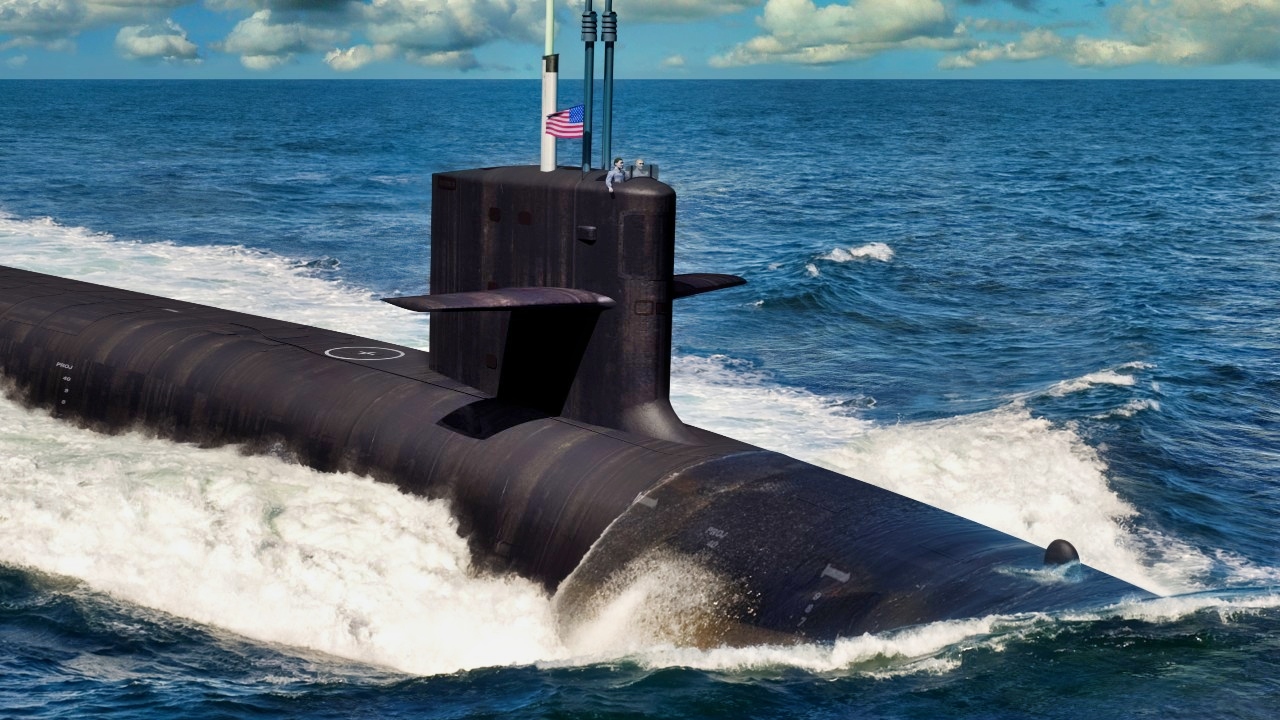
Columbia-Class Navy Handout Photo. Image Credit: U.S. Navy.
-Yet this high-water mark may also be Florida’s swan song.
-Along with sister ship Ohio, she is penciled in for decommissioning and recycling as Columbia-class boats crawl toward the fleet—raising real questions about whether the Navy can afford to let such a proven asset go.
The 727-Day Deployment That Proves Ohio-Class Subs Still Matter
The State of Florida officially became a US state on March 3, 1845, thus becoming the 27th state to join the Union.
It is nicknamed “The Sunshine State,” although it could just as easily be called “The Gator State” on account of its most famous fauna, and Gators is indeed the sports nickname for the University of Florida.
Alligators are aquatic creatures, ergo it’s entirely appropriate that Florida’s name would be bestowed upon a US Navy vessel, particularly a submersible warship to boot.
The submarine USS Florida has a remarkable story to tell, particularly her recently completed patrol that lasted nearly two years.
Alas, her story may soon be coming to an end.
USS Florida (SSBN-728/SSGN-728) Initial History
Built by General Dynamics Electric Boat in Groton, Connecticut, USS Florida is the third ship of the Ohio submarine class. She is the sixth USN vessel to bear the Florida moniker, the most recent predecessor being the World War I-vintage battleship USS Florida (BB-30).
As noted by the ship’s official webpage, “[H]er keel was laid down on the bicentennial of the United States’s independence, 4 July 1976. The boat was unnamed at the keel-laying ceremony … The initial ship’s crew formed the precommissioning unit on 8 July 1980. The first shipboard watches were stationed on 14 February 1981 to support the operational control transfer of engineering systems to the ship’s force control. The Secretary of the Navy finally named her on 19 January 1981 … Florida was launched on 14 November 1981, sponsored by Mrs. Jarcia M. Carlucci … She was commissioned on 18 June 1983, with Captain William L. Powell in command of the Blue Crew and Captain G.R. Sterner in command of the Gold Crew.”
NOTE: The submarine has Blue and Gold crews, which alternate operating the boat (perhaps inspired by the USNA alma mater hymn “Navy Blue and Gold?”).
She started off life as a fleet ballistic missile submarine (SSBN) but was redesignated as a cruise missile submarine (SSGN), entering Norfolk Naval Shipyard in July 2003 to undergo this conversion, which was completed in April 2006; the following month, she had a recommissioning ceremony, with Mrs. Carlucci acting as sponsor once again. The three other Ohios that underwent this transition were USS Ohio (SSBN-726/SSGN-726; the lead ship of the class), USS Michigan (SSBN-727/SSGN-728), and USS Georgia (SSBN-728/SSGN-728).
Her proud motto is Fortes Fortuna Adiuvat (“Fortune Favors the Brave”).
USS Florida Technical Specifications and Vital Stats
(Also coming courtesy of the sub’s official website)
-Hull Length: 560 feet (109.73 meters)
-Beam Width: 42 feet (12.8 meters)
-Displacement: Approx. 18,750 short tons (17,010 metric tons)
-Powerplant: One nuclear reactor, one shaft
-Submerged Speed: 20+ knots (23+ mph; 36,8+ km/h)
-Crew: 15 commissioned officers, 150 enlisted seamen
-Armament: 154 Tomahawk cruise missiles, 4 torpedo tubes
Operational History Part I
She completed her first strategic deterrent patrol on 25 July 1984 and ended up completing 61 such patrols by November 2002. She won multiple accolades along the way:
-The Battle Effectiveness Award (Battle “E”) in 1989, 1991, 1994, 1999, and 2002
-The Marjorie Sterrett Battleship Fund Award in 1991
Florida was first “blooded” in combat on 19 March 2011, launching her Tomahawk Land Attack Missiles (TLAMs) against the air defenses of the regime of then-Libyan strongman Muammar Gaddafi in support of Operation Odyssey Dawn, thus marking the first time that an SSGN fired Tomahawks in anger. Florida ended up firing over 90 such missiles for the duration of the conflict.
Operational History Part Deux: Florida’s 727-Day Incredible Journey
(Yes, we’re paying homage to the 1963 Disney film “The Incredible Journey” here.)
The submarine embarked on this epic deployment in August 2022. The boat circumnavigated the globe, commencing in the Atlantic Ocean and wrapping up in the Pacific Ocean, deploying in the 5th, 6th, and 7th Fleet’s areas of operations, which are in the Middle East, Europe, and Western Pacific Ocean, respectively.
The purpose of this extended tour was to counter threats posed by Russia, China, and Iran.

Akula-Class Submarine from Russian Navy. Image Credit: Creative Commons.

Akula-Class. Image Credit: Creative Commons.
In the process, she performed five crew swaps and traveled 60,000 nautical miles before finally returning home on July 31, 2024. In the words of Capt. Peter French, Blue Crew’s commanding officer (CO) at the time, said, “We have demonstrated the versatility of SSGN platform to operate anywhere at any time. We operated in several different oceans. It’s very uncommon for East Coast submarines to deploy to the West Coast, but we managed to do an exceptional job completing the mission.”
USS Florida’s Present and Future
The current Blue Crew consists of Capt. Peter French as the CO, Lt. Cmdr. George Thompson as the Executive Officer (XO), and TMCM Gerald Struble as the Chief of the Boat (COB). Meanwhile, the Gold Crew is currently comprised of Capt. Roderick L. Hodges as “skipper,” Cmdr. Cmdr. Christopher T. Deyoung as XO, and MMACM Corey G. Watson as COB.
She is currently homeported in Naval Submarine Base Kings Bay, Georgia.
Alas, nothing lasts forever, although that 727-day tour certainly may have felt like it to Florida’s crew. That long patrol may indeed turn out to be the sub’s swan song.
Along with her sister ship USS Ohio, USS Florida is tentatively slated for decommissioning in 2026. According to the “Report to Congress on the Annual Long-Range Plan for Fiscal Year 2025” released by the Office of the Chief of Naval Operations, both of these subs are planned for recycling.
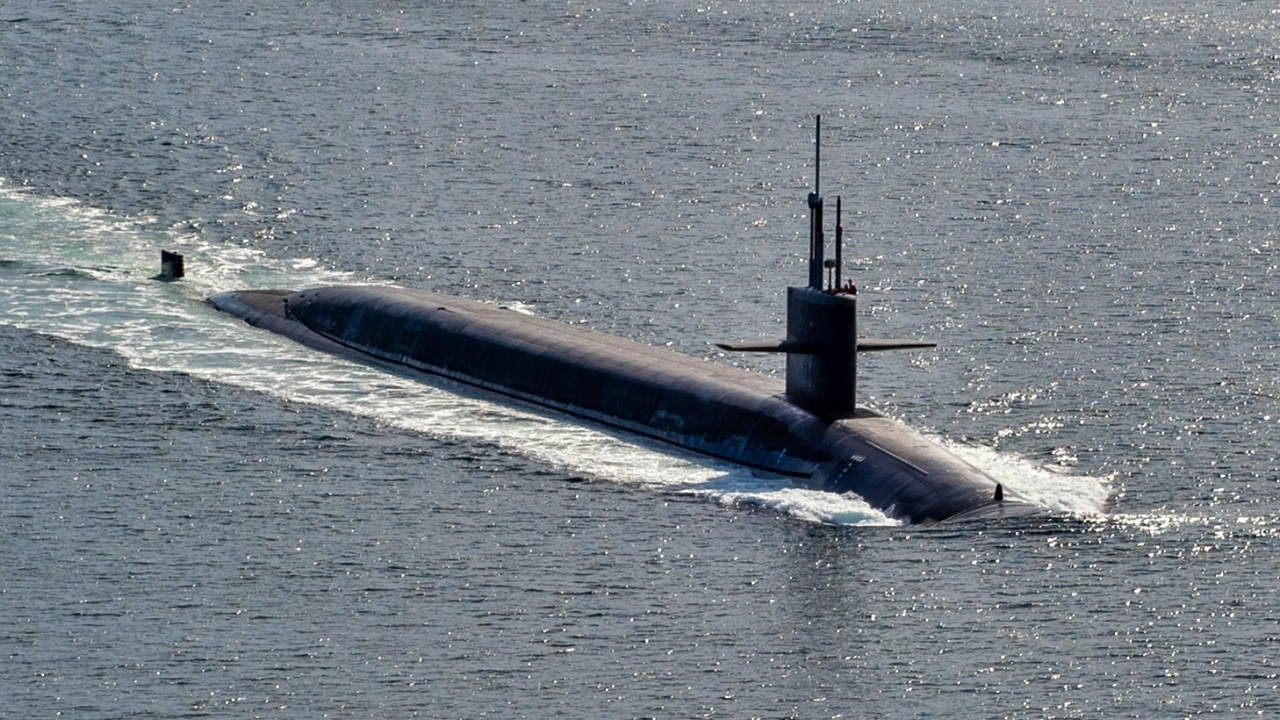
The Ohio-class ballistic-missile submarine USS Maine (SSBN 741) transits the Puget Sound during routine operations, March 18, 2025. Commander, Submarine Group (SUBGRU) 9, exercises administrative control authority for assigned submarine commands and units in the Pacific Northwest providing oversight for shipboard training, personnel, supply and material readiness of SSBNs and their crews. SUBGRU-9 is also responsible for nuclear submarines undergoing conversion or overhaul at Puget Sound Naval Shipyard in Bremerton. (U.S. Navy photo by Mass Communication Specialist 1st Class Ryan Riley)
However, since the Ohio class’s designated replacements, the Columbia-class boats, are coming along at a snail’s pace due to cost overruns and production delays, that may very well end up giving Florida and her sisters an extended lease on life.
If and when this does happen, perhaps plans will be made to preserve this remarkable warship for posterity as a floating museum. Time will tell.
About the Author: Christian D. Orr, Defense Expert
Christian D. Orr is a Senior Defense Editor. He is a former Air Force Security Forces officer, Federal law enforcement officer, and private military contractor (with assignments worked in Iraq, the United Arab Emirates, Kosovo, Japan, Germany, and the Pentagon). Chris holds a B.A. in International Relations from the University of Southern California (USC) and an M.A. in Intelligence Studies (concentration in Terrorism Studies) from American Military University (AMU). He is also the author of the newly published book “Five Decades of a Fabulous Firearm: Celebrating the 50th Anniversary of the Beretta 92 Pistol Series.”


amjmelb
November 24, 2025 at 2:09 pm
Unfortunately, there’ll never be a Trident boat as a museum. Way too much classified equipment on board, and no practical (cost effective) way to remove the reactor and it’s fuel to make it “safe” for the public. It sucks, as a boomer sailor I’d love to see one out there preserved for the public to tour.
Travis
November 25, 2025 at 8:56 am
Some technical errors in this article such as:
“Hull Length: 560 feet (109.73 meters)” which is actually 170.68 meters
Christine Young
November 25, 2025 at 9:34 am
Yeah, showing US resolve by sending a sub that’s about to be decommissioned. 😂 By the way, you do realize that China can see your “stealth” subs from space right?