

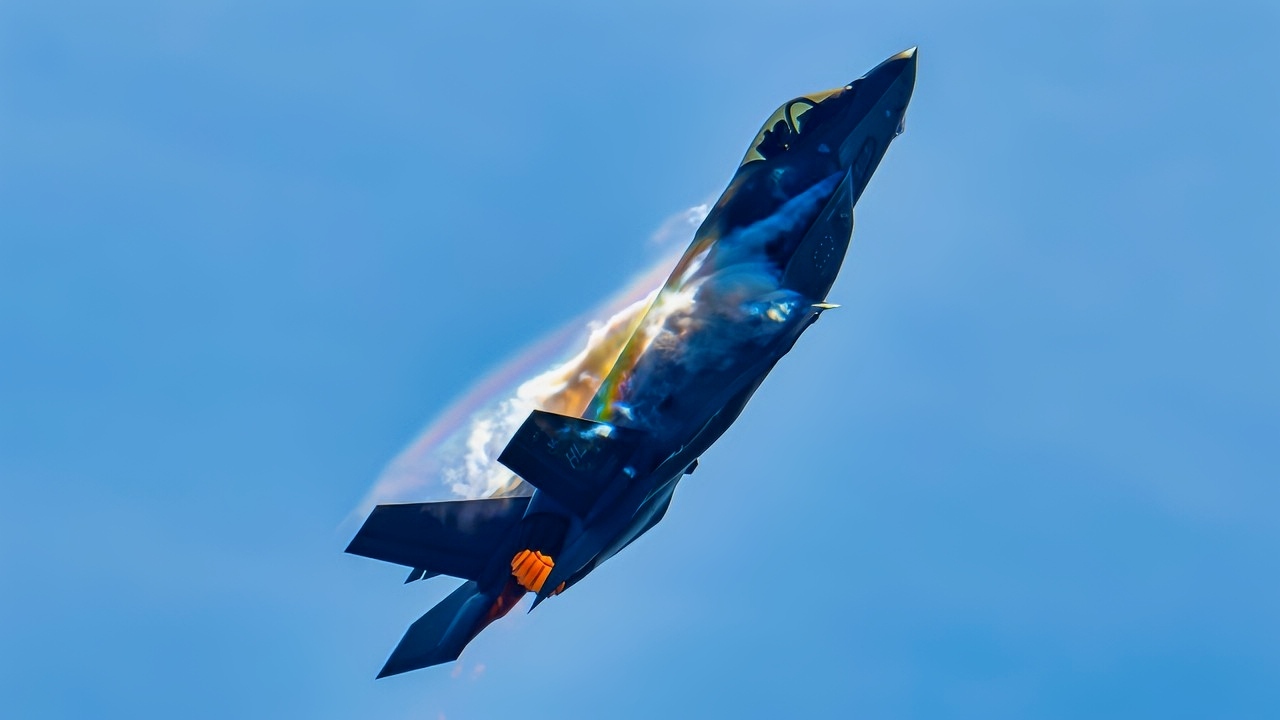
A new Government Accountability Office report found that 74 percent of U.S. Air Force aircraft missed their depot maintenance completion deadlines, up from 31 percent in 2019. The GAO concluded that the Air Force has masked the true severity of these delays by revising target timelines after unplanned work is discovered, making depots appear to meet goals they have not actually met. The service’s three major maintenance depots — Hill in Utah, Robins in Georgia, and Tinker in Oklahoma — cannot compete with private-sector pay for skilled technicians. The Defense Logistics Agency has also lost roughly 22 percent of its vendor base.
The U.S. Air Force Has a Maintenance Problem
The Air Force is experiencing surging maintenance delays, with 74 percent of aircraft missing their depot completion deadlines—up from 31 percent in 2019.
A Government Accountability Office (GAO) report reveals that the true extent of these readiness delays has been masked by officials altering target timelines after discovering unplanned maintenance.
The unplanned surprises found when aircraft are in the Air Force’s depots for maintenance aren’t being reflected in the statistics that the service uses in the assessments of depot maintenance.
A GAO Report States The Air Force Isn’t Meeting Deadlines
This latest report shows that the Air Force “is not reporting the full extent of depot maintenance challenges and may not be able to make accurate comparisons across the fleet,” the GAO says.
Air Force maintainers have masked the delays because officials often revise their target timelines after unplanned work is discovered. These unplanned delays are hurting the service’s aircraft availability for training and operations.
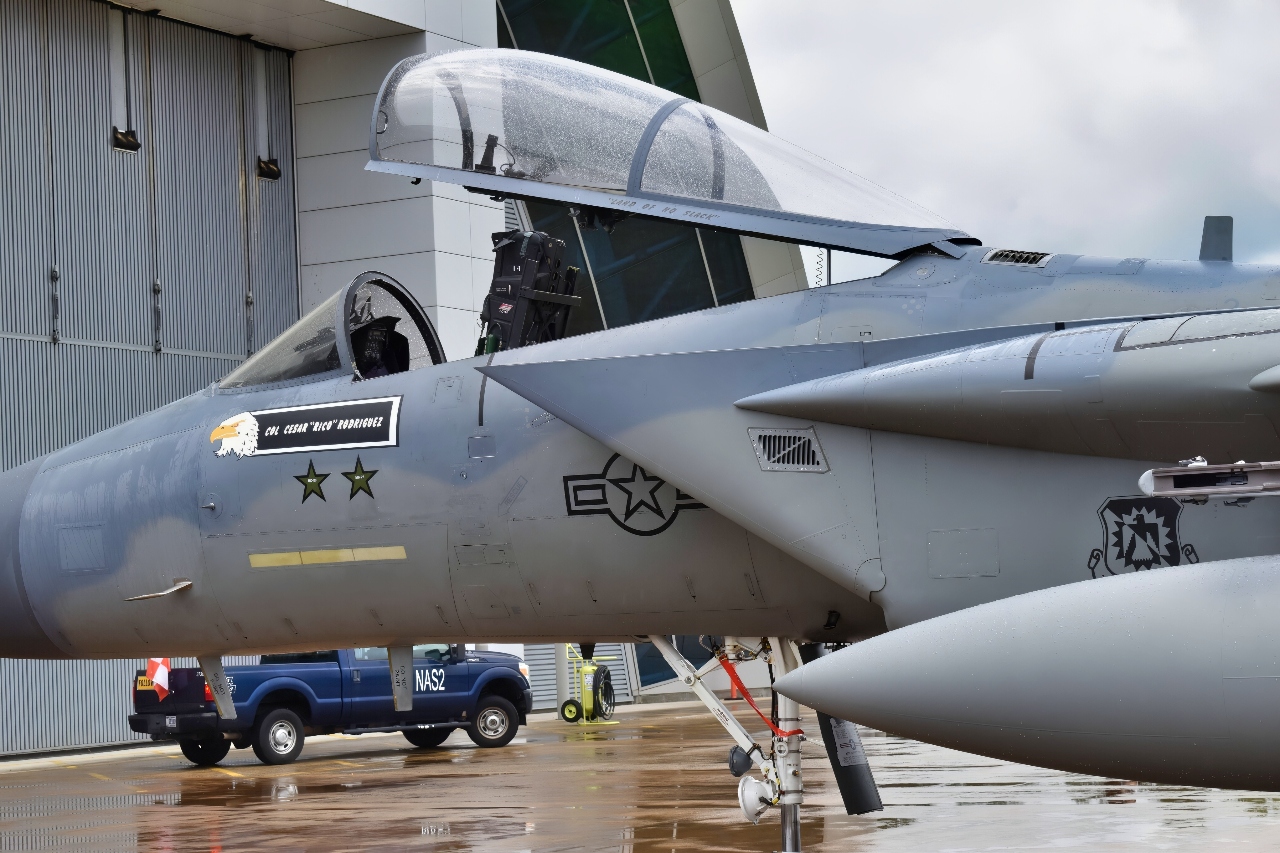
F-15C Fighter at Smithsonian August 13 2025. Image Credit: National Security Journal.
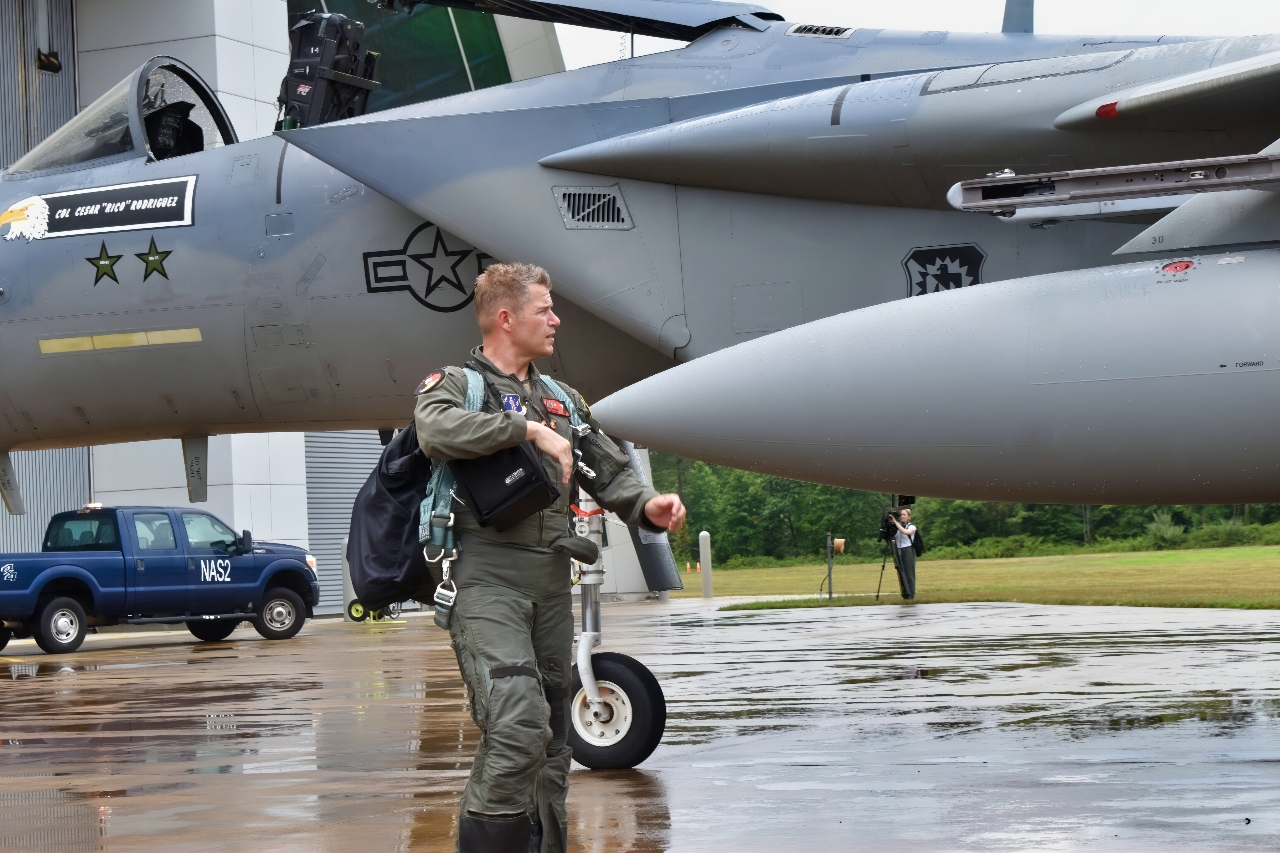
F-15C Pilot National Security Journal Photo. Image Credit: Brent M. Eastwood/National Security Journal.
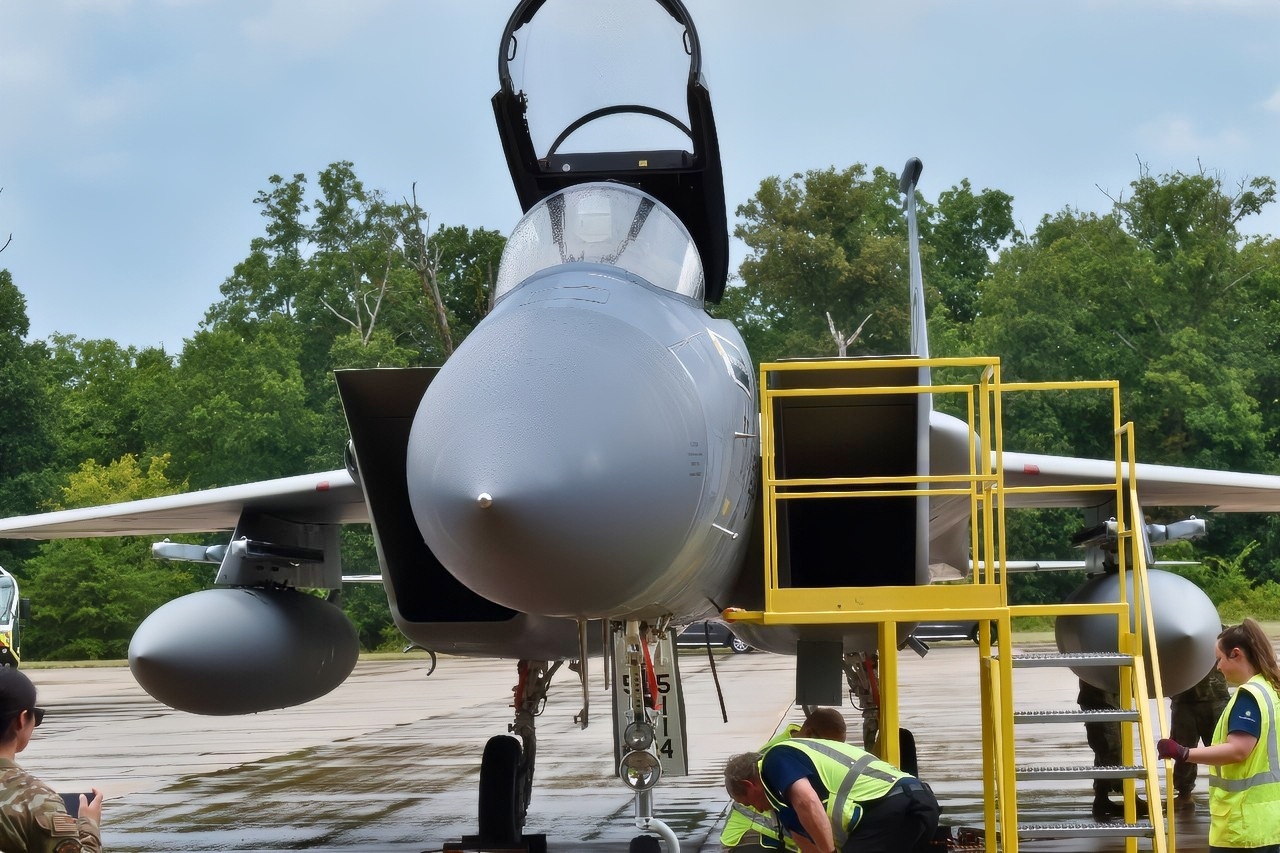
Rain on F-15C Fighter at Smithsonian National Security Journal Photo.
Air and Space Forces magazine reports that, “Depot maintenance is the highest, most intensive level of military maintenance, covering repairs requiring the overhaul, upgrading, or rebuilding of parts or structures, according to U.S. law.” The Air Force has three major maintenance depots:
-Ogden Air Logistics Complex at Hill Air Force Base, Utah
-Warner Robins Air Logistics Complex at Robins Air Force Base, Georgia
-Oklahoma City Air Logistics Complex at Tinker Air Force Base, Oklahoma
What Are The Primary Factors In The USAF’s Maintenance Delays?
Several systemic challenges drive this Air Force maintenance crisis. The Air Force has an aging aircraft fleet, with age-related wear and tear on highly complex aircraft making them more susceptible to unplanned repairs and a critical shortage of skilled technicians.
Making matters worse, the Air Force has masked the true severity of these bottlenecks by shifting target deadlines to match the actual, slower performance of its maintenance depots.
An Aging Aircraft Fleet Presents Constant Challenges
Surging unplanned maintenance is a direct result of the aging of its air fleet. As aircraft age, depots routinely uncover unexpected issues like corrosion or structural stress cracks during routine maintenance.

An F-15C Eagle assigned to the 44th Fighter Squadron returns from a training sortie at Kadena Air Base, Japan, Dec. 20, 2022. The 44th FS maintains combat readiness through daily training, ensuring the ability to provide superior airpower capabilities in support of a free and open Indo-Pacific. (U.S. Air Force photo by Senior Airman Jessi Roth)
This unplanned work has increased significantly, making it difficult to stick to the original schedule.
The masked metrics in the Government Accountability Office (GAO) report found that nearly three-quarters of Air Force aircraft experienced delays. However, the scale of the problem was hidden because officials regularly revised target timelines after unplanned work was discovered, making it appear as though depots were meeting their goals.
The Air Force’s Losing Battle Against the Private Sector
Workforce shortages are reaching critical levels. Maintenance depots struggle with critical staffing challenges because the Air Force can’t compete with the private sector on pay and benefits.
The Air Force’s challenge of recruiting and retaining engineers and mechanics has been constant. The GAO Report highlighted, “The depots have taken some steps to mitigate this challenge by selectively using incentives and emphasizing the nonfinancial benefits of a federal career.
“However, the Air Force has not fully addressed pay competition with the private sector because DOD has not conducted a comprehensive assessment of pay gaps for occupations affected by private sector competition.
“Such an assessment would enable the depots to make informed decisions to address competition with the private sector for occupations critical to aircraft readiness.”
Creating A Pathway For Recruitment
A recent article in War on the Rocks suggests that to address maintenance workforce issues, the Air Force should launch a targeted recruitment campaign in high schools and technical schools that emphasizes service career opportunities and benefits.
“Streamlined pathways for obtaining certifications, such as an Airframe and Powerplant (A&P), can make the Air Force more appealing in an increasingly competitive hiring field. Tying these certification programs to service commitments can ensure a steady influx of qualified maintainers.”
Supply Chain Issues Plague All Of The Services
Supply chain and parts delays aren’t just an Air Force problem but a Pentagon-wide issue. The Defense Logistics Agency (DLA) lost thousands of vendors (roughly 22 percent of its total supplier community) over recent years, which has drastically increased pricing and lead times.
However, complex aircraft, such as the F-35 and F-22, require highly specialized parts, technical training, and logistical support systems, and these systems have struggled to keep pace.
Primary factors include contractor shortages, reliance on foreign-sourced parts, and cyber vulnerabilities. The USAF is actively mitigating these risks using AI and predictive logistics frameworks.
About the Author: Steve Balestrieri
Steve Balestrieri is a National Security Columnist. He served as a US Army Special Forces NCO and Warrant Officer. In addition to writing on defense, he covers the NFL for PatsFans.com and is a member of the Pro Football Writers of America (PFWA). His work was regularly featured in many military publications.


