


The U.S. Navy is set to announce the builder of its F/A-XX sixth-generation carrier fighter by August 2026, with Boeing and Northrop Grumman as the two finalists after Lockheed Martin was dropped from the competition. And many are saying it looks very similar to the YF-23 Black Widow II.
Chief of Naval Operations Adm. Daryl Caudle has hinted one remaining bidder may not be able to deliver on time. The F/A-XX will replace the aging F/A-18 Super Hornet, control up to four Collaborative Combat Aircraft drones, integrate with the MQ-25 Stingray refueling tanker, and counter Chinese platforms including the J-35 stealth carrier fighter, the J-36 sixth-generation bomber, and the KJ-600 early-warning aircraft.
The F/A-XX: The YF-23 Black Widow II Comeback? Well…
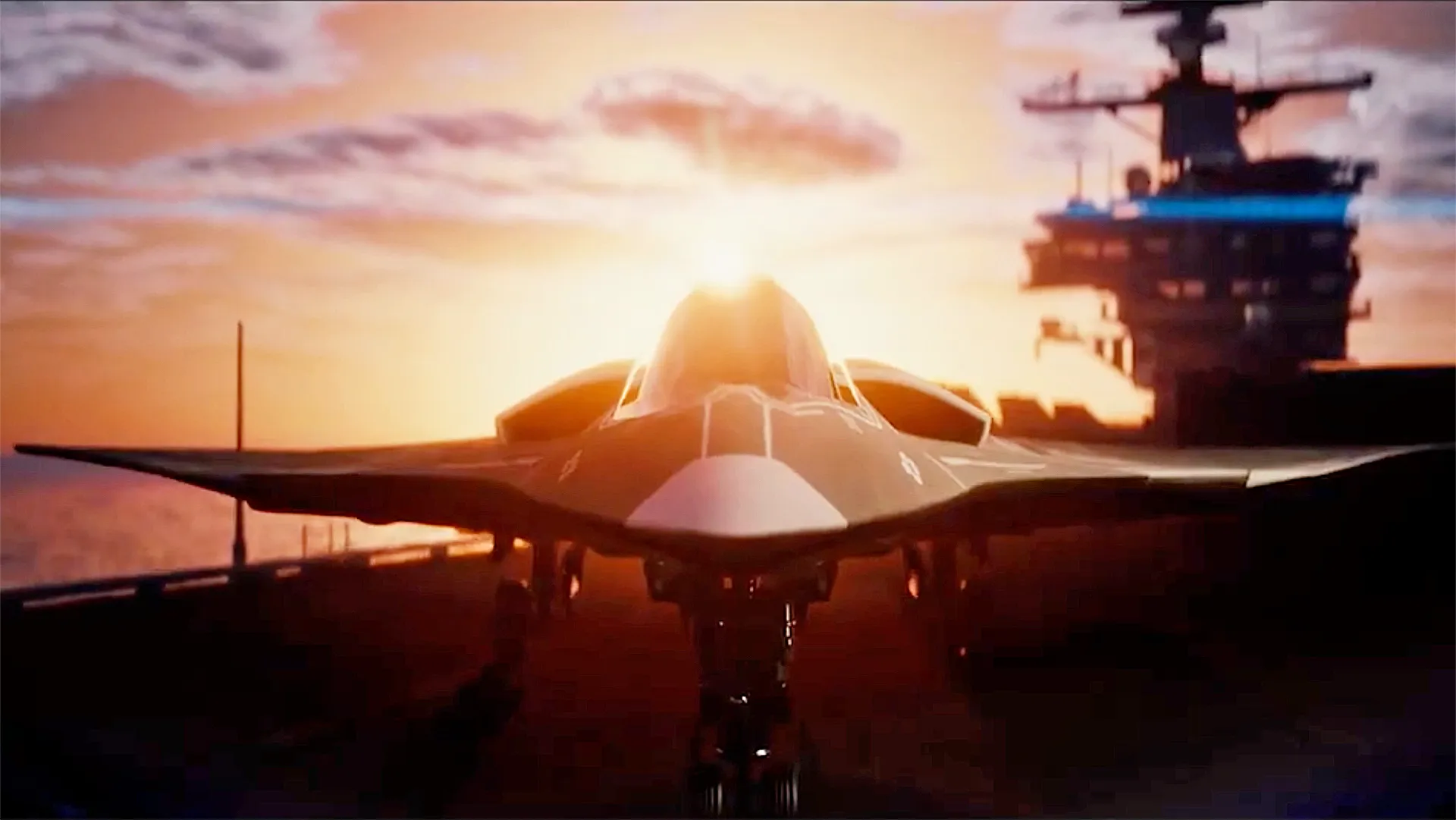
FA-XX. Northrop video screenshot.
The Navy’s long-anticipated F/A-XX sixth-generation fighter program is expected to have an announced builder by August. Chief of Naval Operations Adm. Daryl Caudle said on Monday that the Navy will select the builder this summer in a bidding war between Boeing and Northrop Grumman.
“The need for the F/A-XX is unquestionable. Peer competitors and even lesser adversaries are improving their anti-air capabilities,” Caudle said.
“I think you’re going to see a downselect on this in August. I think that’s the month that they have committed to making the decision on the program,” Caudle said to the assembled media at the Navy League’s Sea-Air-Space Symposium.
Caudle hinted that one company may already have been eliminated from the competition.
“The Navy’s got a lot of demand… making sure that we don’t, again, fall into a trap of oversubscribing,” Caudle said. “One of the contractors who would make this plane for us is in a place where they really can’t deliver in the timeframe we need it. So there was a ‘check twice, cut once’ kind of mentality here on this decision,” he added.
Boeing was selected last year to build the F-47 NGAD fighter for the Air Force, while Northrop Grumman is building the B-21 Raider bomber for the Air Force. Lockheed Martin was involved in the bidding, but was dropped last year after submitting a bid that didn’t meet the service’s criteria.
Is Northrop Grumman’s Teaser Video The Hint Of Things To Come?
In response to the news, Northrop Grumman released a new teaser video. The company then posted on its “X” account, “We’re bringing tomorrow’s horizon into focus, faster, stronger, and ready when the warfighter needs it.”
We’re bringing tomorrow’s horizon into focus, faster, stronger and ready when the warfighter needs it.#SAS2026 pic.twitter.com/r0uORyR5kM
— Northrop Grumman (@northropgrumman) April 20, 2026
With this news and the Air Force’s F-47 NGAD, announced last spring, along with the B-21 Raider already in production, the US military is firmly moving into sixth-generation military aircraft advances. It is no longer just a future vision for the Pentagon.
It is now a defining force in the US military’s continued air dominance for the next several decades. These aircraft promise unprecedented advances in speed, stealth, and autonomy.
What Does The Latest Teaser Show? YF-23 2.0 Maybe
As with any other computer-generated video or still art piece, no one knows whether it will truly look like the aircraft. But the fun part is that many aviation analysts and enthusiasts get to pick which features are shown.
It should be noted that the rendering of the F/A-XX still looks like a sixth-generation version of Northrop’s YF-23 stealth fighter that lost to the YF-22 Raptor a few decades ago, despite many believing that it bested the Raptor in many aspects of the competition, including speed, stealth, and range.
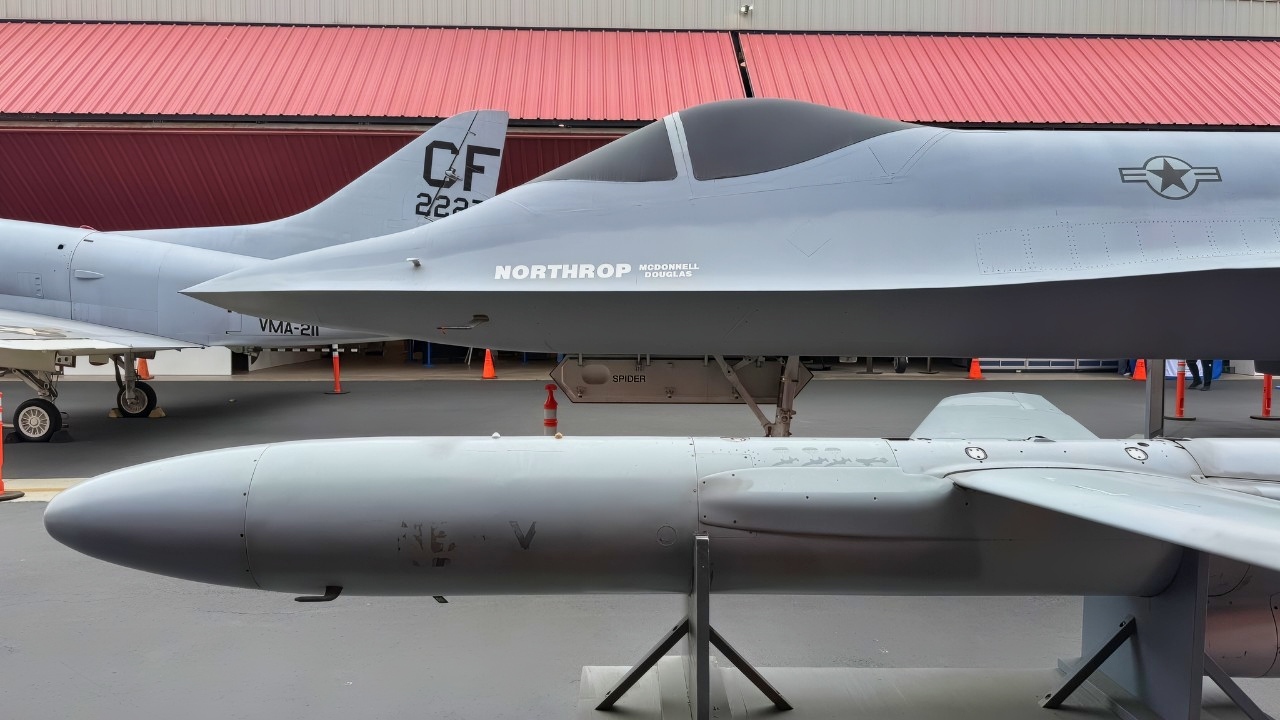
YF-23A Black Widow II Stealth Fighter in Torrance
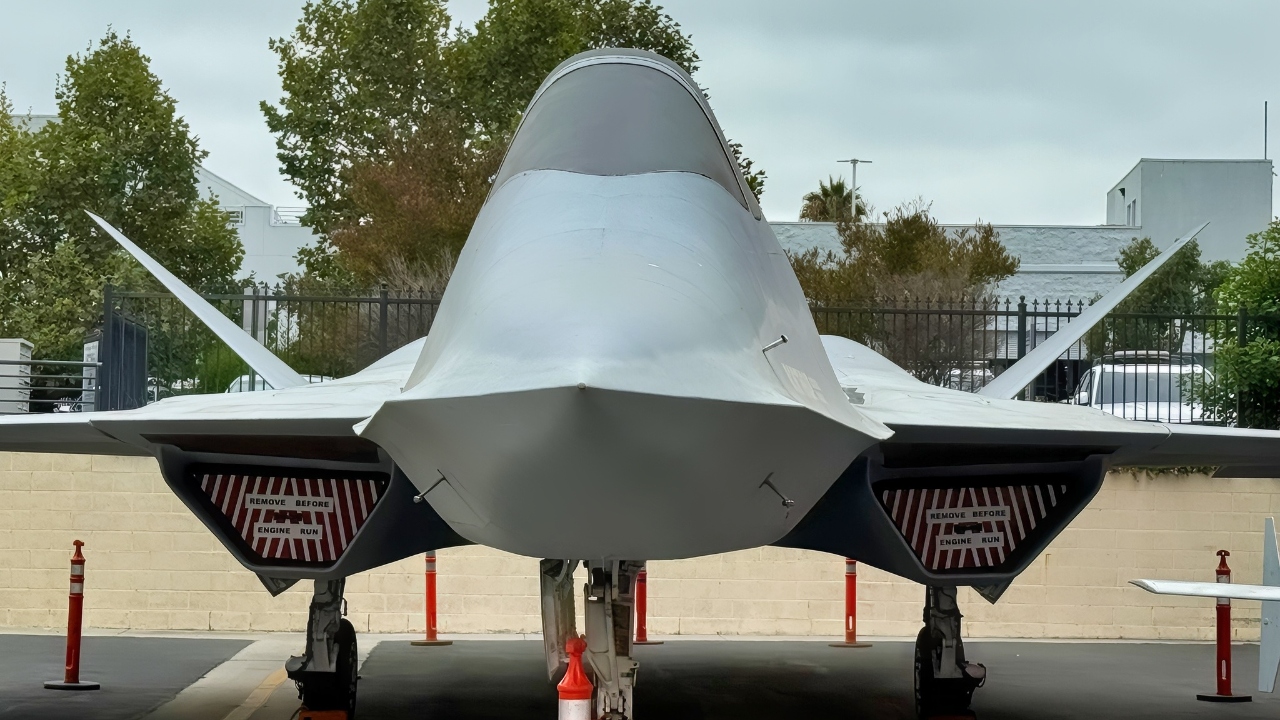
YF-23A Black Widow II Head On. Image Taken by National Security Journal at the Western Museum of Flight on August 16, 2025.
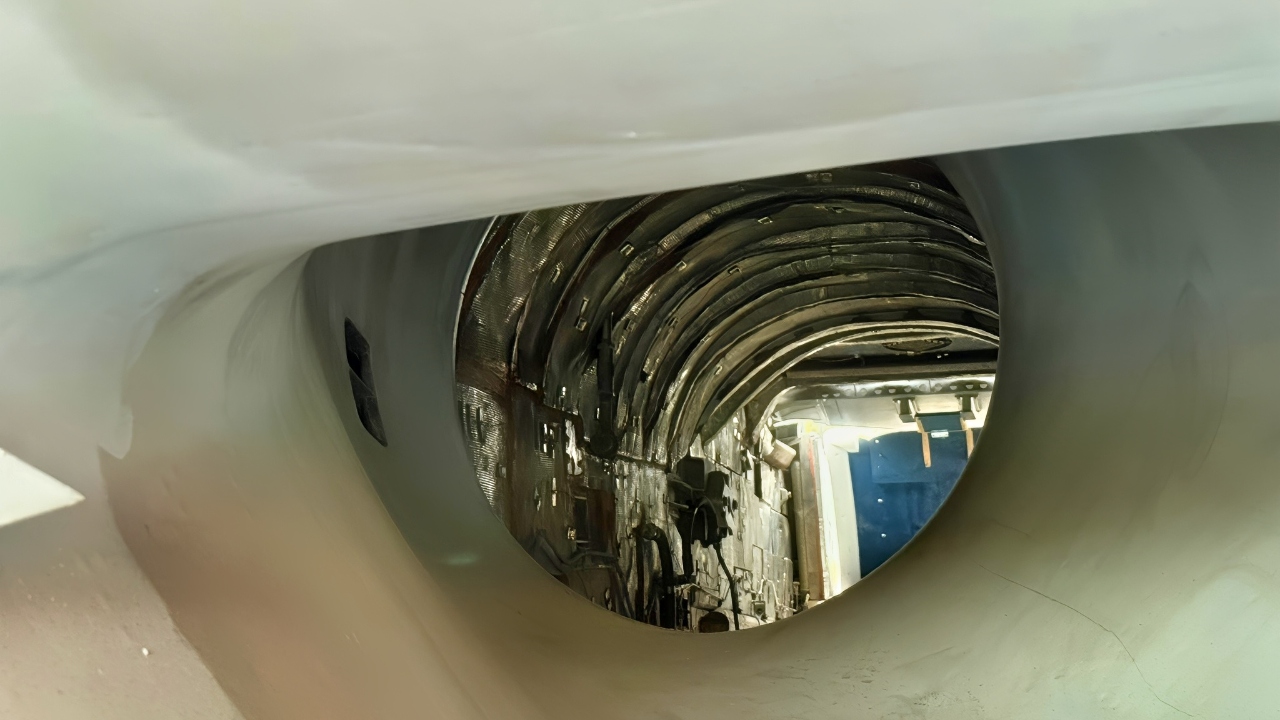
This photo was taken looking inside a YF-23A Black Widow II where the engine was removed. Photo: National Security Journal.

YF-23A Black Widow II National Security Journal Photo. Taken at the Western Museum of Flight by Harry J. Kazianis on August 16, 2025.
As the TWZ points out, the F/A-XX has a broad, duck-billed nose with a stealthy chine that extends back into the fuselage. However, the front landing gear is positioned further back, possibly to accommodate a large AESA radar.
The canopy is large, perhaps large enough for a two-seat configuration. The tailless design has rear-set dorsal inlets for the engines. Those are probably different than the actual ones for security purposes.
Why The Navy Needs The F/A-XX In The Indo-Pacific:
With improvements made by adversaries like China, including the development of advanced fighters and long-range missile systems, the US Navy needs a new platform capable of establishing air superiority and surviving in high-threat environments, while protecting the Navy’s biggest power-projection platforms, its aircraft carriers.
The U.S. Navy needs the F/A-XX, a sixth-generation carrier-based fighter, to replace the aging F/A-18 Super Hornets and to ensure air superiority and continued power-projection capabilities in increasingly contested environments, particularly against rivals like China in the Pacific.
China is also advancing its own naval aviation. The introduction of the J-35 stealth carrier fighter, the J-36, sixth-generation bomber, and the KJ-600 airborne early warning aircraft strengthens China’s ability to contest sea and air control.

J-35 Fighter Chinese State Media Photo.
Key requirements for the F/A-XX include advanced stealth, significantly extended range, and the ability to operate alongside and direct Collaborative Combat Aircraft (CCA) drones, forming a critical component of the Next Generation Air Dominance (NGAD) family of systems.
This advanced platform is vital for maintaining the effectiveness and survivability of aircraft carrier air wings against emerging threats and ensuring the Navy can project power and influence globally.
The US operates 11 aircraft carriers as well as nine amphibious assault ships (LHDs), which are used to maintain force projection around the globe. But the US carriers might not be able to approach close enough to desired targets without incurring unacceptably large volumes of enemy missile fire.
F/A-XX Would Extend Ranges For Strike and Air Defense Missions:
The F/A-XX is designed with significantly greater range and payload capacity than the Super Hornet, allowing carrier air wings to project power further into contested areas and conduct deep strikes more effectively.
With the F/A-XX, the carriers can perform deep strikes, quarterback combat drones, and engage any Chinese missiles, planes, and drones seeking a long-range kill on U.S. ships and assets.
The aircraft “will be vital to maintaining air superiority and open sea lines of communication for decades to come,” wrote Vice Admiral Dan Cheever, the Navy’s “Air Boss.”
“It is the centerpiece of sixth-generation naval aviation — a stealthy, long-range, data-integrated platform designed to dominate in contested environments. It is built for the fight we know is coming,” said Rep. Jen Kiggans.
The F/A-XX And The Loyal Wingman Program:
The F/A-XX will incorporate key fifth and sixth-generation technologies—stealth radar cross-section minimization, networked sensors, and the capability to simultaneously control four drones, starting with new MQ-25 Stingrays entering service for mid-flight refueling (and likely other roles in time) and future carrier-based Loyal Wingmen drones armed with missiles or radars for combat tasks.

A MQ-25 Stingray sits parked in Hangar 1 on Scott Air Force Base, Illinois, May 12, 2023. The MQ-25 Stingray will be the world’s first operational, carrier-based unmanned aircraft and provide aerial refueling and intelligence, surveillance and reconnaissance (ISR) capabilities that enhance capability and versatility for the Carrier Air Wing (CVW) and Carrier Strike Group (CSG). (U.S. Air Force photo by Staff Sgt. Solomon Cook)
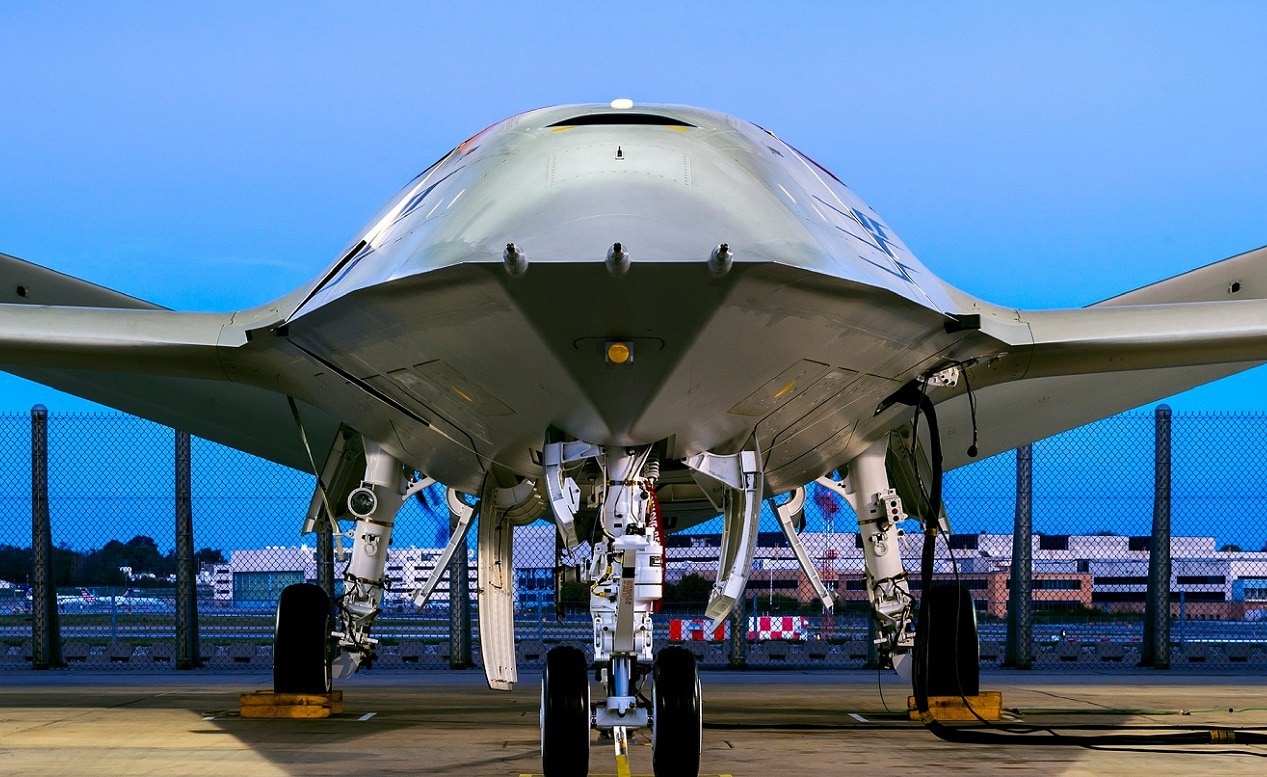
MQ-25. Image Credit: Creative Commons.
“[Air wing of the future] ties to our MQ-25 for stealth refueling. It ties to our reach. It ties to the work we’re doing for making the carry or something that remains very effective into the future based on the range in which it can operate safely,” Caudle said to the USNI.
USNI reported that the US Navy has contracted five defense firms—General Atomics, Boeing, Anduril, Northrop Grumman, and Lockheed Martin—to develop armed, unmanned aircraft and control systems for deployment across its 11 aircraft carriers.
Naval Air Systems Command (NAVAIR) confirmed the contracts, which aim to produce modular, interoperable Collaborative Combat Aircraft (CCA) to augment F/A-18E/F Super Hornets and F-35Cs, while eventually pairing with the future sixth-generation F/A-XX.
“The CCA concept is all part of our sixth-generation concept. It’s tied with the overall air wing of the future concept,”caudle added.
“It is a program that we’re working very hard trying to do that in learning with the Air Force on what CCAs look like in the future and the way we’re going to command and control those how many, what’s the number that a pilot can reasonably control and task and AI is part of that.”
Lockheed Martin will also lead development of the MD-5 Mission Control System via its Skunk Works MDCX autonomy platform.
The US Navy’s carrier task forces have extensive air defense capabilities. But their short-range F/A-18 Super Hornets are a potential Achilles Heel. The F/A-XX will definitely help extend that range to where the carriers can fight and survive.
The F/A-18 Super Hornets are wearing out faster than the standard F/A-18s, and, in the context of the air campaign against Iran, they are placing even more stress on the aging airframes.
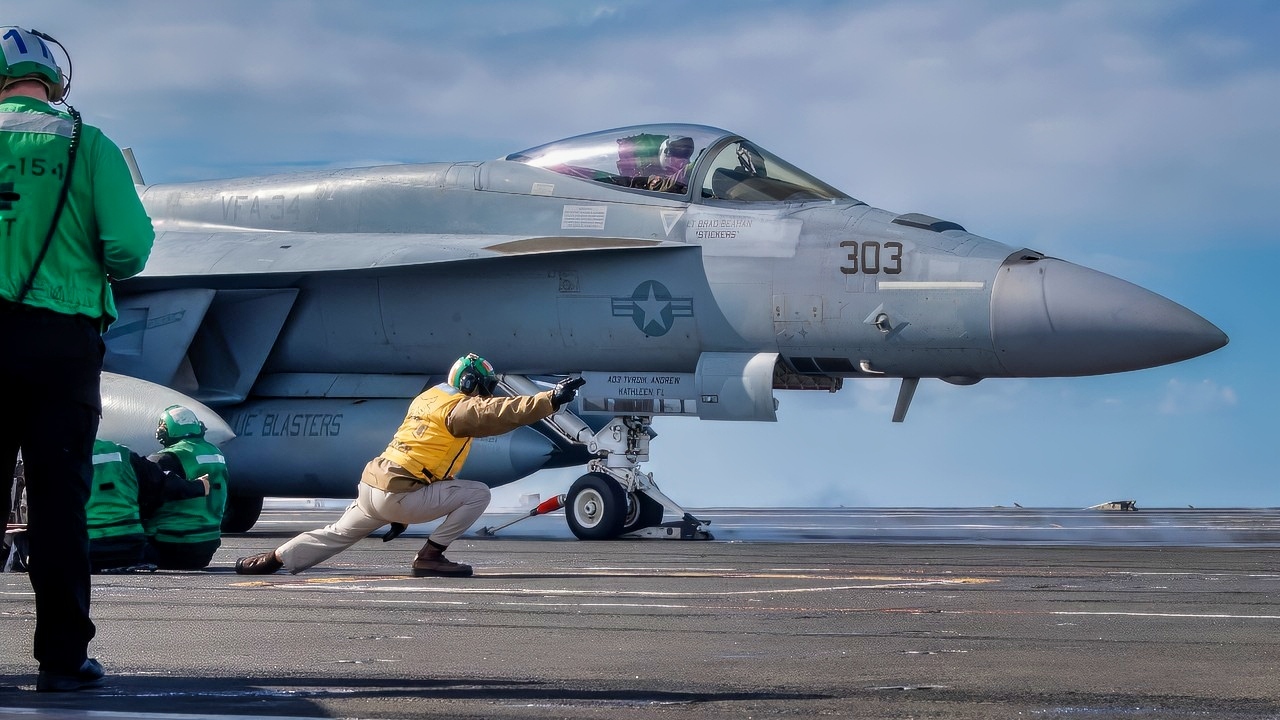
U.S. Navy Lt. Andrew Bentley signals an F/A-18E Super Hornet, assigned to the “Blue Blasters” of Strike Fighter Squadron (VFA) 34, to launch from the flight deck of the Nimitz-class aircraft carrier USS Theodore Roosevelt (CVN 71), Nov. 30, 2023. Theodore Roosevelt, the flagship of Carrier Strike Group Nine (CSG 9), is conducting integrated training exercises in the U.S. 3rd Fleet area of operations. (U.S. Navy photo by Mass Communication Specialist 3rd Class Adina Phebus)
The government is rightly concerned about the simultaneous development of two new projects (F-47 and the F/A-XX), citing budget constraints and production risks.
However, as Isaac Seitz wrote, “The F/A-XX is also designed to be a key node in the Pentagon’s Joint All-Domain Command and Control (JADC2) network.
“It will integrate with space-based assets, undersea platforms, and cyber-resilient systems, enabling multi-domain operations and distributed lethality.
“Its role as a command-and-control hub for unmanned systems and its compatibility with emerging technologies like adaptive propulsion and high-energy lasers position it as a central element of future carrier strike groups.”
About the Author: Steve Balestrieri
Steve Balestrieri is a National Security Columnist. He served as a US Army Special Forces NCO and Warrant Officer. In addition to writing on defense, he covers the NFL for PatsFans.com and is a member of the Pro Football Writers of America (PFWA). His work was regularly featured in many military publications.


