

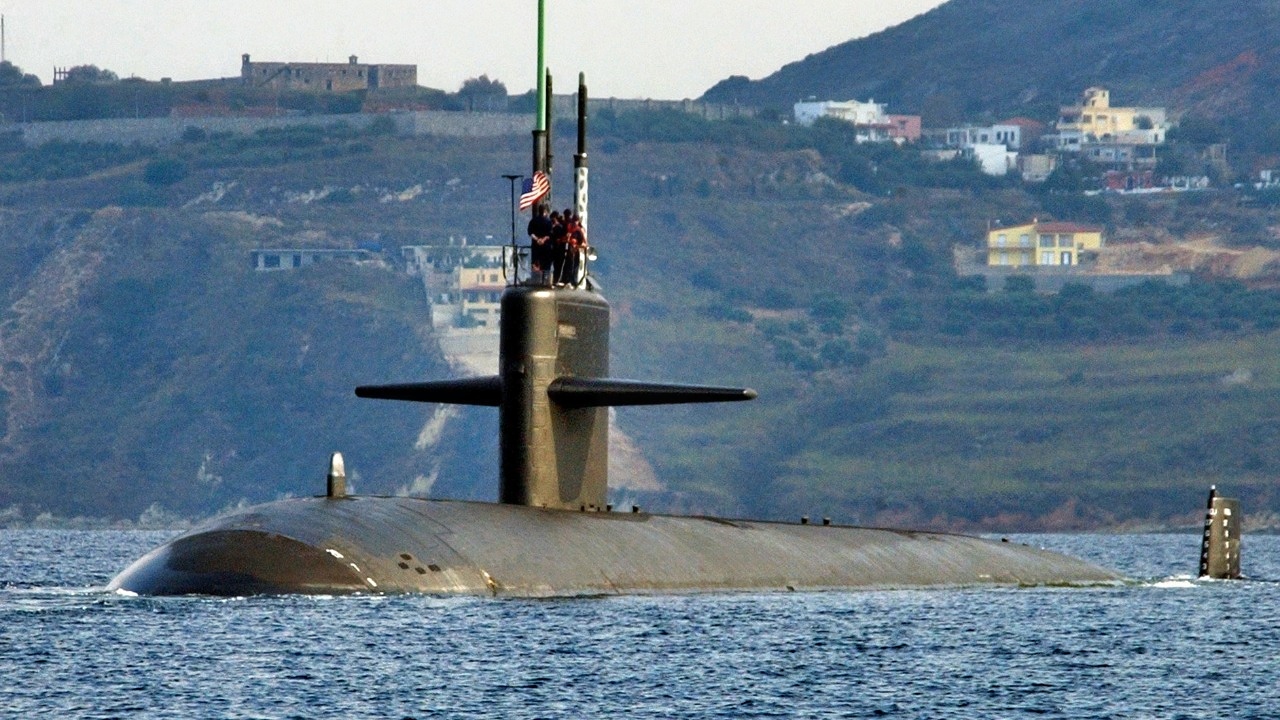
Key Points – In a 2013 NATO anti-submarine exercise, the U.S. Navy’s Los Angeles-class attack submarine, USS Dallas (SSN-700), successfully breached the defensive screen of the British aircraft carrier HMS Illustrious and simulated “sinking” it.
-This event highlighted the profound threat that modern, quiet nuclear-powered submarines pose even to well-defended carrier strike groups.
-The Los Angeles-class, the backbone of the U.S. submarine force for decades, was designed during the Cold War to be faster and stealthier than its predecessors.
-The class’s success in such exercises showcases the strategic advantage of advanced undersea warfare capabilities.
The Day a U.S. Sub “Sank” a British Aircraft Carrier
“Way to go, Dallas!” As an American actor, Courtney B. Vance said in the film The Hunt for Red October, the USS Dallas, a Los Angeles-class nuclear attack submarine, performed an incredible feat during an exercise approximately 12 years ago.
In a 2013 NATO anti-submarine exercise in the Arabian Sea, the Navy’s USS Dallas successfully “sank” the British aircraft carrier HMS Illustrious by breaching its defenses undetected.
A similar incident occurred during a 2007 exercise involving the Canadian submarine HMCS Corner Brook.
How the US Navy Sank an Allied Aircraft Carrier
Stealthy and heavily armed with missiles, drones, and torpedoes, subs are arguably the most powerful naval vessels in the world for full-scale warfare, and arguably the best way to sink the icons of projecting maritime power, aircraft carriers.
During the exercise, the U.S. Navy’s USS Dallas (SSN 700) evaded detection and simulated an attack on the British Navy’s HMS Illustrious.
Dallas used its stealth features to breach the aircraft carrier’s defenses.
Aircraft carriers are large and heavily armed power projection vessels, but Dallas’ win highlighted the strategic advantage submarines can bring in an unseen combat situation.
USS Dallas Highlights The Stealth in Modern Submarines:
This particular exercise demonstrated the power of stealth in submarine warfare and highlighted the vulnerabilities of even the largest warships when faced with skilled submarine operators.
The Dallas breached the anti-submarine defenses of the British aircraft carrier, along with its protection fleet, which attempted to locate and destroy the American sub using helicopters and sonar, came within firing range, signaling it could have launched a successful torpedo strike in real combat.
This exercise showcases the exceptional skill of the Dallas crew, as well as the stealth capabilities of the sub.
Meet The Los Angeles-class of Attack Submarines:
During the Cold War, the Soviet Navy developed its fast attack submarines to shadow US aircraft carrier strike groups.
In response, the United States developed the Los Angeles-class nuclear attack submarines. These new subs were 50 percent larger, faster, and much more stealthier than the earlier Sturgeon-class submarines.
Los Angeles-class submarines are the backbone of the U.S. Navy’s submarine force, with 41 ships now on active duty. Thirty Los Angeles-class SSNs are equipped with 12 Vertical Launch System tubes for firing Tomahawk cruise missiles.
Designed as a follow-on to the Sturgeon-class submarines built during the 1960s, the Los Angeles-class incorporates improved sound quieting and a larger propulsion plant than previous classes.
Its capabilities include wartime functions of undersea warfare, surface warfare, strike warfare, mining operations, special forces delivery, reconnaissance, carrier battle group support and escort, and intelligence collection.
The last 23 submarines of the Los Angeles-class, known as “Improved 688s” (I688s), are quieter, incorporate an advanced combat system, and are configured for under-ice operations.
Their diving planes were relocated from the sail to the bow, and the sail was strengthened to break through ice. The I688s also have twelve vertical launch tubes for Tomahawk Cruise Missiles.
The armament carried by these attack submarines consists of:
4 x 21″ (533mm) torpedo tubes for UGM-109 Tomahawk missiles, UGM-84 Harpoon SSM or Mk-48 torpedoes or mines for the earlier models.
Later Models:
4 x 21″ (533mm) torpedo tubes for Mk-48 torpedoes or Mk67 and Mk-60 CAPTOR mines
1 x Mk-45 Vertical Launching System (VLS) – 12 cells for UGM-109 Tomahawk missiles or UGM-84 Harpoon SSM
The Los Angeles class carries a crew of approximately 130 officers and crew members.
The USS Dallas ‘Sinks’ The HMS Illustrious:
During this simulated war game exercise, HMS Illustrious relied on its onboard systems, including sonar buoys, helicopters, and support ships, to locate the American submarine during the drills.
However, the USS Dallas was able to penetrate all these defenses stealthily.
Dallas positioned itself within shooting range of the British ship—it would have been able to attack the carrier successfully if the exercise had been real.
The USS Dallas completed 14 operational deployments in her lifetime. The nuclear-powered submarine completed seven deployments in the North Atlantic, four in the Mediterranean Sea, two in the Persian Gulf, and one in the Indian Ocean. These 14 deployments translated to over 1 million miles sailed, a feat made easier by the submarine’s nuclear fuel.
The Los Angeles-class is being retired as each new Virginia-class submarine is added to the fleet. There are 23 Virginia-class boats active, with more on the way.
About the Author:
Steve Balestrieri is a National Security Columnist. He served as a US Army Special Forces NCO and Warrant Officer. In addition to writing on defense, he covers the NFL for PatsFans.com and is a member of the Pro Football Writers of America (PFWA). His work was regularly featured in many military publications.
Iran War
30,000 Pound Bunker-Buster Bombs Might Not Be Able to Destroy Fordow


