

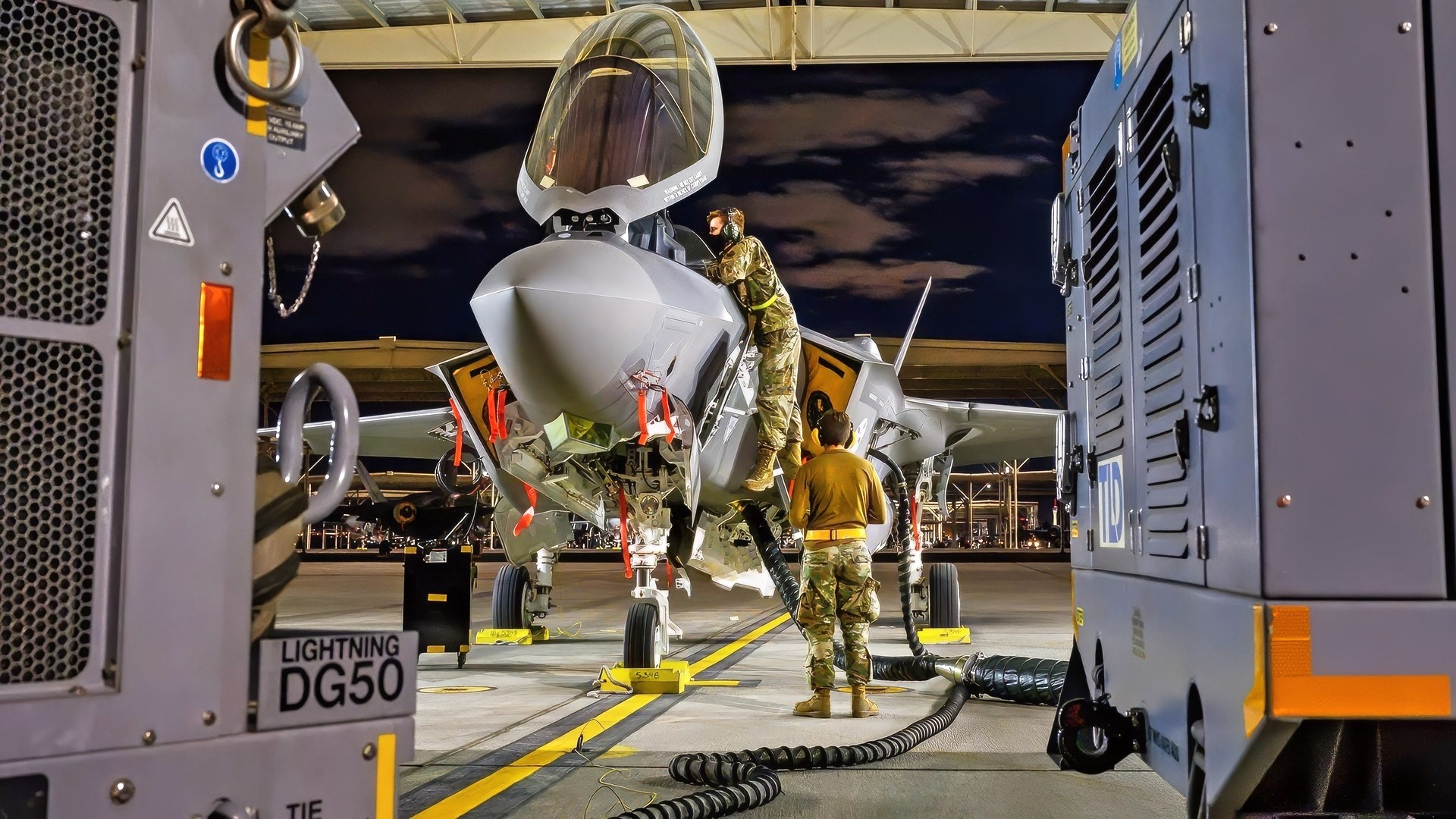
Summary and Key Points: Journalist Georgia Gilholy evaluates the “stagnation” of the Lockheed Martin F-35 Lightning II’s Technology Refresh-3 (TR-3) update.
-Despite the 1,100th delivery in 2026, the Pentagon’s Director of Operational Test and Evaluation (DOT&E) reports that the upgrade—designed as the backbone for Block 4—suffers from chronic stability deficiencies.

Capt. Andrew “Dojo” Olson, F-35 Demonstration Team pilot and commander performs aerial maneuvers during the Wings Over Houston Airshow Oct. 18, 2019, in Houston, Texas. The show featured performances from the U.S. Air Force Thunderbirds, Tora, Tora, Tora, and Oracle. (U.S. Air Force photo by Senior Airman Alexander Cook)

NAS PATUXENT RIVER, Md. — An F-35 Lightning II test pilot conducts flight test Sept. 10 to certify the carrier variant of the fighter aircraft for carrying the AGM-158C Long-Range Anti-Ship Missile (LRASM). As part of ongoing integration efforts, the Pax River F-35 Integrated Test Force (Pax ITF) team flew two days of test flights to evaluate flutter, loads, and flying qualities with two AGM-158 loaded on external stations. LRASM is a defined near-term solution for the Offensive Anti-Surface Warfare (OASuW) air-launch capability gap that will provide flexible, long-range, advanced, anti-surface capability against high-threat maritime targets. The Pax River ITF’s mission is to effectively plan, coordinate, and conduct safe, secure, and efficient flight test for F-35B and C variants, and provide necessary and timely data to support program verification / certification and fleet operational requirements.
-While carrier-based variants from the USS Abraham Lincoln conduct missions in the Middle East, the TR-3’s increased computing and memory capacity remain largely untapped.
-With operational testing delayed until late 2026, the global fleet faces a widening gap between its sophisticated hardware and the software required for advanced Electronic Warfare and sensor fusion.
F-35 Tech Updates Not Yet Up To Scratch
The Lockheed Martin F-35 Lightning II remains the world’s most advanced fighter aircraft.
Like all such modern jets, it relies on sophisticated software to integrate its vital systems.
But the recent attempt to roll out the Technology Refresh-3 (TR-3) update encountered a flurry of issues.
According to a Pentagon testing office report reviewed by Bloomberg News, attempts to deliver upgraded software for the aircraft “stagnated” in 2025, and no new combat capability was added during the year.
The TR-3 package remained “predominantly unusable” for much of the year because of “stability problems, shortfalls in capability and ongoing discovery of deficiencies,” Bloomberg reported, citing the assessment.
Awkwardly, these delays continue whilst the aircraft is actively involved in operations linked to the conflict between Israel, the U.S., and Iran.
F-35 variants, including carrier-based jets operating from the USS Abraham Lincoln, have been flying missions in the region.
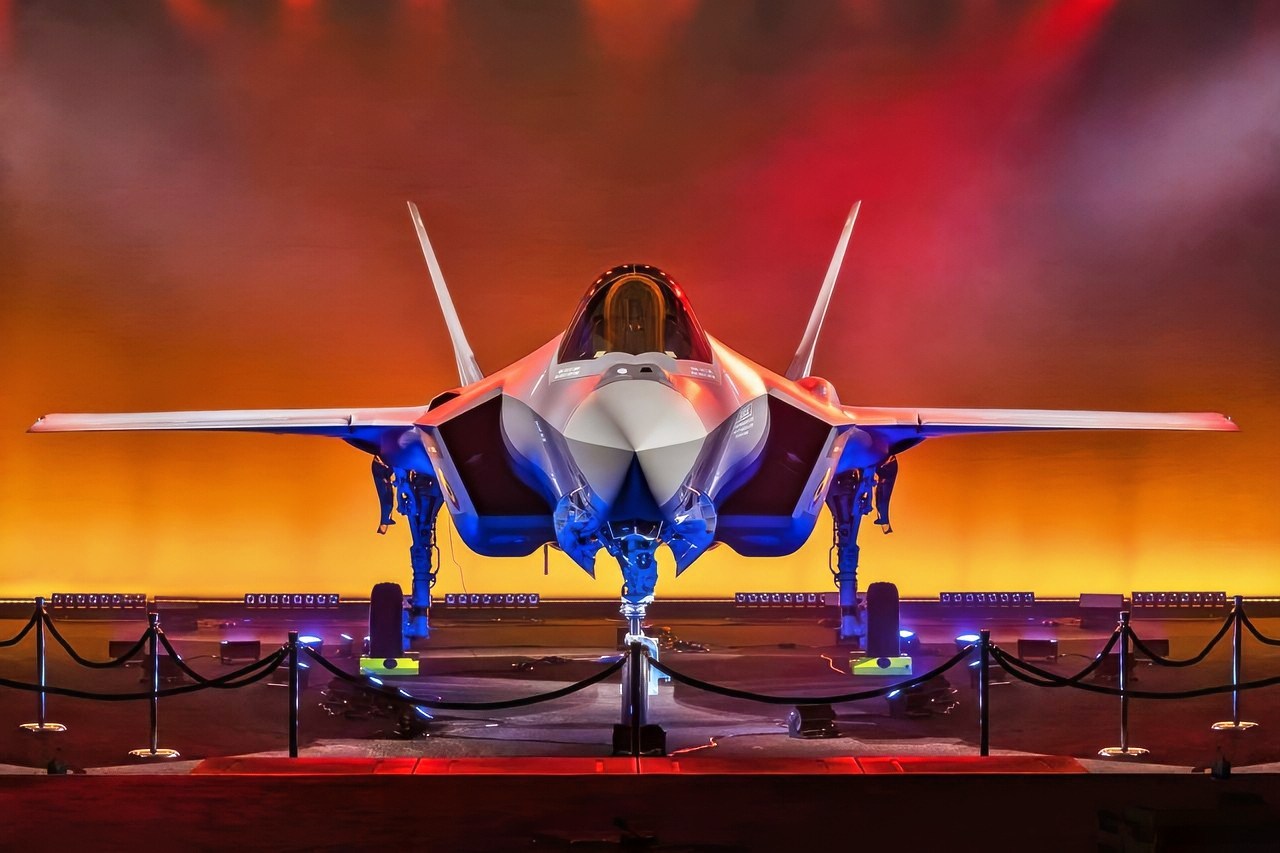
F-35 Fighter in Belgium. Image Credit: Creative Commons.

PHILIPPINE SEA (Dec. 11, 2023) An F-35C Lightning II, assigned to the “War Hawks” of Strike Fighter Squadron (VFA) 97, recovers aboard Nimitz-class aircraft carrier USS Carl Vinson (CVN 70). Vinson, the flagship of Carrier Strike Group ONE, is deployed to the U.S. 7th Fleet area of operations in support of a free and open Indo-Pacific. (U.S. Navy photo by Mass Communication Specialist 2nd Class Benjamin Ringers)
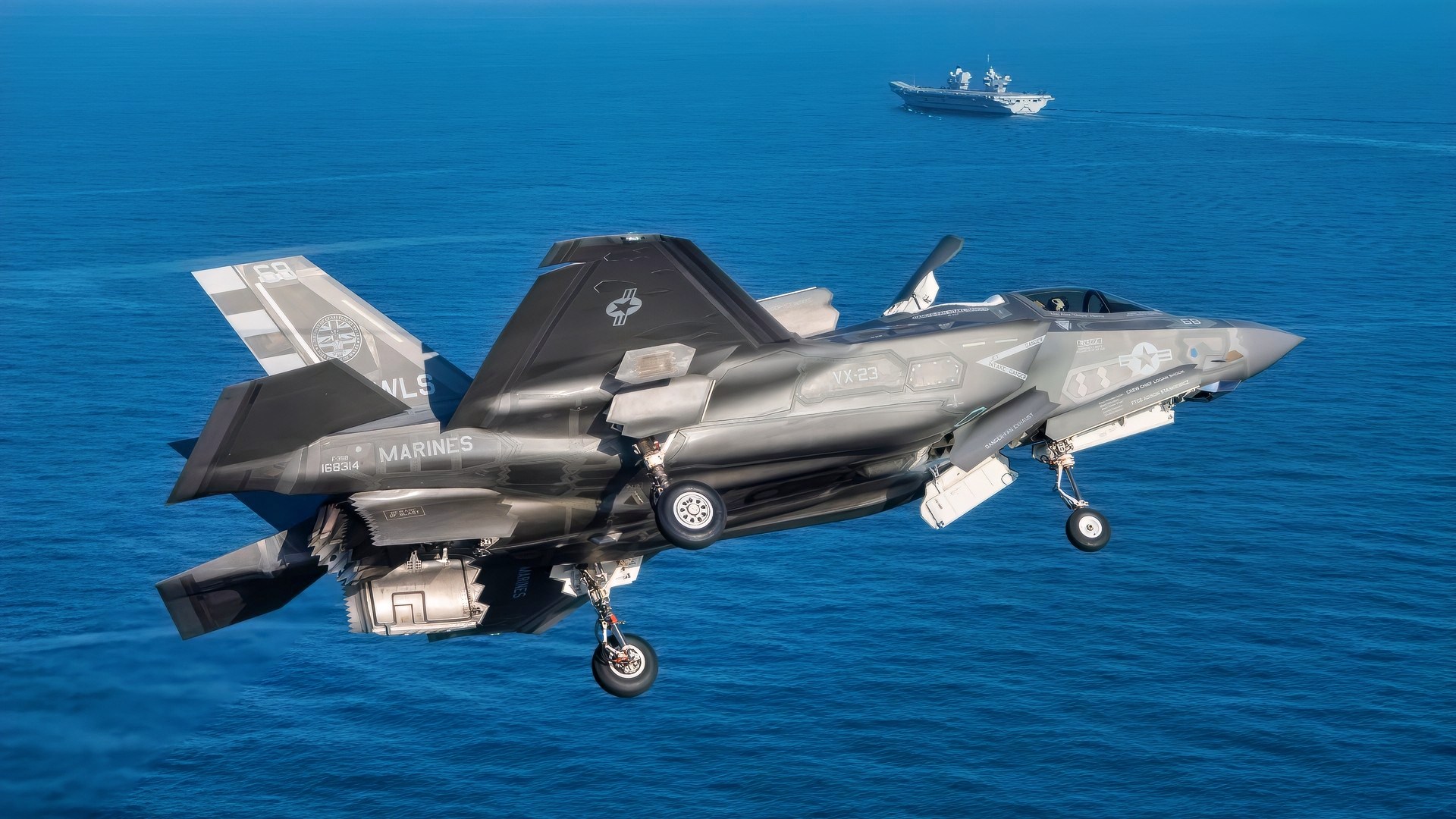
F-35 test pilot Marine Maj. Paul Gucwa from Air Test and Evaluation Squadron Two Three (VX-23), Naval Air Warfare Center Aircraft Division (NAWCAD), flies an F-35B Lightning II fighter aircraft to the U.K. HMS Prince of Wales aircraft carrier in the Western Atlantic Oct. 11, 2023. Gucwa will embark with a detachment from the Patuxent River F-35 Integrated Test Force (ITF) to conduct developmental test phase 3 (DT-3) sea trials with the specially instrumented, short takeoff vertical landing variant of the stealth jet aboard Britain’s largest warship.
The U.K. Queen Elizabeth-class (QEC) aircraft carrier HMS Prince of Wales (R09)’s participation in WESTLANT 23 encompasses a range of U.K. and U.S. naval aircraft trials in the Western Atlantic throughout the autumn of 2023.The HMS Prince of Wales continues to push the boundaries of naval aviation capabilities and operations from QEC aircraft carriers, including increasing the range and lethality of F-35 operations. The U.K. is the only Tier I partner in the F-35 Joint Strike Fighter (JSF) Program. U.K. and U.S. interactions during this deployment are characterized by cooperation and reinforce international relationships, as well as enhance interoperability between the U.S. Navy and Royal Navy.
The F-35 Joint Program Office is the U.S. Department of Defense’s focal point for the 5th-generation strike aircraft for the Navy, Air Force, Marines, and our allies. The F-35 is the premier multi-mission, 5th-generation weapon system. Its ability to collect, analyze and share data is a force multiplier that enhances all assets in the battle space: with stealth technology, advanced sensors, weapons capacity, and range. The F-35 has been operational since July 2015 and is the most lethal, survivable, and interoperable fighter aircraft ever built.
(US Navy photo by Dane Wiedmann)
TR-3 is intended to form the technological backbone of the fighter’s next modernization phase. The upgrade dramatically increases the aircraft’s computing capacity and memory while supporting the broader “Block 4” program, which includes new weapons integration, enhanced electronic warfare capabilities, and improved sensor fusion.
Yet the development timeline has slipped repeatedly.
A report from the Pentagon’s Director of Operational Test and Evaluation found that testing of TR-3 hardware and software remained “significantly behind schedule” throughout fiscal year 2024.
The same report concluded that the program had shown “no improvement” in meeting development and testing timelines for software intended to address deficiencies and add new capabilities.
Operational testing of the upgrade may not begin until 2026, according to the Pentagon’s testing office, despite aircraft configured for the upgrade already being delivered.
Despite the delays, the aircraft continues to expand operational use.
More than 1,100 F-35 aircraft have now been delivered worldwide, according to statements from the Joint Program Office cited by Air & Space Forces Magazine, with over 100 aircraft already produced in the TR-3 configuration for training and testing.
Like it or not, today’s combat aircraft function as much like flying computers as traditional fighter jets.
When software development falters, even the most technologically sophisticated hardware can be left waiting for the code meant to make it fully operational.
About the Author: Georgia Gilholy
Georgia Gilholy is a journalist based in the United Kingdom who has been published in Newsweek, The Times of Israel, and the Spectator. Gilholy writes about international politics, culture, and education. You can follow her on X: @llggeorgia.


