

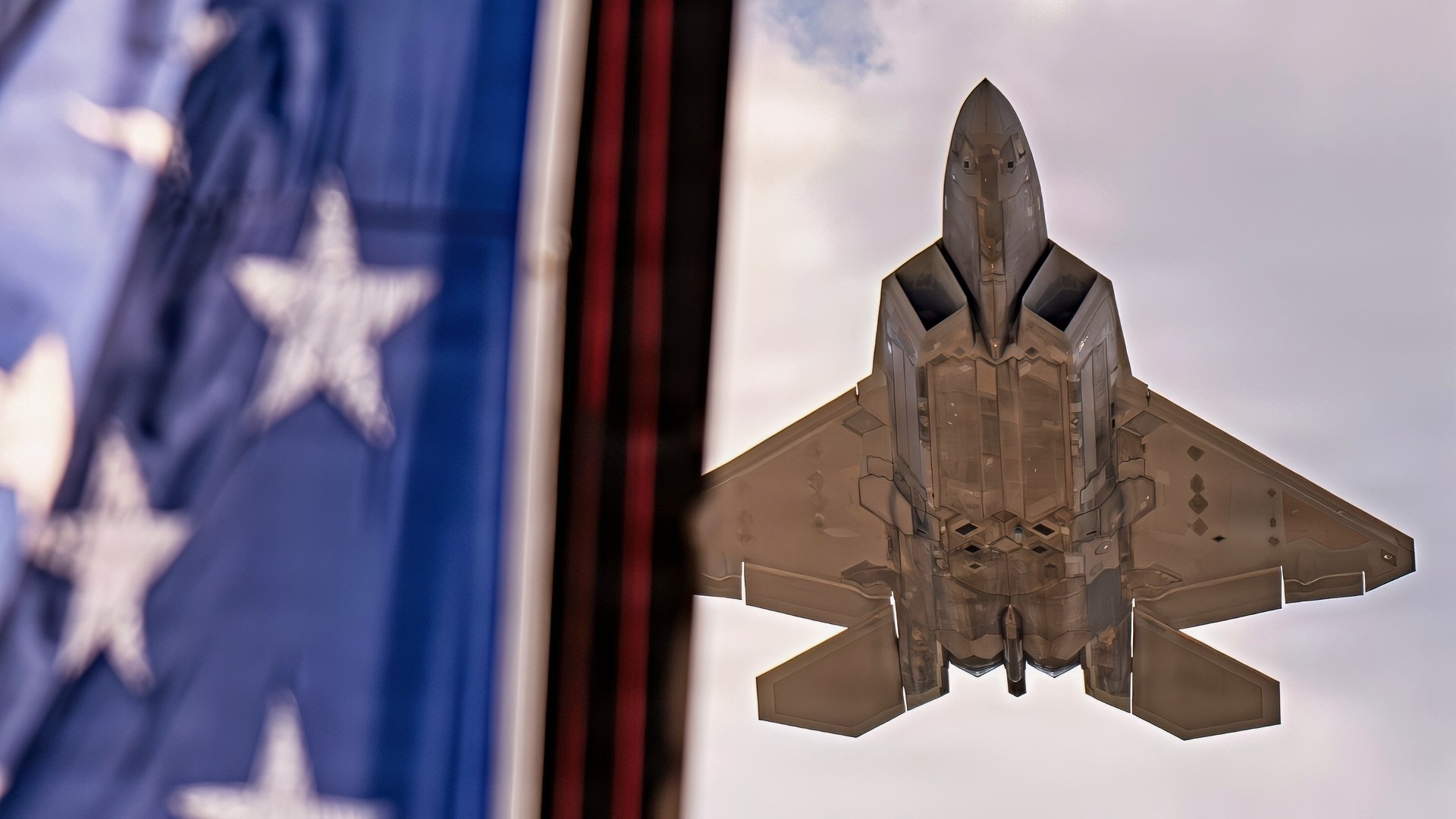
“I could not believe it. I knew at that moment the U.S. Air Force had a problem on its hands that we could never patch or solve easily. The F-22 Raptor was and still is the best fighter on Earth. And now China is catching up. We did this to ourselves.” That’s what a retired U.S. Air Force General told me this week when I asked him about the F-22 Raptor cancellation in the late 2000s. He said other things; however, the language would not be suitable for print, as he was coming in hot, as the kids like to say these days.
He was quite clear: This was one “error” the Air Force could ever fully correct. And now, we are paying the price.
The F-22 Raptor Suffered Bad Timing

F-22 Raptor. Image Credit: Creative Commons.
The United States Air Force planned to build 750 F-22 Raptors. It got 187. And, in fact, an F-22 is sitting in the National Museum of the U.S. Air Force. I would know, I took like a trillion pictures of it last summer. But at the same time, it was sort of weird, considering how badly the Air Force needs as many Raptors as it can get its hands on.
The production line shut down in December 2011 and was systematically dismantled — tooling mothballed, key suppliers redirected to other programs, the industrial ecosystem that had built the world’s most advanced air superiority fighter ground up and dispersed.
Fourteen years later, with China fielding the Chengdu J-20 in numbers exceeding the F-22 inventory and Russia operating the Su-57 Felon, the strategic environment that existed in 2009, when then-Defense Secretary Robert Gates killed the program, no longer exists.
The F-22 was built to dominate exactly the kind of adversaries the United States is now once again preparing to fight.
Production was terminated on the explicit assumption that those adversaries had ceased to matter. That assumption has not aged well.
This is my take on what the F-22 was supposed to be, how it beat the YF-23 in the most consequential American fighter competition since the Vietnam era, why the post-9/11 strategic environment shifted Pentagon thinking against high-end air superiority platforms, how Robert Gates closed the program, and why the decision now looks like one of the most damaging procurement calls in modern American defense history.
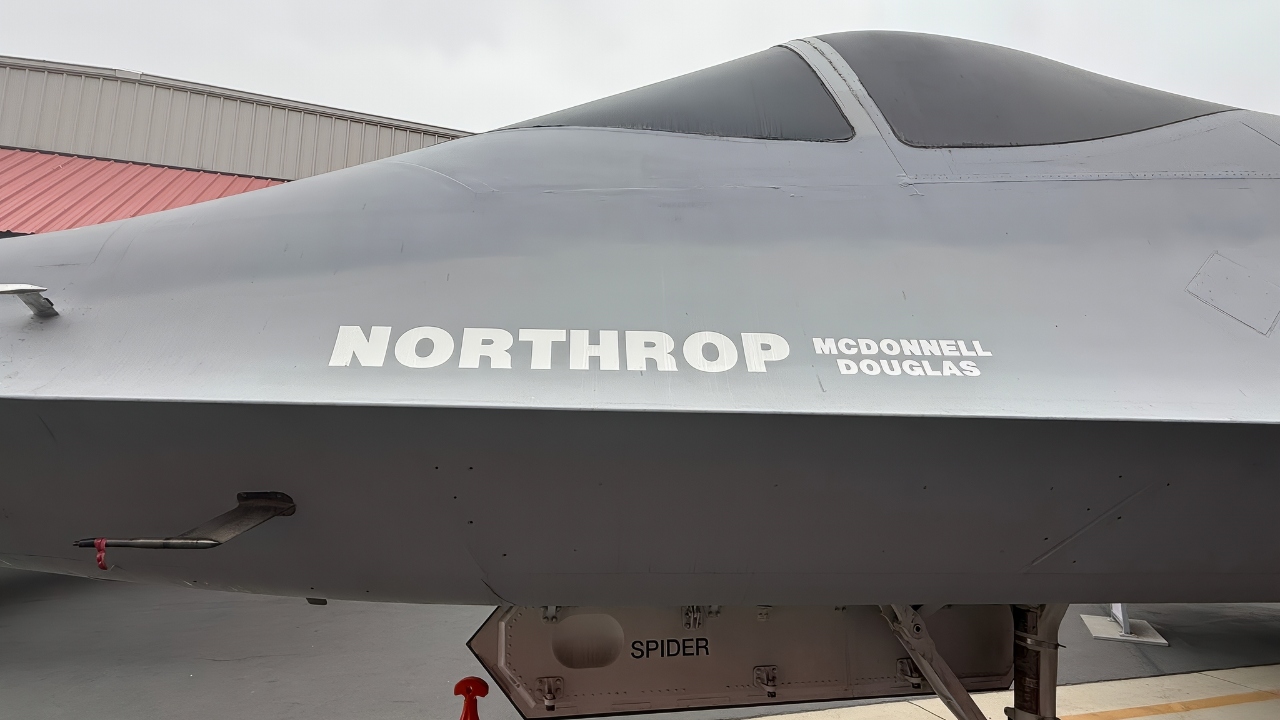
Sideview of YF-23A Black Widow II. Image Credit: Harry J. Kazianis/National Security Journal.
The Soviet Threat That Made The F-22 Necessary
The Advanced Tactical Fighter program began in 1981. The U.S. Air Force was looking at two specific Soviet aircraft entering service in the early 1980s and concluded that the F-15 Eagle, however capable, would not remain dominant against them.
The first was the Sukhoi Su-27 Flanker — a large, twin-engine air superiority fighter with thrust-to-weight performance comparable to the F-15 and significantly greater fuel fraction, allowing longer combat radius. The second was the Mikoyan MiG-29 Fulcrum — a smaller, lighter fighter with a helmet-mounted sight system that gave Soviet pilots a critical first-shot advantage in close-in engagements. Together, those two aircraft represented a generational improvement in Soviet tactical airpower over the MiG-21s and MiG-23s the U.S. Air Force had been training to defeat.
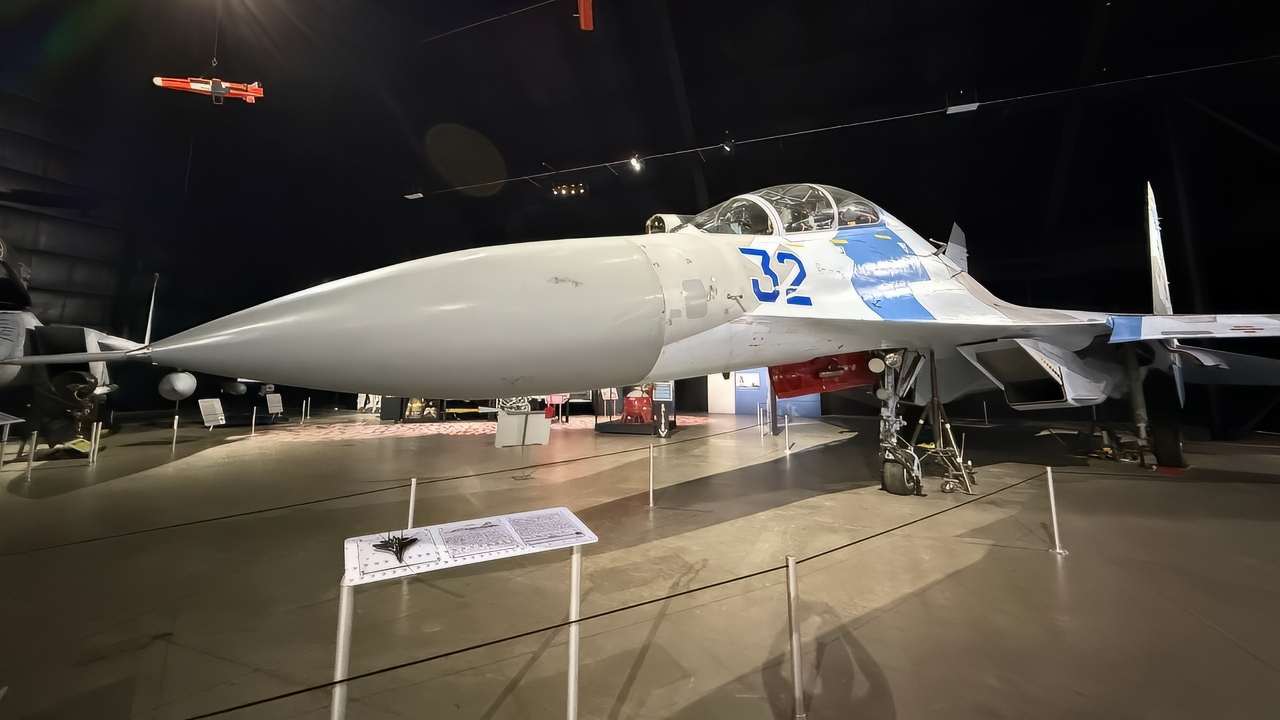
Su-27 Flanker Up Close. Image Credit: National Security Journal Taken on July 19, 2025.
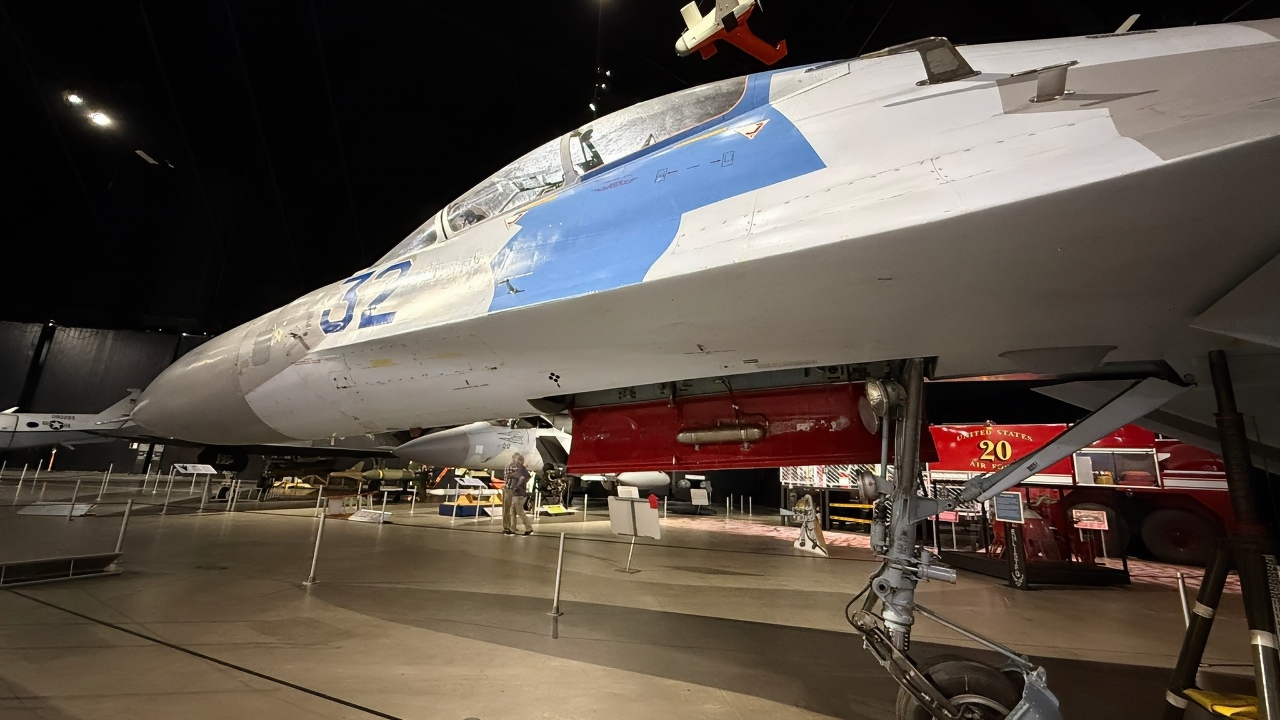
Russian Su-27 Flanker from USAF Museum. Image Credit: National Security Journal.
The ATF requirement was specific. The Air Force wanted a fighter that could penetrate Soviet integrated air defense networks at supersonic speeds without being detected, engage and defeat advanced Soviet fighters in beyond-visual-range combat, dominate close-in dogfights against the Su-27 and MiG-29, and sustain that performance across the kind of major theater air war that the late Cold War assumed would happen across central Europe.
Stealth was the breakthrough that made the requirement achievable. By the mid-1980s, both the Lockheed F-117 and the Northrop B-2 had demonstrated that radar-evading airframe design was practical. The ATF would combine that stealth with the maneuverability and weapons payload of a frontline fighter — a combination no aircraft in any air force on Earth had ever offered.
In November 1984, the Air Force Systems Program Office released its Statement of Operational Need. Seven companies submitted design proposals. By October 1986, the field had been narrowed to two: a Lockheed-led team that included Boeing and General Dynamics, and a Northrop-led team that included McDonnell Douglas. Both teams received $691 million in development contracts and 50 months to deliver flying prototypes.
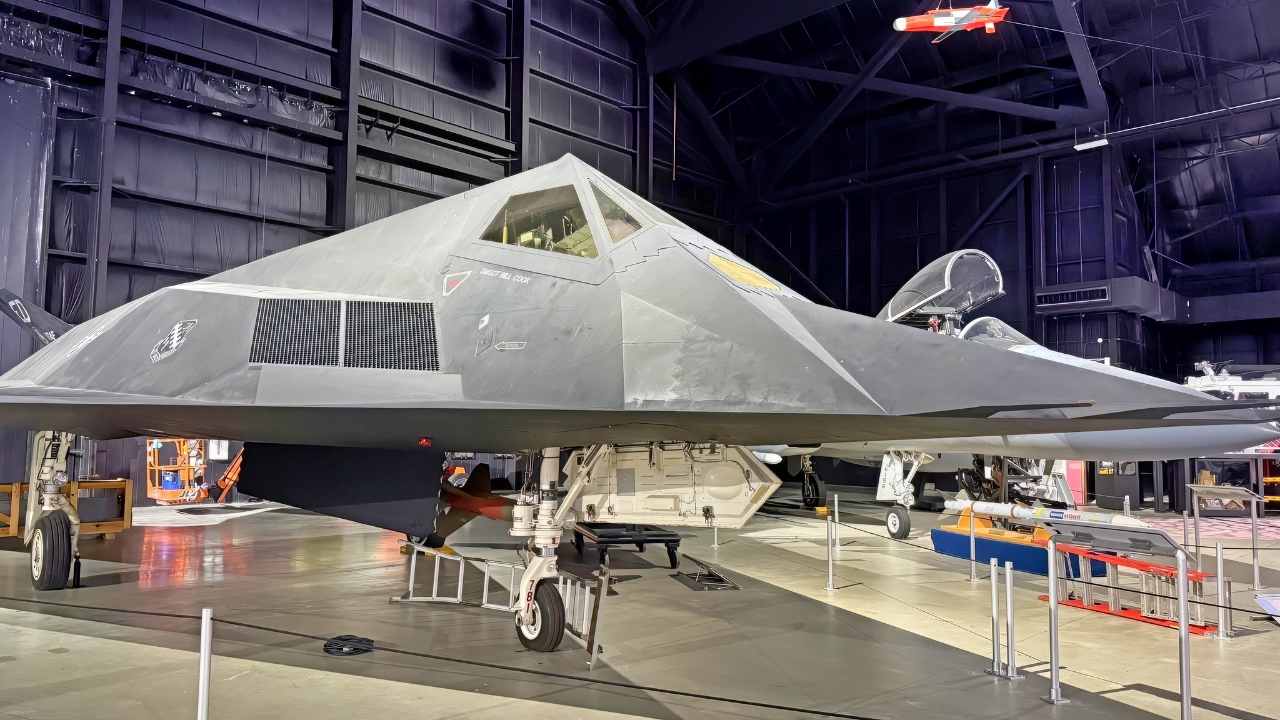
F-117 Nighthawk July 2025 National Security Journal Image HD. Photo by Harry J. Kazianis.
The Lockheed prototype was designated YF-22. The Northrop prototype was designated YF-23 and given the unofficial nickname “Black Widow II” — partly in homage to the World War II Northrop P-61 night fighter, partly because the first prototype briefly carried a red hourglass marking on its ram-air scoop that resembled the marking on the underside of the venomous black widow spider.
By most measures of raw performance, the YF-23 was the better aircraft. It was faster — both prototypes supercruised at higher Mach numbers than the YF-22 achieved, with the second YF-23 prototype topping out above Mach 1.7 in supercruise testing. It was stealthier, with a smoother airframe shape, no vertical stabilizers (replaced by V-tail “ruddervators”), and engine inlets and exhausts specifically optimized to reduce both radar and infrared signature from the rear and sides — historically the angles where stealth aircraft are most vulnerable. It had a better range than the YF-22.
The YF-22 had two specific advantages.
The first was thrust-vectoring. Lockheed’s prototype used two-dimensional thrust-vectoring nozzles that allowed the aircraft to point its engine thrust vector independently of its airframe orientation, producing extreme maneuverability at low speeds and high angles of attack. The YF-23 had no comparable system. In a close-in dogfight against a maneuvering Su-27 or MiG-29, the YF-22’s thrust-vectoring offered a decisive advantage that Air Force pilots, who at the time still placed substantial doctrinal weight on within-visual-range maneuvering, considered critical.
The second was program management and risk profile. The YF-22 flew significantly more sorties and accumulated significantly more flight hours during the demonstration and validation phase than the YF-23 did.
Lockheed’s program management was rated higher by the Air Force evaluation team. Northrop’s recent track record, particularly cost overruns and delays on the B-2 Spirit and the AGM-137 TSSAM cruise missile, weighed against the YF-23 team.

YF-23 Black Widow II Up Close National Security Journal Photo.
Aviation reporting from the period and subsequent technical analysis have generally concluded that the YF-22 won the competition not because it was the better airplane, but because the Air Force had more confidence in Lockheed’s ability to deliver the aircraft on time and on budget.
There was also speculation that the Lockheed design was considered more adaptable to a potential Naval Advanced Tactical Fighter variant — although the Navy backed out of that program before it ever entered full-scale development.
On April 23, 1991, Secretary of the Air Force Donald Rice announced that the Lockheed YF-22 team had won the Advanced Tactical Fighter competition. The Pratt & Whitney F119 engine was selected over the General Electric F120.
The Air Force’s planned procurement was 750 aircraft. It would never come close.
The Procurement Run That Kept Getting Smaller
The 750-aircraft target did not survive the post-Cold War 1990s.
The Soviet Union dissolved in December 1991, eight months after the ATF competition concluded. The strategic rationale for a force of 750 fifth-generation air superiority fighters — sustained dominance over Soviet airspace in a major theater war that everyone in 1991 understood was no longer going to happen — evaporated. The George H. W. Bush administration trimmed the planned buy to 648 aircraft.
By 1997, Congressional appropriations debates had pushed the number down to 339. By 2003, with the Pentagon focused on the war in Iraq and the broader counterterrorism campaign that followed September 11, 2001, the planned buy was 277.
By 2004, with the Defense Department under Secretary Donald Rumsfeld actively reorienting toward asymmetric counterinsurgency warfare, procurement was further cut to 183 aircraft. A multi-year procurement contract awarded in 2006 funded the program at 183 fighters plus four additional aircraft from a fiscal year 2009 supplemental appropriation, for a final total of 187 production aircraft.

Aircraft from the 1st Fighter Wing conducted an Elephant Walk at Langley Air Force Base, Jan. 31, 2025, showcasing the wing’s readiness and operational agility. This demonstration highlighted the wing’s capability to mobilize forces rapidly in high-stress scenarios. The wing’s fleet includes F-22 Raptors and T-38 Talons. As Air Combat Command’s lead wing, the 1 FW maintains unparalleled combat readiness to ensure national defense at a moment’s notice. (U.S. Air Force photo by SrA Ian Sullens)
The Air Force’s stated requirement throughout this period was 381 aircraft. That number was based on the doctrinal need for ten rotational Air Expeditionary Forces, each with one operational squadron of 24 F-22s, supported by 60 training aircraft, 15 test and evaluation aircraft, 32 backup aircraft, and 34 attrition reserves. Retired Air Force General John Loh, who served as Commander of Air Combat Command, characterized 381 as the absolute minimum consistent with sound operational logic. Loh’s preferred number was closer to 700.
The Pentagon’s procurement decisions did not reflect Loh’s analysis. They reflected the strategic environment as the political leadership of the early 2000s perceived it.
How September 11 Changed Pentagon Thinking About Great Power Competition
The September 11, 2001, attacks did not directly target the F-22 program. What they did was reorient the entire American defense establishment around a different set of threats than the F-22 had been built to fight.
The new enemy was Al-Qaeda. Al-Qaeda did not have an air force. It lacked integrated air defense systems. It did not field advanced Soviet fighters or modern surface-to-air missile networks. The wars that followed September 11 — first in Afghanistan, then in Iraq — were fundamentally counterinsurgency conflicts in which American air superiority was established within hours of combat operations beginning, and the actual challenge was finding and killing dispersed enemy formations that could not be detected from altitude.
The platforms that mattered in those wars were not air superiority fighters. They were the A-10 Warthog for close air support, the MQ-1 Predator and MQ-9 Reaper for persistent surveillance and precision strike, the AC-130 gunship for sustained ground fire support, and the heavy transport and tanker aircraft that kept the campaign supplied. By 2009, the F-22 had not flown a single combat sortie in either Iraq or Afghanistan. The aircraft was, in the operational vocabulary of the era, a solution to a problem that no longer existed.
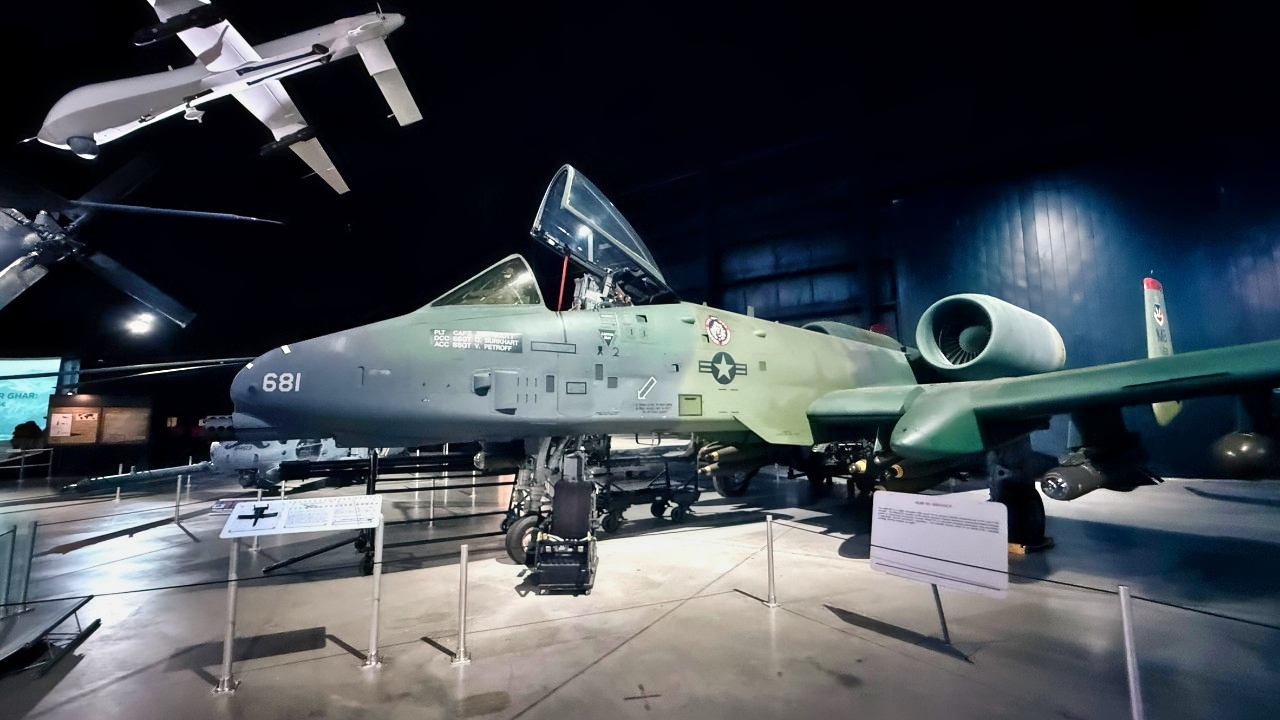
A-10 Warthog National Security Journal Photo.
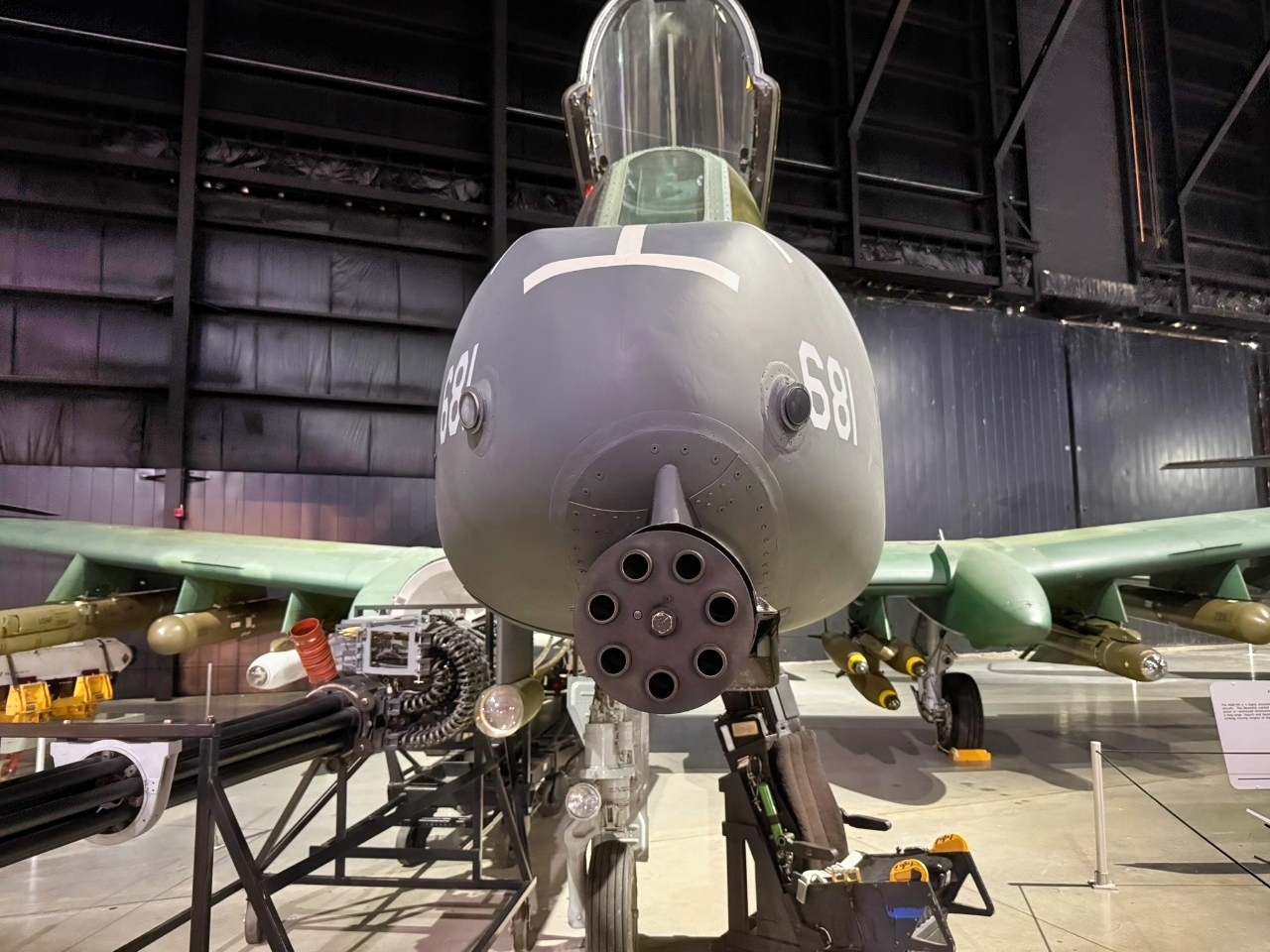
A-10 Warthog Cannon NSJ Photo. Taken at U.S. Air Force Museum on 7/19/2025.
That perception was reinforced by parallel developments at the Pentagon. The F-35 Lightning II program — a multi-role fighter intended to serve the Air Force, Navy, and Marine Corps in a wide range of mission sets — was being marketed as a more affordable, more versatile alternative that could absorb the air-to-ground roles the F-22 had been pushed toward as its air-to-air mission set seemed less relevant. The 2008 financial crisis, which dropped American GDP by approximately 8 percent in 2009, made the political environment for high-cost defense programs substantially worse than it had been even three years earlier.
By the time Robert Gates took over as Secretary of Defense in December 2006 — a date Air Force historian Robert F. Dorr would later identify as “the date of the final betrayal” for those who supported the program — the institutional momentum against continued F-22 production was substantial.
How Robert Gates Closed The F-22 Raptor Program
Gates was a pragmatist, a career intelligence professional who had previously served as Director of Central Intelligence under President George H. W. Bush, and a defense secretary widely respected across the political spectrum.
He came to the F-22 question with a clear position: the aircraft was not contributing to the wars the United States was actually fighting, and the resources tied up in continued production could be better spent on platforms that were.
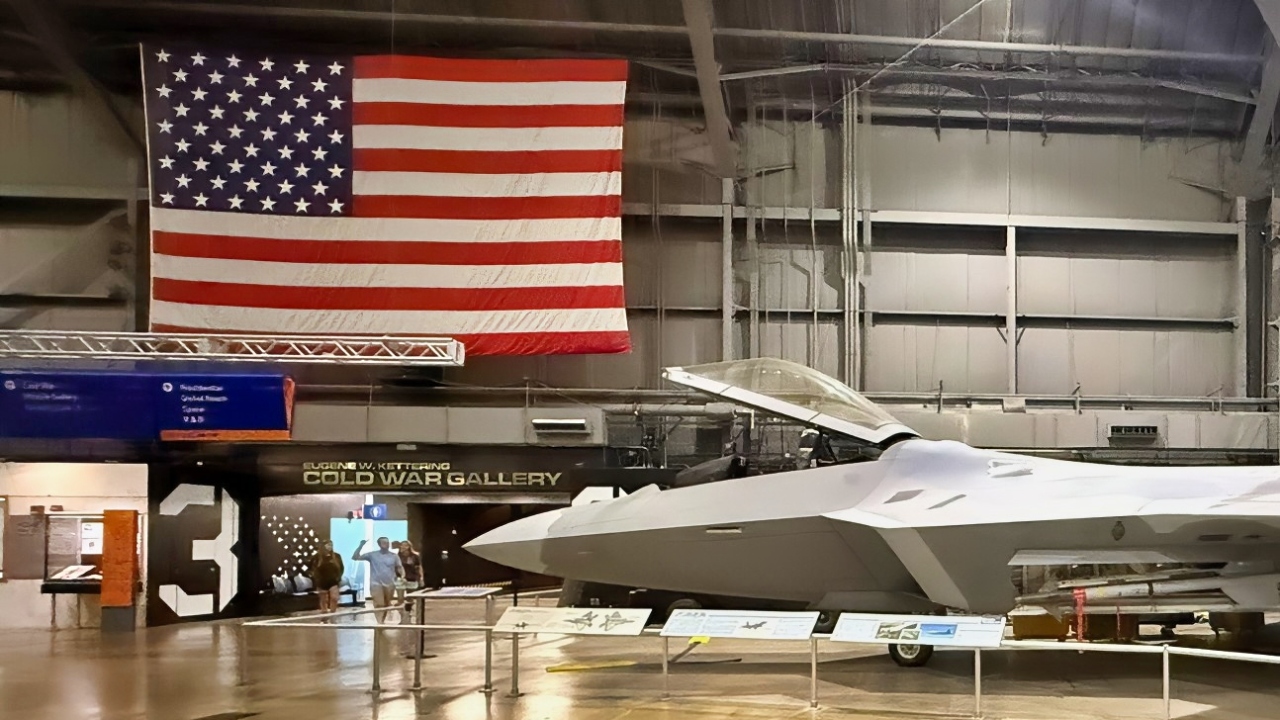
F-22A Raptor in the Air Force Museum NSJ Photo.
In June 2008, Gates fired Secretary of the Air Force Michael Wynne and Chief of Staff General T. Michael Moseley — both strong F-22 advocates.
The official reason was a series of nuclear handling incidents in the Air Force; the practical effect was the removal of the program’s two highest-ranking institutional defenders. Their replacements, Secretary Michael Donley and Chief of Staff General Norton Schwartz, were less inclined to fight Gates on procurement priorities.
On April 6, 2009, Gates announced the Obama administration’s fiscal year 2010 defense budget proposal. The F-22 production line would close at 187 aircraft. No additional F-22s would be procured. The F-35 program would continue as planned. Gates promised, in a phrase that became closely associated with his tenure, to “ruthlessly separate appetites from real requirements”.
A week later, on April 13, 2009, Donley and Schwartz published a Washington Post op-ed titled “Moving Beyond the F-22” that publicly endorsed the cancellation. Donley later described the op-ed as his own idea, framed as a choice between backing the Secretary of Defense or going around him to Congress. Defenders of the program subsequently characterized it as a humiliating capitulation by Air Force leadership that should have fought harder to retain the aircraft.
The legislative endgame came in July 2009. The Air Force had requested $4 billion to build 20 additional F-22s in the FY2010 budget. Gates cut the request to zero. The Senate Armed Services Committee voted 13-11 to add $1.7 billion back for an additional seven aircraft. The full Senate then voted to remove that amendment. The vote, as Slate magazine reported at the time, broke not on party lines but on contractor geography — 15 Republicans sided with Gates and Obama to kill the program; 15 Democrats voted to continue it. The amendment to halt production was co-sponsored by Senator Carl Levin (D-Mich.) and Senator John McCain (R-Ariz.), with McCain quoting President Eisenhower’s farewell address warning about the military-industrial complex during floor debate.
The amendment passed. The F-22 line was confirmed as scheduled for closure.
The last F-22 rolled off the Lockheed Martin assembly line in Marietta, Georgia in December 2011. The total program cost was approximately $67 billion, with per-aircraft costs reaching approximately $150 million, excluding development costs, and substantially higher when development costs were amortized across the smaller-than-planned fleet.
Why The Decision Now Looks Like A Massive Mistake
The strategic environment that justified the F-22 cancellation no longer exists. Anytime I mention the F-22 cut to past and present U.S. Air Force leadership, I know I am going to have a tough conversation, as they don’t like what occurred.
China currently operates more than 200 Chengdu J-20 stealth fighters. The J-20 was specifically designed to challenge the F-22 — its development began in the 2000s, its first flight occurred in January 2011, and its serial production accelerated dramatically through the 2010s and into the 2020s. By any reasonable measure, China now operates more frontline stealth air superiority fighters than the United States Air Force has F-22s in its inventory, and the gap is widening every year.

J-20 on the Tarmac. Image Credit: Creative Commons.
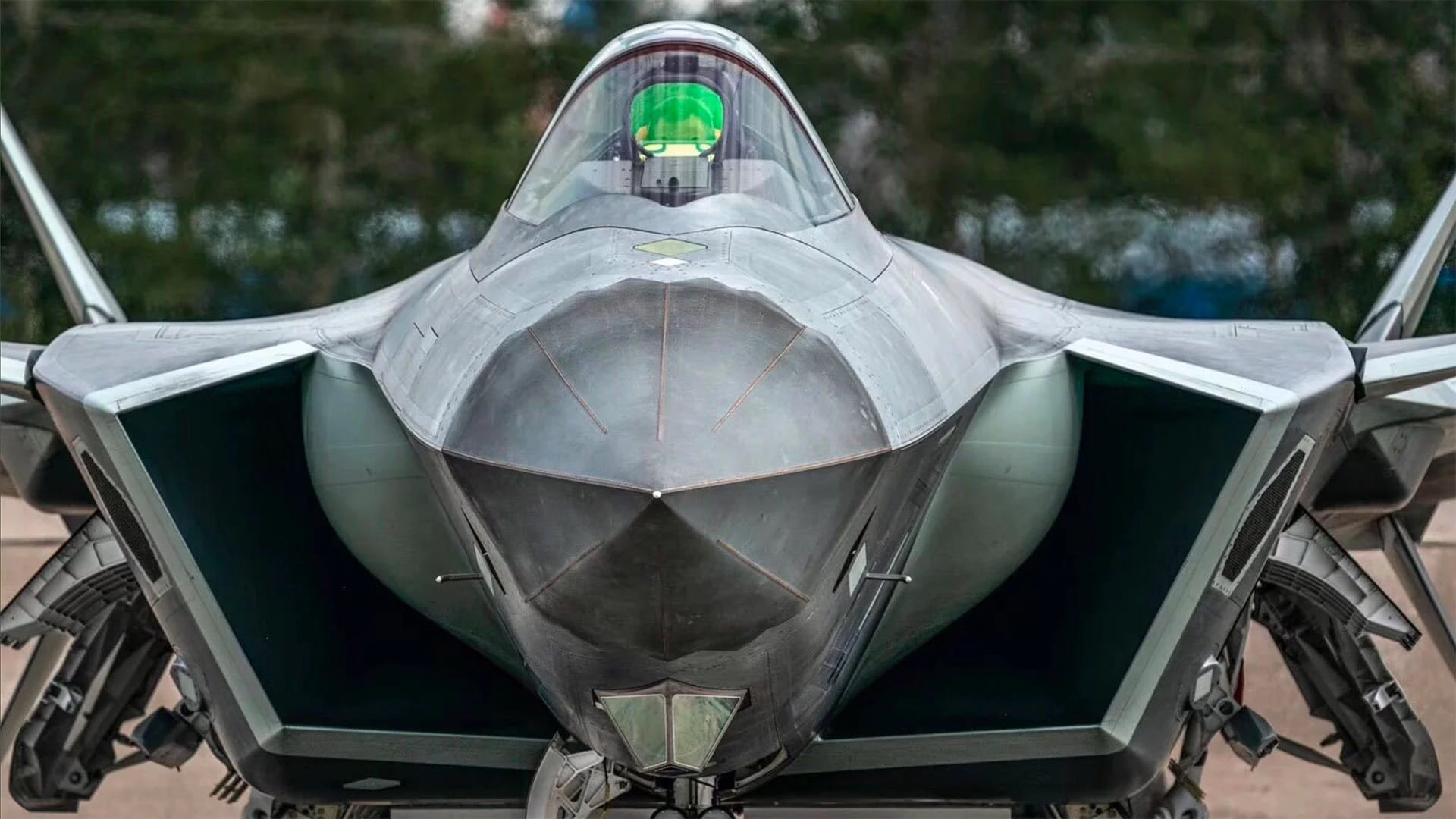
J-20 Fighter Image. Image Credit: Creative Commons.
Russia, despite the strain of the prolonged war in Ukraine, has continued production of the Su-57 Felon. The numbers are smaller than China’s J-20 fleet, but the existence of any Russian fifth-generation fighter at all is a strategic development that the 2009 cancellation decision did not anticipate.
The United States Air Force, meanwhile, operates a fleet of approximately 186 F-22s — a number that drops further when maintenance cycles, upgrades, and attrition are factored in. Combat-ready F-22 numbers at any given time are estimated below 100. The aircraft has flown combat missions in Syria, Afghanistan, and against Iran in 2025 and 2026 operations, but the fleet size is fundamentally inadequate for the kind of sustained high-end air superiority campaign that a war in the Western Pacific against China would require.
Restarting the production line is not a realistic option; I saw that debate play out in real-time a decade ago. A 2017 Air Force study submitted to Congress estimated that restarting F-22 production would cost approximately $50 billion to procure 194 additional aircraft — roughly $206 to $216 million per aircraft, more than double the cost of new-build F-15EX Eagle II fighters. Much of the F-22 production tooling has been physically destroyed (some dispute this). Key supplier facilities have been repurposed for other programs. The skilled workforce that built the original Raptors has aged out or moved on. The institutional memory required to manufacture the aircraft no longer exists in functional form.
The Air Force’s response has been the Next Generation Air Dominance program, which has produced the Boeing F-47 sixth-generation fighter program. The F-47 is projected to enter service around 2030. Until then, the F-22 fleet has to bridge the gap — a fleet that is already approaching 30 years of service for the earliest production hulls, that requires substantial life-extension investment to remain operational, and that is roughly half the size the Air Force originally said it needed.
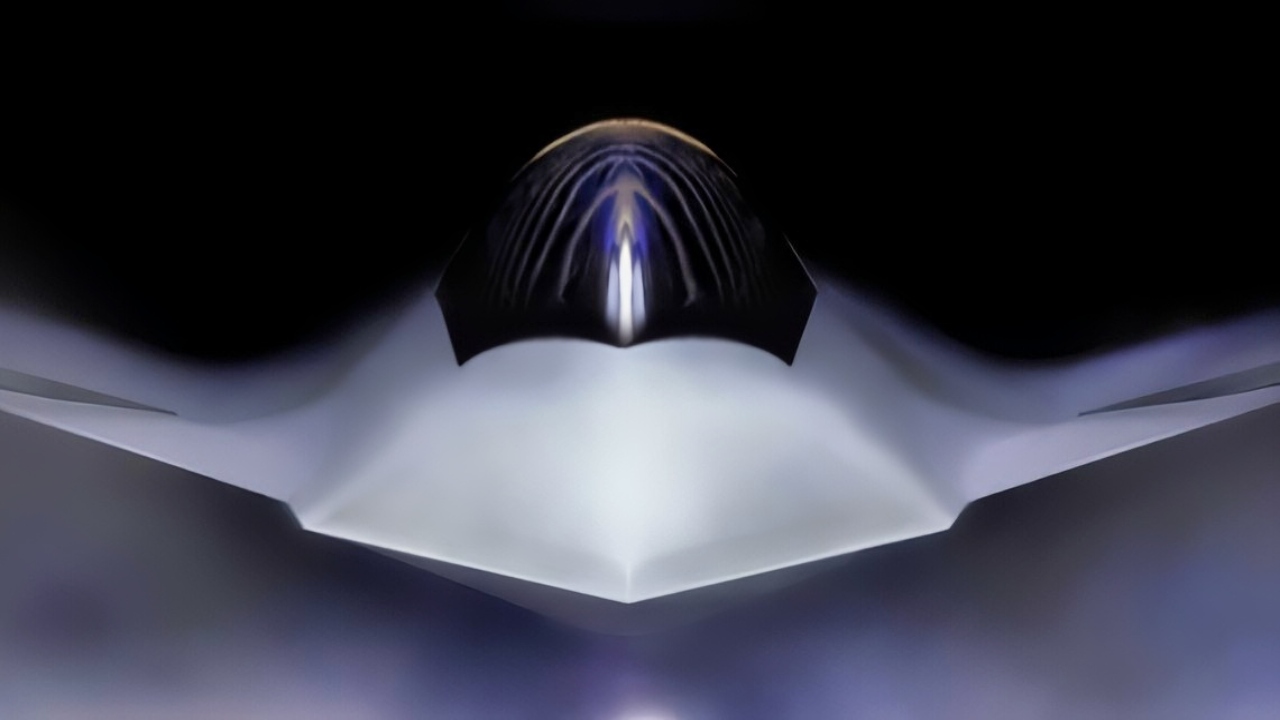
Shown is a graphical artist rendering of the Next Generation Air Dominance (NGAD) Platform. The rendering highlights the Air Force’s sixth generation fighter, the F-47. The NGAD Platform will bring lethal, next-generation technologies to ensure air superiority for the Joint Force in any conflict. (U.S. Air Force graphic)
The Lesson Of The F-22
The F-22 procurement decision was not a single decision. It was a decade and a half of decisions, each individually defensible at the time it was made, that collectively produced an outcome the United States Air Force is now spending billions of dollars trying to work around.
Canceling 750 aircraft down to 648 in 1991 was defensible. The Soviet Union had collapsed. Canceling further to 339 in 1997 was defensible. The post-Cold War strategic environment did not justify a frontline force of 750 air superiority fighters. Canceling further to 277 in 2003, and then to 183 in 2004, reflected the genuine reality that the wars the United States was actually fighting did not require fifth-generation air dominance.
The 2009 cancellation, the dismantling of the production line, and the destruction of the tooling were the decisions that made the cumulative result irreversible. Those decisions were made on the explicit assumption that great power competition with peer adversaries was no longer a primary threat to American national security. That assumption was wrong.

F-22 Raptor National Security Journal Image.
The F-22 was the right aircraft built for the right reasons. The wrong call was killing the production line on the assumption that the threat environment would never change.
The threat environment has changed. The production line is not coming back. The United States Air Force will fight the air superiority war of the 2030s with 186 F-22s and whatever the F-47 program manages to deliver — a force structure that is, by every honest assessment, inadequate to the challenge it is being asked to meet.
That is the cost of the 2009 decision. It will be paid for over the next 30 years.
About the Author: Harry J. Kazianis
Harry J. Kazianis (@Grecianformula) was the former Senior Director of National Security Affairs at the Center for the National Interest (CFTNI), a foreign policy think tank founded by Richard Nixon based in Washington, DC. Harry has over a decade of experience in think tanks and national security publishing. His ideas have been published in the NY Times, The Washington Post, The Wall Street Journal, CNN, and many other outlets worldwide. He has held positions at CSIS, the Heritage Foundation, the University of Nottingham, and several other institutions related to national security research and studies. He is the former Executive Editor of the National Interest and the Diplomat. He holds a Master’s degree focusing on international affairs from Harvard University.


