

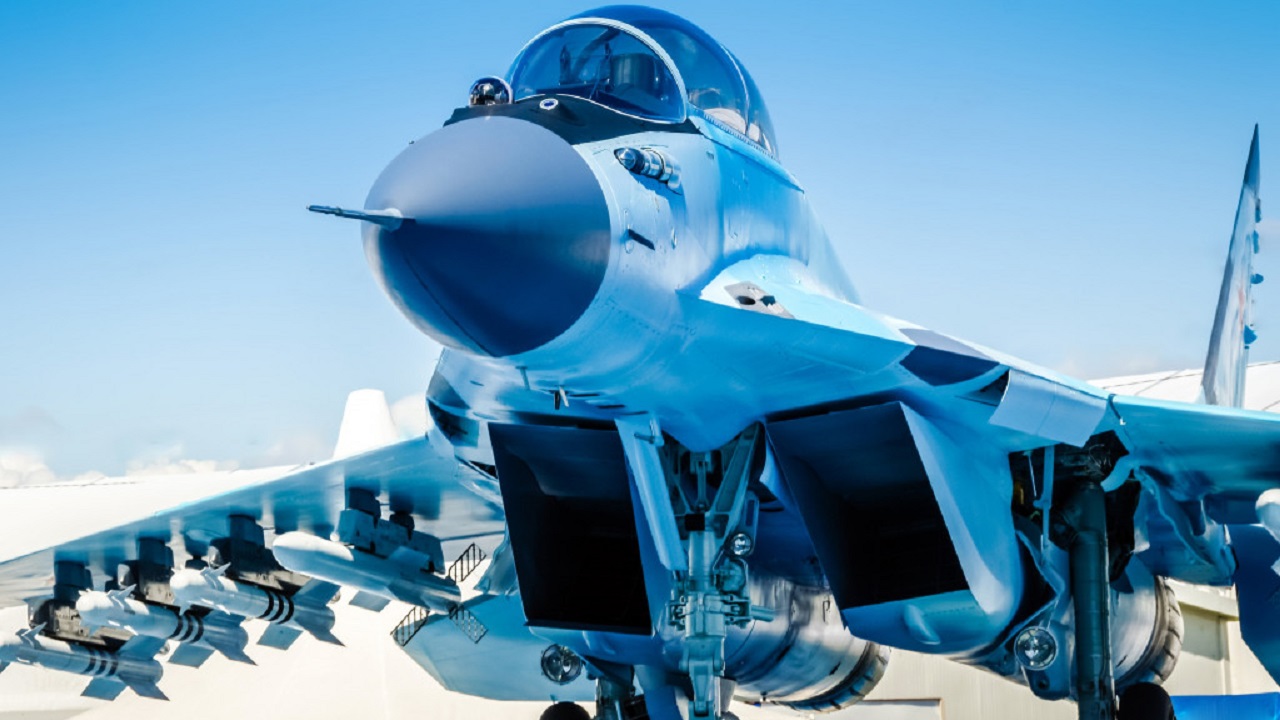
Russia’s MiG-35 Fulcrum-F was supposed to be the bridge fighter that carried Moscow’s air force into the stealth era—a Mach 2.25 multi-role workhorse with AESA radar that would dominate Ukraine and bring foreign export sales pouring in.
Instead, fewer than 10 have been built, exports have dried up, and the program is quietly dying while the Russian aerospace industry pretends everything is fine.

MiG-35 Creative Commons Image.
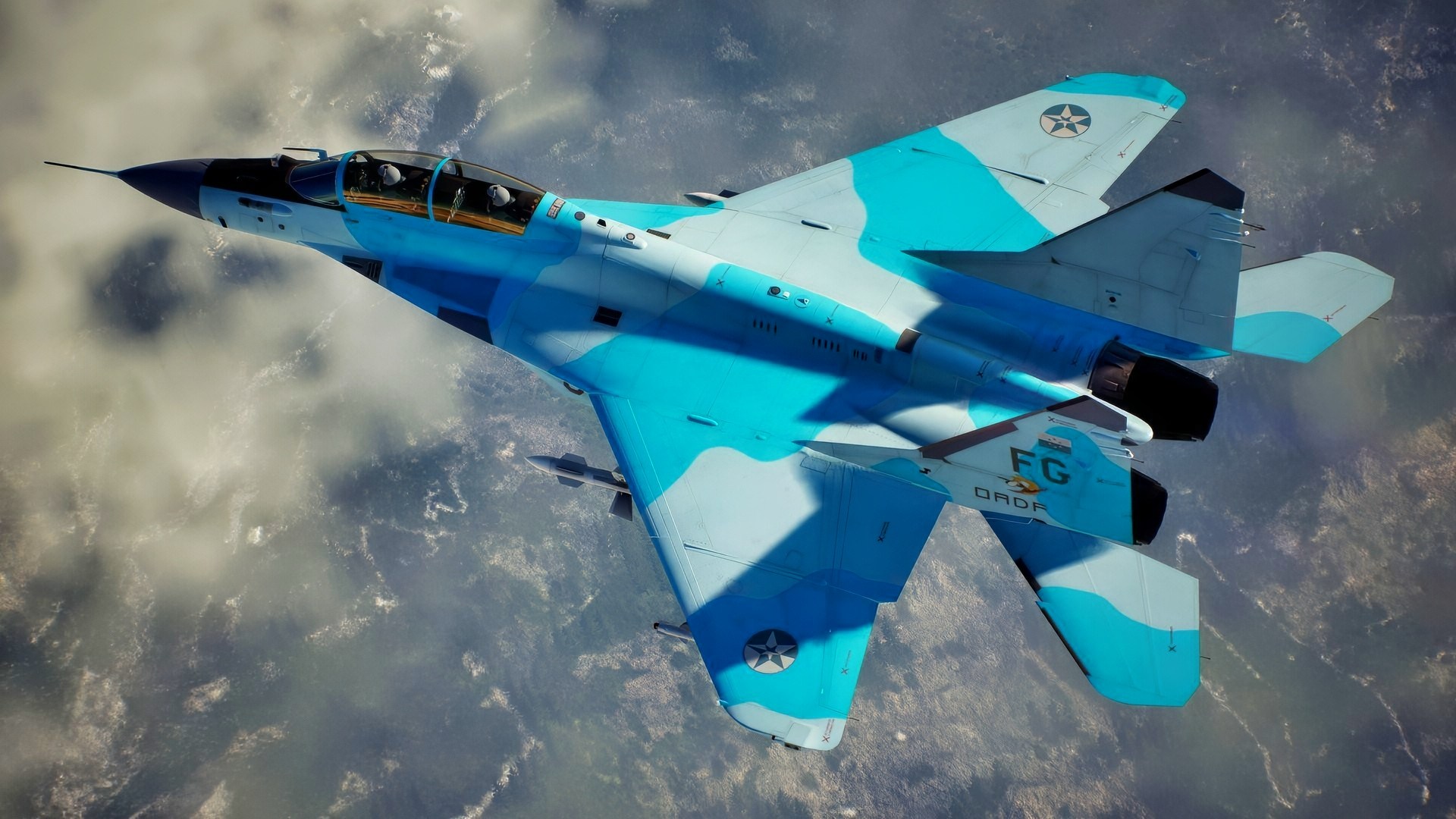
MiG-35 Fighter Creative Commons Image.
Russia’s MiG-35 Fighter Failure
Russia’s MiG-35 Fulcrum-F fighter jet just cannot get any respect. This was supposed to be the airplane that would dominate the war in Ukraine and pave the way for the stealthy Su-57 Felon. Long hailed as a fourth-generation “++” or perhaps even a “+++” fighter, it has been an overrated disappointment, with only a handful of jets actually produced. The Russian aerospace industrial complex failed with this airplane, and it would take a miracle from Vladimir Putin’s defense contractors to save the program.
Too Little and Too Late
The MiG-35 was never a priority and won’t be produced in the numbers needed to change the outcome of the war. The zombie program needs some momentum after years of sanctions and supply-chain snarls that kept it from succeeding.
One positive development occurred in 2017, when the Russian air force purchased 24 Fulcrums to be delivered in 2027. It doesn’t look like this deal will ever materialize as planned. Somewhere under 10 MiG-35s have been manufactured, and they are flying only a few missions over Ukraine.
No Joy on the Export Market
A saving grace for the MiG-35 was supposed to be international sales, but exports have not materialized for the program.
The jet is too expensive and has an “ick” factor that has potential buyers kicking the tires but not pulling the trigger on a purchase that would spur large production runs.
There is just too much competition from the JAS 39 Gripen, the Eurofighter Typhoon, and the Dassault Rafale for customers to choose from.
Better Than the MiG-29
The MiG-35 was supposed to be an improvement on the MiG-29. The Fulcrum has a better combat radius than the MiG-29, topping out at over 1,250 miles without an aerial refueling or external tanks. That’s a 50 percent better range than the MiG-29.
The ‘Tweener” Airplane That Would Transition to the Su-57 Felon
Russia’s acquisition strategy was to use the MiG-35 effectively and then transition to deliveries of the Su-57. The engineers and technicians thought that the air force could build the MiG-35 in between the time lag for the Felon to enter active duty. This made sense.
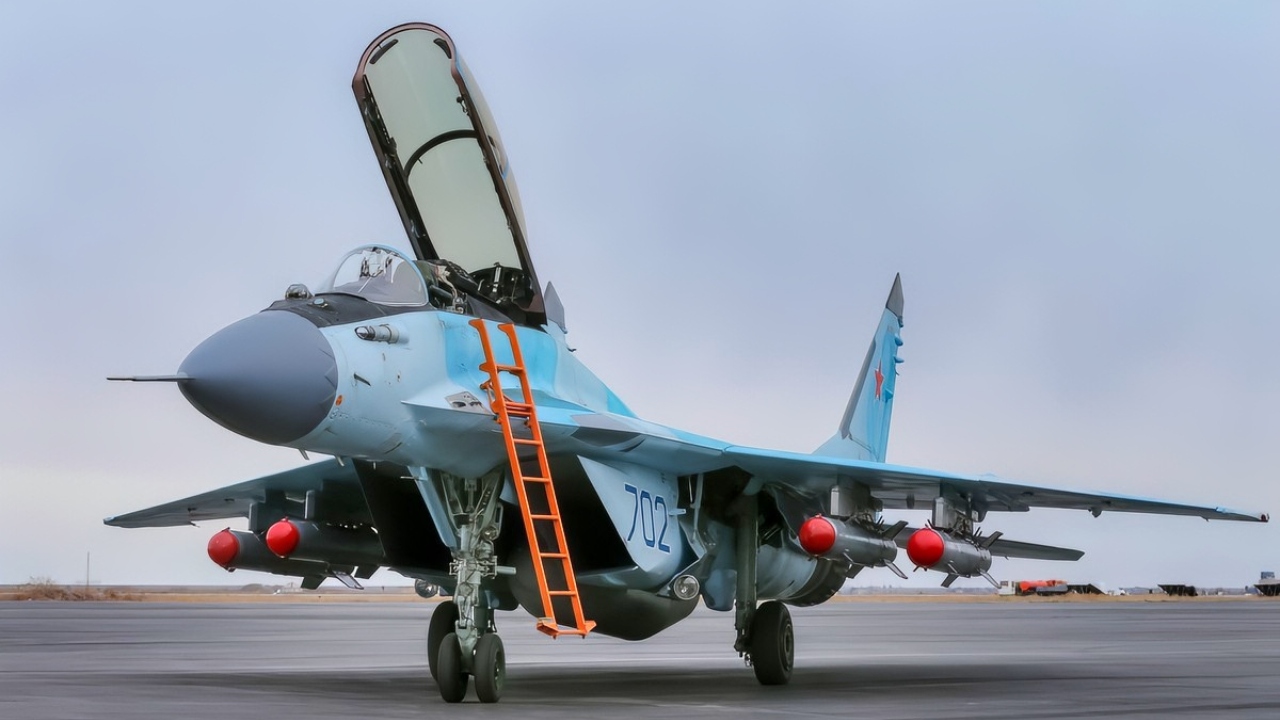
MiG-35 On the Runway. Image Credit: Creative Commons.
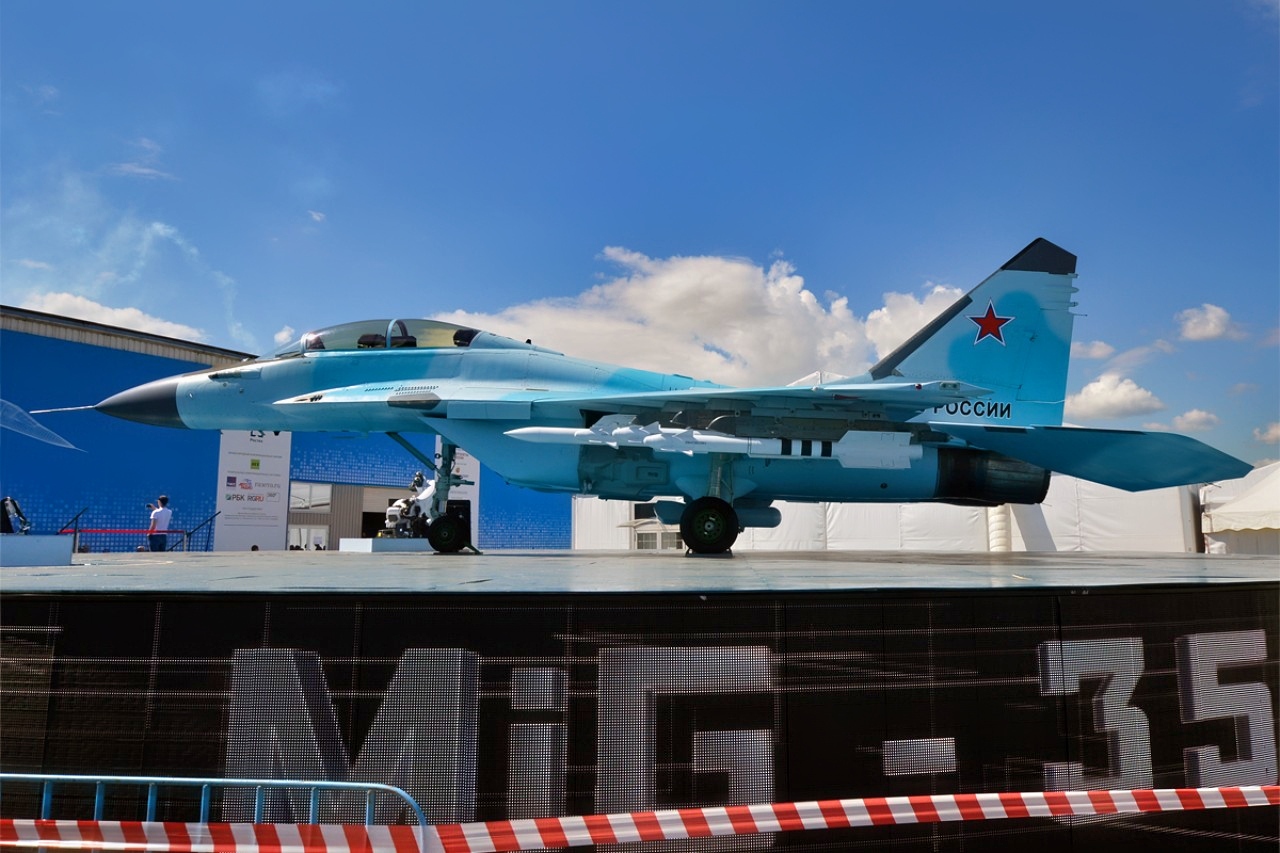
MiG-35. Image Credit: Creative Commons.
It is similar to what the U.S. Air Force is doing with the F-47 NGAD. The Americans are building dozens of F-15EXs to replace the older F-15E Strike Eagles as the sixth-generation F-47 comes online.
Someone forgot to tell the Russians that for this transition period to be successful, they need to build the MiG-35 in numbers to get over the hump. This part of the acquisition strategy has failed.
New Radar Is Promising
One positive aspect of the Fulcrum is that it comes standard with a Phazotron Zhuk-A AESA active electronically scanned array radar. This helps the pilot gain greater situational awareness, thanks to its outstanding range and ability to identify and track multiple targets efficiently.
Multirole Combat Stalwart
The MiG-35 is not only a good dogfighter but also a multi-role fighter, making it perfect for ground strike with a wide array of air-to-air precision-guided munitions, missiles, and bombs for eliminating targets on the surface. There are eight to ten hardpoints for weapons.
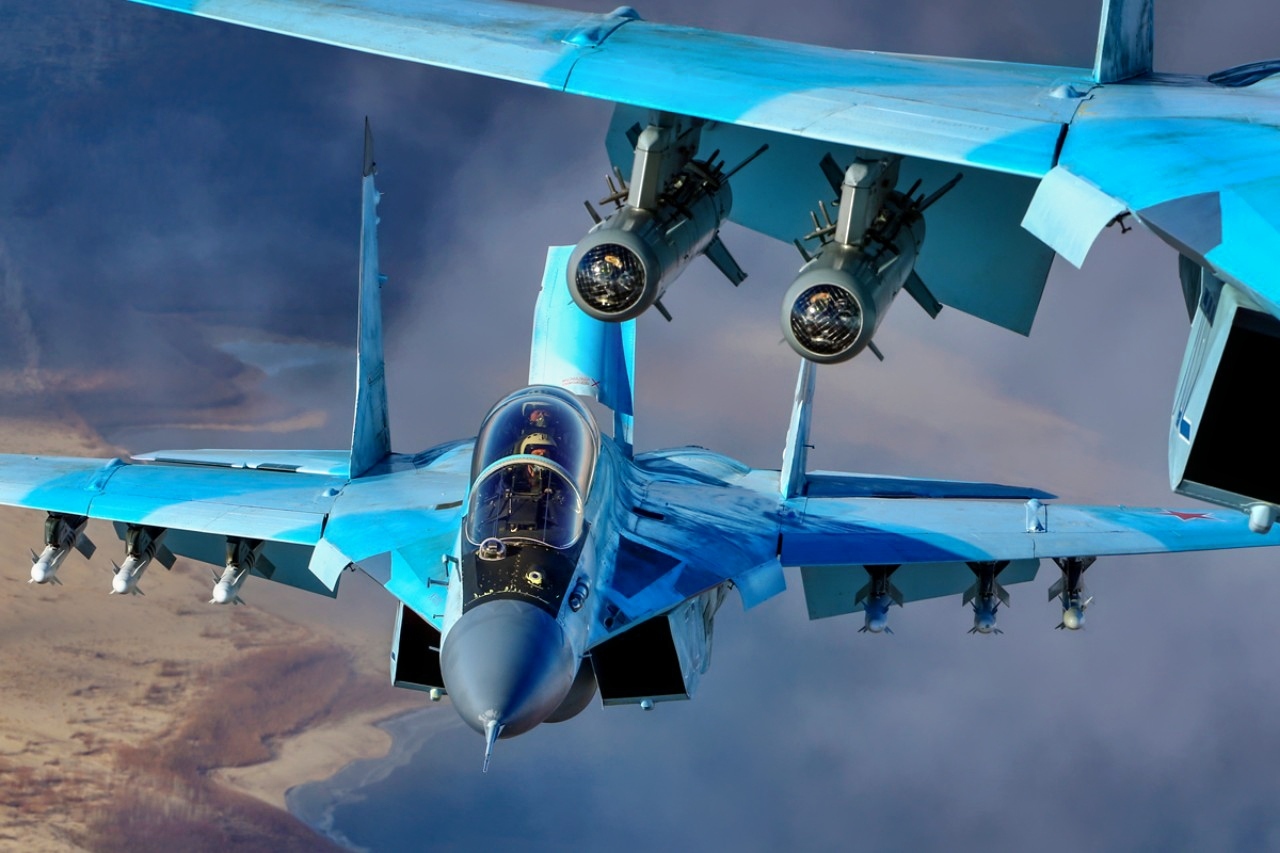
MiG-35 Fighters from Russia. Image Credit: Creative Commons.
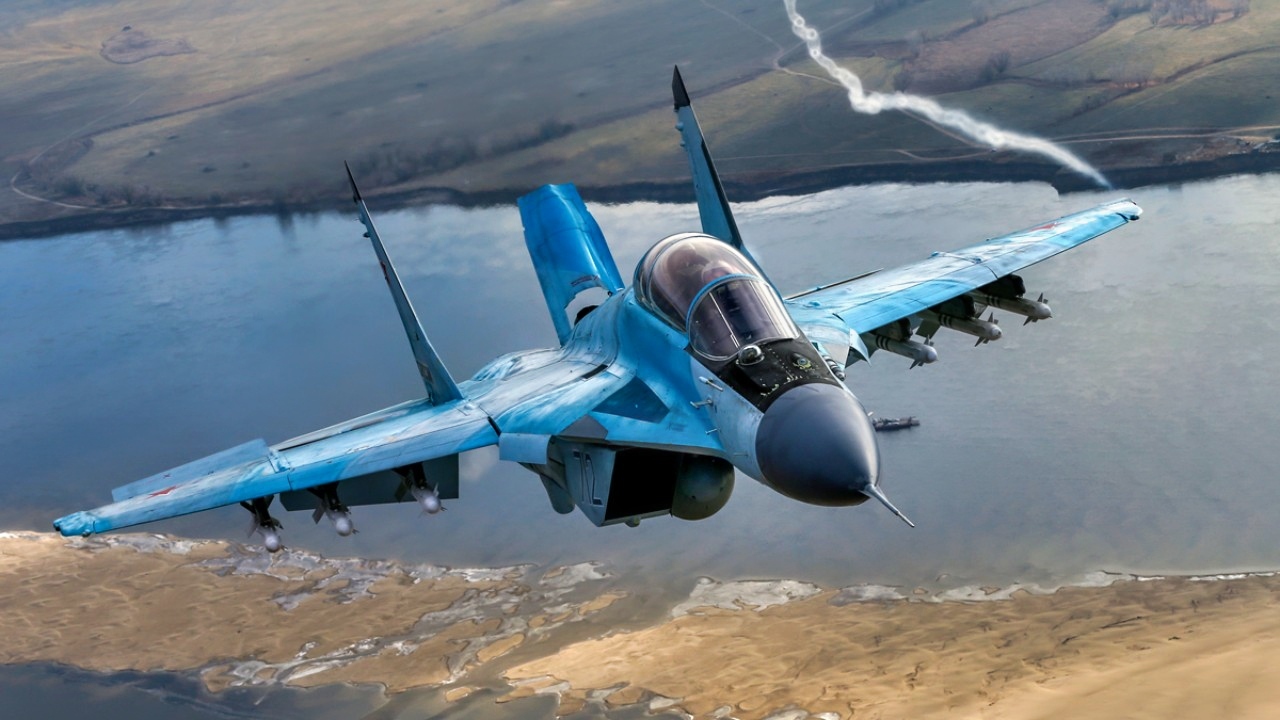
MiG-35 Russian Air Force Fighter. Image Credit: Creative Commons.
Not Stealthy Enough
However, that lack of full stealthiness is a problem in aerial combat. There are some redeeming stealth features, such as radar-absorbent coatings, but the MiG-35 is limited in the stealth area. This means each MiG-35 pilot must operate to the best of his abilities to succeed in battle.
The Ability to Save Money
One selling point of the MiG-35 is that the engineers brag that it is less expensive to keep in the air with fewer maintenance hours required. This is a talking point for salesmen, but it doesn’t seem to move the needle in increasing revenue and optimizing profit in the export market.
Good Speed and Thrust
There are also the RD-33MKB afterburning turbofan engines and an advanced fly-by-wire system. This gives the MiG-35 a top speed of MACH 2.25, which is respectable. Thrust-to-weight ratio is decent, and the MiG-35 has enviable climbing ability.
Are They Still Testing and Evaluating
One problem with the Fulcrum-F program is that pilots have not flown the airplane enough to gather data from many flight hours. The airplane seems to be still in test and evaluation mode. The Russian air force also needs to determine how this fighter will deliver a powerful punch.
Can it evade enemy air defenses well for a ground strike? How effective is it when matched up against Ukrainian fighters? Can it fire stand-off glide bombs well? The Russian battle planners need to speak up and give this airplane a specific mission to focus on.
What Does the Future Hold?
The Russian air force needs to take a long, hard look at the MiG-35 and figure out a path forward. It seems that the high command is flummoxed about the future of this jet. Russia has a habit of failing to analyze its acquisition strategy and moving forward despite negative reviews.
They take the Soviet-era practice of pretending everything is fine about a program and allow things to fester until there is a full-on failure.
The MiG-35 could be an airplane that would make a foreign air force happy, but the competition is too steep. It is not a bad fighter, but it has just been forgotten by the Russians. This is a problematic outcome for a jet that had so much potential. It may be time to cancel the program and focus on other fighters until the Su-57 Felon is available in numbers. The Fulcrum-F has been a “flying disappointment.”
About the Author: Brent M. Eastwood, PhD
Author of now over 3,500 articles on defense issues, Brent M. Eastwood, PhD, is the author of Don’t Turn Your Back On the World: A Conservative Foreign Policy and Humans, Machines, and Data: Future Trends in Warfare, plus two other books. Brent was the founder and CEO of a tech firm that predicted world events using artificial intelligence. He served as a legislative fellow for US Senator Tim Scott and advised the senator on defense and foreign policy issues. He has taught at American University, George Washington University, and George Mason University. Brent is a former US Army Infantry officer. He can be followed on X @BMEastwood.


