

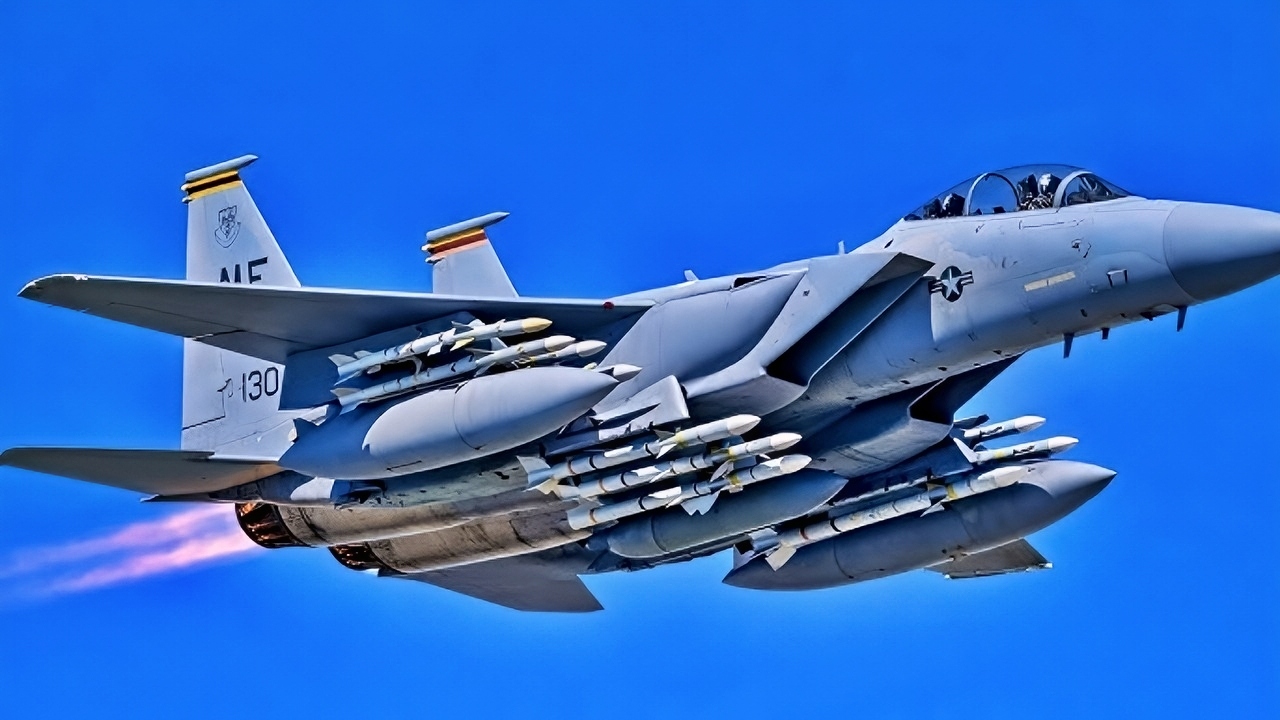
The U.S. Air Force Boeing F-15EX Eagle II will carry and fire air-launched hypersonic weapons. The F-15EX features the world’s fastest jet-computing processor — the Advanced Display Core Processor II — which performs 87 billion computing operations per second. The F-15EX has a top speed of Mach 2.5. All of that means trouble for Russia or China.
The F-15EX Eagle II Looks Like One Tough Fighter
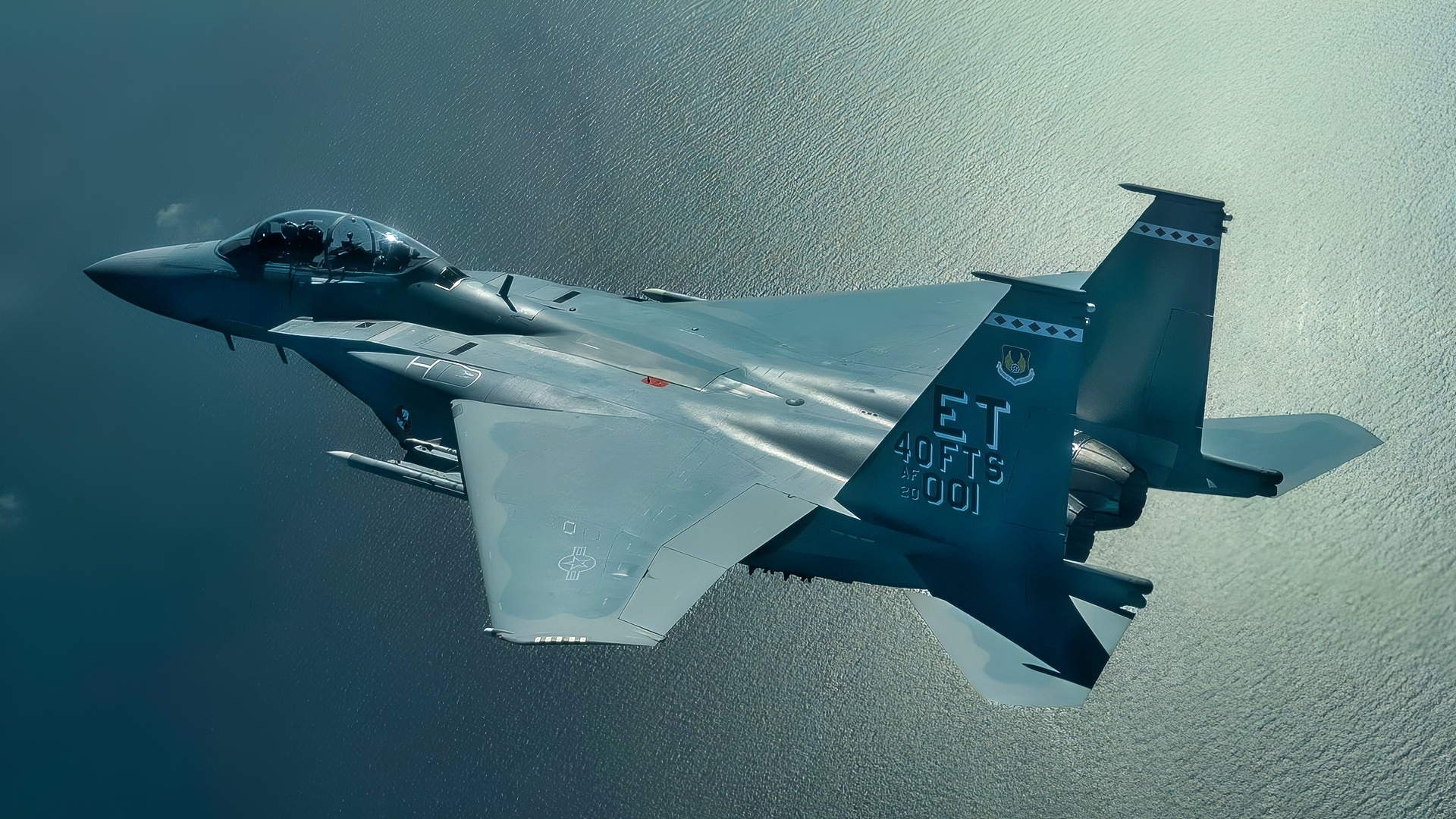
U.S. Air Force Lt. Col. Richard Turner, 40th Flight Test Squadron commander flies 40 FLTS Senior Enlisted Leader, MSgt Tristan McIntire during a test sortie in the F-15EX Eagle II over the Gulf of Mexico on Jun. 14, 2022. Assigned to the 96th Test Wing at Eglin Air Force Base, Fla., the F-15EX Eagle II is the Air Force’s newest 4th generation fighter being tested at the 40 FLTS. (U.S. Air Force photo by Tech. Sgt. John McRell)
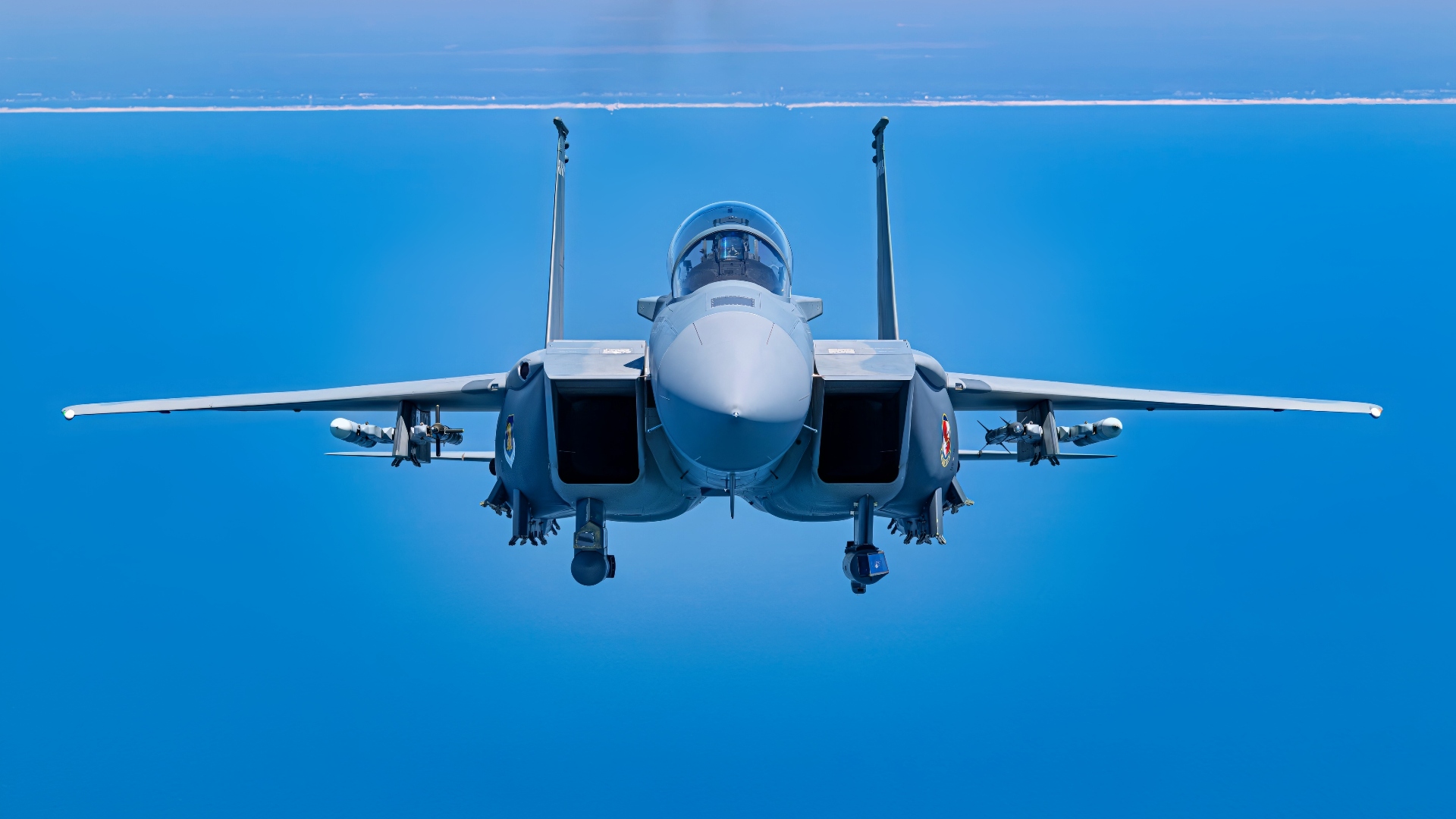
A U.S. Air Force F-15EX Eagle II flies over the Gulf of America, September 16, 2025. The F-15EX, from the 40th Flight Test Squadron at Eglin Air Force Base, Florida, is one of the first F-15EXs in the Air Force, and is going through developmental and operational test series at Eglin to prepare the platform to be delivered to the warfighter. (U.S. Air Force photo by Tech Sgt. Jacob Stephens)
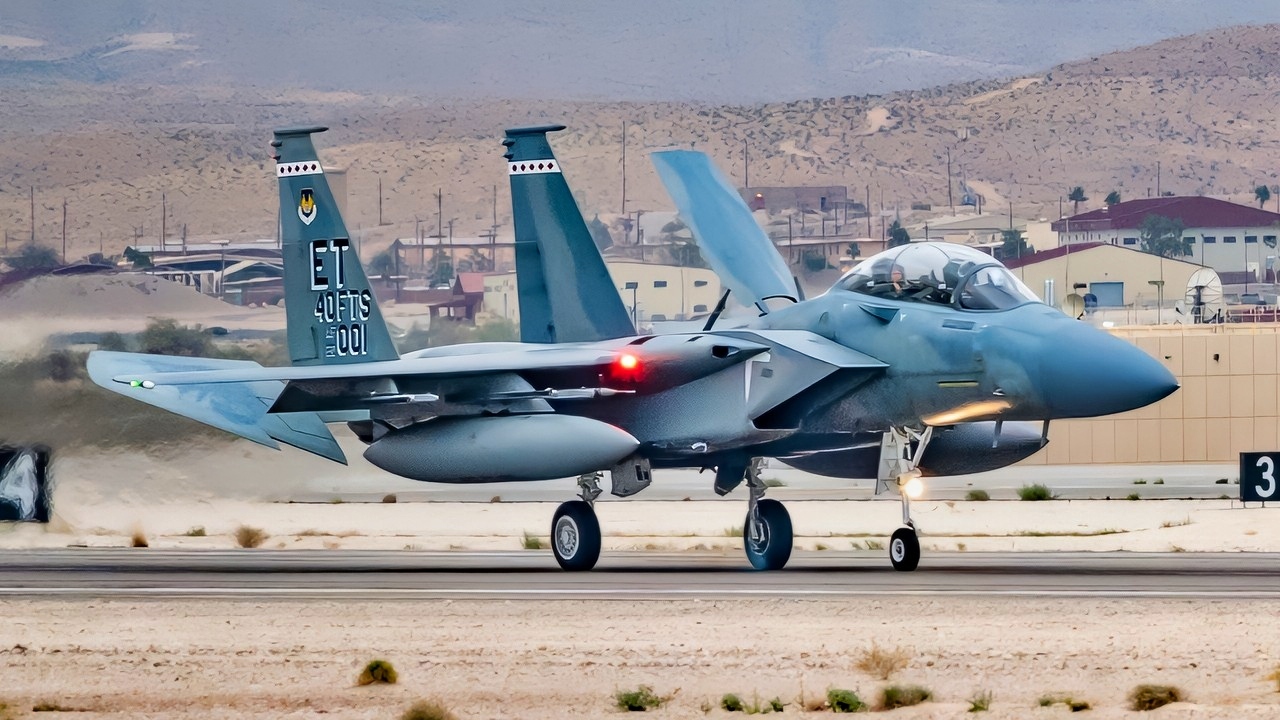
An F-15EX Eagle II lands on the flight line after a training operation at Nellis Air Force Base, Nevada, Nov. 15, 2023. The aircraft is able to fly at a speed of Mach 2.5, constituting it as the world’s fastest fighter jet. (U.S. Air Force photo by Airman 1st Class Elizabeth Tan)
With only a few of the first Boeing F-15EX Eagle II aircraft now operational as of late 2025, the U.S. Air Force is surging to increase production and ramp up its intended fleet size.
The war in Iran, the overall global threat environment, and operational demands placed upon Air Combat Commanders all lend strong evidence in support of the service’s decision to accelerate and expand the scope and reach of the F-15EX program.
Regarded as a “4th-Generation Plus” kind of breakthrough fighter jet, the F-15EX does incorporate a number of 5th-gen-like attributes and does appear to lower the radar signature of the famous, high-performing F-15E fighter.
Several years ago, the F-15 was integrated with the world’s fastest jet-computing processor, the Advanced Display Core Processor II, which performs 87 billion computing operations per second.
With computing this much faster, many of the distinct F-15EX attributes reside in networking, computing, EW, radar, and threat warning systems, yet the new jet does incorporate several potentially paradigm-changing propulsion technologies and attack weapons.
For instance, the first F-15EX aircraft does not have conformal fuel tanks, as they are optimized for aerial agility rather than a longer-range “missile truck” configuration.
However, conformal fuel tanks can also be added to the aircraft to slightly lower the aircraft’s radar cross-section and extend mission reach and dwell time.
F-15EX vs Chinese 4th-Gen Fighters
There is yet another key factor that might help explain the rationale for massively expanding the F-15EX program, and it pertains to the question of “mass” or major warfare.

The Air Force’s newest fighter, the F-15EX Eagle II, was revealed and named during a ceremony April 7 at Eglin Air Force Base, Fla. The aircraft will be the first Air Force aircraft to be tested and fielded from beginning to end, through combined developmental and operational tests. (U.S. Air Force photo/Samuel King Jr.)

A U.S. Air Force F-15EX Eagle II, assigned to 85th Test and Evaluation Squadron, Eglin Air Force Base, Florida, lands at Kadena Air Base, Japan, July 16, 2025.This short-term visit marked a key milestone in the Department of Defense’s ongoing effort to modernize U.S. airpower in the Indo-Pacific. (U.S. Air Force photo by Airman Nathaniel Jackson)

A U.S. Air Force F-15EX Eagle II, assigned to 85th Test and Evaluation Squadron, Eglin Air Force Base, Florida, lands at Kadena Air Base, Japan, July 16, 2025. During the transition to the F-15EX, the U.S. Air Force will sustain a steady-state presence at Kadena through a combination of 4th and 5th generation aircraft. (U.S. Air Force photo by Airman Nathaniel Jackson)
For instance, should there be a massive air-war engagement between the US and Russia or China, there will clearly be a place for a 4th-gen “Plus” aircraft capable of defeating enemy 4th-gen aircraft.
The Chinese, for instance, have hundreds of J-10s, and the Russians operate hundreds of Su-27s and Su-30s, aircraft which would likely need to be engaged and destroyed in any kind of massive air war involving large numbers of planes.
Clearly, Russian and Chinese 5th-generation aircraft need to be destroyed, yet a large-scale or protracted engagement would also present the need to eliminate both Russia and China’s large fleet of 4th-generation aircraft.
This is a mission for which the F-15EX Eagle II might be exceptionally well suited.
What the F-15EX lacks in stealth could perhaps be accounted for by pure speed and F-35-like high-speed computing. The F-15EX Eagle II is listed as capable of Mach 2.5, faster than both the Mach 1.6 F-35 and the Mach 2.25 F-22.
F-15EX Fires Hypersonic Weapons
The F-15EX is not only engineered with new levels of “thrust,” but also carries 12 missiles as well as elements of its existing or well-known arsenal, including the AIM-120D, AIM-9x, and standard JDAMS, among others.
While there have been massive software upgrades to the AIM-120D and AIM-9x, enabling improved targeting guidance, jamming countermeasures, and explosives, some of the newer weapons additions could potentially be even more groundbreaking.
The F-15EX will, for example, carry and fire air-launched hypersonic weapons, a decided combat advantage that needs little introduction, as their arrival will naturally transform modern air war by altering the speed of attack, enemy response time, and stand-off attack range.
An air-fired missile traveling at 5-times the speed of sound would certainly hit an air or ground target operating hundreds of miles away in a matter of minutes, all but eliminating an enemy’s ability to respond in time.
New F-15EX Weapons
The Air Force has now also armed its F-15EX with the well-known Stormbreaker weapon, a first-of-its-kind air-dropped bomb capable of finding, tracking, and destroying moving targets from up to 40 nautical miles away in all weather conditions.
Not only does the Stormbreaker utilize a two-way data link enabling it to adjust course in flight according to a target’s movements, but the weapon is engineered with an often-discussed tri-mode seeker.
The “tri-mode” targeting and sensing technology leverages millimeter-wave, infrared, and laser targeting guidance to track and eliminate targets.
The F-15s weapons are engineered to closely align with the kinds of sensing, computing, and EW applications known to be fundamental to 5th-Gen assets such as the F-35.
However, the DOT&E report adds the caveat that, during testing, the F-15EX may not have been matched against the most advanced threats available.
Therefore, it may not be fully known just how comparable an F-15EX Eagle II is to an F-35, yet many regard the F-35’s advantage as a so-called “flying computer” in the fidelity, range, and integration of its sensing, radar, threat warning, and information-sharing systems.
This is quite similar to what is described for the F-15EX Eagle II.
About the Author: Kris Osborn
Kris Osborn is a Military Technology Editor. Osborn is also President of Warrior Maven – Center for Military Modernization. Osborn previously served at the Pentagon as a highly qualified expert in the Office of the Assistant Secretary of the Army—Acquisition, Logistics & Technology. Osborn has also worked as an anchor and on-air military specialist at national TV networks. He has appeared as a guest military expert on Fox News, MSNBC, The Military Channel, and The History Channel. He also has a Masters Degree in Comparative Literature from Columbia University.


