


The U.S. Air Force operates 187 F-22 Raptor 5th-generation stealth fighters. China’s People’s Liberation Army Air Force already operates an estimated 300 J-20 stealth fighters. The Royal United Services Institute (RUSI) projects China could have 1,000 J-20s by 2030. China is currently producing 40-50 J-20s per year. A South China Morning Post report says China is doubling J-20 production through AI and autonomous manufacturing systems. The U.S. operates hundreds of F-35 5th-generation stealth fighters in addition to the 187 F-22s. China is fast-tracking the J-35 5th-generation stealth fighter in land and ocean variants. The J-35 is designed to rival the F-35C ocean-launched variant. China is also fast-tracking the J-36 and J-50 6th-generation aircraft.
F-22 vs. J-20: Steath Battle

J-20 Mighty Dragon in Camo Back in 2018. Image Credit: Chinese Air Force.
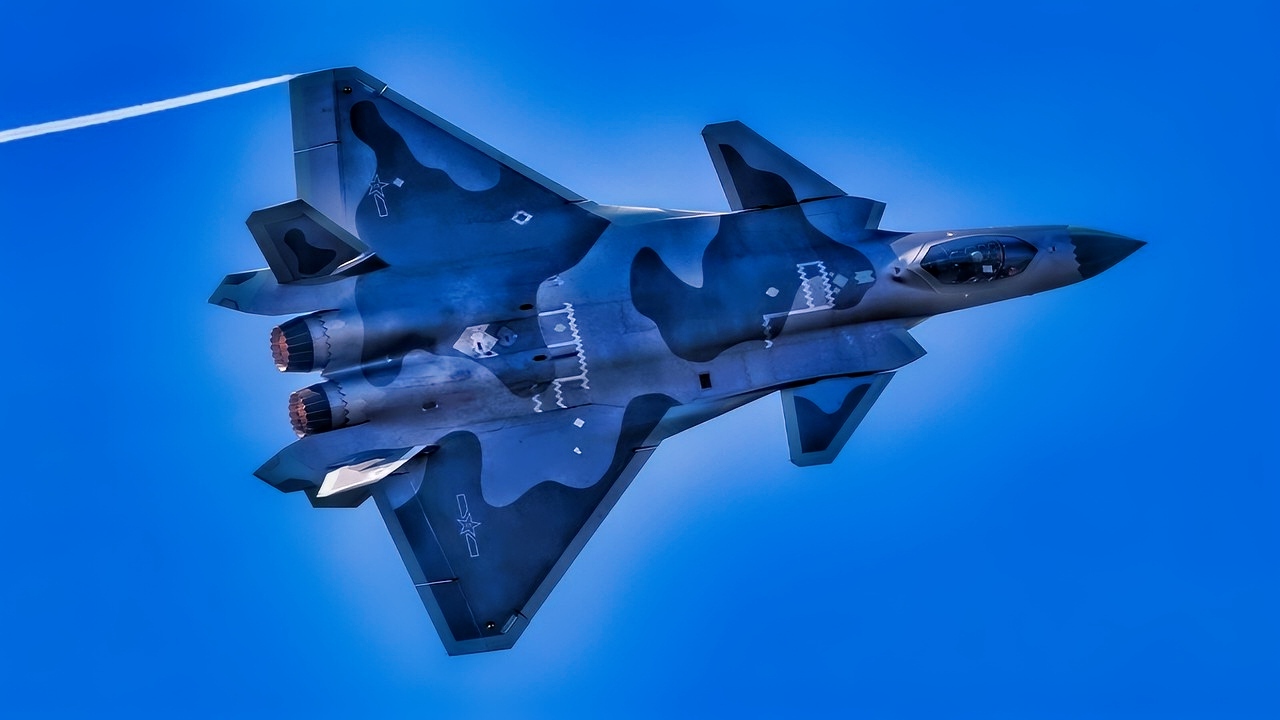
J-20 Fighter In New Paint Scheme. Image Credit: Creative Commons.

Chinese J-20 Fighters. Image Credit: PLAAF.
In what seems like the flash of an instant or mere blink of an eye, the People’s Liberation Army Air Force is matching if not “surpassing” the U.S. in the realm of 5th-generation stealth airpower. While such a prospect might seem alarming on the surface, particularly given that the U.S. now operates hundreds of F-35s and 187 F-22s, China’s pace of J-20 production is quickly closing this gap.
Public estimates from the U.S. military and open-source analysis suggest that the PLA is now producing 40-50 J-20s per year and already operates an estimated J-20 fleet of roughly 200 aircraft as of 2024, a number likely to be considerably larger in 2026.
Furthermore, China’s well-known civil-military fusion and growing production capacity would seem to indicate the PLA could massively increase its J-20 production rates to much more than 40-to-50 aircraft per year.
A recent essay in the South China Morning Post argues that the PRC is now “doubling” J-20 production through AI and autonomous manufacturing systems.
“The London-based Royal United Services Institute estimated that the People’s Liberation Army had around 300 J-20s in service by the middle of last year, a figure that could rise to 1,000 by 2030,” the SCMP writes.

VIRGINIA BEACH, Va. (Sept. 20, 2025) The United States Air Force F-22 Demo Team performs at the 2025 Naval Air Station (NAS) Oceana Air Show aboard NAS Oceana, Sept. 20, 2025. The show’s theme celebrated 250 years of America’s navy and featured performances highlighting the precision, power, and innovation of naval aviation. (U.S. Navy photo by Mass Communication Specialist Seaman Apprentice Oliver McCain Vieira)
Chinese Fighter Jet Explosion
One reason for this is simply that China is now amidst what could be described as a stealth fighter jet explosion; not only is the J-20 being mass-produced, but the PLA is also fast-tracking land-and-ocean variants of its J-35 5th-gen stealth fighter, an aircraft which only existed in the form of a few prototypes several years ago.
Added to this equation, China is simultaneously fast-tracking several mysterious 6th-generation aircraft, including the J-36 and J-50.
“Mass” in War
Ultimately, it seems any ability for a 5th- or 6th-generation aircraft to prevail in combat depends on an interwoven mix of variables, including pilot ability and technological parameters such as radar range and fidelity, targeting precision, sensor effectiveness, and computing power.
Should one aircraft be positioned to “see” and “destroy” an enemy from ranges where it cannot itself be seen, a single fighter jet could destroy multiple enemy fighters at one time.
This is the case with the F-35, as service wargames have shown that the aircraft can “see” and defeat groups of 4th-generation fighters from stand-off ranges using its long-range sensing and weaponry.
Nonetheless, despite the margin of difference a single superior aircraft could create in modern war, there is still great value in any ability to “mass” 5th-generation air power across an expanded formation or air combat envelope.
Essentially, a force with a greater volume of 5th-generation stealth aircraft would provide a massive tactical advantage, even if its individual aircraft were not superior to the adversary’s.
For example, even if a single J-20 would not prevail in a direct engagement with an F-35, there is still great tactical value associated with any ability to “mass” a large force.
Long Way to Go
Overall, however, China has a long way to go before it can “mass” a 5th-generation force able to rival a combined 5th-gen force composed of the U.S. and its key allies such as Japan, South Korea, or Australia.
After making a massive 5th-generation F-35 “buy” years ago, Japan operates a fast-growing fleet of F-35s, and South Korea also regularly supports theater sustainment packages, training exercises, and joint, multinational F-35 operations.
U.S. and allied F-35s are being built quickly as well, so it could be several years before the PLA AF J-20s could truly outnumber an allied force of 5th-generation aircraft.
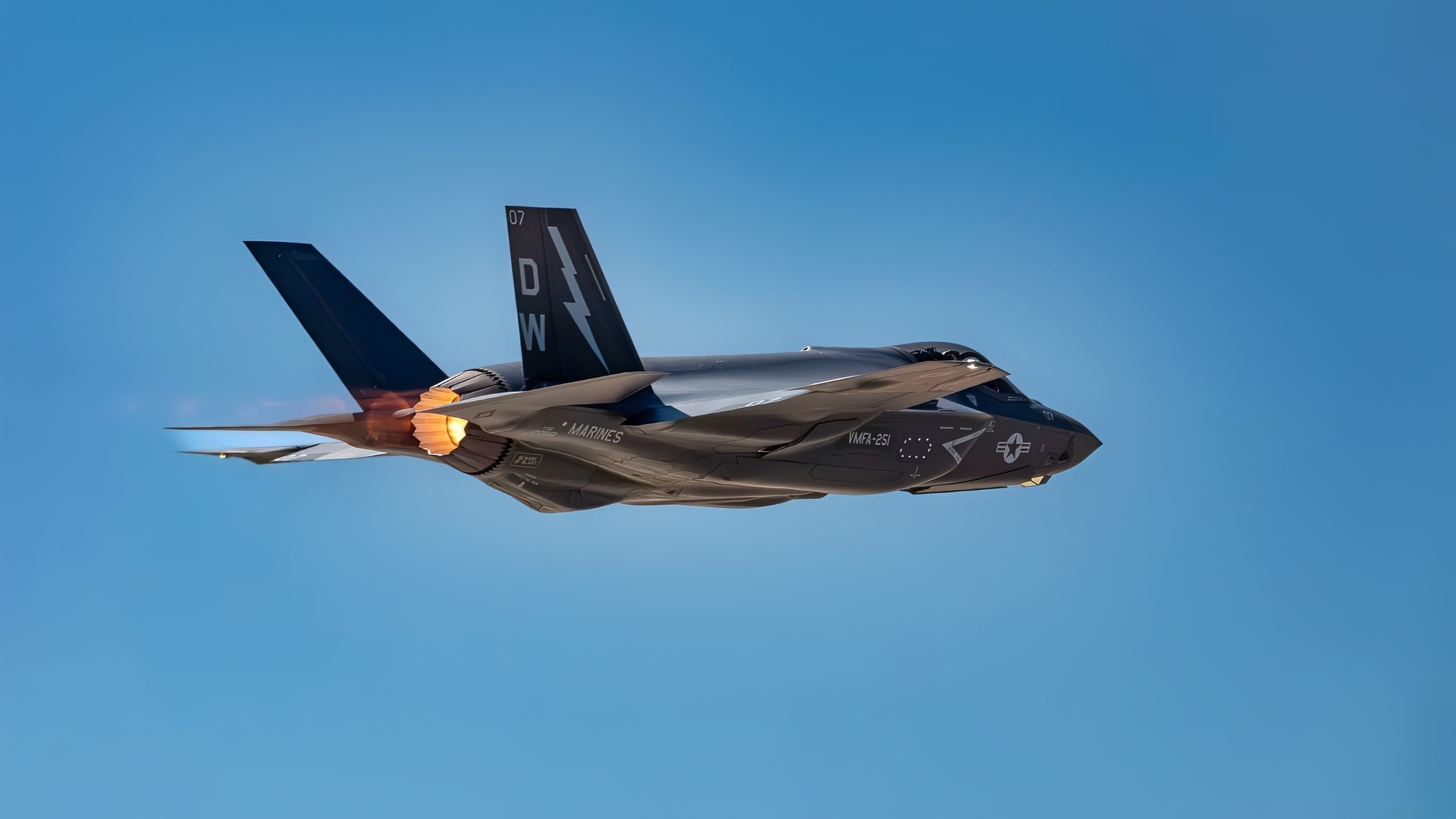
A U.S. Marine Corps F-35C Lightning II assigned to Marine Fighter Attack Squadron 251 (VMFA-251), Marine Corps Air Station Cherry Point, North Carolina, takes off for a mission in support of Red Flag-Nellis Marine Fighter Attack Squadron 251 (VMFA-251), 2nd Marine Aircraft Wing, Marine Corps Air Station Cherry Point, North Carolina 25-3 from Nellis Air Force Base, Nevada, July 22, 2025. Red Flag strengthens joint-force readiness through integration in realistic combat scenarios, enhancing interoperability and rapid-response capabilities. (U.S. Air Force photo by William R. Lewis)
Perhaps an even greater element of China’s 5th-gen deficit is its lack of ocean-launched 5th-gen capacity.
The J-20, while a formidable threat, is purely land-launched and potentially ill-equipped to perform forward-positioned ocean-launched 5th-generation air attack far from its shores.
The PLA AF does not have an F-35B equivalent and is only just now starting to produce its J-35 ocean-launched stealth fighter jet, designed to rival the U.S. Navy’s F-35C.
About the Author: Kris Osborn
Kris Osborn is the Military Technology Editor. Osborn is also President of Warrior Maven – Center for Military Modernization. Osborn previously served at the Pentagon as a highly qualified expert in the Office of the Assistant Secretary of the Army—Acquisition, Logistics & Technology. Osborn has also worked as an anchor and on-air military specialist at national TV networks. He has appeared as a guest military expert on Fox News, MSNBC, The Military Channel, and The History Channel. He also has a Master’s Degree in Comparative Literature from Columbia University.


Melvin Brazier
May 14, 2026 at 1:54 pm
Yes but we also have over 600 F35’s in service with a planned of over 2400 across all variants so I’d say you’re point is moot.