

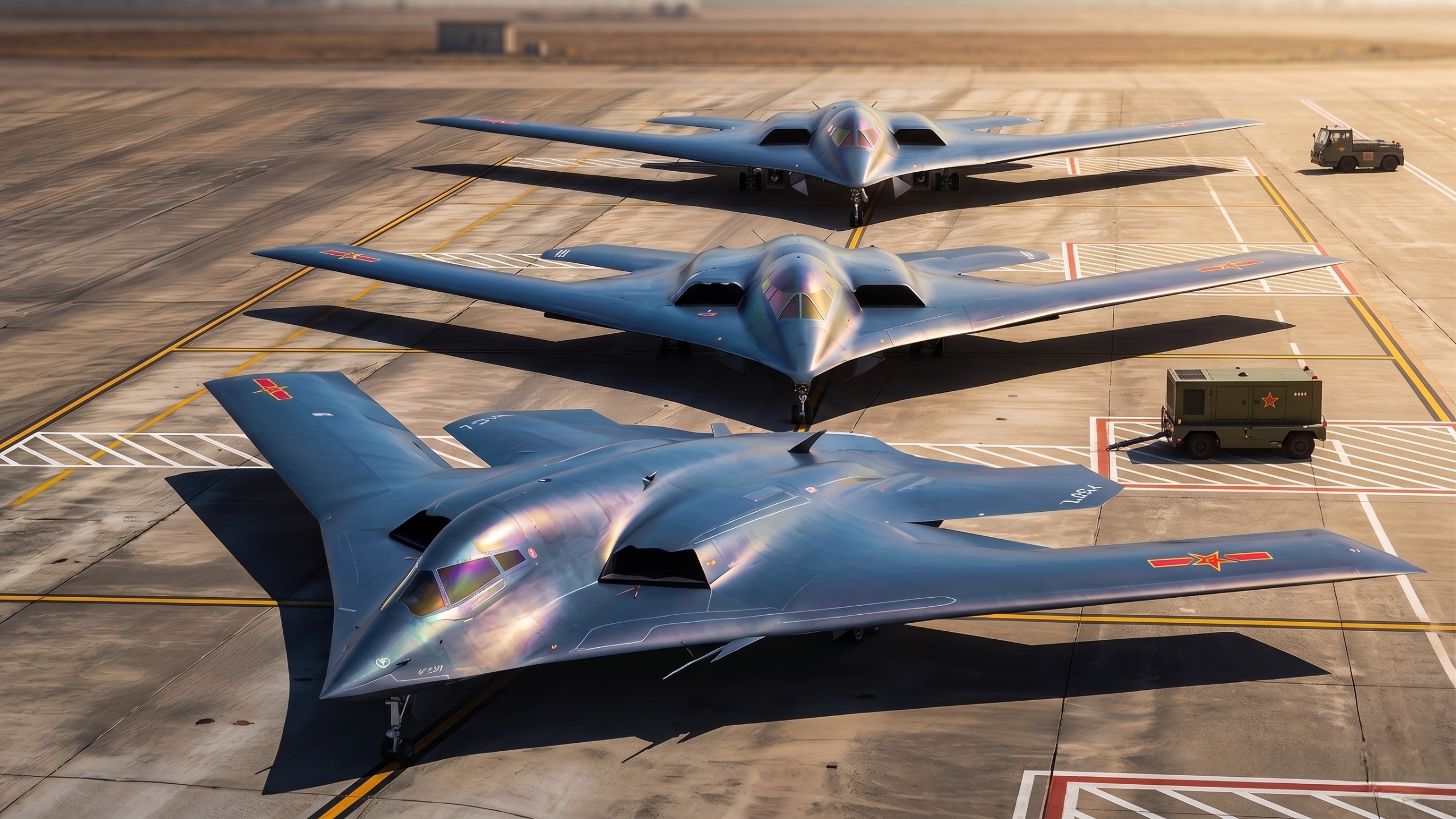
China continues its rapid military modernization and buildup. One of the systems that Beijing is interested in developing is its long-range strategic, nuclear-capable Xi’an H-20 stealth bomber. Western sources continue comparing the H-20 to China’s version of the older American B-2 Spirit stealth bomber. Some Chinese sources dispute that description. But many have noted that the H-20, which was supposed to have entered active service by now, has not yet done so.
Where Is the H-20 Stealth Bomber?

H-20 Bomber from China. Image Credit: Creative Commons.

H-20 Bomber Mock Up. Image Credit: Creative Commons.
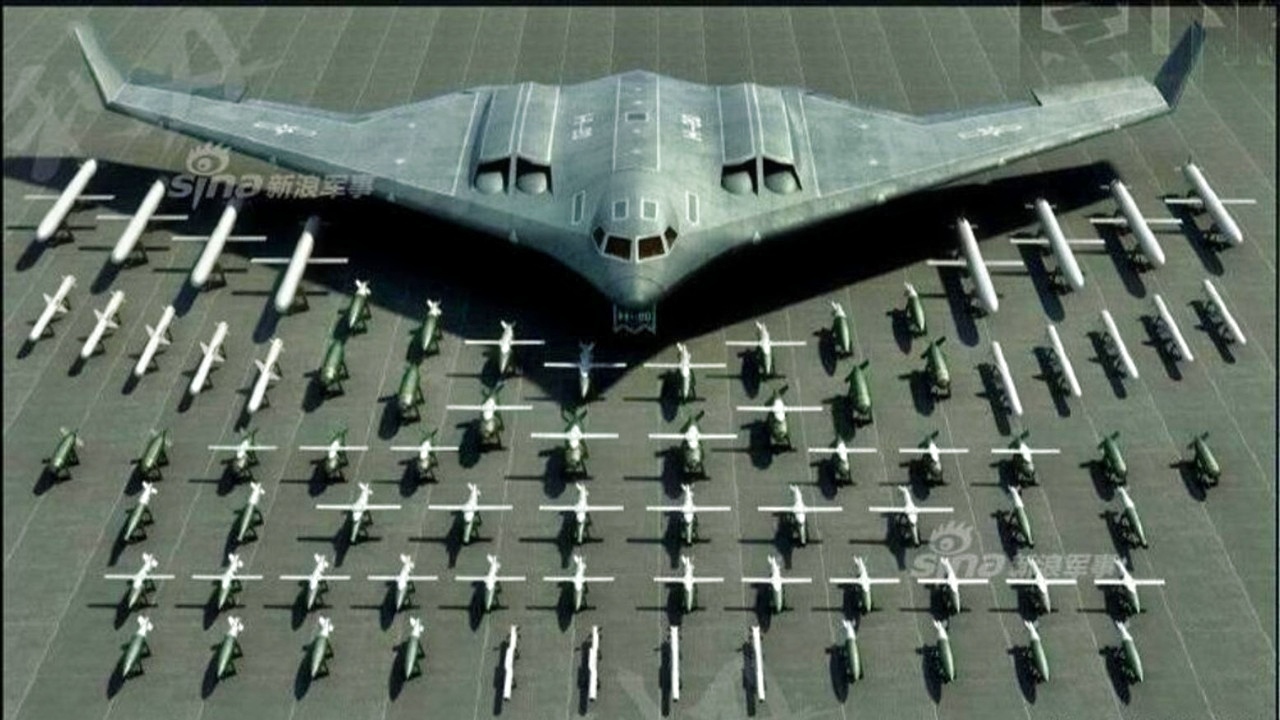
H-20 Bomber. Chinese Internet Social Media Screenshot.
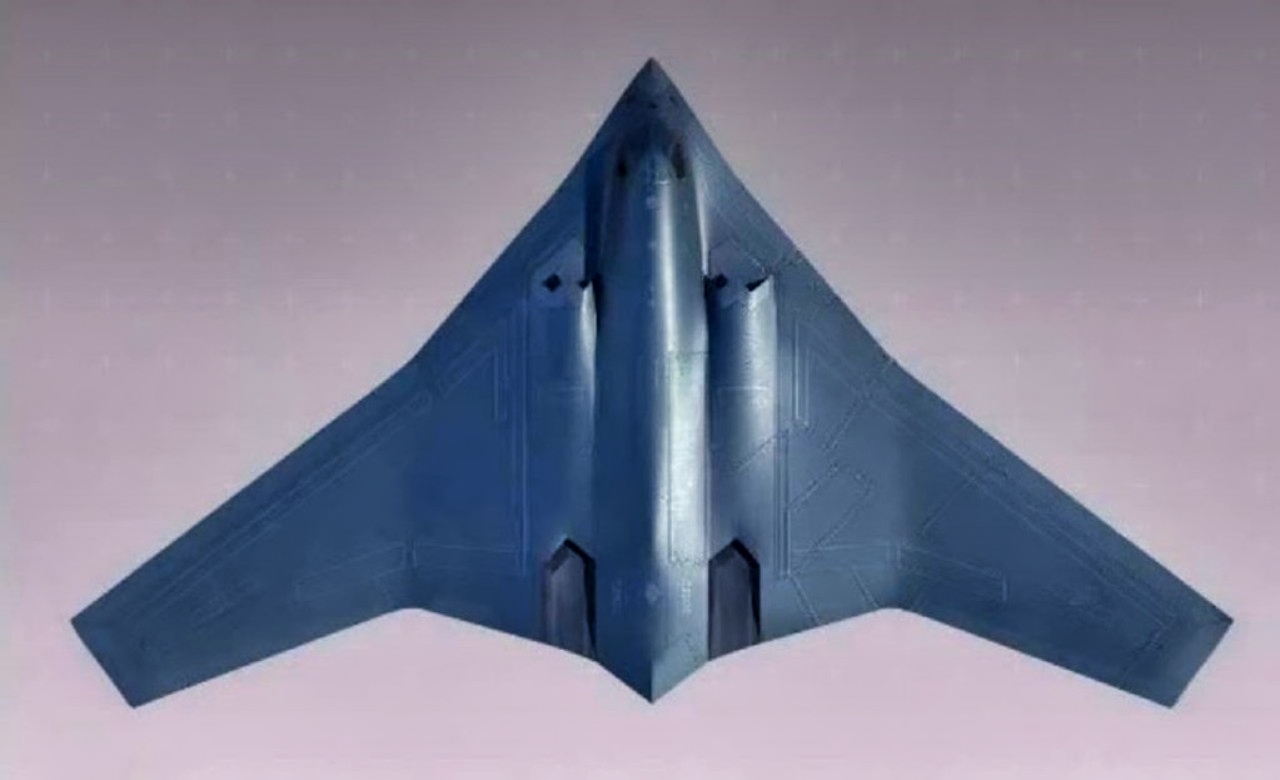
H-20 Bomber from China Artist Rendition. Creative Commons.
Due to the delay in deployment, it is possible that the rapid shift toward cheaply produced drone swarms in modern combat might have effectively killed the H-20.
Plus, China is developing the JH-XX/J-36 medium-range stealth bomber, so there might not yet–or ever–be a need for China to invest in the H-20.
What Is the H-20?
Designed by the Xi’an Aircraft Corporation, the H-20 is a flying-wing stealth bomber with intercontinental range. Like the American B-2 and B-21 Raider, the Xi’an H-20 will carry both conventional and nuclear weapons.
What’s more, H-20 is believed to possess long-range cruise missile delivery, allowing the H-20 to penetrate the Second Island Chain and become a potential threat to the US presence on Guam (and beyond).
This bird has been discussed in aviation circles since 2016.
Still, there have been no confirmed tests of the H-20, no operational prototypes, no official unveiling, and no verified production line. This absence, over many years, is becoming increasingly conspicuous.
It either indicates that China is now prioritizing the Chengdu J-36, the Shenyang J-35 fifth-generation multirole fighter, loyal wingman drones, and other unmanned combat systems.
China could simply keep the H-20 under wraps because it has either encountered production complications or simply doesn’t want the West to gain a realistic understanding of China’s newfound long-range stealth strike capabilities.
China May Still Struggle with True Stealth
Stealth technology, though decades old, is a very difficult skill to master. And yet, the B-2 Spirit stealth bomber is sitting in a museum, well, at least one of them. And we have the photos.
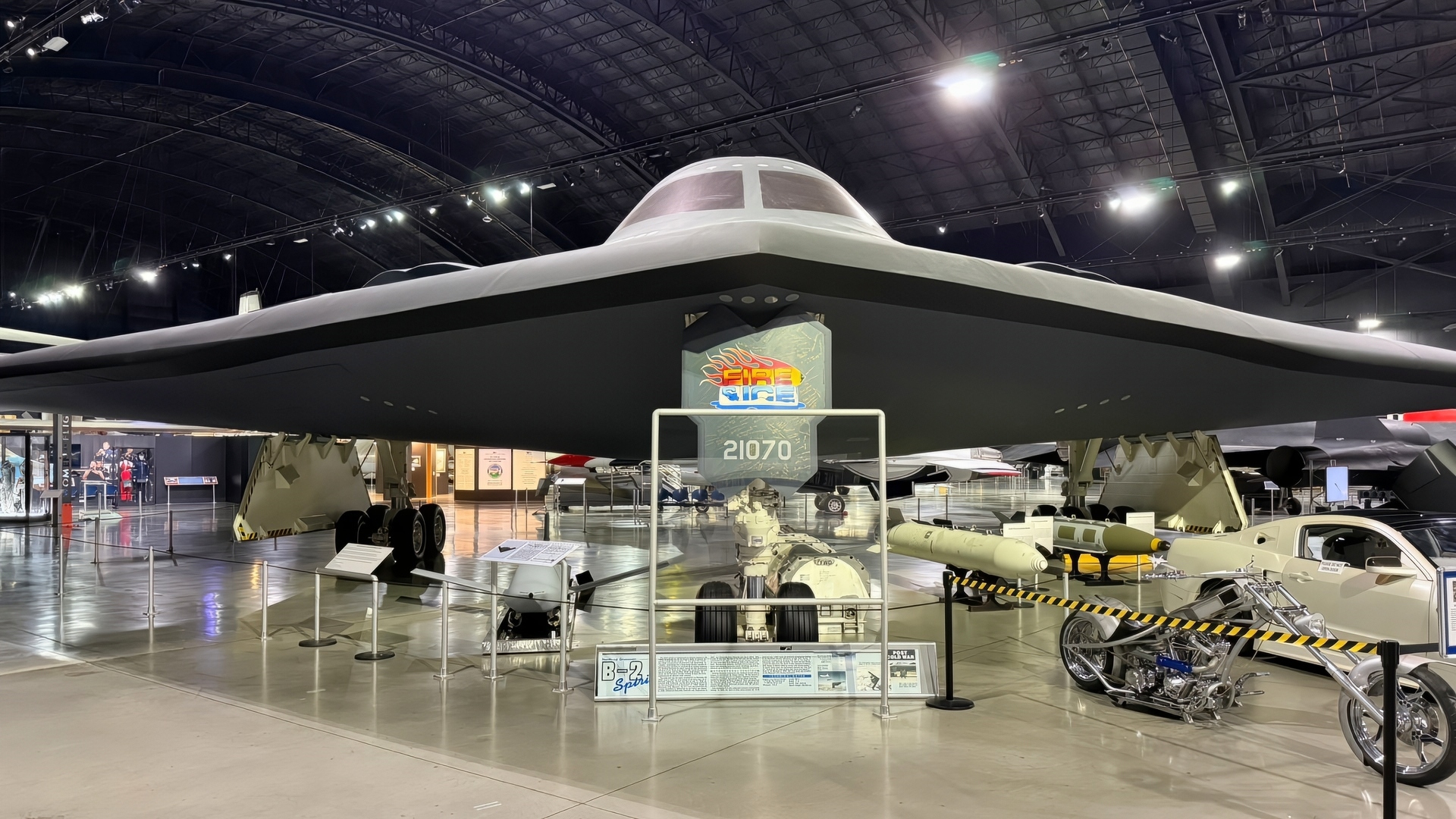
B-2A Spirit On Display. Image by Editor Harry J. Kazianis/National Security Journal.
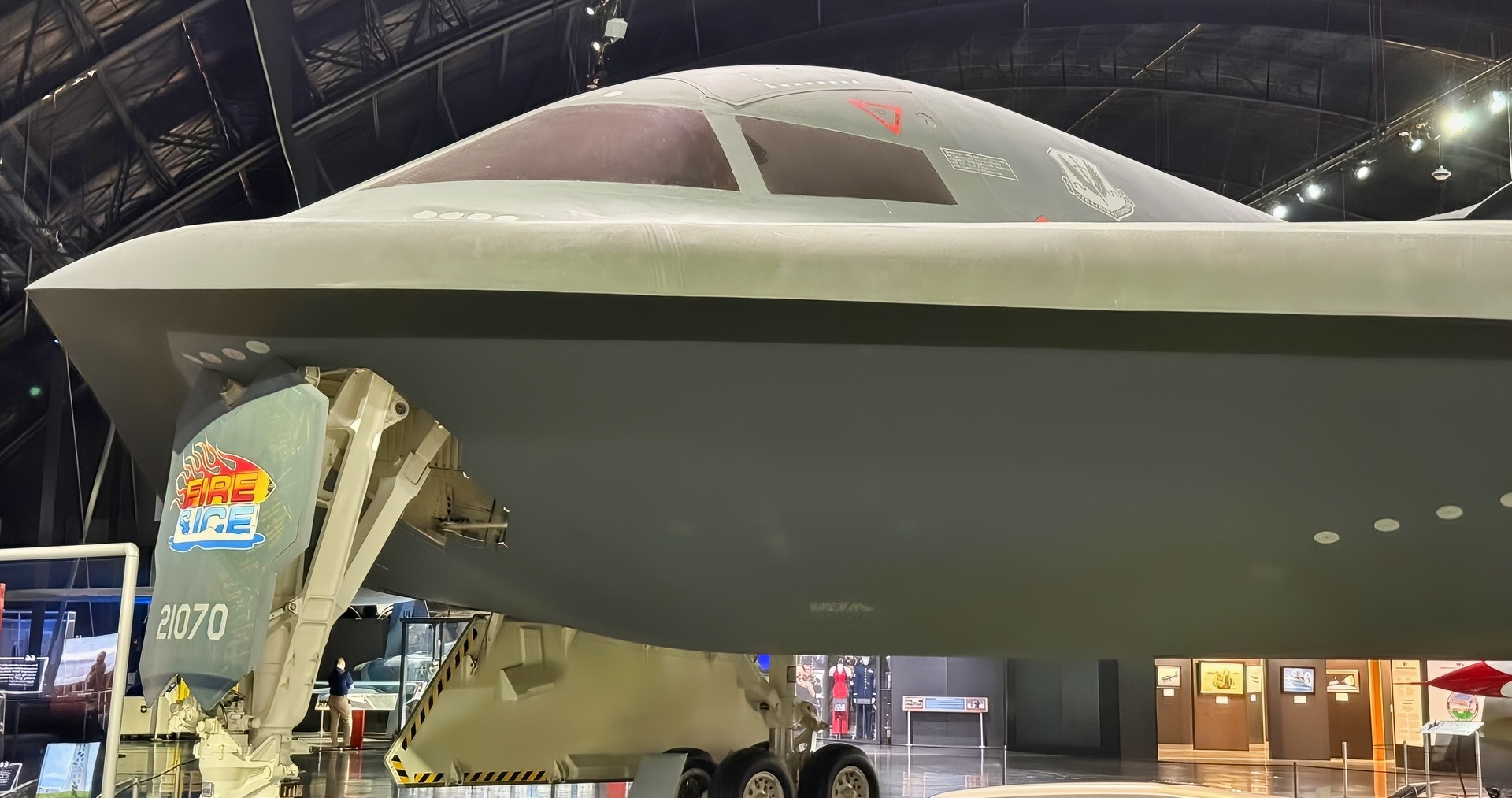
B-2A Spirit Stealth Bomber USAF Museum. Image Credit: Harry J. Kazianis/National Security Journal.
China undoubtedly has industrial capabilities that should never be underestimated, but creating stealth systems is very difficult.
Stealth planes require radar-absorbent materials, edge alignment, thermal management, and a coterie of other capabilities, any of which could prove more complicated to design than previously assumed.
Again, though, it is imperative that readers understand that the Chinese industrial capacity is so great and advanced that, inevitably, their engineers will overcome whatever problems they’ve run into.
Of course, if Beijing has quietly decided to pivot away entirely from the H-20 concept, that’s another matter.
The technical problems China could face redound to the fact that strategic bombers generate immense thermal signatures.
Large flying wings are very difficult to manufacture. Plus, maintaining low observability over long-range missions is brutally demanding.
Serious Engine Woes
The engine issue may be more serious for China. Chinese turbofan development has notoriously lagged that of the United States and Russia in fuel efficiency, reliability, thermal management, and high-thrust performance. China is perfecting its systems.
But they are still behind the US in this key area.
Hotter-running engines produce stronger infrared signatures, thereby negating the H-20’s stealth capabilities.
The H-20 May Be Arriving at the Wrong Time
America still values stealth bombers because it already has the infrastructure to support them.
Its industrial base, such as it is, remains primed to produce and support stealth planes.
Stealth is embedded within US military doctrine, too. What’s more, the US possesses a global basing architecture.
So, Beijing might be spending enormous resources fielding a manned stealth long-range bomber just as cheaper unmanned systems become the dominant strike platform. That presents quite the conundrum for Beijing.
The Real Strategic Question
At its core, the question is not whether China can produce the H-20. It can.
The issue is whether the aircraft arrives too late, costs too much, lacks survivability against future sensor networks, or if it becomes strategically obsolete before mass deployment.
Thus, the “silence” surrounding the program can be better understood as reticence to advertise what China is doing, as it is still figuring out what it wants from the Xi’an H-20 program.
About the Author: Brandon J. Weichert
Brandon J. Weichert is a Senior National Security Editor. Recently, Weichert became the editor of the “NatSec Guy” section at Emerald. TV. He was previously the senior national security editor at The National Interest. Weichert hosts The National Security Hour on iHeartRadio, where he discusses national security policy every Wednesday at 8 p.m. Eastern. He hosts a companion show on Rumble entitled “National Security Talk.” Weichert consults regularly with various government institutions and private organizations on geopolitical issues. His writings have appeared in numerous publications, among them Popular Mechanics, National Review, MSN, and The American Spectator. And his books include Winning Space: How America Remains a Superpower, Biohacked: China’s Race to Control Life, and The Shadow War: Iran’s Quest for Supremacy. Weichert’s newest book, A Disaster of Our Own Making: How the West Lost Ukraine, is available for purchase at any bookstore. Follow him via Twitter/X @WeTheBrandon.


