


The U.S. military has been quietly reassuring itself that China’s long-range H-20 stealth bomber program is years behind schedule, plagued by likely engine problems and challenges with the stealth coating that Beijing simply can’t solve. The real danger isn’t that the H-20 arrives late—it’s that it arrives mature, while America’s aging B-2 fleet shrinks and the B-21 Raider production timeline keeps slipping.
The H-20 and the Rise of China’s Military
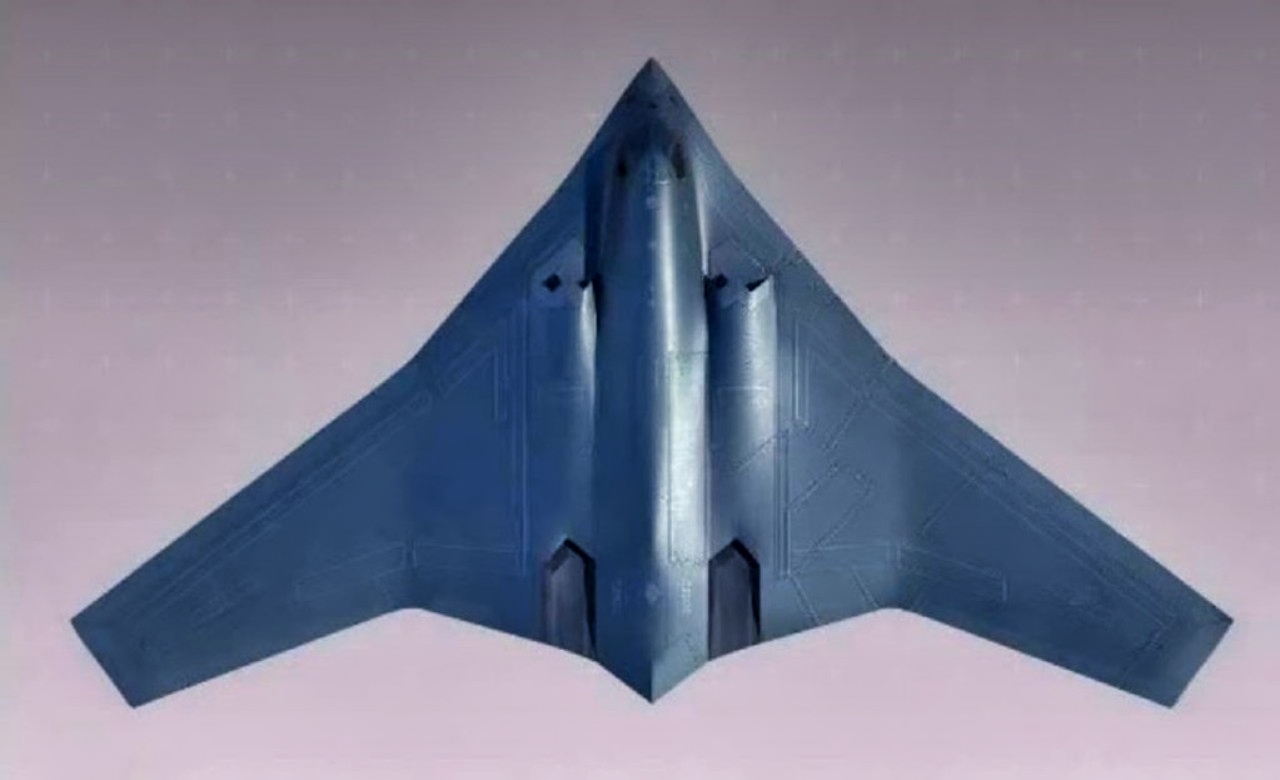
H-20 Bomber from China Artist Rendition. Creative Commons.
The People’s Republic of China is undoubtedly the most serious geopolitical challenger of the United States in the 21st century.
What makes China such a powerful rival to the United States is its status as an economic dynamo.
And their economic dynamism is built on a robust industrial base that churns out products at a rate no Western nation can match. Because of the country’s incredible industrial base, China is becoming a major military power today.
Yet, its military power is still growing.
Beijing’s Advantage: Time, Scale, and Relentless Iteration
Take, for instance, the development of China’s long-range stealth bomber, the H-20 Xi’an.
While China’s military (and economy) have certainly caught up with that of the United States in many respects, there are still critical gaps in China’s force.
One of those gaps is the long-range stealth bomber capability.

H-20 Bomber from China. Image Credit: Creative Commons.

H-20 Bomber Mock Up. Image Credit: Creative Commons.
Stealth technology is among the most difficult to develop and master. China is currently experiencing grave difficulty in producing a large, flying-wing aircraft capable of sustaining high-altitude, long-duration stealth operations.
These likely difficulties stem from the complexities of domestically produced low-observable materials, high-bypass engines, and other aspects of stealth technology.
Radar-absorbent materials (RAMs) are among the most difficult technologies to produce. It’s just as hard to maintain RAM as it is to develop it. If RAM technology gets damaged, the time and resources needed to repair it are great.
If the duration and high-intensity use of America’s B-2 Spirit long-range stealth bombers are any indication, then China will need to create an entire ecosystem to maintain its version of those planes, the H-20.
What’s more, China has likely long struggled with complications related to its engines.
Although their domestic industry has begun meeting demand for other systems, long-range stealth bombers require high-bypass engines for fuel-efficient performance.
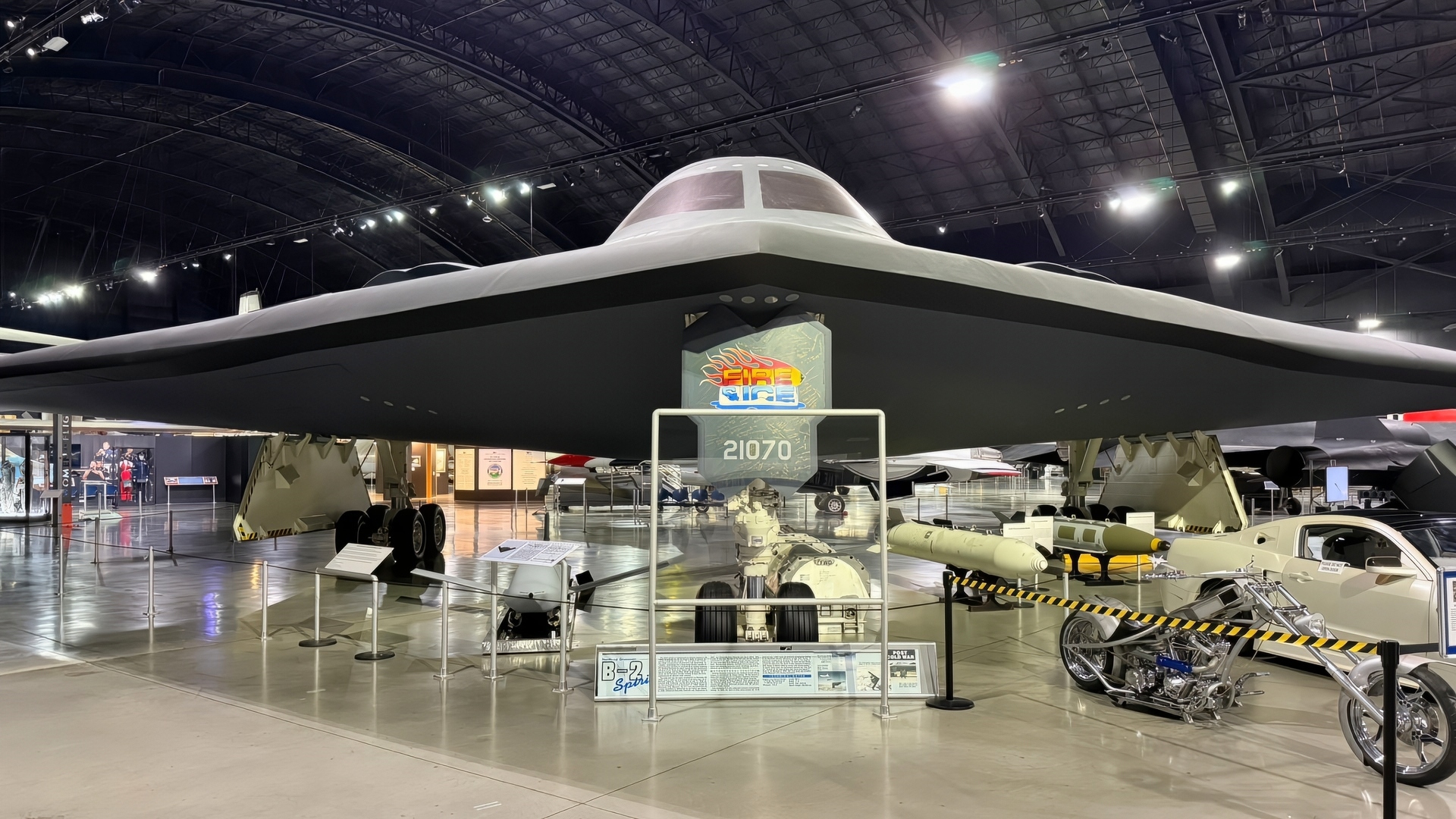
B-2A Spirit On Display. Image by Editor Harry J. Kazianis/National Security Journal.
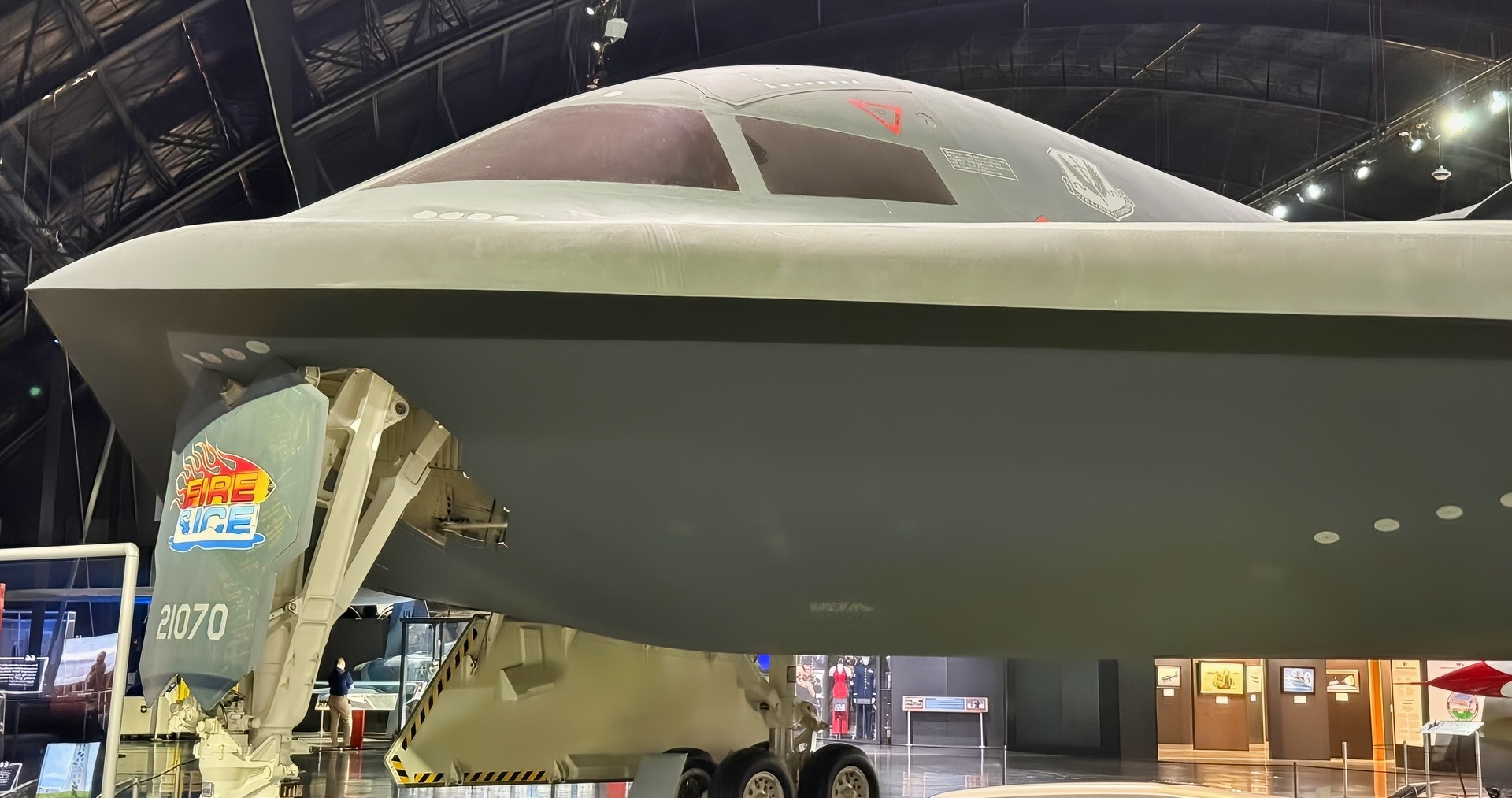
B-2A Spirit Stealth Bomber USAF Museum. Image Credit: Harry J. Kazianis/National Security Journal.
Whereas the United States has nearly 50 years of experience maintaining and operating stealth warplanes and bombers, the Chinese are relatively new at this.
At the same time, though, arguments about experience were made about China’s aircraft carrier force.
In a little over a decade, the Chinese have dispelled many of the criticisms that they lacked the capability for aircraft carrier flight operations. Sure, the Chinese have yet to use their carrier force in battle.
But the Chinese have clearly adapted well to carrier operations and continue to grow their experience. The same is likely to hold true for their level of experience with stealth bombers.
A Different War, A Different Timeline
And that’s the point. One only truly learns by doing. China has repeatedly proven, across multiple domains, that the more processes it takes on for itself, whether carrier operations or, eventually, long-range stealth bomber development, the better it gets. Over time, they might even catch up to the Americans.
Yes, the Americans are still world leaders in stealth bombers. That may persist for many years to come.
But China doesn’t have to get there immediately. They can take their time to work out the kinks in their own systems. Once they’ve ironed out those wrinkles, then China’s forces can work to achieve operational parity with the Americans.
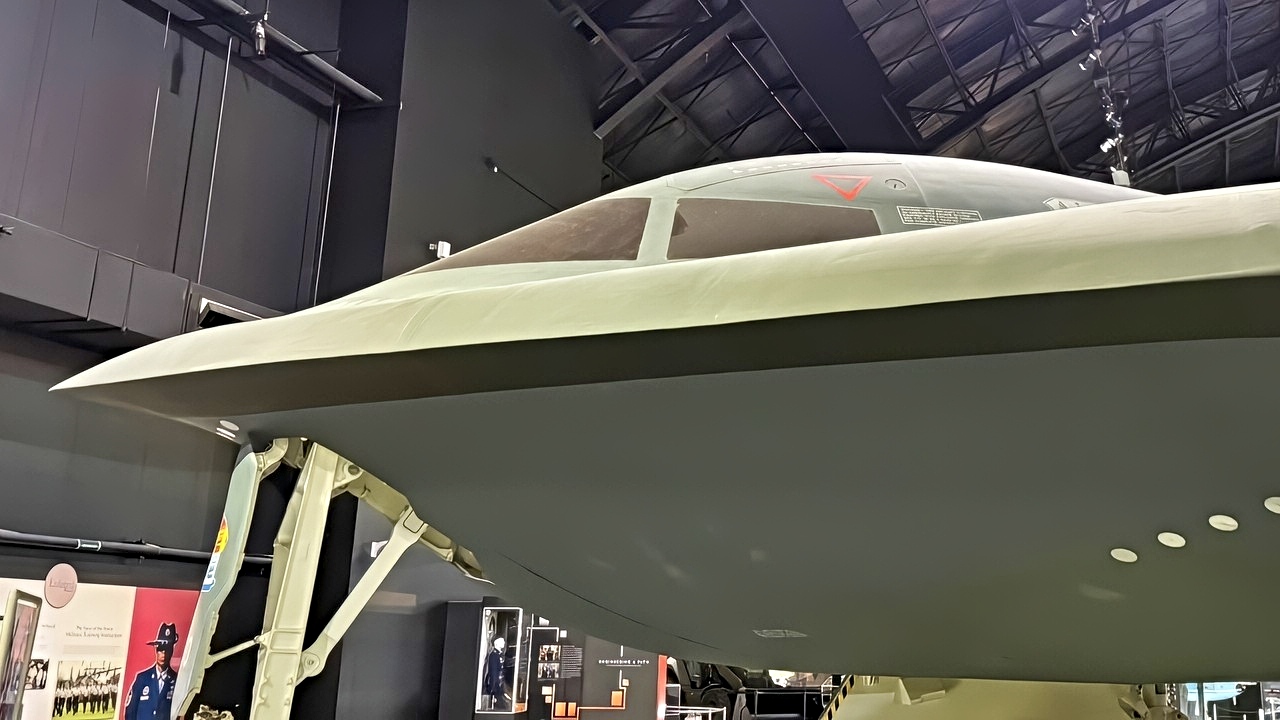
B-2 Bomber Sitting in Museum National Security Journal Photos. All Rights Reserved.
More importantly, the Chinese doctrine. American grand strategy is global in nature. While China likely anticipates one day having a similar global posture with its military, right now, Beijing remains focused on being a regional powerhouse.
By combining its massive missile arsenal, hypersonic weapons, and drone swarms, and eventually the H-20, China has redundancy built in to maintain dominance in its near abroad.
Plus, those aforementioned systems mean that the Chinese are in no real rush to get the H-20 out before they feel it is absolutely ready for showtime.
The H-20 Isn’t Ready–But That May Not Matter
In other words, China isn’t really going to feel a loss from not having the H-20 at the ready whenever a conflict with the West kicks off.
On the flipside of this equation, however, if America cannot resolve its own declining long-range stealth bomber predicament (the B-2 fleet is relatively small and the planes themselves are aging, with their replacement, the B-21 Raider, nowhere near ready for deployment), then it is Uncle Sam who will find himself lacking key capabilities in the stealth domain.
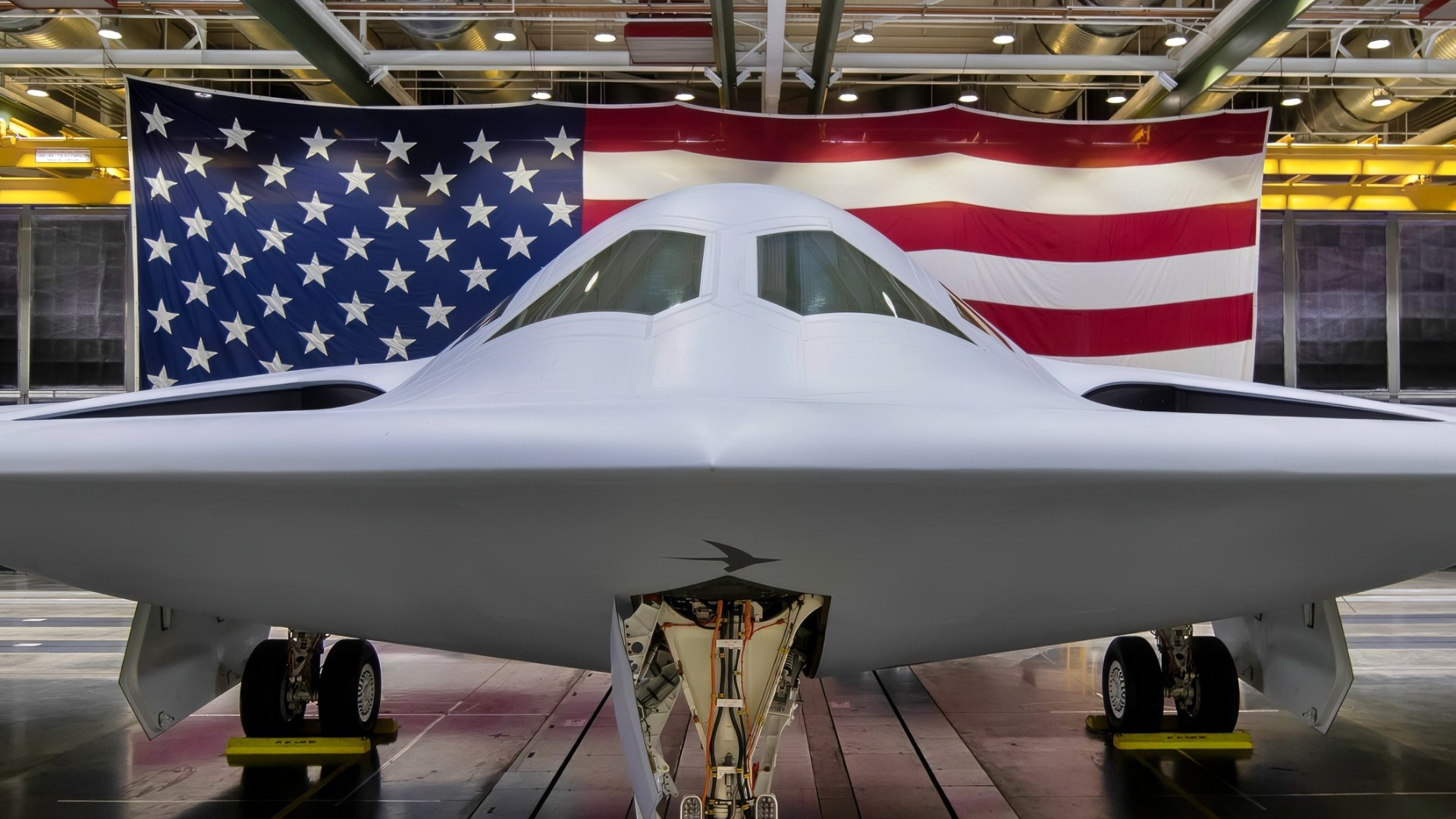
The B-21 Raider was unveiled to the public at a ceremony on December 2, 2022, in Palmdale, Calif. Designed to operate in tomorrow’s high-end threat environment, the B-21 will play a critical role in ensuring America’s enduring airpower capability. (U.S. Air Force photo)
Let’s not forget, too, that hard lessons learned from recent conflicts–notably the Iran War–may prompt Beijing to double down on its commitment to the H-20. If that happens, we could see the H-20 deployed in some capacity much sooner than Beijing originally planned for the plane’s unveiling.
The real danger isn’t that China’s H-20 arrives late. It’s that it arrives mature.
While Beijing refines its stealth ecosystem at its own pace, the United States risks drifting into complacency with a small, aging bomber fleet and an unproven replacement timeline.
If current trends hold, Washington could find itself in an uncomfortable position, defending legacy advantages against a competitor that has quietly learned, adapted, and closed the gap.
When that moment comes, the question will be why did the US stand still while China caught up?
About the Author: Brandon J. Weichert
Brandon J. Weichert is the Senior National Security Editor at 19FortyFive.com. Recently, Weichert became the editor of the “NatSec Guy” section at Emerald.TV. He was previously the senior national security editor at The National Interest. Weichert is the host of The National Security Hour on iHeartRadio, where he discusses national security policy every Wednesday at 8pm Eastern. He hosts a companion show on Rumble entitled “National Security Talk.” Weichert consults regularly with various government institutions and private organizations on geopolitical issues. His writings have appeared in numerous publications, among them Popular Mechanics, National Review, MSN, and The American Spectator. And his books include Winning Space: How America Remains a Superpower, Biohacked: China’s Race to Control Life, and The Shadow War: Iran’s Quest for Supremacy. Weichert’s newest book, A Disaster of Our Own Making: How the West Lost Ukraine, is available for purchase wherever books are sold. He can be followed via Twitter/X @WeTheBrandon.


