

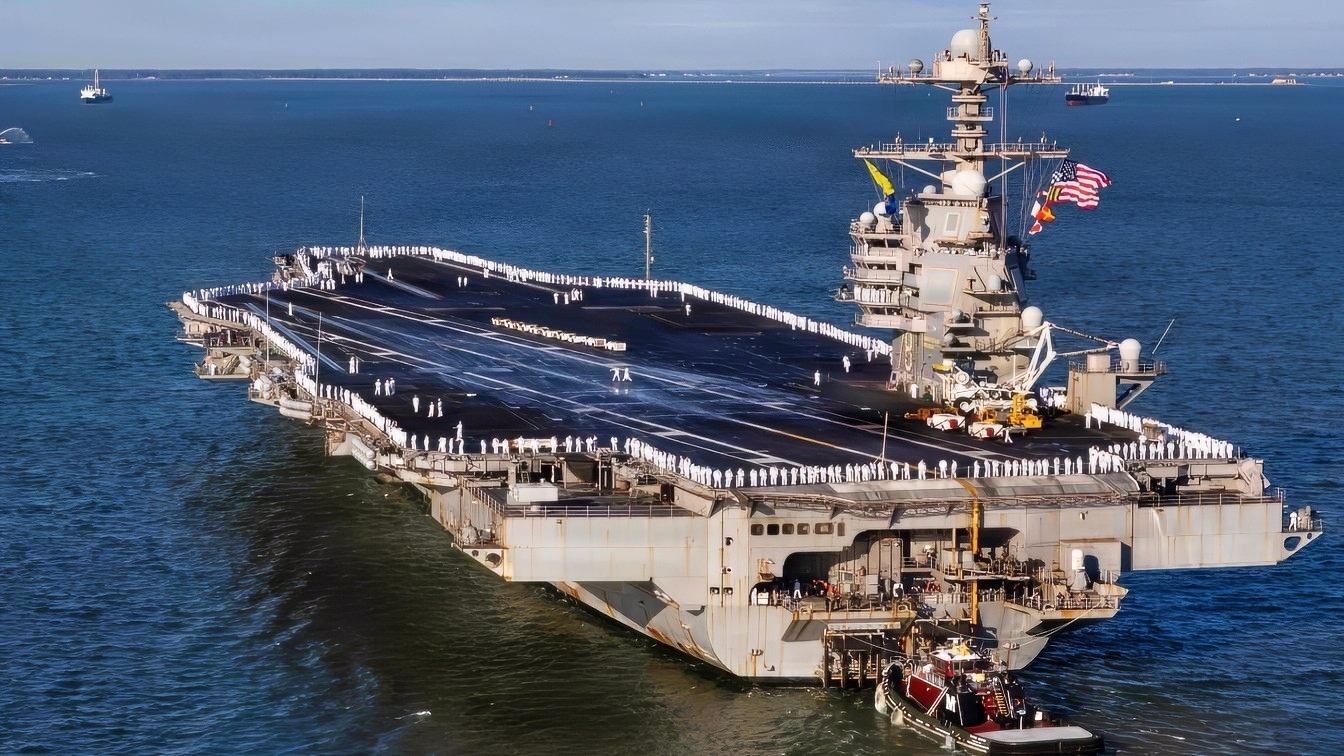
The USS Gerald R. Ford has returned home. The carrier saw action off both Venezuela and Iran in an epic deployment, one of the longest of any aircraft carrier since World War II. With her sister ship, the USS John F. Kennedy, set to enter service next year, the mechanical and morale difficulties towards the end of Ford’s deployment have raised questions about the future of the CVN-78 design, and about the health of the US Navy’s carrier fleet more generally.
Teething Problems for USS Gerald R. Ford
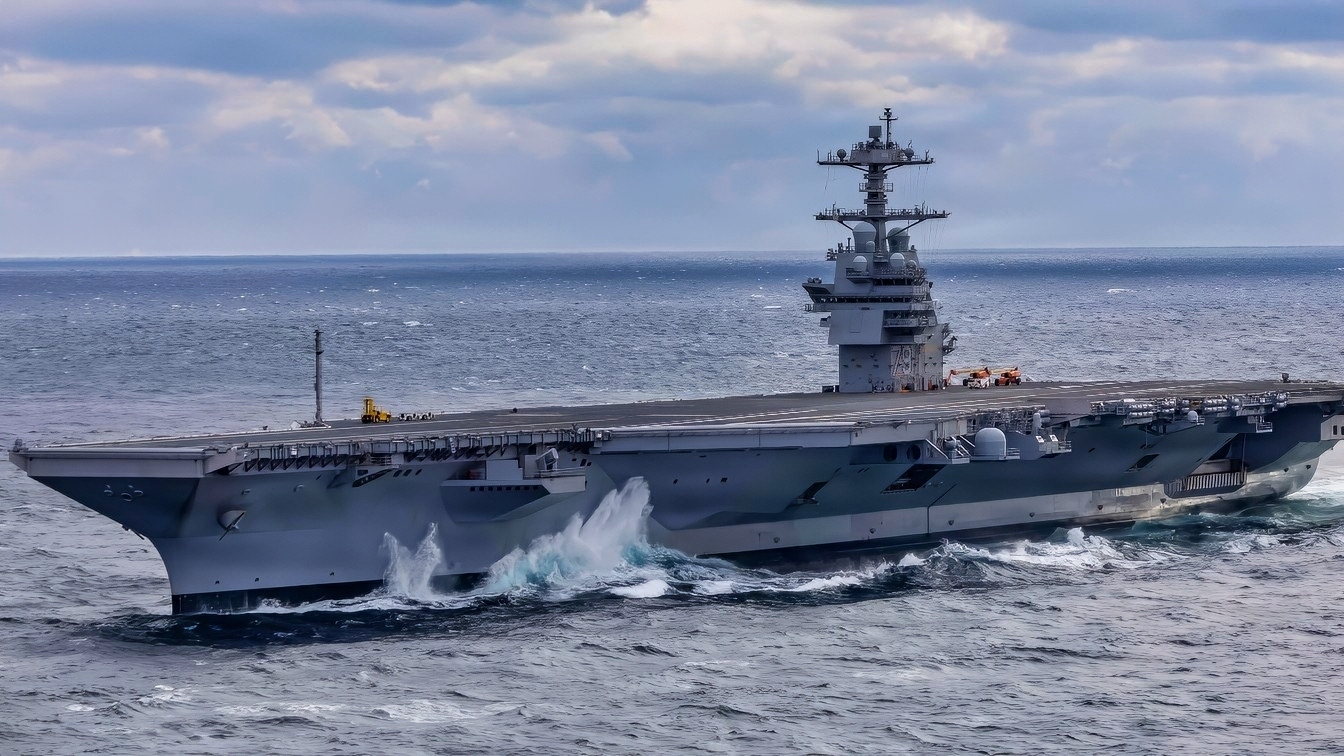
Pre-Commissioning Unit John F. Kennedy (CVN 79) transits the Atlantic Ocean during Builder’s Sea Trials, Jan. 28, 2026. Builder’s Trials provide an opportunity to test ship systems and components at sea for the first time, and make required adjustments prior to additional underway testing. (U.S. Navy photo by Mass Communication Specialist 2nd Class Kaitlin Young)
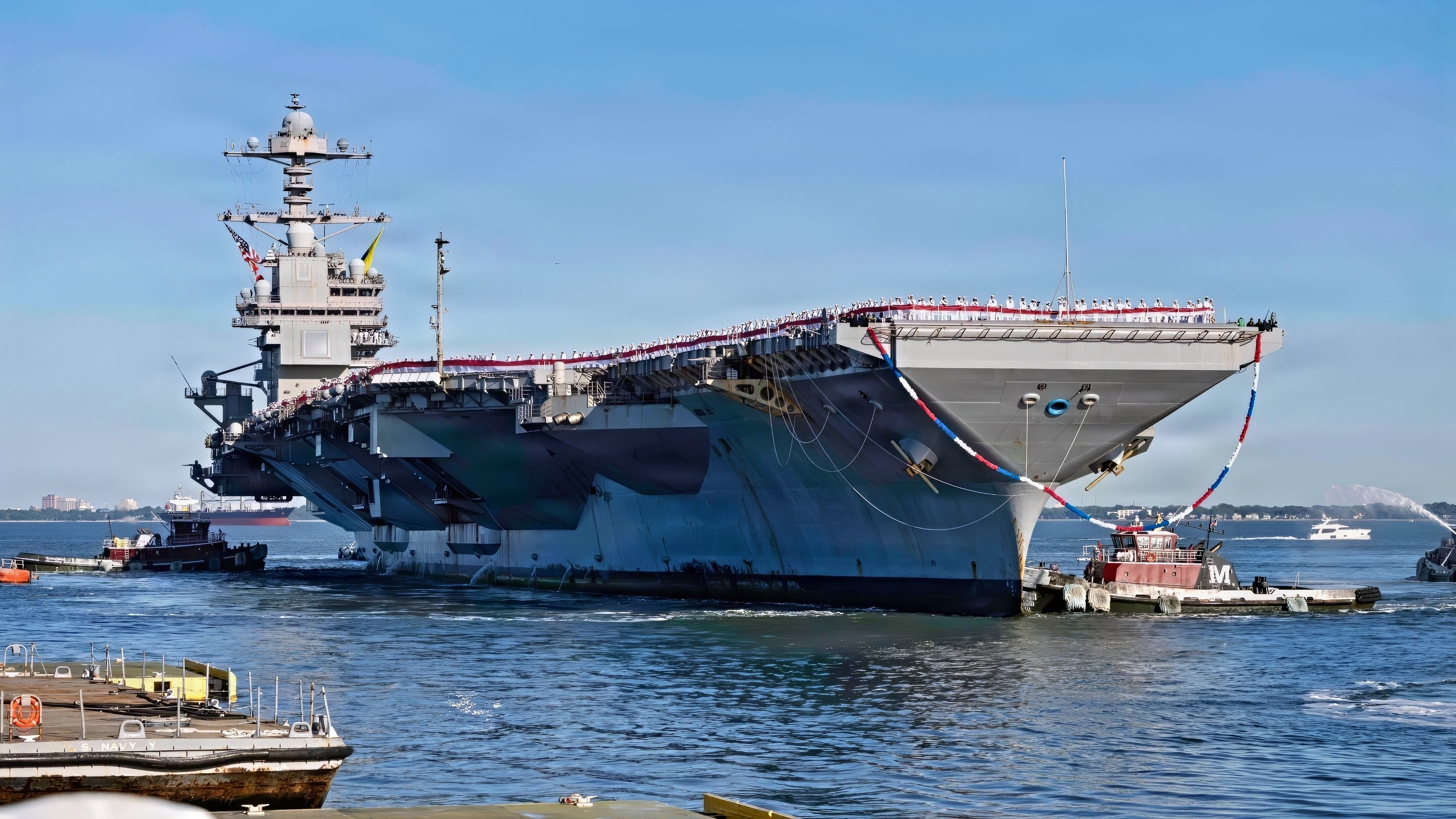
260516-N-EE423-1027 NORFOLK, Va. (May 16, 2026) – The world’s largest aircraft carrier, USS Gerald R. Ford (CVN 78), returns to Naval Station Norfolk, May 16, 2026, following a historic 11-month deployment to U.S. 2nd, 4th, 5th, and 6th Fleets as part of the Gerald R. Ford Carrier Strike Group. Before returning to Norfolk after 326 days, the Gerald R. Ford crew conducted 23 replenishments-at-sea, sailed over 57,713 nautical miles, and safely transferred 14 million gallons of fuel. Embarked Carrier Air Wing 8 logged more than 5,760 flight hours and 12,200 flight launches. (U.S. Navy photo by Mass Communication Specialist 1st Class Sophie Pinkham)
Sister ships are rarely identical.
Especially with construction times as slow as those of the CVN-78 class, each ensuing vessel incorporates lessons learned from its predecessor.
Sometimes this results in sub-classes (the ten ships of the Nimitz class are grouped into three distinct sub-classes), and sometimes just as an invisible set of incremental improvements over the period of construction. Problems with the first ship in a class are extremely common across naval history, sometimes leading to major modifications for the rest of the class.
In comparative historical terms, the Ford hasn’t exactly been rushed into operations. While the USS Ford’s first official deployment came in 2022, she entered service in 2018, meaning that builders now have a wealth of experience to draw on with respect to the ship’s performance.
The extensive trials revealed numerous problems with the ship’s design, many of which have been addressed in the construction of her first sister, the USS John F. Kennedy.
By comparison, the first deployment of USS Nimitz in a combat situation was in her fourth year in service, when she redeployed from the Mediterranean to the Indian Ocean in response to the Iranian Revolution.
Of course, fifty years is a difficult gap to bridge, as Navy procedures and Navy technology have changed dramatically. Nevertheless, early experience with Nimitz informed the construction and improvement of her sisters and half-sisters throughout the class’s lifespan.
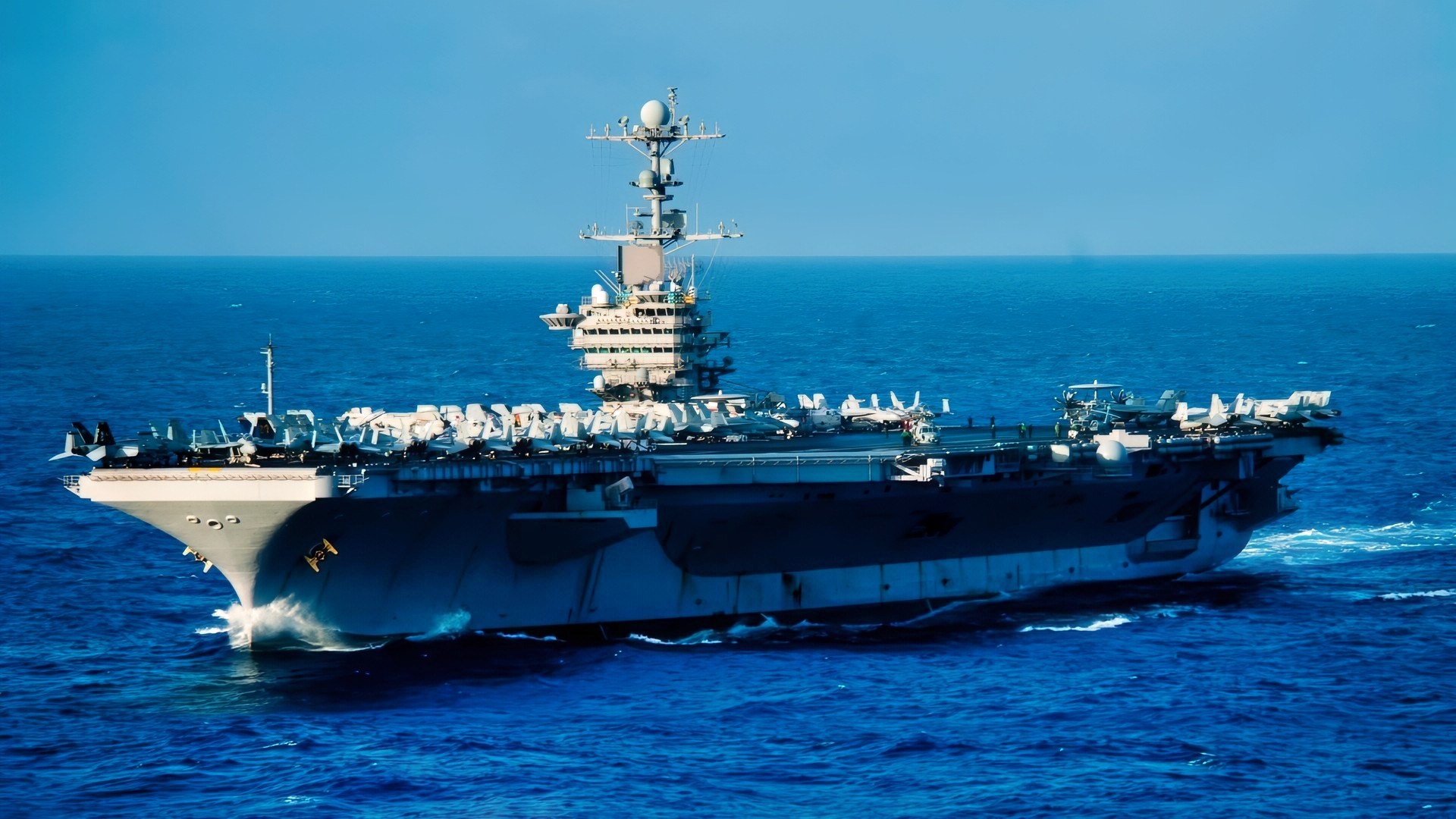
PACIFIC OCEAN (Feb. 9, 2012) The Nimitz-class aircraft carrier USS John C. Stennis (CVN 74) transits the Pacific Ocean. John C. Stennis is operating in the U.S. 7th Fleet area of responsibility while on a seven-month deployment. (U.S. Navy photo by Mass Communication Specialist 3rd Class Kenneth Abbate/Released)
U.S. Navy Shipbuilding
And yet it’s worth asking these questions because of the problems that have afflicted US Navy shipbuilding over the past three decades.
The failures of the Zumwalt-class destroyer, the Littoral Combat Ship, and, most recently, the Constellation-class frigate have bred appropriate skepticism about the Navy’s and the US shipbuilding industry’s ability to deliver effective warships.
And Ford has hardly been without problems. Well before any concerns with fires and habitability, CVN-78 suffered from difficulties with her catapults and weapon elevators, difficulties that were surmounted (or ameliorated) only with time and at great expense.
The fact that the CVN-78 class is supposed to provide the backbone of American naval power for the rest of the 21st century makes these concerns particularly acute.
The Ford-Class Problem?
Observers have drawn opposite conclusions about Ford’s difficulties over the past year.
On the one hand, it’s a bad look for the Navy when a laundry fire threatens to sideline the world’s most powerful (and most expensive) warship.
On the other hand, some have argued that the exhaustion evident at the end of CVN-78’s deployment indicates that the USN needs more aircraft carriers.
These arguments tend to devolve along well-known battlelines, with carrier skeptics falling into the former camp and carrier enthusiasts into the latter.
At the moment, notwithstanding President Trump’s fixation with his new class of battleships, it is likely that the Ford class will follow a historically “normal” life path; hard-won experience with the first ship will inform the construction of the second, which will inform the construction of the third, and so forth.
The expansion of digital and AI tools for design and construction will probably make this process smoother over time, although, as always, shipbuilding requires careful management of human capital and workforce expertise.
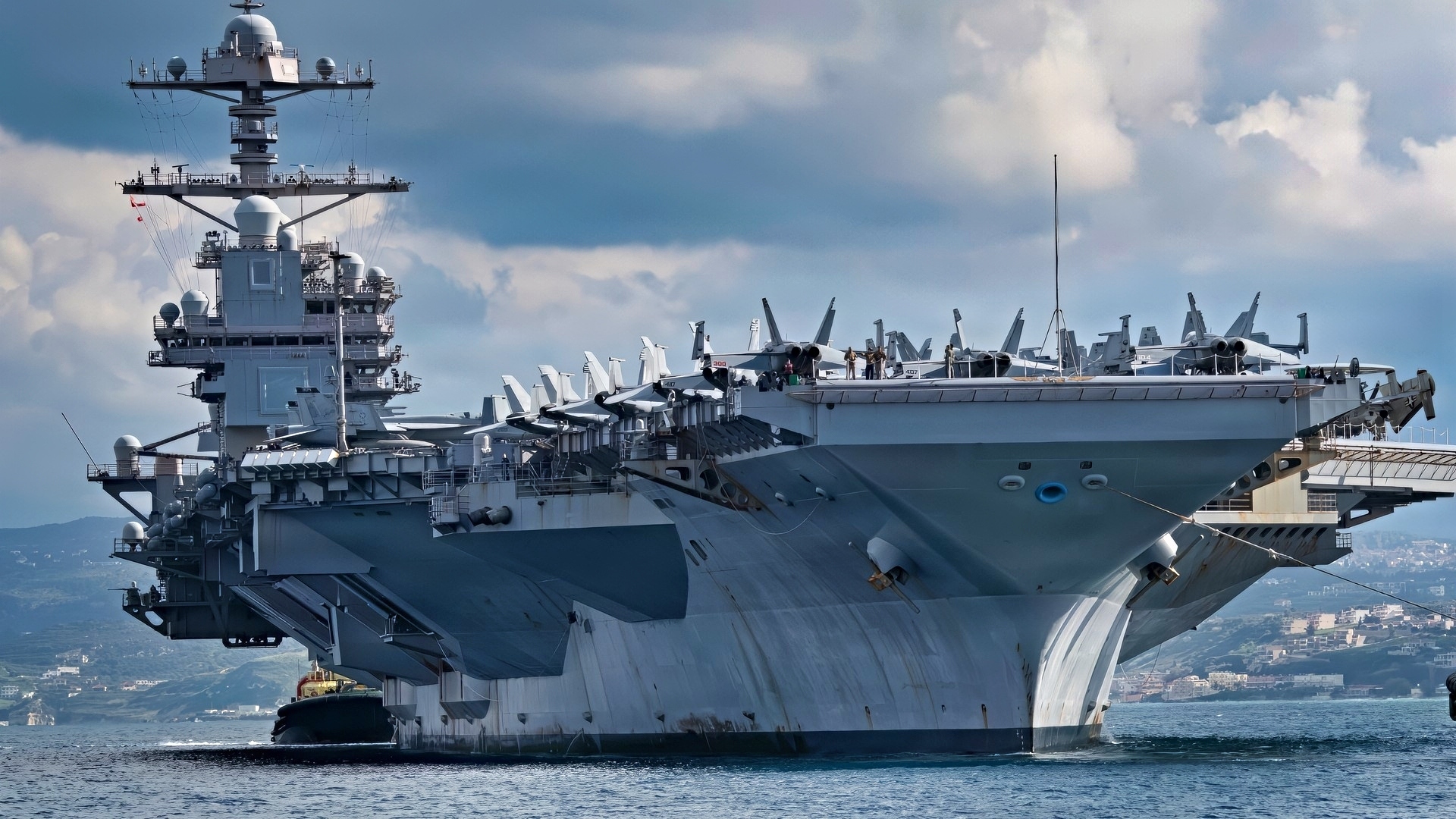
NAVAL SUPPORT ACTIVITY SOUDA BAY, Greece (Feb. 23, 2026) The world’s largest aircraft carrier, Ford-class aircraft carrier USS Gerald R. Ford (CVN 78) arrives at the NATO Marathi Pier Complex in Souda Bay, Crete, Greece, during a scheduled port visit on Feb. 23, 2026. NSA Souda Bay is an operational ashore installation that enables and supports U.S., Allied, Coalition, and partner nation forces to preserve security and stability in the European, African, and Central Command areas of responsibility. (U.S. Navy photo by Mass Communication Specialist 3rd Class Hannah Donahue)
The broader story of the Iran War remains to be told in full, but US aircraft carriers have performed more effectively than US fixed bases, suggesting that carriers will play a role in American power projection for the foreseeable future.
MORE – ‘She Can Shoot Down an F-22’: China’s J-20 Stealth Fighter Has Arrived
MORE – China’s J-35A Stealth Fighter Has a Message for the U.S. Air Force
About the Author: Robert Farley, PhD
Dr. Robert Farley has taught security and diplomacy courses at the Patterson School since 2005. He received his BS from the University of Oregon in 1997 and his Ph. D. from the University of Washington in 2004. Dr. Farley is the author of Grounded: The Case for Abolishing the United States Air Force (University Press of Kentucky, 2014), the Battleship Book (Wildside, 2016), Patents for Power: Intellectual Property Law and the Diffusion of Military Technology (University of Chicago, 2020), and most recently Waging War with Gold: National Security and the Finance Domain Across the Ages (Lynne Rienner, 2023). He has contributed extensively to a number of journals and magazines, including the National Interest, the Diplomat: APAC, World Politics Review, and the American Prospect. Dr. Farley is also a founder and senior editor of Lawyers, Guns, and Money.


