

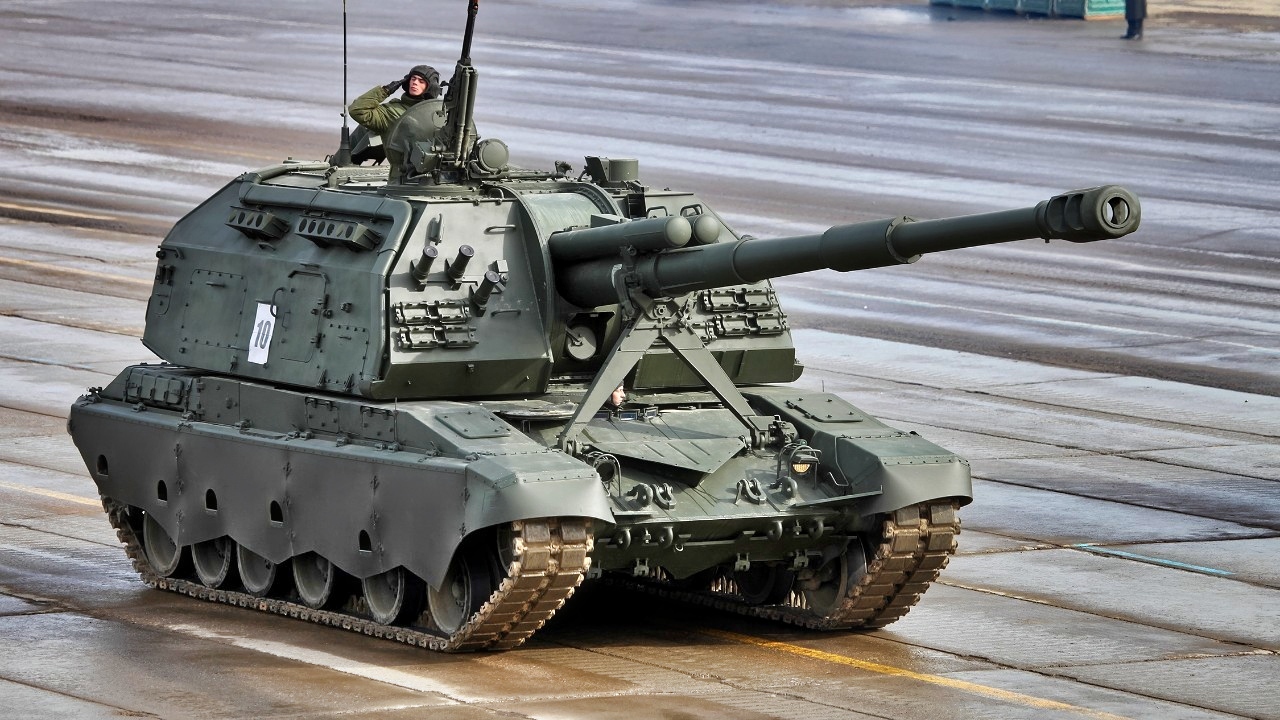
Ukrainian one-way attack drones have become Kyiv’s primary equalizer against Russia, accounting for roughly 80% of Russian battlefield casualties and striking oil and gas infrastructure as far as 2,000 kilometers from the front. About 70% of the Russian population now lives within range of Ukrainian drone attacks. A Gazpromneft refinery in southern Moscow has halted oil processing for fear of strikes. The Lukoil-Nizhegorodnefteorgsintez refinery at Kstovo — Russia’s fourth-largest by volume — has been hit. Repeated strikes on oil facilities at Tuapse have created what may be Russia’s most significant post-Cold War environmental disaster, with soot and oil falling from the sky. About 3% of Russia’s prewar male population has been killed or wounded.
Russia’s War in Ukraine Is Backfiring: The Oil Problem Putin Now Faces

Shahed Drone from Ukraine. Image Credit: Creative Commons.
With the Russian offensive in Ukraine seemingly stalled and the long-anticipated Russian spring offensive mired in mud and losses, for the first time in at least several years, Russian forces have ceded small but significant chunks of land to Ukrainian forces.
Though some analysts have suggested Russia may be biding its time ahead of a broader summer offensive, Russia’s losses in men are staggering: according to one analysis, about three percent of Russia’s pre-war male population has been killed or wounded in the fighting in Ukraine.
But battlefield dynamics aside, perhaps the biggest shift in the war’s course this year has been Ukraine’s one-way attack drones, which have taken center stage as Kyiv’s equalizer against Russian military sites as well as oil infrastructure, putting facilities around the country in flames and biting hard into Russia’s ability to finance and wage the war.
Ukrainian drone strikes within Russia proper have struck a number of oil and gas infrastructure sites deep within Russia, and some strikes close to Moscow.
One oil refinery in southern Moscow decided to stop processing oil products out of fear of a Ukrainian drone strike.
The refinery, owned by Gazpromneft, a Russian state-owned entity, processed 1.6 million metric tons of crude oil in 2024 and produced 2.9 million tons of gasoline, 3.2 million tons of diesel, and 1.3 million tons of bitumen, according to Reuters.
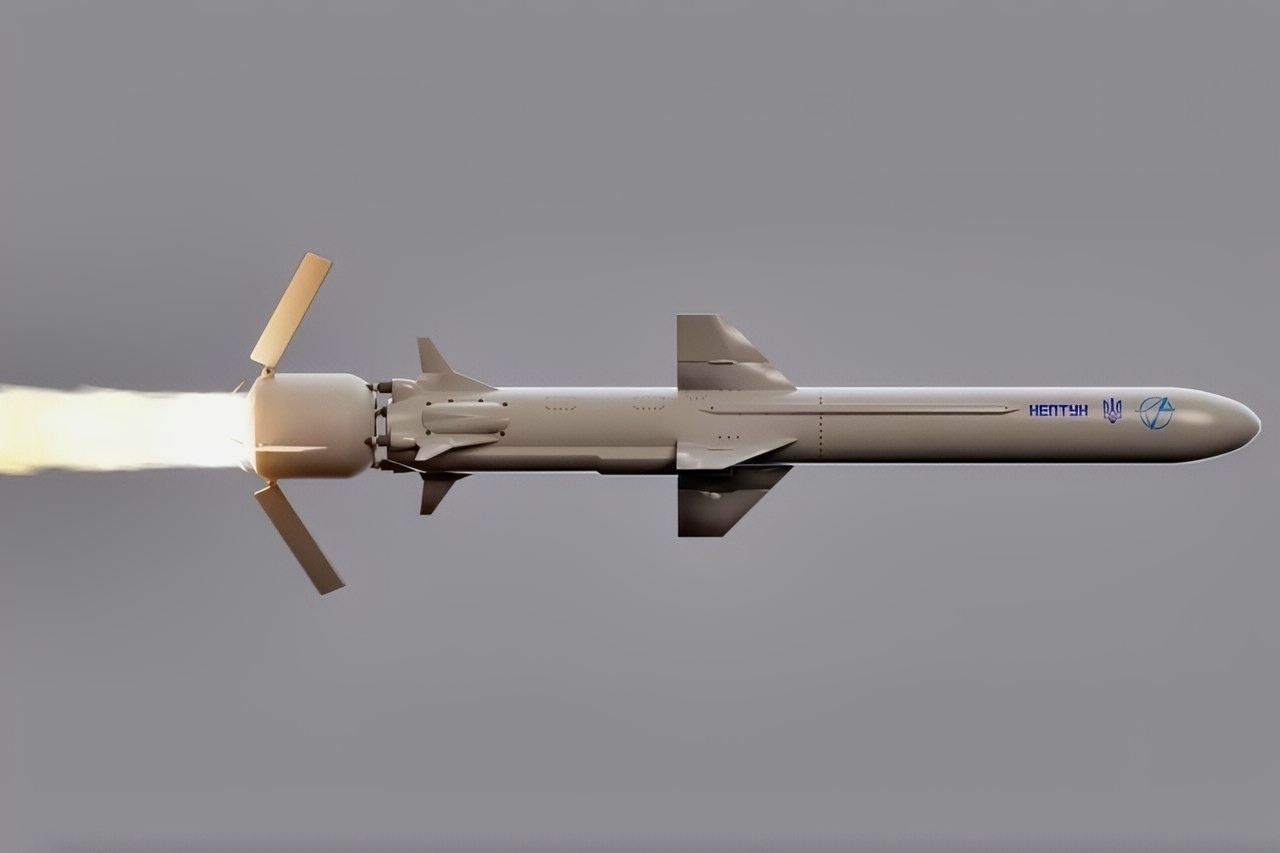
Neptune Missile. Image Credit: Government of Ukraine.
Another strike at Kstovo, in Russia’s Nizhny Novgorod region, targeted the Lukoil-Nizhegorodnefteorgsintez refinery, one of Russia’s largest oil refineries.
According to some estimates, around 5% of Russian oil is processed at the Lukoil-Nizhegorodnefteorgsintez refinery, making it Russia’s fourth-largest by volume.
Russia has struggled to control blazes that erupted after a series of repeated Ukrainian strikes against oil infrastructure at Tuapse.
Local residents have posted photos and videos to social media showing soot and oil falling from the sky, in what is likely one of Russia’s most significant post-Cold War environmental disasters.
The Mid-Range
Ukraine’s strikes against Russian oil and gas infrastructure deep within Russia have forced a redeployment of Russian air defenses from areas protecting the front to positions much farther back within Russia itself.
Arrayed around high-value areas, including oil and gas infrastructure sites, Russia’s air defense density near the front has fallen.
At the “mid-range,” or from about 20 to 110 miles behind the front lines, Ukraine has enjoyed success in striking air defense infrastructure, logistics and medical hubs, radar installations, and communications assets.
But both long- and mid-range strikes have complemented each other, opening up opportunities that would not otherwise be possible and helping greatly blunt the Russian spring push — so much so that the push is widely seen as a flop.
Russia is thought to no longer be able to replace its killed and wounded with fresh recruitments, despite offering large, life-changing sign-up bonuses for newly signed soldiers.

Ukraine Switchblade Drone. Image Credit: Creative Commons.
Perhaps as many as eighty percent of Russian casualties are caused by Ukrainian FPV drones. Strapped with a small explosives package, these drones hunt down groups of soldiers but also vehicles, particularly those in relatively close proximity to the front, disrupting Russian logistic chains that feed the front with everything from weapons and ammunition to food and fuel.
Further Ranges
With some Ukrainian drone attacks occurring as far as 2,000 kilometers away from the front, possibly as much as seventy percent of the Russian population lives within range of Ukrainian drone attacks.
Though it surely would not be enough to turn the tide of the war on its own, it is a tall psychological blow.
The sheer size of Russia — the largest country in the world — and Ukraine’s close proximity to Russia make protecting the entire country, or better yet, all of Russia’s important political and oil infrastructure sites, a near-impossibility.
Further complicating the picture for Russia are the advancements Ukraine has made in developing counter-drone interceptors, which can cheaply and reliably take down Russia’s Shahed one-way attack drones.
Russia has been slow to develop its own interceptors, which has contributed to recent Ukrainian strike successes.

Su-34 Fullback. Creator: Vitaly V. Kuzmin. Credit: Vitaly V. Kuzmin
Into the Future
Though the Russian economy is certainly feeling a squeeze and Russian commanders are under pressure on the battlefield, momentum is clearly with Ukraine.
But exerting sustained pressure on the Russian economy will be difficult, in part because of the ongoing war in Iran and the closure of the Strait of Hormuz, which have buoyed global oil prices.
Time will tell what the ultimate outcome of Ukraine’s strike push is — and if Russia is holding forces and equipment back for a wider, more coordinated summer push.
MORE – ‘She Can Shoot Down an F-22’: China’s J-20 Stealth Fighter Has Arrived
MORE – China’s J-35A Stealth Fighter Has a Message for the U.S. Air Force
About the Author: Caleb Larson
Caleb Larson is an American multiformat journalist based in Berlin, Germany. His work covers the intersection of conflict and society, focusing on American foreign policy and European security. He has reported from Germany, Russia, and the United States. Most recently, he covered the war in Ukraine, reporting extensively on the shifting battle lines in Donbas and writing about the war’s civilian and humanitarian toll. Previously, he worked as a Defense Reporter for POLITICO Europe. You can follow his latest work on X.


geh-geh
May 20, 2026 at 10:26 pm
Question: Why did US vote chuanpu president in 2016.
Answer: His opponent was hillary Clinton, the democrat neocon warmonger who would have quickly initiated ww3 against russia, had the US public voted her the 45th US president.
Now, the saga has come full circle. Chuanpu is the president again, and on russia and the subject of ww3, chuanpu prefers to blow hot and cold.
Right now, chuanpu dreams of strangling iran’s scrawny neck, but efforts made so far have brought little success.
That doesn’t mean russia is no longer on the ww3 menu. It still is, but chuanpu and his associates prefer to let the ukro nazis handle the dirty job. For now.
But is putin privvy to all that. No, not at all. Putin is a fool, a very big big fool.
AWAY WITH PUTIN.
megiddo
May 22, 2026 at 1:01 am
Putin must go, just go anywhere, go somewhere, and let or allow Russia to enjoy victory.
Victory over the Nazis & their supporters.
The US state dept has just approved a $100 million sale of Hawk missiles to the nazis.
Whatcha waitin’ for, Moscow !
Swamplaw Yankee
May 22, 2026 at 1:17 pm
The USA facilitated the Balkanization of Independent Ukraine with its highly intelligent POTUS Barry Obama decision of February 6th, 2014 capitulation to vassal Kremlin Muscovy Putin.
By not taking ownership of this 2014 decision in 2026, MAGA POTUS Trump has self-abdicated any legitimate role in his self declared war to covertly, unilaterally hand over 50 Trillion in USD of Ukrainian mineral, industrial, agricultural + human resources to the prime COLD WAR enemy of the USA.
If MAGA Trump refuses to use WW Xi as a semantic concept, then no worries. The more Trump denies that World War Xi exists, the more Han Intelligence can out bite the US military ass in the 3 theatres that WW Xi has kinetically active against the USA.
The Kremlin Muscovy NAZI marriage grandchildren are not Russia.
The map is not territory!