

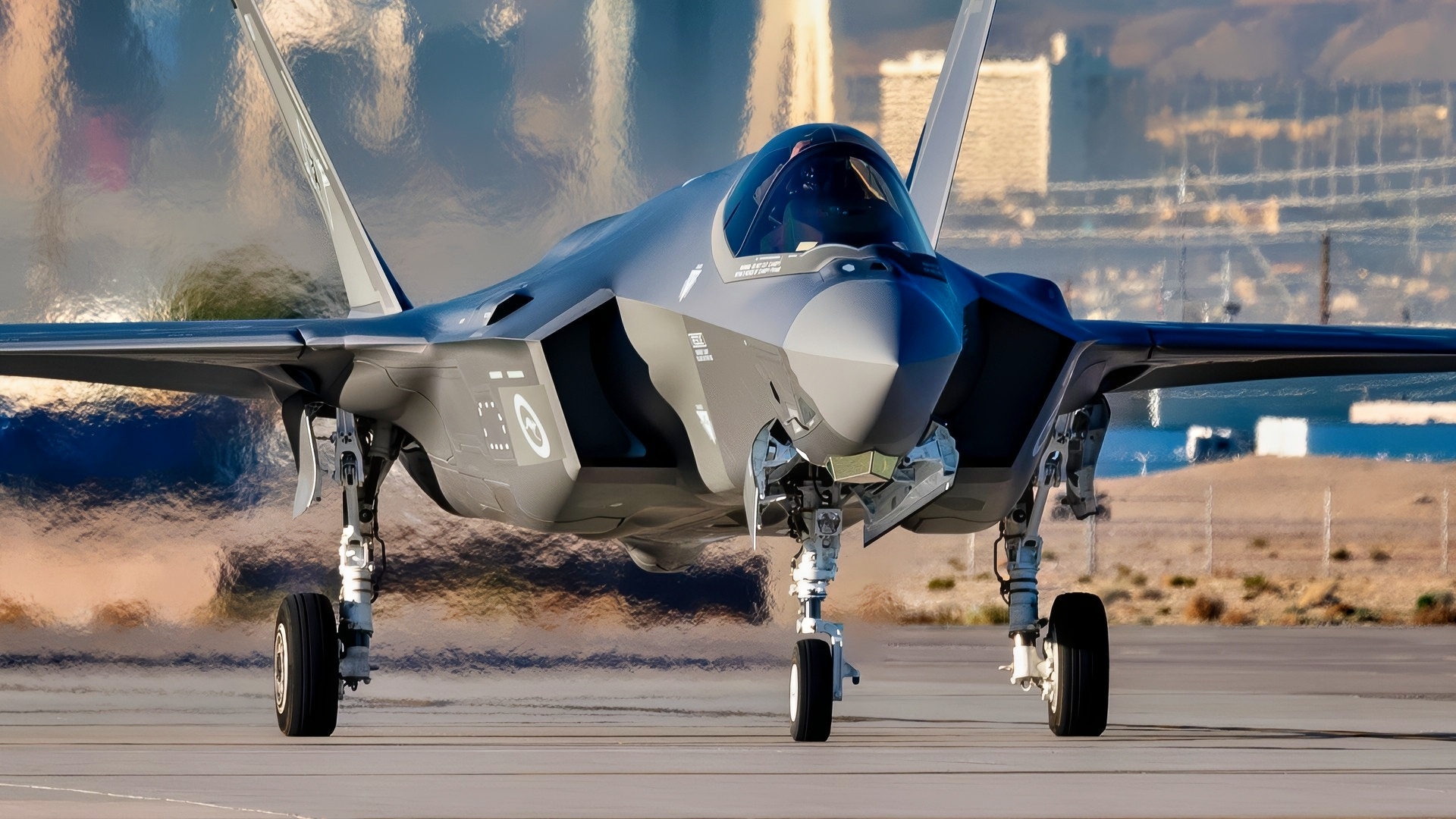
The F-35A Lightning II has been certified as a Dual-Capable Aircraft, allowing it to deliver both conventional and thermonuclear weapons. It is the first fifth-generation stealth fighter ever certified for the nuclear mission and the first tactical fighter to receive the designation since the early 1990s. The F-35A can carry two B61-12 thermonuclear bombs internally, preserving its stealth profile. The B61-12 features a Boeing guidance tail kit, inertial navigation, and a variable yield from 0.3 to 50 kilotons. The aircraft uses an isolated Nuclear Aircraft Monitoring and Control system. The U.S. stores B61 bombs across the Netherlands, Germany, Belgium, Italy, and the United Kingdom.
The F-35A Is a Nuclear Bomber

A U.S. Air Force F-35A Lightning II assigned to the 56th Fighter Wing, Luke Air Force Base, Arizona, performs a strafing run during Haboob Havoc, April 24, 2024, over Barry M. Goldwater Range, Arizona. Haboob Havoc is a total force exercise that provides a way for pilots from various bases to demonstrate their skills across a diverse range of aircraft, including F-35 Lightning IIs, F-16 Fighting Falcons, and A-10 Thunderbolt IIs, while also testing their abilities in different mission sets such as dogfighting and gun runs. (U.S. Air Force photo by Airman 1st Class Mason Hargrove)
The F-35A Lightning II is officially certified as a Dual-Capable Aircraft (DCA), a designation that allows it to perform both conventional strike and thermonuclear delivery missions.
The certification is historic; the F-35A is the first fifth-generation stealth fighter ever certified for the nuclear mission, and the first tactical fighter to receive the certification since the early 1990s.
Beyond its history, the designation is significant, marking the merger of stealth, precision-guided munitions, and tactical nuclear capabilities.
Stealth Nukes
Previous tactical nuclear models include the F-16, F-15E, and Tornado.

The 187th Fighter Wing unveiled the new Alabama Air National Guard’s F-35 Lightning II fighter jet during an event at Dannelly Field, Alabama, today. The red tails are a historic tribute to the Tuskegee Red Tails, the famed WWII squadron, which lives on as the 100th Fighter Squadron within the wing. “The red tail you will see is a reminder to all that through excellence we will overcome any obstacle and threat regardless of gender, race, or religion, “ said Col. Brian Vaughn, the wing’s commander, during the ceremony. “We are all here for the same mission: to protect our nation, defend our constitution, and to form a more perfect union as the Tuskegee Airmen did.” (U.S. Air Force photo by Tech. Sgt. William Blankenship)
But all of these aircraft were non-stealth, fourth-generation platforms that became increasingly vulnerable as air defense systems improved.
The F-35A, meanwhile, is a stealthy fifth-generation platform that can be configured to carry two B61-12 bombs internally.
Without external pylons, the F-35A can preserve its low radar cross-section and low observable profile.
The result is that the aircraft can penetrate heavily defended airspace—while carrying nuclear weapons.
The B61-12 is derived from older variants of the B61, which were “dumb” gravity bombs that required the delivering aircraft to fly directly over a target.
The B61-12 modernization included a Boeing guidance tail kit and INS (inertial navigation system).
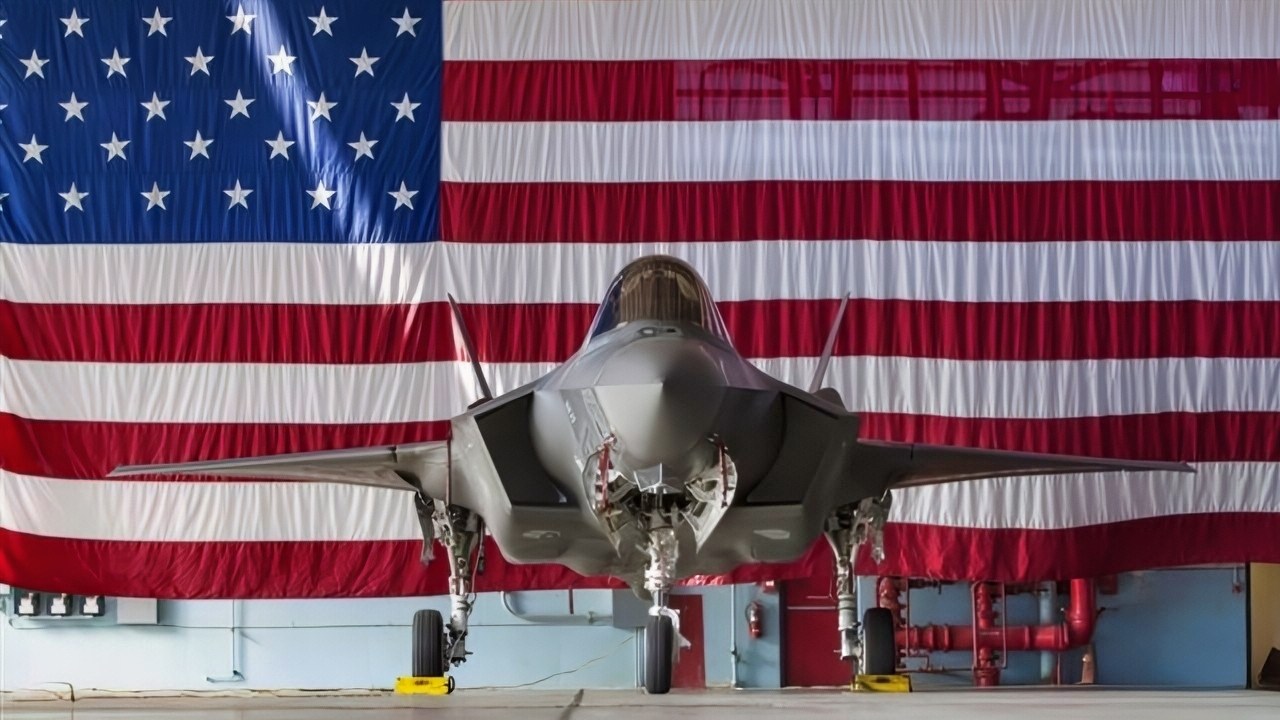
F-35 Fighter Image by Lockheed Martin

An F-35 Lightning II assigned to the 56th Fighter Wing performs a strafing run during exercise Haboob Havoc, April 26, 2023, over Barry M. Goldwater Range, Ariz. Haboob Havoc is a total force competition enabling pilots from various bases to demonstrate their skills across a diverse range of aircraft while also testing their abilities in different mission sets such as dogfighting and gun-runs. (U.S. Air Force photo by Airman 1st Class Mason Hargrove)
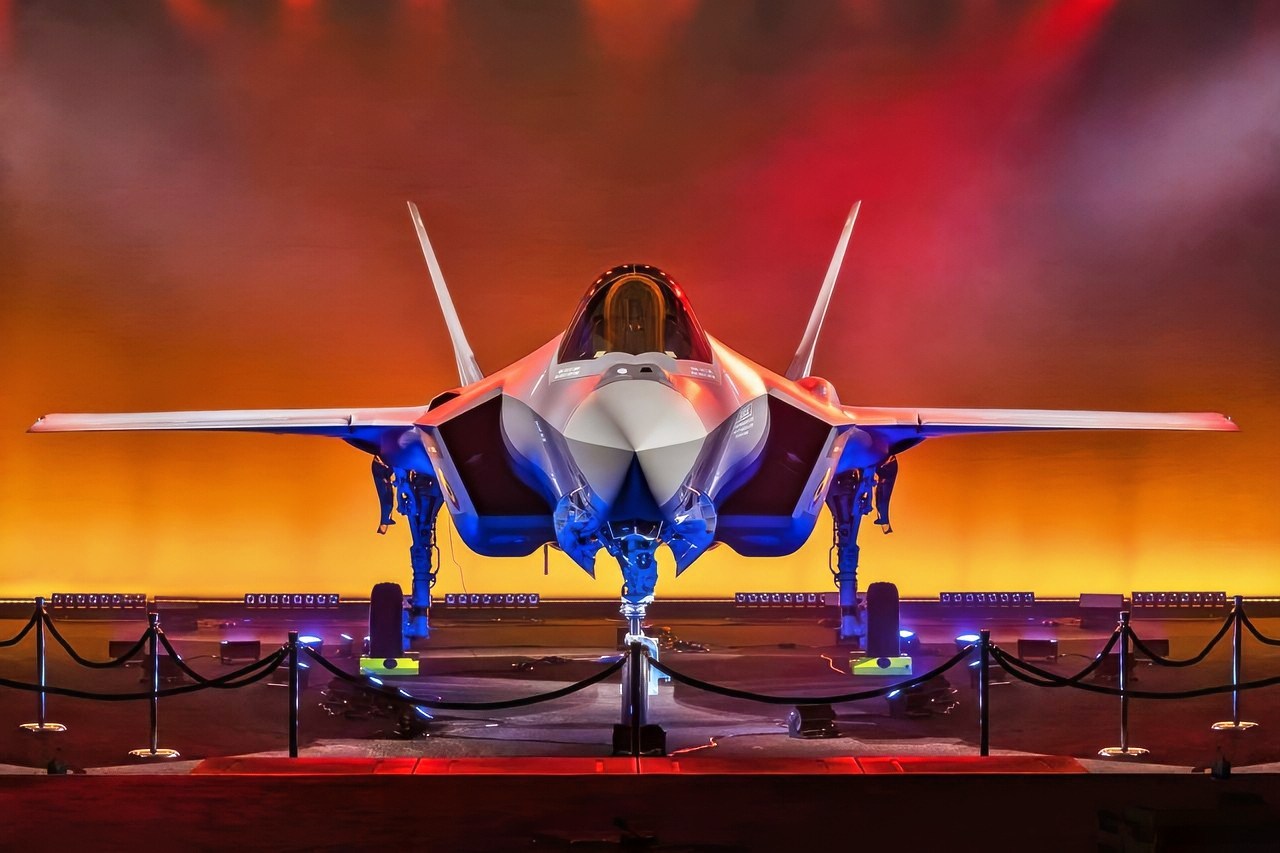
F-35 Fighter in Belgium. Image Credit: Creative Commons.
The effect is that the bomb can glide toward the target with modest standoff capability.
The B61-12 also features a variable yield, or “dial-a-yield,” with selectable outputs from 0.3 kilotons up to 50 kilotons.
The result here is that the B61-12 offers improved accuracy (which reduces the required yield), lowers collateral damage, and reduces localized fallout—at least in theory.
Making Dual-Capable Work
The DCA designation isn’t as simple as bolting a nuclear bomb under the wing.
The F-35A has a dedicated nuclear architecture, specifically a physically isolated nuclear data bus.
This prevents conventional systems, EW signals, or software errors from interacting with nuclear systems.
Known as the AMAC, or Nuclear Aircraft Monitoring and Control system, this program acts as a gatekeeper; it is the only system allowed to power, monitor, or issue release commands for the nuclear payload.
The jet also features grounding firewalls that block stray voltage. The point is that the DCA-certified F-35A features a protected mini-network that is entirely separate from the jet’s normal systems.
Further, the F-35A pilot cannot simply press weapons release on the nuclear payload.
Instead, an Emergency Action Message (EAM) code is received from the National Command Authority; the pilot then enters the highly classified authorization code, and then the B61 unlocks internally. But the aircraft does not permanently store the authorization codes.
So, essentially, the F-35A acts more as a secure conduit than as an independent nuclear release platform.
NATO Sharing Implications
Under the Cold War system, the US stores B61 bombs across Europe.
This arrangement allows the US to retain custody and control of the nukes, but allied pilots could potentially execute nuclear missions. European countries involved include the Netherlands, Germany, Belgium, Italy, and the United Kingdom.
This extends the US’s nuclear-sharing program for possibly decades to come.
The arrangement with NATO is, of course, a problem for Russia; NATO stealth aircraft equipped with nuclear weapons reduce warning time and potentially force an increased investment in VHF radars and counter-stealth systems.
The F-35A’s dual-capable status also creates ambiguity, as an approaching F-35 formation can represent either a conventional strike or a nuclear strike.
Adversaries like China or Russia may be inclined to assume the worst-case scenario, raising the risk of preemptive decisions and escalation.
Oddly, the same ambiguity that can increase deterrence can also increase the risk of escalation.
The F-35A’s nuclear certification represents more than just an aircraft modernization—it changes deterrence calculations, alliance structures, and escalation dynamics. It represents a shift from the Cold War model of dependence on strategic bombers, like the B-52 and B-2, to execute the nuclear mission.
These platforms were large and relatively predictable. But stealth fighters like the F-35A are harder to track—and as a dual-use platform that blends conventional and nuclear roles, much harder to predict.
This uncertainty becomes a strategic tool that can potentially strengthen deterrence but also complicates adversary decision-making and raises the risk of misinterpretation during crises.
About the Author: Harrison Kass
Harrison Kass is a writer and attorney focused on national security, technology, and political culture. His work has appeared in City Journal, The Hill, Quillette, The Spectator, and The Cipher Brief. He holds a JD from the University of Oregon and a master’s in Global & Joint Program Studies from NYU. More at harrisonkass.com.


megiddo
May 22, 2026 at 5:09 pm
The F-35A is, or was designed for, What else but ww3.
The coming ww3 will be fought with nukes, with generals and admirals hurling nukes as though their hurling nukes just the same as santa hurling sweets at kids standing at street corners.
So, exactly where, can ww3 break out, tomorrow.
There places, three places where uncle sam has been very busy supplying weapons and ammo.
The first place is ukraine, followed by the mide east, and then the far east.
The next world war, ww3, will be the final great handiwork of uncle sam after the 1773 tea party which history has been its first one.
Doyle
May 23, 2026 at 10:12 am
The F-35 was designed to win wars.
Your hot spots are all caused by totalitarian/terrorist regimes and not the US. WW III will only happen when Uncle Sam drops his guard and the dictators believe they can win….nothing more nothing less.
Doyle
May 23, 2026 at 10:10 am
The F-35 was nuclear certified back in late 2023….