

The U.S. Navy’s FY2027 shipbuilding plan strongly signals that the Trump-class nuclear-powered battleship has effectively superseded the DDG(X) destroyer program. The Navy had planned to begin DDG(X) procurement around FY2028 to replace the Arleigh Burke-class and assume roles once held by the retired Ticonderoga-class cruisers. In its plan, the Navy now states that DDG(X) made undesirable capability and weapon system compromises, while the nuclear-powered BBG(X) Trump-class — at 30,000 to 40,000 tons displacement, using the same A1B reactor as the Ford-class carriers — provides the most comprehensive capability a surface combatant can provide. The Navy wants 15 Trump-class ships by 2056 at roughly $17 billion each.
Will the Trump-Class Kill the DDG(X)?

Trump-Class Battleship. Image Credit: White House.
The chances of the U.S. Navy’s DDG(X) next-generation destroyer program ever becoming a reality keep getting slimmer, as the service shifts its attention (and funding) toward the far larger and more ambitious Trump-class guided-missile battleship program. There have been no official announcements yet, but the details found within the FY2027 30-year shipbuilding plan and related budget documents strongly suggest the Navy no longer sees DDG(X) as its future flagship combatant program.
What the DDG(X) Is
The DDG(X) program had originally been intended to replace the aging Arleigh Burke-class destroyers and eventually assume many of the roles once performed by the retired Ticonderoga-class cruisers.
The Navy first began seriously discussing the concept years ago after acknowledging that the Burke hull was approaching the limits of its available space, cooling, and power-generation capacity.

Arleigh Burke-class guided-missile destroyer USS Michael Murphy (DDG 112) sails alongside Nimitz-class aircraft carrier USS Abraham Lincoln (CVN 72) on Dec. 8, 2025. USS Abraham Lincoln (CVN 72), flagship of the Abraham Lincoln Carrier Strike Group, is underway conducting routine operations in the U.S. 7th Fleet area of operations, demonstrating the U.S. Navy’s long-term commitment to a free and open Indo-Pacific. (U.S. Navy photo by Mass Communication Specialist 3rd Class Nathaly Cruz)

Arleigh Burke-Class. Image Credit: Creative Commons.
The service repeatedly argued that it needed a larger, more adaptable warship capable of supporting future systems such as high-energy lasers, hypersonic weapons, larger radars, and expanded missile capacity.
Unlike the Burke class, which first entered service in 1991, before the Soviet Union collapsed, DDG(X) was specifically designed with future growth in mind. Navy planning documents described a larger hull with an Integrated Power System architecture, derived in part from technologies developed for the Zumwalt-class destroyer program.
The ship was expected to carry the SPY-6 radar family already entering service on Flight III Burkes while providing substantially greater electrical generation and cooling capacity for future weapons systems.
The Navy had originally hoped to begin procurement of DDG(X) around FY2028.
But despite years of studies and concept work, the program has not progressed to a finalized acquisition strategy, and there has been no detailed procurement timeline. Budget documents as recently as FY2026 still stated that a “formal acquisition strategy for DDG(X) is still being developed.” Now, though, the Navy appears to be moving in an entirely new direction.
The Trump-Class
The Trump-class battleship, formally designated BBG(X), was announced by President Donald Trump in December 2025 as part of the administration’s broader “Golden Fleet” naval expansion initiative.
The proposed warship is dramatically larger than DDG(X), with estimates placing its displacement between 30,000 and 40,000 tons, potentially making it the largest American surface combatant built since World War II, aside from aircraft carriers.

(Aug. 22, 2023) Gunner’s Mate 2nd Class Chase Allen maintains the barrel of a Mark 45 5-inch light-weight gun on the fo’c’sle of the Arleigh Burke-class guided-missile destroyer USS Paul Hamilton (DDG 60) in the Pacific Ocean, Aug. 22, 2023. Paul Hamilton is deployed to the U.S. 3rd Fleet area of operations. (U.S. Navy photo by Mass Communication Specialist 2nd Class Elliot Schaudt)
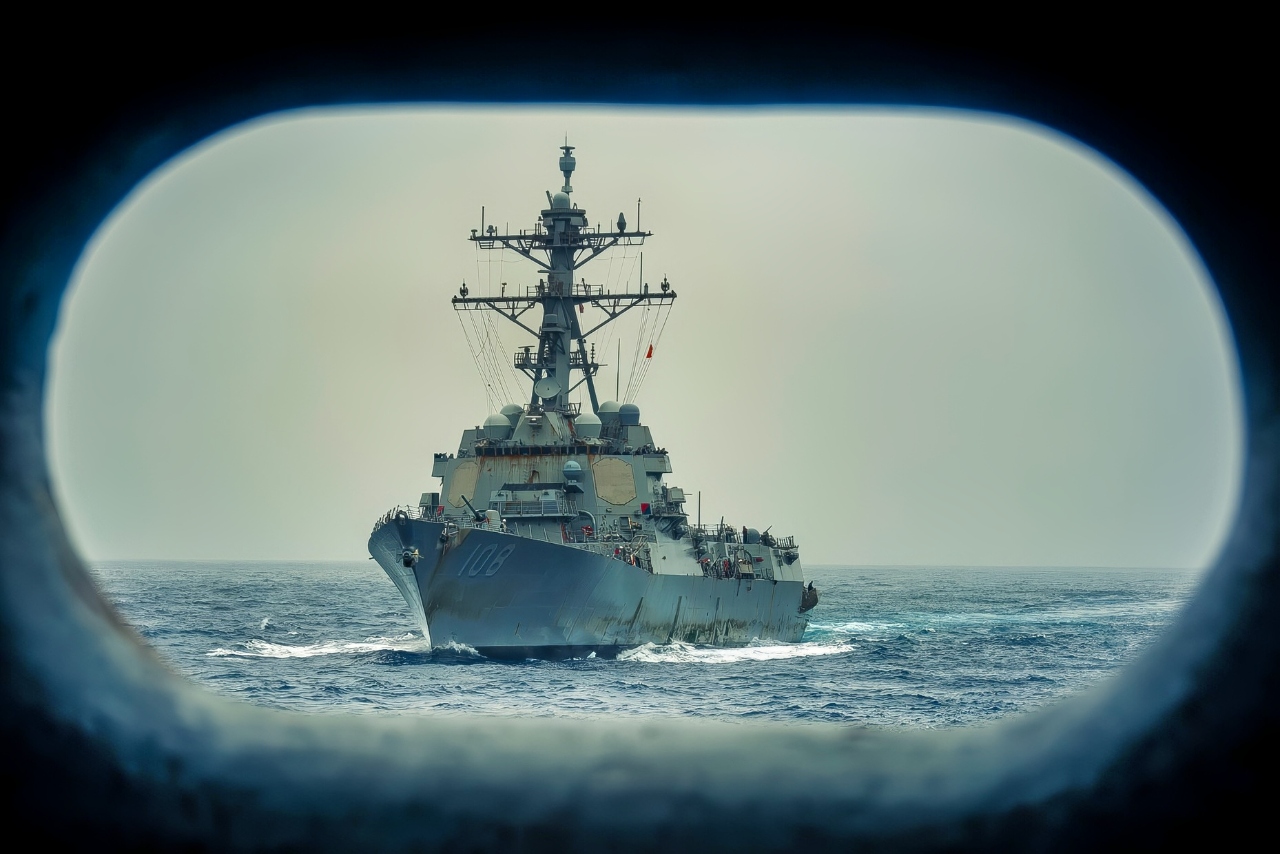
(August 1, 2025) The Arleigh Burke-class guided-missile destroyer USS Wayne E. Meyer (DDG 108) approaches the Nimitz-class aircraft carrier USS Nimitz (CVN 68) for a replenishment-at-sea in the U.S. Central Command area of responsibility. (Official U.S. Navy photo)
The battleship program, though politically sensitive and potentially at risk if the Democrats win the next presidential election, is evolving from what initially seemed a political branding exercise into a very serious Navy procurement effort.
The FY2027 shipbuilding plan revealed that the Navy intends for the Trump-class to be nuclear-powered, using the same A1B reactor employed aboard the Ford-class aircraft carriers. The service now wants as many as 15 Trump-class ships by 2056, while the first vessel alone is expected to cost more than $17 billion.
More importantly, the Navy’s own language in the shipbuilding plan strongly implied that the Trump class has superseded DDG(X) internally.
In one of the document’s most revealing sections, the Navy stated that “even the planned DDG(X) program made undesirable capability and weapon system compromises,” before arguing that the new nuclear-powered battleship would provide “the most comprehensive capability a surface combatant can provide.”
“The nuclear-powered Battleship is designed to provide the Fleet with a significant increase in combat power by longer endurance, higher speed, and accommodating advanced weapon systems required for modern warfare,” the shipbuilding plan also reads.
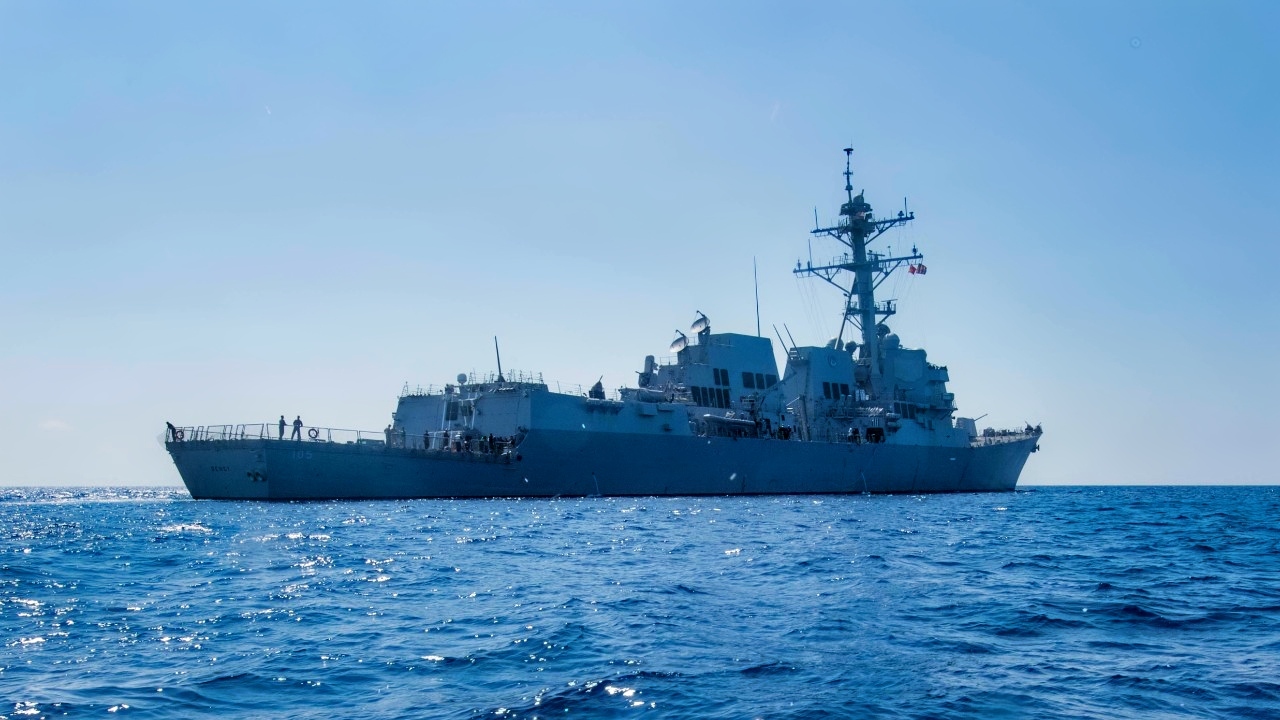
(May 6, 2017)
Arleigh Burke-class guided-missile destroyer USS Dewey (DDG 105) transits the South China Sea. Dewey is part of the Sterett-Dewey Surface Action Group and is the third deploying group operating under the command and control construct called 3rd Fleet Forward. The U.S. 3rd Fleet operating forward offers additional options to the Pacific Fleet commander by leveraging the capabilities of 3rd and 7th Fleets. (U.S. Navy Photo By Mass Communication Specialist 3rd Class Kryzentia Weiermann/ Released)
That wording is drawing analysts’ attention because DDG(X) is barely referenced elsewhere in the plan.
Instead, the Navy continues to reference Arleigh Burke production while also heavily pushing the Trump-class program as the centerpiece of future surface warfare planning.
The implication, then, seems to be that the Navy cannot afford both programs simultaneously – and may not need both of them, anyway.
Shipbuilding Under Strain
American shipbuilding is already under enormous strain. The Navy is struggling with submarine production delays, carrier construction bottlenecks, workforce shortages, maintenance backlogs, and rising procurement costs across nearly every major platform.
The service continues to face major delays in the Virginia-class submarine program while simultaneously attempting to build Columbia-class ballistic missile submarines and Ford-class aircraft carriers. And it is in that context that DDG(X) looks increasingly uncertain.
Why the Navy Wants the Trump-Class
What makes the Trump-class fundamentally different from DDG(X) is that the Navy does not appear to view it as merely another destroyer or cruiser replacement.
Instead, the ship is increasingly being described as a modern capital ship – the most heavily armed ship of a fleet – intended to serve as the centerpiece of future naval strike groups in the same way battleships once anchored fleets during the 20th century.
The difference, however, is that it will be updated for missile warfare, hypersonic combat, and future directed-energy systems.
Unlike DDG(X), which was still constrained by the realities of fitting advanced systems onto a conventionally powered destroyer-sized hull, the Trump-class is intended to remove many of those limitations entirely.
The Navy’s FY2027 shipbuilding plan specifically references the ship’s nuclear propulsion, enormous size, and significantly expanded power generation capacity that will support future weapons systems.
The use of the Ford-class A1B nuclear reactor is especially important because it produces more electrical power than existing Burke destroyers, allowing the ship to support future high-energy lasers, advanced radar systems, electronic warfare suites, and potentially railguns or other energy-intensive weapons that smaller ships would struggle to operate effectively.
The Trump class is also expected to carry far more missiles than DDG(X), with naval analysts widely expecting a very large vertical launch system battery intended for sustained missile warfare in the Pacific against China.
That matters because recent conflicts and war games have repeatedly demonstrated how quickly modern naval forces can burn through missile inventories during high-intensity combat.
The Navy increasingly appears to want a surface combatant capable of operating as a heavily armed missile-armed ship while simultaneously functioning as an air-defense node, strike platform, command ship, and escort for carrier groups.
In many ways, the Trump-class appears to be reviving the original strategic logic behind battleships themselves – specifically, the massive survivability and sustained firepower, long endurance, and the ability to dominate large sections of ocean during wartime.
About the Author: Jack Buckby
Jack Buckby is a British researcher and analyst specializing in defense and national security, based in New York. His work focuses on military capability, procurement, and strategic competition, producing and editing analysis for policy and defense audiences. He brings extensive editorial experience, with a career output spanning over 1,000 articles at 19FortyFive and National Security Journal, and has previously authored books and papers on extremism and deradicalization.


