

Chief of Naval Operations Admiral Daryl Caudle acknowledged this month that American shipyards are unlikely to consistently achieve the U.S. Navy’s target of two Virginia-class submarines per year until the early 2030s. The Virginia-class — built jointly by General Dynamics Electric Boat and HII Newport News Shipbuilding since 2004 — is now in its fifth production block. Block V introduced the Virginia Payload Module, an 84-foot hull extension that tripled Tomahawk capacity from roughly 12 missiles to 40. The class uses an S9G nuclear reactor designed to last each boat’s entire service life, photonics masts in place of optical periscopes, and dedicated lockout chambers for Navy SEAL operations.
The U.S. Navy’s Virginia-Class Submarine Is A Powerhouse
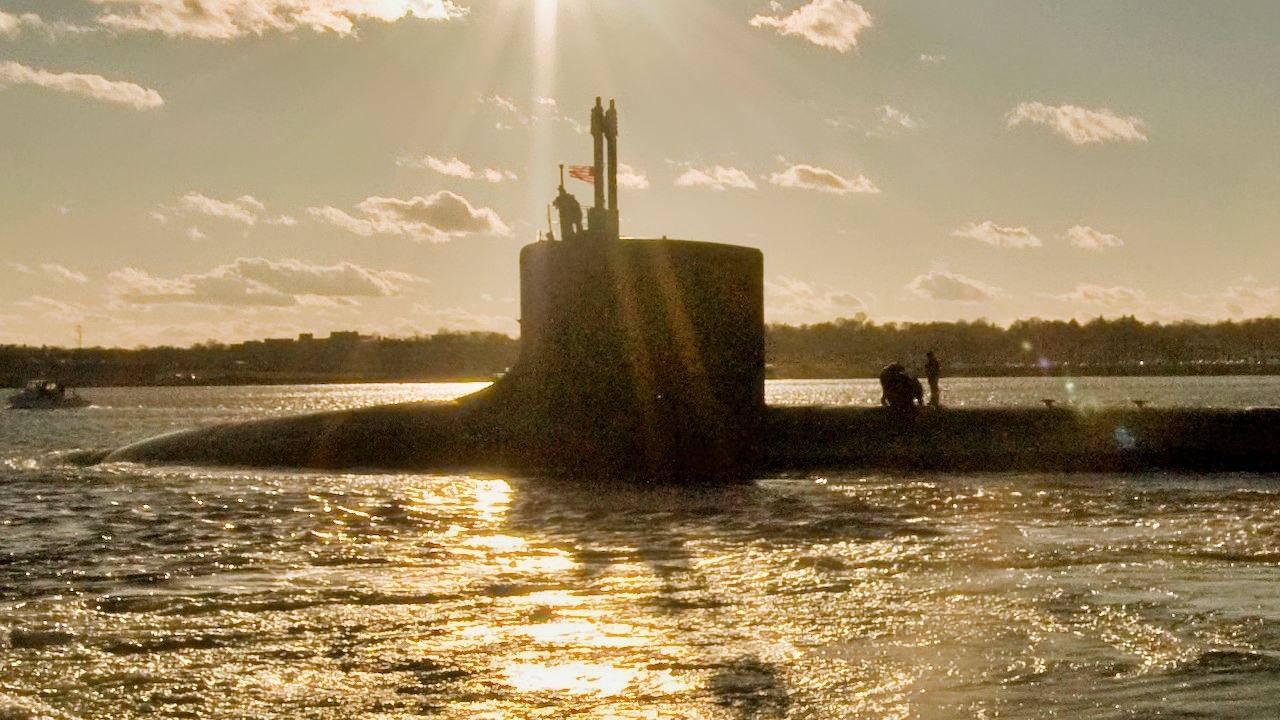
The Virginia-class attack submarine USS Virginia departs for a six-week underway. During this deployment, Virginia will undergo an Operational Reactor Safeguard Examination and a Tactical Readiness Evaluation to assess the submarine’s reactor along with its capacity to combat casualties through damage control.
The U.S. Navy is still struggling to build Virginia-class submarines fast enough to meet demand. Earlier this month, Chief of Naval Operations Adm. Daryl Caudle acknowledged that American shipbuilders are unlikely to consistently achieve the Navy’s desired production rate of two Virginia-class submarines per year until the early 2030s. It is the result of sustained industrial pressure on one of the Pentagon’s most important weapons programs.
But despite rising costs, workforce shortages, supplier bottlenecks, and maintenance backlogs, the Navy continues to upgrade and expand the Virginia-class submarine fleet through increasingly advanced “blocks.” It is a testament to the Virginia-class being one of the most successful and adaptable submarine programs in modern military history.
Meet the Virginia-Class
The Virginia-class first entered service in 2004.
It was designed to replace older Los Angeles-class attack submarines while avoiding the enormous cost of the Seawolf class program, which had originally been intended as America’s next dominant Cold War submarine platform.

Los Angeles-Class. Image Credit: Creative Commons.

APRA HARBOR, Guam (Jan. 17, 2023) – The Los Angeles-class fast-attack submarine USS Key West (SSN 722) departs Apra Harbor, Guam, Jan. 17. Key West is one of five submarines assigned to Commander, Submarine Squadron 15. Commander, Submarine Squadron 15 is responsible for providing training, material and personnel readiness support to multiple Los Angeles-class fast attack submarines and is located at Polaris Point, Naval Base Guam. (U.S. Navy photo by Lt. Eric Uhden)

PERSIAN GULF (March 20, 2009) The Los Angeles-class attack submarine USS Hartford (SSN 768) is underway in the Persian Gulf after a collision with the amphibious transport dock ship USS New Orleans (LPD 18). Hartford sustained damage to her sail,
but the propulsion plant of the nuclear-powered submarine was unaffected by
this collision. (U.S. Navy photo/Released)
Only three Seawolf boats were ultimately built after the collapse of the Soviet Union dramatically changed defense priorities and budgets.
Instead, the Navy pursued a cheaper yet highly capable nuclear-powered fast-attack submarine optimized not only for open-ocean warfare but also for intelligence gathering, land-attack missions, surveillance operations, special forces support, and shallow-water operations close to hostile coastlines. That became the Virginia-class.
Built jointly by General Dynamics Electric Boat and HII Newport News Shipbuilding, the submarines measure roughly 377 feet long in earlier variants and displace about 7,800 tons submerged.
Each submarine carries a crew of roughly 132 sailors and uses an S9G nuclear reactor designed to last the vessel’s entire service life without refueling. The boats can deploy Tomahawk cruise missiles, Mk 48 torpedoes, mines, special operations teams, and increasingly unmanned underwater systems.
The World’s Premier Attack Submarine
The Virginia-class is widely considered the world’s premier attack submarine, thanks to its balance of stealth, versatility, endurance, and sheer firepower. Much of the submarine’s exact performance figures and specifications remain classified.
Still, analysts generally evaluate submarines based on operational flexibility, acoustic stealth, sensor capability, strike capacity, and survivability – and the Virginia-class excels in all of these areas.

101210-N-5538K-056 PHILIPPINE SEA (Dec. 10, 2010) The Los Angeles-class attack submarine USS Houston (SSN 713) takes part in a photo exercise as part of Keen Sword 2011. Keen Sword is a joint, bilateral exercise designed to strengthen Japan-U.S. military operations. (U.S. Navy photo by Mass Communication Specialist 3rd Class Casey H. Kyhl)
The submarines incorporate extensive acoustic quieting measures, including raft-mounted machinery and pump-jet propulsion systems intended to reduce detectability. The class also introduced photonics masts that use cameras and sensors instead of traditional optical periscopes, allowing for more flexible internal layouts while improving situational awareness.
Designed for Operations Warfare
The Virginia-class was designed from the outset to support modern special operations warfare, particularly covert missions near hostile coastlines.
Unlike many Cold War-era submarines primarily optimized for tracking Soviet ballistic-missile submarines in deep-ocean environments, the Virginia-class was specifically built to operate in littoral waters while supporting intelligence, surveillance, and reconnaissance, as well as special operations missions.
The submarine is designed to deploy Navy SEALs and other special operations forces through dedicated lockout chambers, which allow divers to leave and re-enter the submarine underwater without flooding the rest of the vessel.
Virginia-class submarines can also carry a Dry Dock Shelter (DDS), a large external module mounted behind the sail. The DDS serves as a portable underwater hangar that can transport and launch SEAL Delivery Vehicles (SDVs), small submersibles used to covertly move special operators toward enemy coastlines or offshore infrastructure.
The Blocks
One of the main reasons the Virginia-class has remained dominant for more than two decades is the Navy’s “block” approach to development.
Rather than waiting to design entirely new submarine classes every few decades, the Navy continuously upgrades the Virginia-class through successive production blocks, with each introducing major operational improvements, weapons upgrades, or manufacturing changes.
Block I established the original baseline design, with the first four submarines entering service in the 2000s. Block II focused heavily on reducing production costs and shortening construction timelines through more efficient modular manufacturing methods.
Block III introduced one of the program’s biggest redesigns, replacing 12 separate vertical-launch missile tubes with two large Virginia Payload Tubes capable of carrying multiple Tomahawk cruise missiles while also incorporating a new Large Aperture Bow sonar array.
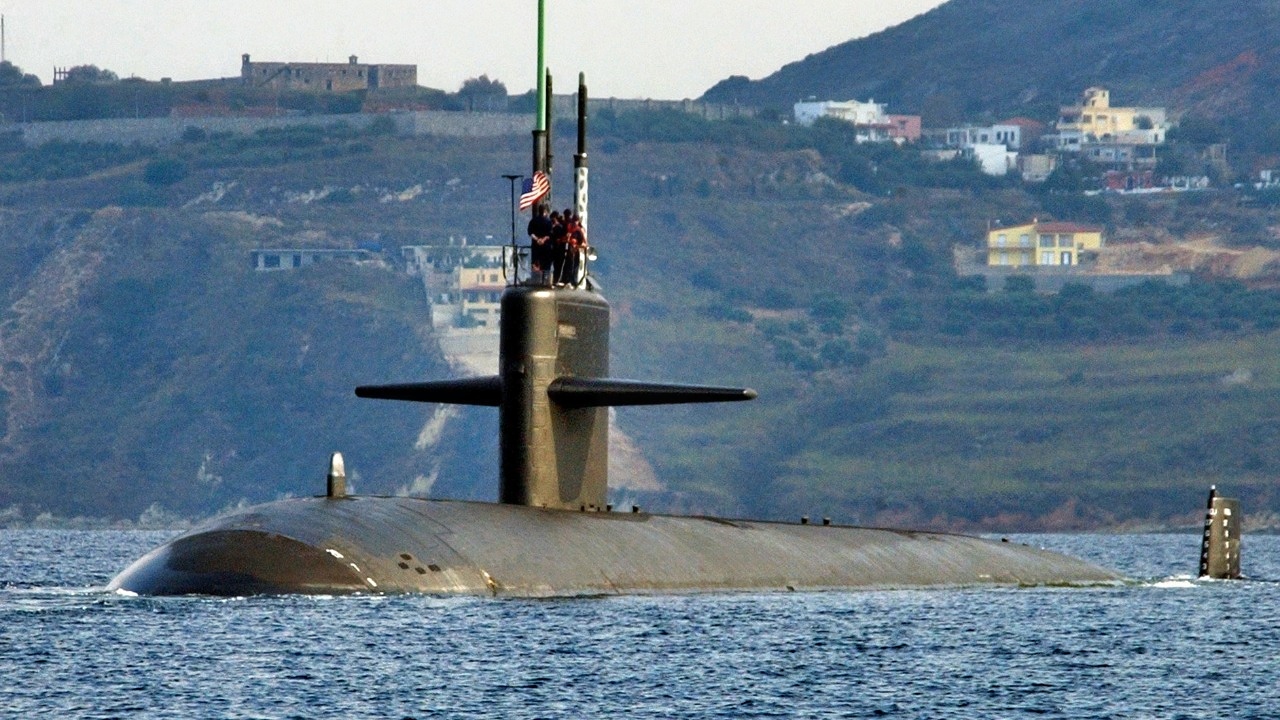
Port bow view showing US Navy (USN) Sailors manning a topside watch aboard the Los Angeles Class Attack Submarine USS NEWPORT NEWS (SSN 750), as the ship departs the harbor at Souda Bay, Crete, Greece following a port visit.
Block IV focused on operational availability by reducing major maintenance periods, allowing each submarine to conduct more deployments during its service life. The biggest leap came with Block V, which introduced the Virginia Payload Module (VPM), an 84-foot hull extension containing four additional large-diameter payload tubes.
This increased Tomahawk missile capacity from roughly 12 missiles to around 40, effectively turning newer Virginia-class boats into heavily armed underwater strike platforms intended partly to offset the future retirement of the Navy’s Ohio-class guided missile submarines. Block VI boats are expected to incorporate additional upgrades to stealth and sensors, and to support unmanned systems.
What Comes Next?
The Virginia-class is not being phased out anytime soon. In fact, the Navy is expected to continue operating and building submarines for decades to come. Most Virginia-class boats are designed for roughly 33 years of service, meaning many of the submarines entering service today will likely remain operational into the 2060s or even the early 2070s.
The Navy intends to eventually replace the class with a next-generation attack submarine known as SSN(X).
The future platform is expected to combine the speed and payload capacity of the Seawolf-class with the versatility and mission flexibility of the Virginia-class while also incorporating new stealth technologies, advanced sensors, greater unmanned systems integration, and improved survivability for potential future conflict with China. But SSN(X) remains years away and is expected to be extraordinarily expensive.
In the meantime, the Virginia-class remains the backbone of America’s undersea fleet and one of the Navy’s most important strategic assets.
The Navy continues ordering new boats because there is currently no realistic alternative capable of meeting America’s growing undersea warfare requirements in the Indo-Pacific and elsewhere.
About the Author: Jack Buckby
Jack Buckby is a British researcher and analyst specializing in defense and national security, based in New York. His work focuses on military capability, procurement, and strategic competition, producing and editing analysis for policy and defense audiences. He brings extensive editorial experience, with a career output spanning over 1,000 articles at 19FortyFive and National Security Journal, and has previously authored books and papers on extremism and deradicalization.


