
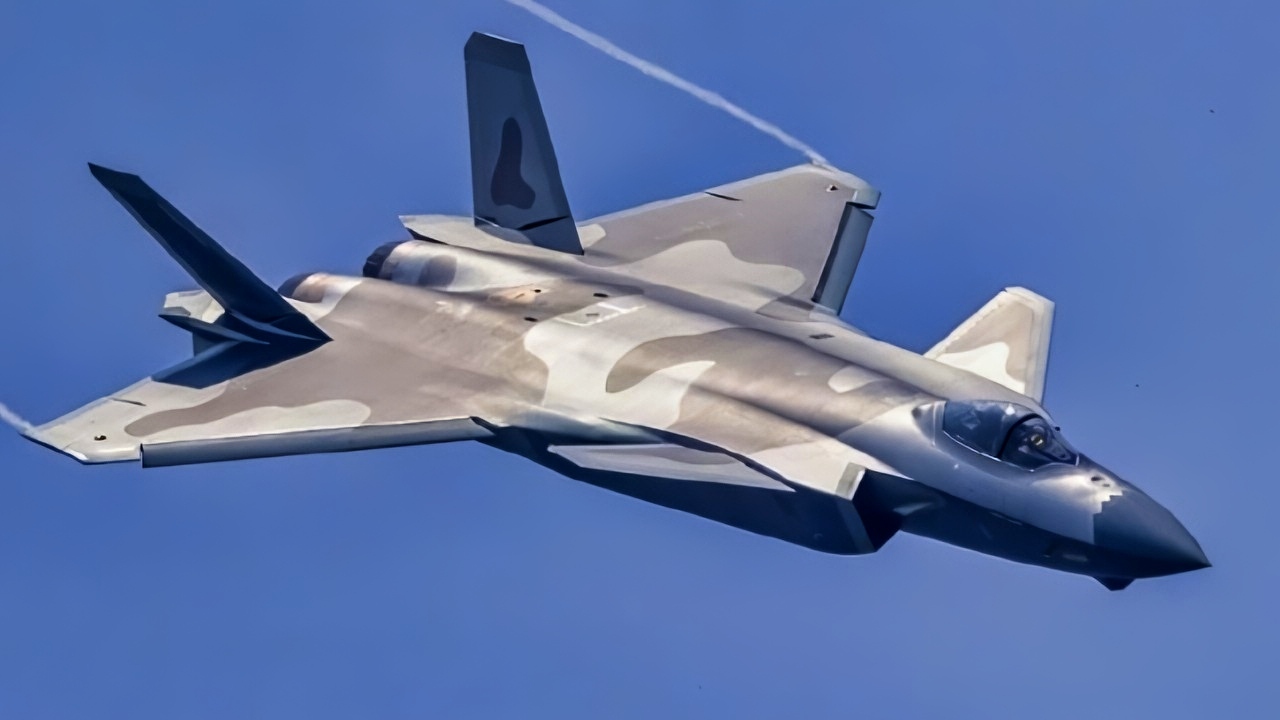
China’s People’s Liberation Army Air Force has deployed the upgraded J-20A stealth fighter to the 41st Air Brigade at Wuyishan Air Base in Fujian province, directly across the Taiwan Strait from the island. The brigade replaced its 1960s-era J-7s with baseline J-20s in 2023, and the J-20A introduces China’s long-awaited WS-15 engine — providing more thrust, longer range, better supercruise, and ending Beijing’s dependence on Russian AL-31 powerplants. A Heritage Foundation analysis identified 21 PLAAF airfields in Fujian, Guangdong, and other coastal provinces as the hardened forward ring for any Taiwan contingency, hosting J-20, J-16, Su-35, J-10C, and H-6K units within strike range of Taiwan.
China’s J-20A: Ready to Attack Taiwan?

China J-20 With Parachute. Image Credit: PLAAF.
China’s People’s Liberation Army Air Force (PLAAF) has begun deploying its new J-20A stealth fighter variant to frontline units positioned near Taiwan, with the 41st Air Brigade at Wuyishan Air Base in Fujian province becoming one of the first confirmed operational units to receive the upgraded aircraft.
It is the latest development amid China’s rapid and ongoing expansion of fifth-generation airpower, and demonstrates Beijing’s continued focus on preparing for a potential Taiwan contingency.
The 41st Air Brigade began replacing its older J-11 fighters and adopted baseline J-20 stealth fighters in 2023.
Its base at Wuyishan sits close to the Taiwan Strait and falls within the PLA’s Eastern Theater Command area of responsibility, the military command expected to lead any future operations involving Taiwan.
The deployment of the upgraded J-20A variant suggests China is prioritizing its most strategically important units for the aircraft’s introduction.
The new fighter integrates China’s long-awaited WS-15 engine and includes multiple airframe changes intended to improve stealth performance, speed, range, and overall combat capability.
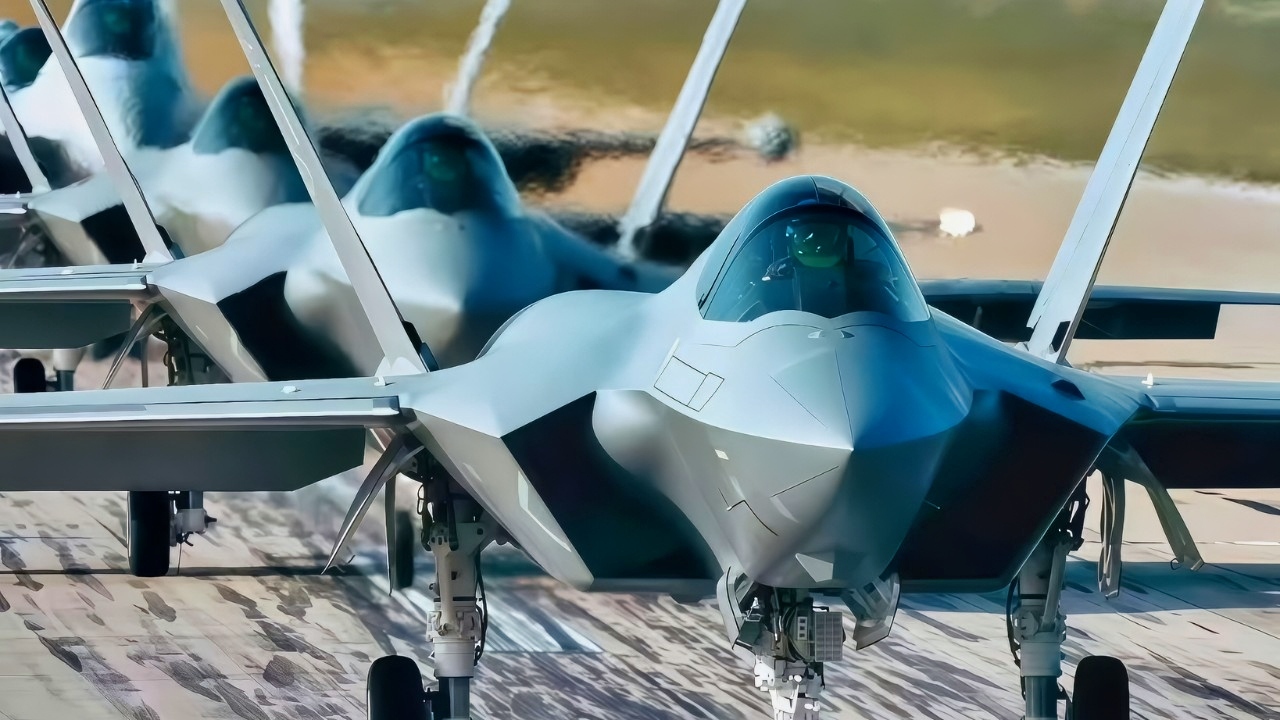
J-35 Fighter In Elephant Walk PLAAF Photo.
The development comes amid rising military competition across the Western Pacific as China continues to expand its J-20 and newer J-35 stealth fighter fleets, while the United States and its allies increase their own deployments near Taiwan and the East China Sea.
China’s Taiwan-Facing Brigade Receives New Stealth Fighter
The PLAAF’s 41st Air Brigade is one of China’s most strategically important air units, owing to its location on the southeastern coast opposite Taiwan.
Commercial satellite imagery previously confirmed the brigade’s transition to the baseline J-20 in late 2023, replacing its older Russian-derived J-11 fighters.
Before that, the unit had operated aging J-7 fighters.
The transition to the newer J-20A variant indicates that the PLAAF sees the upgraded aircraft as a major capability improvement rather than a minor modernization.
Reports note that the aircraft are already entering frontline service with elite brigades close to sensitive operational areas.
Wuyishan Air Base is part of a larger network of Chinese coastal airfields positioned to support potential high-tempo operations around Taiwan, and a recent Heritage Foundation analysis of Chinese military basing described Fujian and Guangdong province air bases as forming a hardened forward operating ring capable of sustaining large-scale air operations during a Taiwan contingency.

J-20 Fighter from Chinese PLAAF. Image Credit: Creative Commons.
“Heritage judges that a 21-base subset of People’s Liberation Army Air Force (PLAAF) airfields in the Eastern, Southern, and Northern Theater Commands almost certainly constitutes the top-tier basing network for a Taiwan contingency, based on their hardened runway infrastructure, basing of J-20, J-16, Su-30MKK, Su-35, H-6K/H-6U, and J-10C units, and geographic position relative to Taiwan and U.S./allied forces,” the analysis notes.
“These 21 bases provide China with a hardened forward ring (Fujian/Guangdong), depth J-20/J-16 hubs, and northern strategic reserves, very likely enabling sustained, high-tempo air operations against Taiwan and complicating U.S./allied air planning through survivable forward bases, reinforcement depth, and strategic diversion options,” it continues.
China has steadily expanded the number of J-20 brigades over the past several years.
Open-source tracking and satellite imagery assessments indicate the aircraft is now deployed across multiple theater commands, with some brigades fully converted to the stealth fighter.
The WS-15 Engine Could Transform the J-20
Perhaps the most significant update to the J-20A is the introduction of the WS-15 engine, a next-generation indigenous
Chinese powerplant that Beijing has spent years perfecting. Earlier J-20 variants initially relied on Russian AL-31 engines before later transitioning to Chinese WS-10 variants.
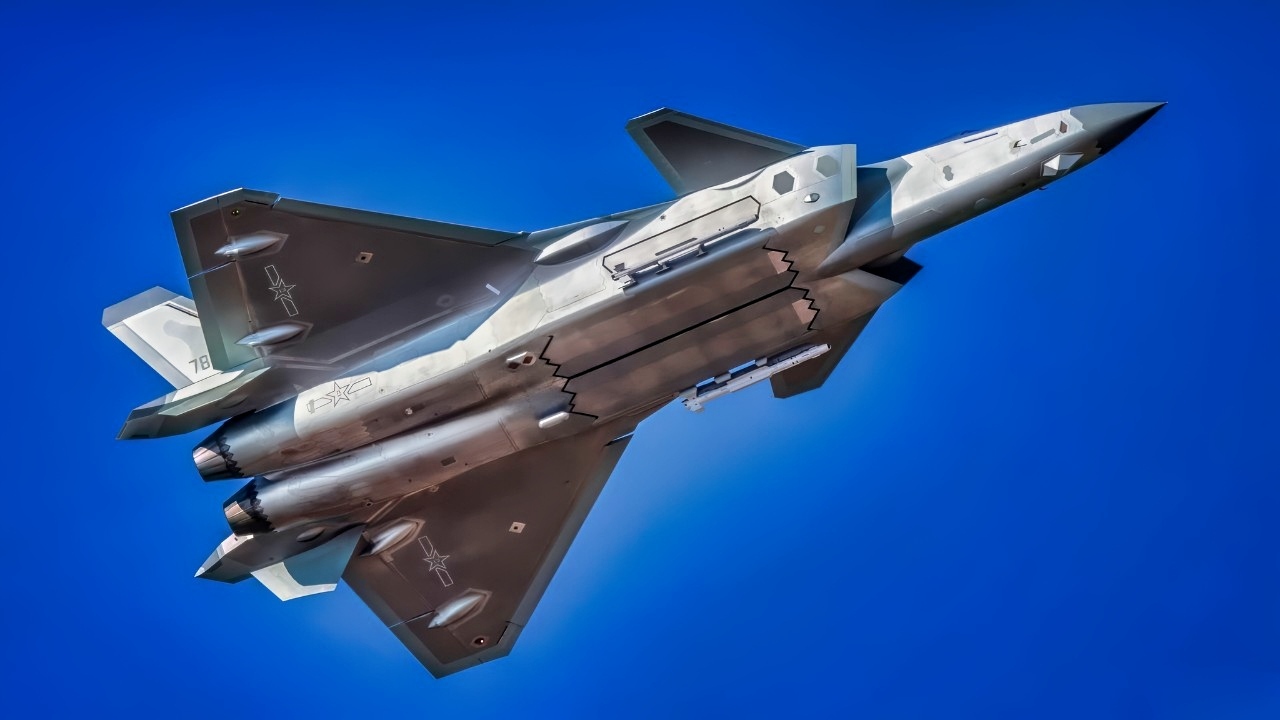
J-20 Takes Flight For China. Image Credit: Creative Commons/PLAAF.

China J-20 Fighter Yellow. Image Credit: Creative Commons.
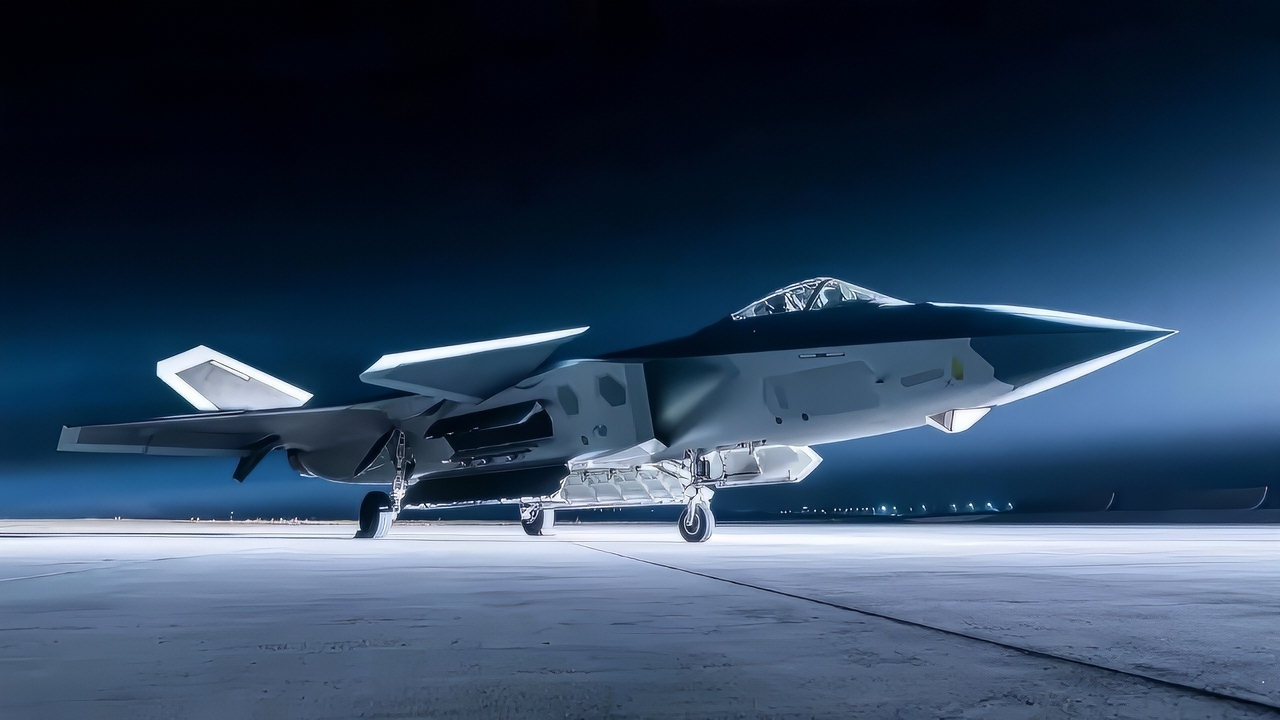
J-20 Fighter in the Dark. Image Credit: Creative Commons.
The WS-15 is expected to provide significantly more thrust, allowing improved acceleration, higher sustained speeds, longer range, and better supercruise performance.
It provides increased electrical capacity, which could support more advanced radar systems and electronic warfare suites, and can accommodate future networked combat technologies.
The J-20A also features a redesigned rear canopy and revised airframe features that appear to be intended to reduce drag and improve stealth.
The engine is widely seen as one of the most important milestones in Chinese military aviation because it reduces Beijing’s historical dependence on Russian propulsion technology.
For years, aircraft engines have represented one of the largest remaining gaps between China’s aerospace industry and the United States – and that gap is now beginning to close.
Taiwan and the Western Pacific
The deployment of these upgraded stealth fighters near Taiwan reflects the central role the island continues to play in Chinese military planning.
Beijing has dramatically increased military pressure around Taiwan over the past several years through large-scale exercises, air patrols, naval operations, and missile drills.
The J-20A’s longer range and improved endurance could be particularly important in scenarios involving blockade enforcement, long-range patrols, or attempts to deter U.S. and Japanese intervention during a Taiwan conflict.
China’s military increasingly emphasizes anti-access and area-denial operations designed to push opposing forces farther away from the Chinese mainland.
Meanwhile, the United States continues to deploy F-35 fighters and other advanced aircraft throughout the region, including bases in Japan, and Tokyo itself is expanding its own F-35 fleet as concerns grow over China’s rapidly modernizing airpower.
About the Author: Jack Buckby
Jack Buckby is a British researcher and analyst specializing in defense and national security, based in New York. His work focuses on military capability, procurement, and strategic competition, producing and editing analysis for policy and defense audiences. He brings extensive editorial experience, with a career output spanning over 1,000 articles at 19FortyFive and National Security Journal, and has previously authored books and papers on extremism and deradicalization.


