


Key Points and Summary – The Pentagon worries Beijing could try a “fait accompli” against Taiwan: seize the island so fast that prying the PLA out would require a massive, bloody counter-invasion.
-A slow, visible amphibious buildup is unlikely to succeed against forward-deployed U.S. carriers, subs, and F-35s.
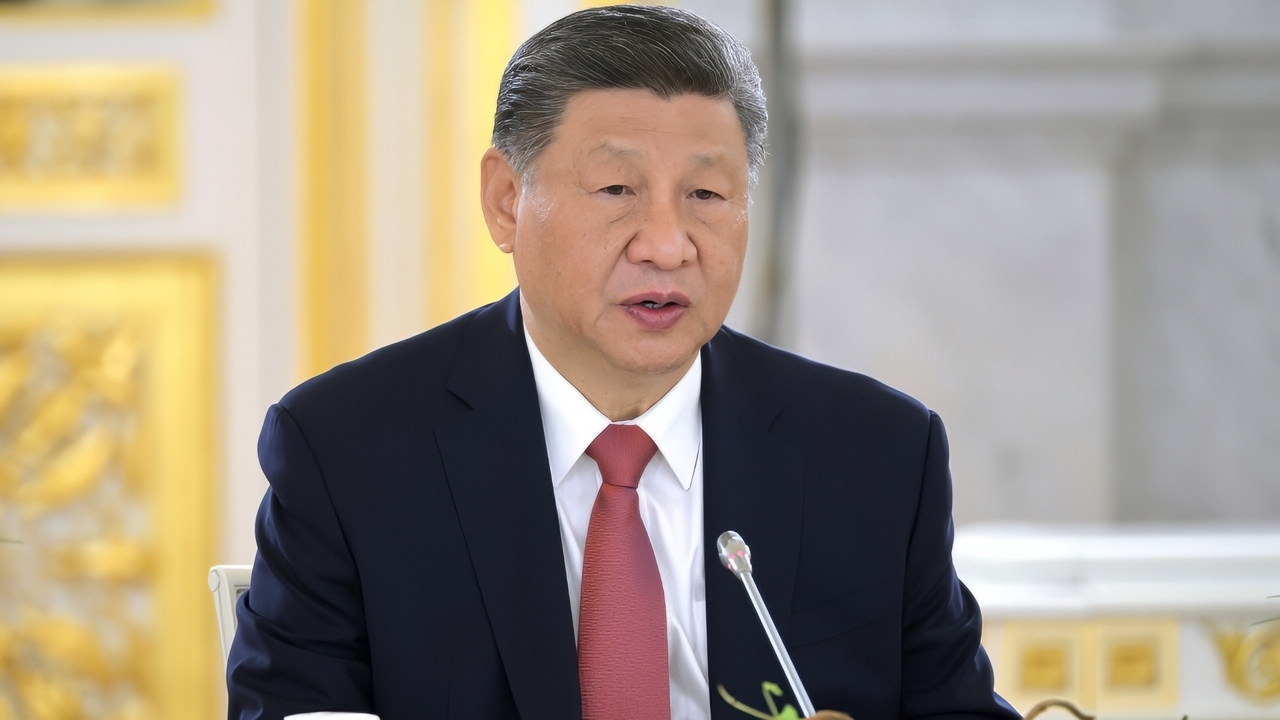
China’s Xi Jinping. Image Credit: Creative Commons.
-The real danger is a rapid campaign built around hypersonic “access denial” — PLA missiles and bombers creating a kill bubble that keeps U.S. and allied forces at arm’s length while China locks in control.
-Yet Washington’s own hypersonic weapons and defenses are coming online fast, narrowing Beijing’s window to pull off such a shock move.
China’s Taiwan ‘Fait Accompli’ Plan in One Word: Hypersonics
“Fait Accompli” is the term often used by the Pentagon’s annual China report to describe a potential People’s Liberation Army strategy to annex the island of Taiwan so quickly and effectively that it would simply become too costly in lives, dollars, and consequences to “extract” an embedded PRC force.
In this scenario, a Chinese-occupied Taiwan would become a “fait accompli” and exist in perpetuity as a new “status quo.”
A contingency such as this one raises a pressing tactical question: just “how” the PLA might succeed in taking over Taiwan before a US-allied force can intervene.
The idea would be to create a situation in which stopping a Chinese occupation would require a massive, heavy mechanized campaign to “extricate” a Chinese force from the island.
Rapid Chinese Attack
Is a rapid surprise Chinese takeover a realistic prospect?
How might this be accomplished?
Indeed, a large-scale amphibious assault buildup would be easily seen by satellites and forward-positioned F-35-armed U.S. Navy carriers, and amphibs would likely be able to respond in time.
It would also be safe to assume that the U.S. Navy would be operating a significant attack submarine force capable of attacking or “stopping” a PLA Navy invasion.
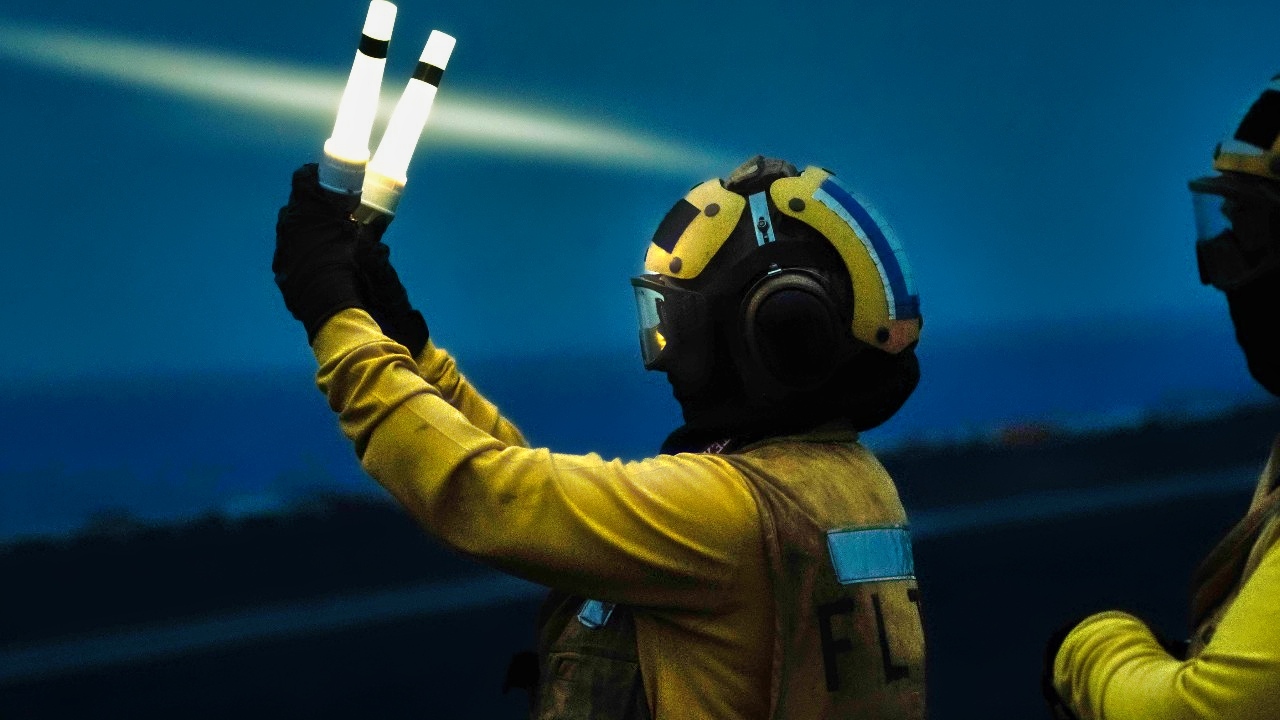
U.S. 5TH FLEET AREA OF OPERATIONS (Aug. 6, 2024) An Aviation Boatswain’s Mate (Handling) signals aircraft on the flight deck of the Nimitz-class aircraft carrier USS Theodore Roosevelt (CVN 71), Aug. 6. Theodore Roosevelt is deployed to the U.S. 5th Fleet area of operations to support maritime security and stability in the U.S. Central Command area of responsibility. (Official U.S. Navy photo)
It seems there may be only a few contingencies in which the PLA could “annex” Taiwan faster than the U.S., Japan, or South Korea could respond.
One could be that U.S. Navy warships, F-35s, and submarines may not be sufficiently forward positioned to close in on an attacking PLA Navy force transiting the 100-mile Taiwan Strait to take over the island.
This seems unlikely given how consistently the U.S. Navy maintains a forward presence in the region.
Blockade
The other possibility could be that China uses its advantage in hypersonic weapons to “deny” access to forces seeking to intervene and defend Taiwan.
A salvo of ballistic missiles, followed by warships and aircraft armed with hypersonic weapons, could seek to “blockade” U.S. forces aiming to defend Taiwan quickly.
The idea of a protective hypersonic “bubble” would rely on the assumption that the PLA is ahead of the US military in hypersonics, which could put U.S. warships and aircraft at risk at great ranges with unprecedented speed.
This might prove effective if the U.S. were without comparable hypersonic weapons itself or in possession of any workable defenses against them.
The US Navy is on track to arm its Zumwalt-class destroyers with hypersonic Conventional Prompt Strike weapons by 2026; however, the PLA Navy appears to be much further along.

(September 24, 2021). The navy’s only forward deployed aircraft carrier USS Ronald Reagan (CVN 76) transits the South China Sea. Reagan is attached to Commander, Task Force 70/Carrier Strike Group 5 conducting underway operations in support of a free and open Indo-Pacific. (U.S. Navy Photo by Mass Communication Specialist 1st Class Rawad Madanat)
Within the last several years, the PLA-Navy has successfully fired the YJ-20 deck-launched hypersonic missile from its Type 055 destroyer.
Even more recently, the PLA Air Force has armed its H-6K bomber with a YJ-21 air-launched hypersonic weapon.
Should the PRC operate hypersonic weapons of this kind in the absence of a U.S. equivalent or hypersonics defenses, it seems possible that forces intervening to protect Taiwan could potentially be “denied” access to the area it would need to operate in to defend Taiwan.
However, any potential Chinese advantage in hypersonics is eroding quickly in several key respects; the Pentagon is making rapid progress on several soon-to-be-operational hypersonic weapons, including the Army’s Long Range Hypersonic Weapon, the Navy’s Conventional Prompt Strike, and the Air Force’s MAKO air-launched hypersonic weapon.
The LRHW and CPS are both expected to deploy in 2026 if not sooner, and the Pentagon is making significant progress with several hypersonic defensive systems, such as the Glide Phase Interceptor and the Hypersonic Ballistic Tracking Space System.
About the Author: Kris Osborn
Kris Osborn is the President of Warrior Maven – Center for Military Modernization. Osborn previously served at the Pentagon as a highly qualified expert in the Office of the Assistant Secretary of the Army—Acquisition, Logistics & Technology. Osborn has also worked as an anchor and on-air military specialist at national TV networks. He has appeared as a guest military expert on Fox News, MSNBC, The Military Channel, and The History Channel. He also has a Masters Degree in Comparative Literature from Columbia University.


