


U.S. Undersecretary of War Elbridge Colby announced May 18 that the Pentagon was pausing its participation in the Permanent Joint Board on Defense, the 86-year-old advisory body that has coordinated North American continental defense since 1940. Washington cited Canada’s failure to meet NATO’s 5% GDP defense spending target and incomplete progress on its commitment to buy 88 F-35s. Ottawa has so far ordered only 16 and is reviewing the remaining purchase amid trade tensions. NORAD commander USAF General Gregory Guillot told the Senate in April that the F-35 is not essential for continental defense. Canada is now reportedly considering buying 40 F-35s plus 80 Swedish Saab JAS-39 Gripen E/F fighters instead.
Canada Might Be Getting Ready to Dump the F-35

JAS 39 Gripen. Image Credit: Creative Commons.

JAS 39 Gripen Fighter from Back in 2017. Image Credit: Creative Commons.

JAS 39 Gripen. Image Credit: Creative Commons.
The F-35 Joint Strike Fighter is the US Department of Defense’s most expensive weapons program ever. Other estimates have put it in the category of “the most expensive program in human history.”
However, thanks to an action taken this week by the same Pentagon that is being criticized, it is increasingly likely that the aircraft’s unit cost will increase further.
A simple primer of defense procurement goes something like this: Weapon systems take a tremendous sum of money to develop. Once the design has been validated and approved for production, the weapon then enters the manufacturing phase. Each weapon – in this case, each F-35 – has a price equal to the cost of production per unit plus the total research and development cost amortized across the total number of units to be built.
In plain English, the more F-35s you build, the less each one costs because you are dividing that development cost by a larger number of total units in the production runs. Therefore, one of the most important goals of this program is to sell as many as possible for export to as many foreign customers as you can persuade to purchase it over other options. It lowers the cost for these customers and the cost the US armed forces pay for the units they procure.
One of the largest export customers for the aircraft is our neighbor to the north, Canada.
The Royal Canadian Air Force (RCAF) planned to procure 88 F-35s to replace its aging fleet of F/A-18C/D aircraft acquired in the 1980s. Canada has been part of the program since its earliest days in 1997 and is one of only four Tier 3 partners in the effort, along with Australia, Norway, and Denmark.
Level of Commitment
However, because export customers sign up for different production lots. So, as of today, Canada is only committed to buy 16 of the stealth fighter aircraft.
In February, Canada quietly placed orders for components and other items that would obligate the RCAF to another 14 units, but the commitment for the full 88 units remains unfulfilled, as Ottawa has been reviewing any additional purchases due to trade tensions with Washington, sources have told Canada’s CBC News.
This week, in what appears to be an unforced error, Washington announced it is “pausing” its participation in an 86-year-old body dedicated to Canada-US defense initiatives. The US is claiming the decision is partly due to Canada not meeting the US demands for all NATO nations to raise defense spending to 5 percent of GDP and for Canada to follow through with its full order of 88 F-35 jets.
The US Undersecretary of War, Elbridge Colby, announced on Monday, 18 May, that the Pentagon was, for now, not participating in the Permanent Joint Board on Defense, an advisory body on North American continental defense that has existed since 1940.

F-35 1st UK arrival at RAF Marham. Image Credit: Lockheed Martin.
“Only by investing in our own defense capabilities will Americans and Canadians be safe, secure, and prosperous,” Colby wrote in a series of posts on X. “Unfortunately, Canada has failed to make credible progress on its defense commitments.”
These and other comments have not gone down well with Canada’s political and defense establishments.
Part of the US posturing in Colby’s announcement also indicates that offense has been taken for Canadian Prime Minister Mark Carney’s headline-grabbing address at this year’s World Economic Forum in Davos, Switzerland, and his increasing moves to forge closer defense ties with EU nations.
Senior Canadian and US defense and diplomatic officials make up this joint board, and it is seen as an important symbol of the relationship between the two countries, commented Imran Bayoumi, a former US defense adviser now at the Scowcroft Center for Strategy and Security, a Washington think-tank.
Foolish But Not Surprising
John McKay, the former MP who served as the Canadian co-chair the last time the board met in 2024, said the decision casts doubt over issues like the renegotiation of the North American Air Defense (NORAD) joint command agreement, military co-operation in the Arctic and Canada’s F-35 purchase.
“I’m disappointed. I think it’s short-sighted. I think it’s foolish, but I’m not surprised,” McKay told CBC.

Capt. Kristin “Beo” Wolfe, F-35A Lightning II Demonstration Team pilot and commander, banks hard left making vapor trails over and behind the wings during a practice demonstration at Hill Air Force Base, Utah, Mar. 23, 2021. The demonstration team is part of Air Combat Command and is assigned to the 388th Fighter Wing at Hill AFB. Capt. Wolfe grew up a military child as the daughter of retired Col. Jon Wolfe and has flown the T-6 Texan II, T-38 Talon, F-22 Raptor and now the F-35A Lightning II. (U.S. Air Force photo by Alex R. Lloyd)
“I don’t see how canceling one of the most significant — if secret and unknown — organizations that manages the mutual defense of North America enhances trade negotiations or enhances our willingness to purchase F-35s, maybe in some devious mind of some official somewhere,” he also commented.
The issue of Canada’s commitment to increased defense spending is also a canard, said a recently retired Canadian special forces veteran, National Security Journal spoke to. “Canada is likely never going to meet this GDP spending target on defense when we can barely recruit enough people to fill the ranks and staff organizations as they are now.”
Another factor in the F-35 decision is that in early April, the NORAD commander, USAF General Gregory Guillot, told the US Senate that the jet’s advanced capabilities are not essential for the continental defense mission.
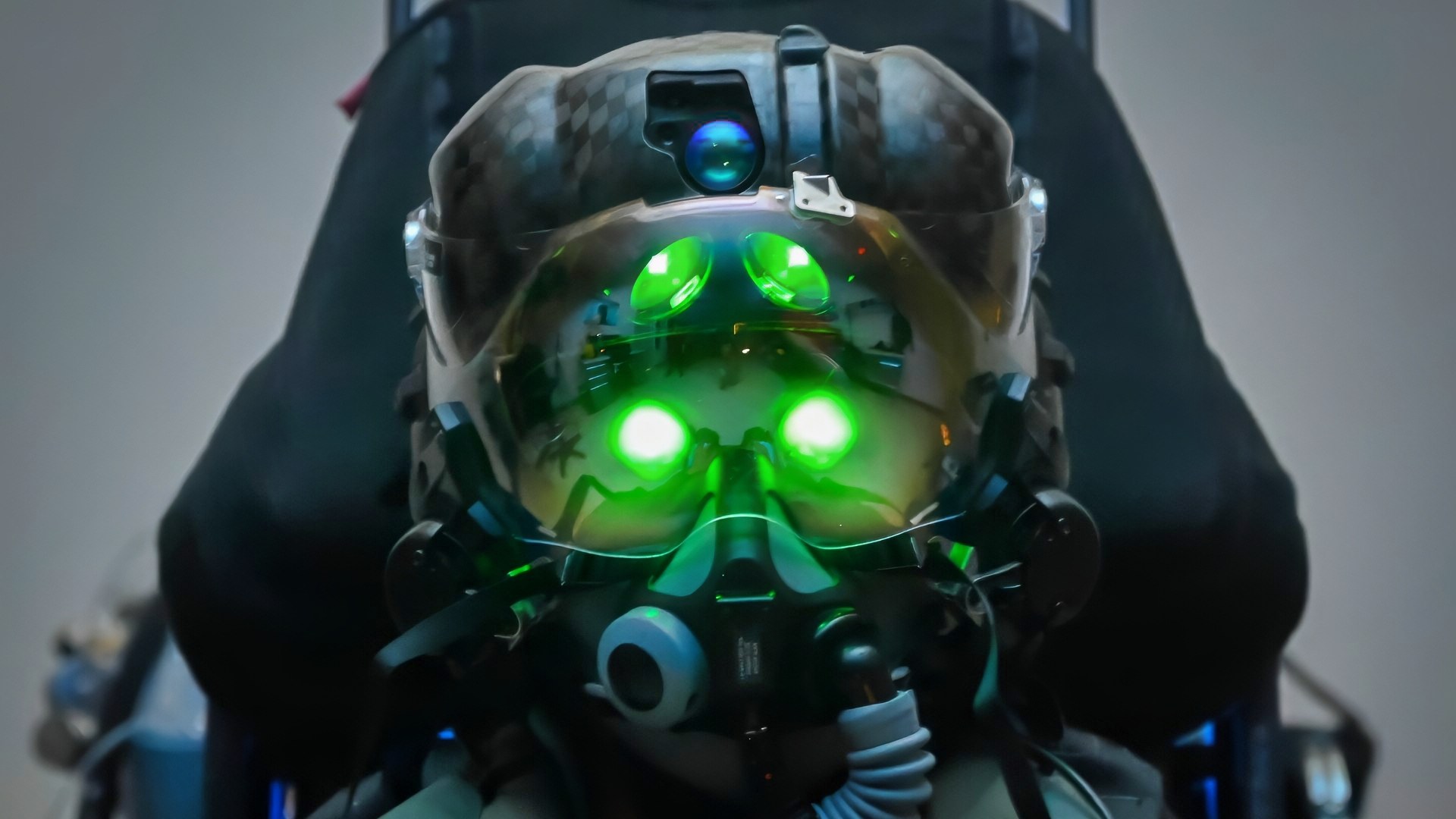
Capt. Ryosuke Sugimoto, a Japanese Air Self-Defense Force F-35 Lightning II pilot, sits in an ejection seat wearing his new pilot gear after completing the 1,000th fitting in the pilot fit facility at Eglin Air Force Base, Florida, May 22, 2024. This milestone fitting underscores the strong international partnership and commitment to pilot readiness and safety. (U.S. Air Force photo by 1st Lt. Jymil Licorish)
His testimony focused on NORAD’s primary role in interception and airspace security rather than offensive operations, making the F-35 almost “overkill” for this mission. The alternative option being discussed as the optimal solution for Canada and this mission is to truncate the F-35 buy at only 40 of the US jet and then procure 80 of the Swedish-made Saab JAS-39 Gripen E/F.
MORE – ‘She Can Shoot Down an F-22’: China’s J-20 Stealth Fighter Has Arrived
MORE – China’s J-35A Stealth Fighter Has a Message for the U.S. Air Force
About the Author: Reuben F. Johnson
Reuben F. Johnson has thirty-six years of experience analyzing and reporting on foreign weapons systems, defense technologies, and international arms export policy. Johnson is the Director of Research at the Casimir Pulaski Foundation. He is also a survivor of the Russian invasion of Ukraine in February 2022. He worked for years in the American defense industry as a foreign technology analyst and later as a consultant for the U.S. Department of Defense, the Departments of the Navy and Air Force, and the governments of the United Kingdom and Australia. In 2022-2023, he won two consecutive awards for his defense reporting. He holds a bachelor’s degree from DePauw University and a master’s degree from Miami University in Ohio, specializing in Soviet and Russian studies. He lives in Warsaw.


David Smyth
May 20, 2026 at 10:23 pm
Gripen should be considered properly. The Joly proposal is simply a make work project for Quebec and Bombardier. My understanding is Joly Bureaucrats have not involved RCAF and that simply is idiotic. Also building and supporting the plane from Montreal simply makes no sense for a fighter whose role is Protect Canadian Arctic. Not to mention Quebec’s language laws that will mean only a MINORITY OF CANADIANS WILL BE EMPLOYABLE!!! Finally Financially this promises to be a DISASTER. The elephant in the room is Quebec separatism (2 voted and a psb 3) that implies the probability of a total loss must be considered!! CARNEY NEEDS TO TEACH HIS QUEBEC MINISTERS AND THEIR BUREAUCRATS THE PPRUDENT MAN RULE!! If this is applied the NO BID Gripen/Bomber contract in Quebec does not FLY
Adam
May 21, 2026 at 1:24 pm
Frankly 32 to 40 F35 for expeditionary ops,some set number based in another F35 using European nation,and 60 to 70 Gripen fighters for domestic and long term arctic deployment would be the best mix. Gripens actually based at upgraded Arctic FOLs would give the best shield so to speak, with majority split amongst the MOBs. The pain of hi/low could be mitigated by sharing servicing / basing facilities with the European partner nation who likely also has a small fleet. NATO was built for this very thing.
Steve
May 21, 2026 at 2:57 pm
As soon as I read “Joly” proposal I could not take the above comment seriously…
John Welwood
May 21, 2026 at 3:30 pm
The Trump predator regime is a threat to Canadian sovereignty. They have declared economic war against Canada. They support Putin’s invasion of a neighbouring European nation They ignore international laws and agreements. They are not trustworthy. I sincerely hope Canada takes the Swedish Saab option and drops the F35.
Mark
May 21, 2026 at 7:32 pm
I surely hope Canada takes the grippens too..what a stupid short-sighted move but I wouldn’t expect anything less then what Canada’s current regime is doing. Let’s see how long those grippens last when a real war comes about and russia/china picks your jets apart with ease. All because your leadership cant stand one man who’s brash and tells you like it is and now yall are all butthurt. Im not a trump supporter but Canada should know how to handle American politics by now without turning into an enemy..btw, keep letting all those foreign immigrants and muslims on in as if they wont turn around at some point soon and start jihading right in your own country. And when that happens guess who Canada will call to help get rid of them when the terrorism starts..also, its kinda being a shiity ally to turn on us the exact moment someone with balls tells yall what you need to do and stop relying on big brother to pay for all your security..so instead of learning how to work trump and own him through his ego yall wanna make enemies with us? Good luck with that. Canada and western European countries can kick rocks as far as im concerned. With the decades of military decay from relying on the us all your militaires together couldnt stop a Russian or chinese threat realistically. So keep bashing the country that has literally had your back since the end of ww2 and you’ll find we wont answer the phone call we all know will come when shit goes down for yall. Your decades and decades away from forming a real military that anyone would be concerned with without the us involvement. Bunch of ungrateful fu*ks