

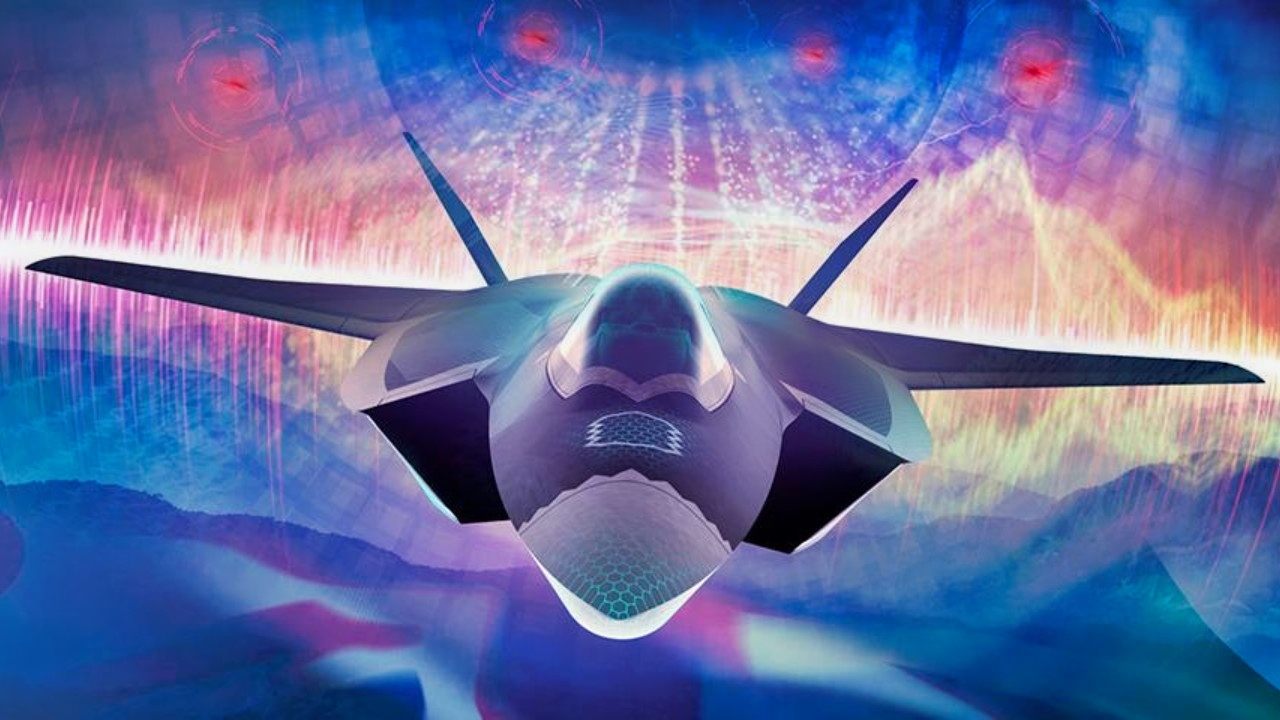
The Global Combat Air Program (GCAP) — the joint sixth-generation fighter program between Britain, Italy, and Japan — is facing its first major crack. BAE Systems has warned that roughly 4,000 British engineers and personnel working on the program will be reassigned within ten weeks if the British government does not finalize longer-term contracts before the temporary bridge funding ends in June. Britain has already paid £686 million into Edgewing, the industrial venture combining BAE Systems, Italy’s Leonardo, and Japan Aircraft Industrial Enhancement Co. Total GCAP program costs through 2037 are projected at 8.77 billion euros. GCAP is meant to replace the Eurofighter Typhoon and the Mitsubishi F-2 by 2035.
GCAP Won’t Make It?

GCAP 6th Generation Fighter.
American allies, like those in Europe and in Asia, such as Japan, are racing to make defense spending a priority. Part of this push involves spending gobs of money (that no European or Asian nation really has available) on advanced systems, such as the sixth-generation warplane.
Because of the complexity and the cost, as well as the lack of industrial capacity to support such projects like the sixth-generation warplane, some European countries are jointly developing these advanced systems.
Enter the Global Combat Air Program (GCAP).
GCAP is the joint sixth-generation fighter program created by the United Kingdom, Italy, and that very non-European country, Japan. All three states were developing their own sixth-generation warplane. But the cost and complexity proved too much for them. So, London, Rome, and Tokyo pulled their resources together to share the onerous burden of developing a sixth-generation warplane.
The three allies intend for the GCAP plane to be available by 2035, to deploy drones to conduct artificial intelligence-assisted battle management operations, to be capable of next-generation electronic warfare (EW), and to operate as a node in a larger battle network. GCAP will replace the Eurofighter Typhoon in British and Italian service, while it will replace the Mitsubishi F-2 in Japan.
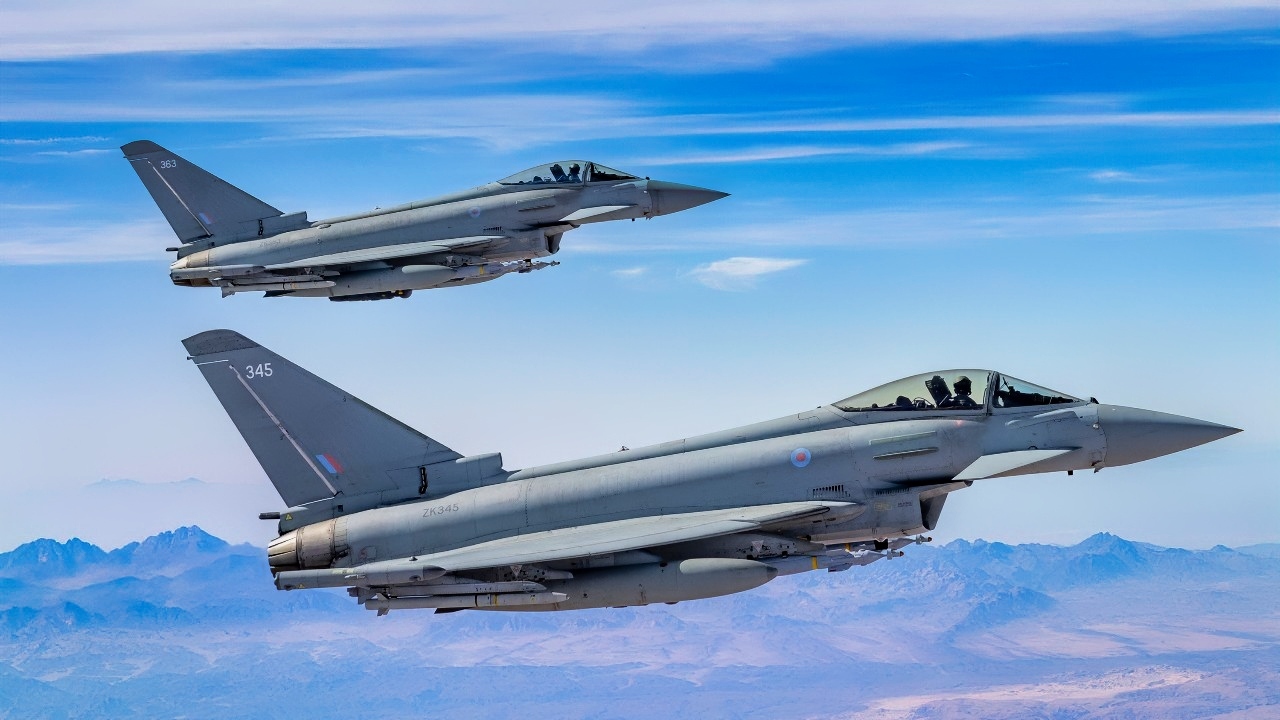
Image of two RAF Typhoon FGR Mk 4 aircraft, seen here during a routine mission over the Middle East as part of Operation Shader. Op SHADER air to air refuelling sortie took place on Wednesday 13th November, maintaining Typhoon presence across the Middle East running routine missions. Typhoon, Voyager and Atlas A400 aircraft operate from RAF AKrotiri as part of Op SHADER, part of the International coalition effort fighting terrorist organisations in the Middle East region. The RAF has been engaged in this mission since 2014 combating Daesh in Iraq and Eastern Syria as well as Houthi Rebels more recently in Yemen who threaten global shipping. Image Credit: Creative Commons.

A UK Typhoon flies above the Baltics on 25 May 2022. Image Credit: NATO.
Britain’s Defense Crisis Comes for GCAP
However, cracks are already forming in this unlikely alliance of warplane development.
Britain’s portion, run by BAE Systems, is hitting a massive budgetary crunch. According to BAE Systems, around 4,000 British engineers and personnel working on the plane will be reassigned in less than 10 weeks if the British government doesn’t finalize longer-term contracts before the temporary bridge funding that supports the British component of the GCAP ends in June.
For starters, this crisis highlights a much broader problem facing Britain: the overall decline of its military. Frankly, it’s a miracle that Britain is still able to deploy warships and launch warplanes at all. Britain faces an emergency unlike anything in its history, marked by a long-term recruitment crisis, a massive decline in capabilities, and yet London keeps committing itself to building increasingly expensive and complex systems it simply cannot afford or maintain.
The Risk of Losing Britain’s Aerospace Workforce
In the specific case of the GCAP, should there be any disruption to the system’s development, as the BAE executives warn, the British component of the GCAP will collapse in terms of assembly and maintenance quality. Once highly specialized stealth, propulsion, radar, software, and materials engineers are dispersed across other defense programs, rebuilding that workforce becomes expensive and time-consuming.
Even a temporary funding interruption could spell doom for the British component of the GCAP. It would definitely slow down the timeframe of the demonstrator aircraft. Meanwhile, Britain’s sovereign combat-air expertise would be damaged.
Remember, this may be a UK-Italy-Japan development program, but for Britain, the GCAP is slated to be its next primary warplane. Delays in the development of the GCAP, then, will create major problems for Britain’s airpower.
What’s more, if Britain fails to hold up their end of the deal with Tokyo and Rome this early in the development program, then the trust with those two countries will have been broken. Thus, the entire GCAP is at risk at the very start of the program.
And this creates openings for rival programs that will only sap resources from the GCAP and delay whatever hope Europe and Japan have for a sixth-generation warplane.
A Program With Exploding Costs
British taxpayers might gasp, but the initial sum their government paid to Edgewing, which combines the industrial venture between Britain’s BAE Systems, Italy’s Leonardo, and Japan Aircraft Industrial Enhancement Co. (JAIEC) was £686 million.
That sum represents only the initial tranche of money needed for the GCAP, not the total program cost. Long-term costs are projected at around 8.77 billion euros for the initial GCAP phases through 2037. Estimates for the larger GCAP program have exploded, per Reuters.
Is a Sixth-Generation Fighter Even Worth It?
The bigger question all nations must ask is whether a sixth-generation warplane is really worth the cost, especially for countries that already have access to fifth-generation aircraft.
Thus far, it doesn’t sound like it is. Many of the capabilities the sixth-generation warplane brings–such as manned-unmanned teaming (MUMT) and stealth–are all found in current fifth-generation warplanes. And those fifth-generation warplane programs are only now reaching maturity.

NGAD. Image Credit. Lockheed Martin.
Plus, the world’s fifth-generation warplanes have not really lived up to their promises. Why assume that even more sophisticated and expensive sixth-generation systems will provide anything better?
Europe’s Strategic Fragmentation Is Growing
Still, the British clearly believe the GCAP is necessary as a hedge against overreliance on the United States for military technology.
It also represents a European-Pacific defense alignment (though why Europe would delude itself into thinking it is, or should be, a Pacific power is beyond me).
It’s also a response to the Franco-German-Spanish FCAS sixth-generation warplane project, which clearly shows that the continent’s defense programs are fracturing at a time when everyone in Europe is waxing eloquent about European solidarity and the need for an independent European army.
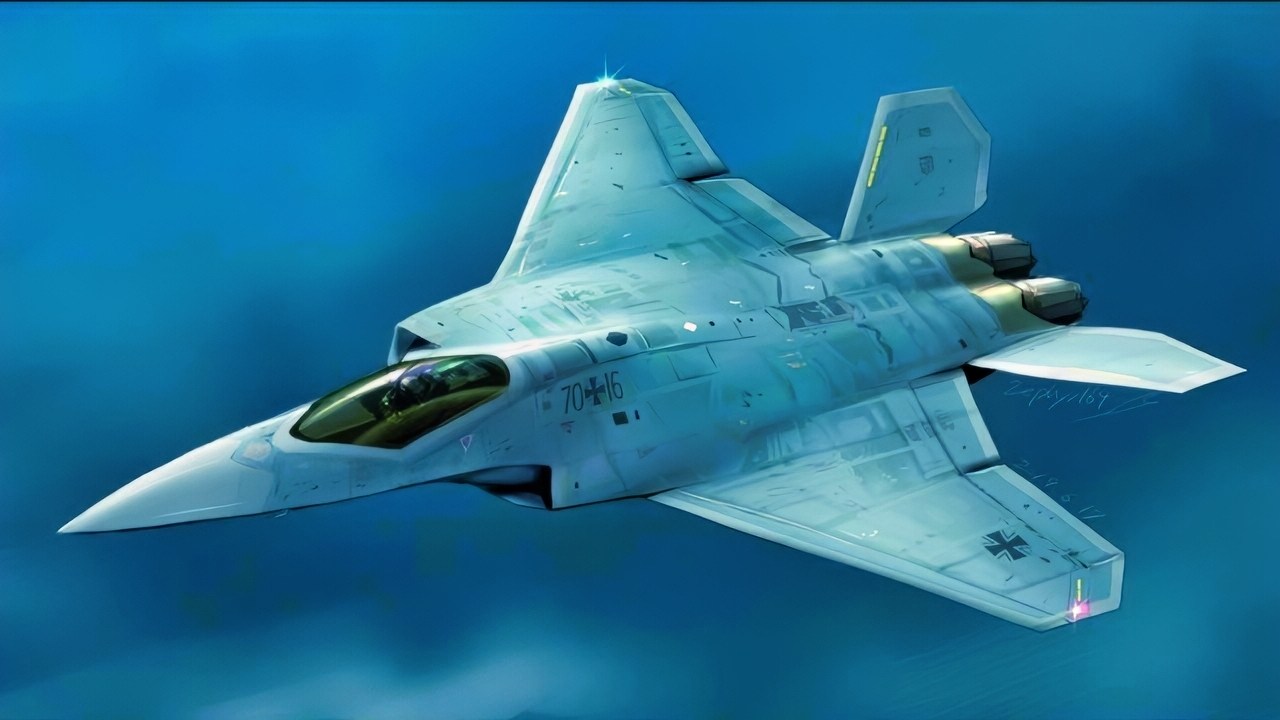
FCAS Photo Artist Image. Image Credit: Creative Commons.
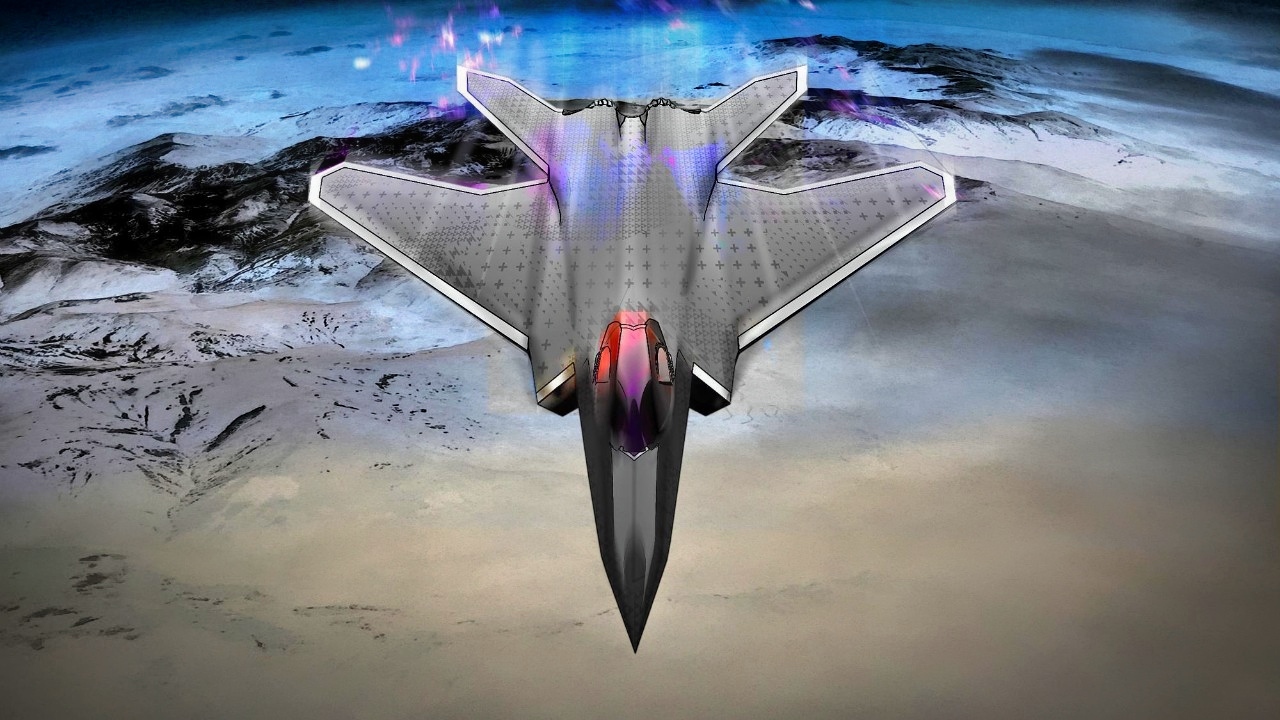
FCAS Fighter from Dassault. Image Credit: Dassault.
Britain’s Failure Signals Europe’s Decline
The bottom line is this: either Europe congeals into a truly united entity separate from the United States, or it continues on its current trajectory toward becoming a geopolitical backwater. In the specific case of GCAP, this program is becoming a test of whether Britain and its chosen partners can still build cutting-edge military aviation.
Given the problems Britain is facing and the overarching issues with Western supply chains and the weakening industrial bases, it is highly unlikely that Europe can achieve its goal of becoming an independent power that balances against the other major powers of our day (the US, China, and Russia).
Britain’s abysmal performance in the opening phases of the GCAP proves this.
About the Author: Brandon J. Weichert
Brandon J. Weichert is Senior National Security Editor. Recently, Weichert became the editor of the “NatSec Guy” section at Emerald. TV. He was previously the senior national security editor at The National Interest. Weichert hosts The National Security Hour on iHeartRadio, where he discusses national security policy every Wednesday at 8 p.m. Eastern. He hosts a companion show on Rumble entitled “National Security Talk.” Weichert consults regularly with various government institutions and private organizations on geopolitical issues. His writings have appeared in numerous publications, among them Popular Mechanics, National Review, MSN, and The American Spectator. And his books include Winning Space: How America Remains a Superpower, Biohacked: China’s Race to Control Life, and The Shadow War: Iran’s Quest for Supremacy. Weichert’s newest book, A Disaster of Our Own Making: How the West Lost Ukraine, is available for purchase at any bookstore. Follow him via Twitter/X @WeTheBrandon.


