

Japan might be considering buying additional Lockheed Martin F-35s as a stopgap if the Global Combat Air Programme (GCAP) sixth-generation fighter slips beyond its 2035 in-service target. Japanese officials are also considering extending the operational life of Japan’s existing Mitsubishi F-2 fleet through upgrades. Japan’s chief trade negotiator Ryosei Akazawa said additional U.S. defense purchases “could be considered” during trade talks with Washington.
Slow GCAP Development Might Mean More F-35 Fighters for Japan

An F-35B Lightening II with Marine Fighter Attack Squadron 121, 3rd Marine Aircraft Wing out of Marine Corps Air Station Yuma, Ariz., stopped at Joint Base Elmendorf-Richardson, Alaska en route to Marine Corps Air Station Iwakuni, Japan, Jan. 12, 2017. U.S Air Force Photo by Staff Sgt. Mike Campbell.

A U.S. Air Force F-35A Lightning II assigned to the 56th Fighter Wing, Luke Air Force Base, Arizona, performs a strafing run during Haboob Havoc, April 24, 2024, over Barry M. Goldwater Range, Arizona. Haboob Havoc is a total force exercise that provides a way for pilots from various bases to demonstrate their skills across a diverse range of aircraft, including F-35 Lightning IIs, F-16 Fighting Falcons, and A-10 Thunderbolt IIs, while also testing their abilities in different mission sets such as dogfighting and gun runs. (U.S. Air Force photo by Airman 1st Class Mason Hargrove)

Capt. Andrew “Dojo” Olson, F-35 Demonstration Team pilot and commander performs aerial maneuvers during the Wings Over Houston Airshow Oct. 18, 2019, in Houston, Texas. The show featured performances from the U.S. Air Force Thunderbirds, Tora, Tora, Tora, and Oracle. (U.S. Air Force photo by Senior Airman Alexander Cook)
Can Japan continue relying on the Global Combat Air Program (GCAP) amid ongoing funding delays in Britain?
Or is the latest round of uncertainty a danger to the future of the program?
The questions are increasingly difficult to ignore because, while uncertainty around Britain’s defense budget continues to delay long-term commitments to GCAP, Boeing’s F-47 sixth-generation fighter program is advancing rapidly in the United States and presenting Tokyo with a possible alternative.
GCAP was formally launched in December 2022 by Britain, Italy, and Japan as a trilateral sixth-generation fighter project intended to replace the Eurofighter Typhoon and Japan’s Mitsubishi F-2 around 2035.
The program was designed not only to create a new stealth fighter but also to build an entire “system of systems” architecture involving drones, sensors, networking, and advanced data integration.
It also represented one of the largest attempts in decades for Western allies outside the United States to independently develop a next-generation combat aircraft.
But by early 2026, Britain’s delayed Defense Investment Plan, a reported £28 billion defense funding gap, and repeated contract delays had begun to generate visible concern in Tokyo about whether the aircraft could realistically arrive on schedule.
Britain’s Budget Uncertainty Has Been Slowing GCAP For Months
The recently reported problems are not a sudden shock.
The issue has been building for some time due to repeated delays in the United Kingdom’s defense spending commitments.
The problem centers around Britain’s Defense Investment Plan, which was expected to provide long-term financial clarity for major British defense programs, including GCAP. Instead, publication of the plan was repeatedly postponed amid disputes between the Treasury and the Ministry of Defense over broader military spending priorities.
Reports claim that the funding uncertainty has already delayed the first major international development contract for Edgewing – the industrial joint venture involving BAE Systems, Leonardo, and Japan Aircraft Industrial Enhancement Co. Ltd.
That contract was eventually signed in April 2026, but only as a temporary £686 million ($906 million) stopgap arrangement covering several months of engineering and design work through June.
British newspapers later reported that Britain’s stealth fighter initiative was facing a new 10-week funding deadline before the current arrangement expired at the end of June. More than 4,000 British personnel are already working on GCAP-related programs across BAE Systems, Rolls-Royce, and Leonardo UK, as well as their associated industrial teams.
The problem for Tokyo is not necessarily that GCAP appears close to cancellation, but that the fighter’s schedule is increasingly being impacted by British domestic budget politics. And while Japan has largely shrugged off those concerns publicly for some time, it is now openly signaling concern.
Newspapers reported in March that Japanese officials were becoming increasingly frustrated by repeated British delays.
Delays Are A Big Problem for Japan
For Japan, delays carry far greater strategic consequences than they do for Britain or Italy.
Tokyo is confronting an increasingly aggressive regional security environment characterized by China’s military modernization, the expansion of the People’s Liberation Army Air Force’s capabilities, and ongoing tensions over Taiwan and the East China Sea.
Sixth-generation fighter development in Japan is directly tied to future regional deterrence and air superiority planning, and delays put the country’s security at risk.
The timeline also matters because Japan’s Mitsubishi F-2 fleet is expected to begin retiring around 2035 – one reason the original GCAP service-entry target became so politically important in the first place.
Reuters reported that Japanese officials had already begun discussing contingency plans in case GCAP slips beyond its 2035 target and potentially moves “beyond 2040.” According to the report, senior officials were considering two main stopgap options: purchasing additional Lockheed Martin F-35s or extending the operational life of Japan’s aging Mitsubishi F-2 fleet through upgrades and life-extension work.
Japan’s Ministry of Defense has acknowledged that the F-2 retirement schedule begins around 2035, increasing pressure to avoid a capability gap if GCAP is delayed.
Why More F-35s Could Be Coming to Japan
One Japanese acquisition agency spokesperson told Reuters that the 2035 target remained unchanged, adding that the F-2’s decommissioning “is set to begin that year.”
Japan’s chief trade negotiator Ryosei Akazawa also openly acknowledged that additional U.S. defense purchases “could be considered” during trade talks with Washington, potentially including more F-35s.
Boeing’s F-47 Could Be A Real Alternative
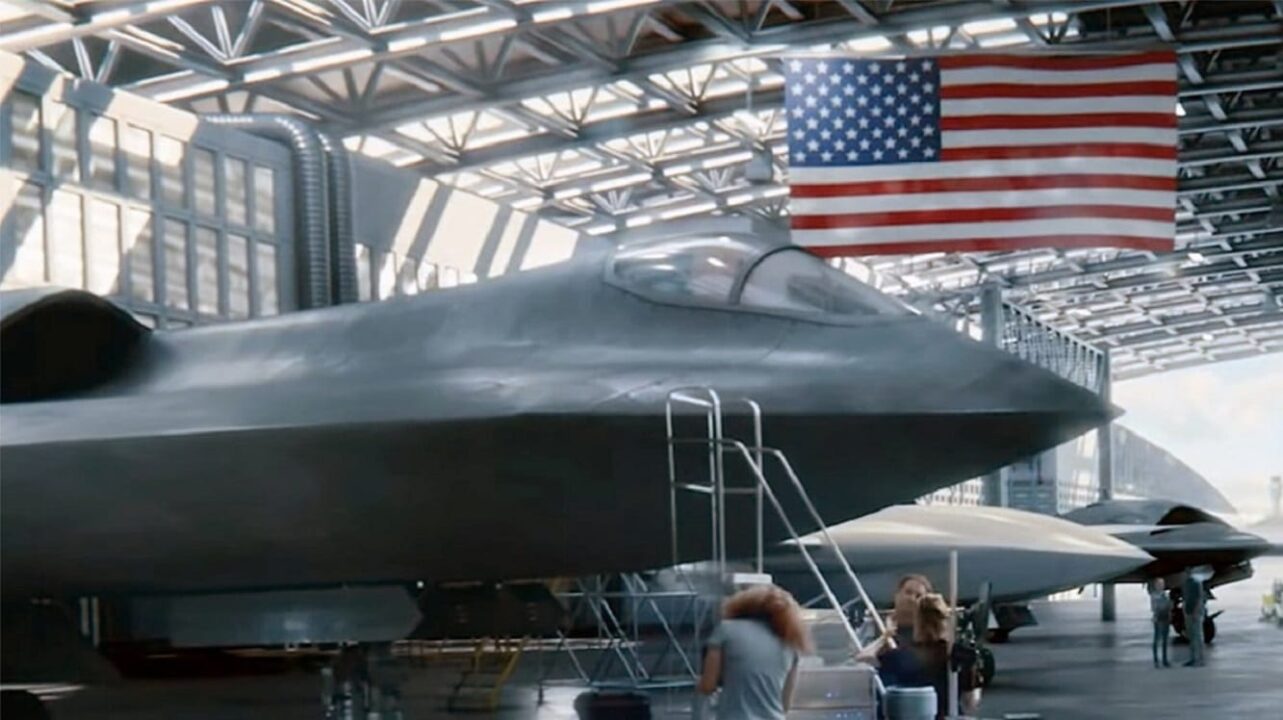
NGAD F-47. Image Credit: Creative Commons.
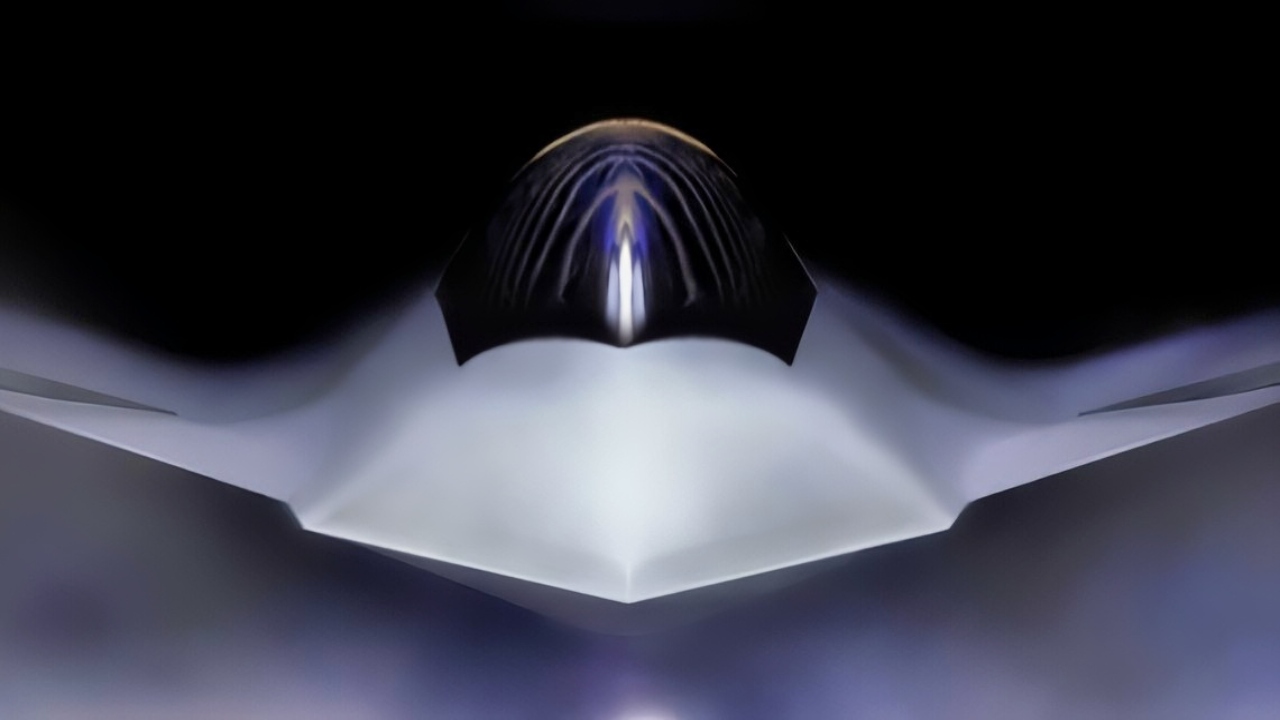
Shown is a graphical artist rendering of the Next Generation Air Dominance (NGAD) Platform. The rendering highlights the Air Force’s sixth generation fighter, the F-47. The NGAD Platform will bring lethal, next-generation technologies to ensure air superiority for the Joint Force in any conflict. (U.S. Air Force graphic)
Boeing’s F-47 program poses a problem for GCAP because it gives Japan a potential American backup option if confidence in the British-partnered fighter project continues to weaken.
The F-47 is being developed under the U.S. Air Force’s Next Generation Air Dominance program as the planned successor to the F-22 Raptor.
Unlike the F-22, which Congress blocked from export despite years of Japanese interest, reports now indicate that the United States is actively discussing exporting the F-47 to close allies.
The War Zone reported last year that President Donald Trump personally discussed the aircraft with then-Prime Minister Shigeru Ishiba and pitched an export-configured version directly to Tokyo.
That means Japan may no longer view GCAP as its only realistic path toward acquiring a sixth-generation fighter on schedule.
About the Author: Jack Buckby
Jack Buckby is a British researcher and analyst specializing in defense and national security, based in New York. His work focuses on military capability, procurement, and strategic competition, producing and editing analysis for policy and defense audiences. He brings extensive editorial experience, with a career output spanning over 1,000 articles at 19FortyFive and National Security Journal, and has previously authored books and papers on extremism and deradicalization.


Matthew Hatton
May 15, 2026 at 12:43 pm
Errrrr nope!
Sorry.