
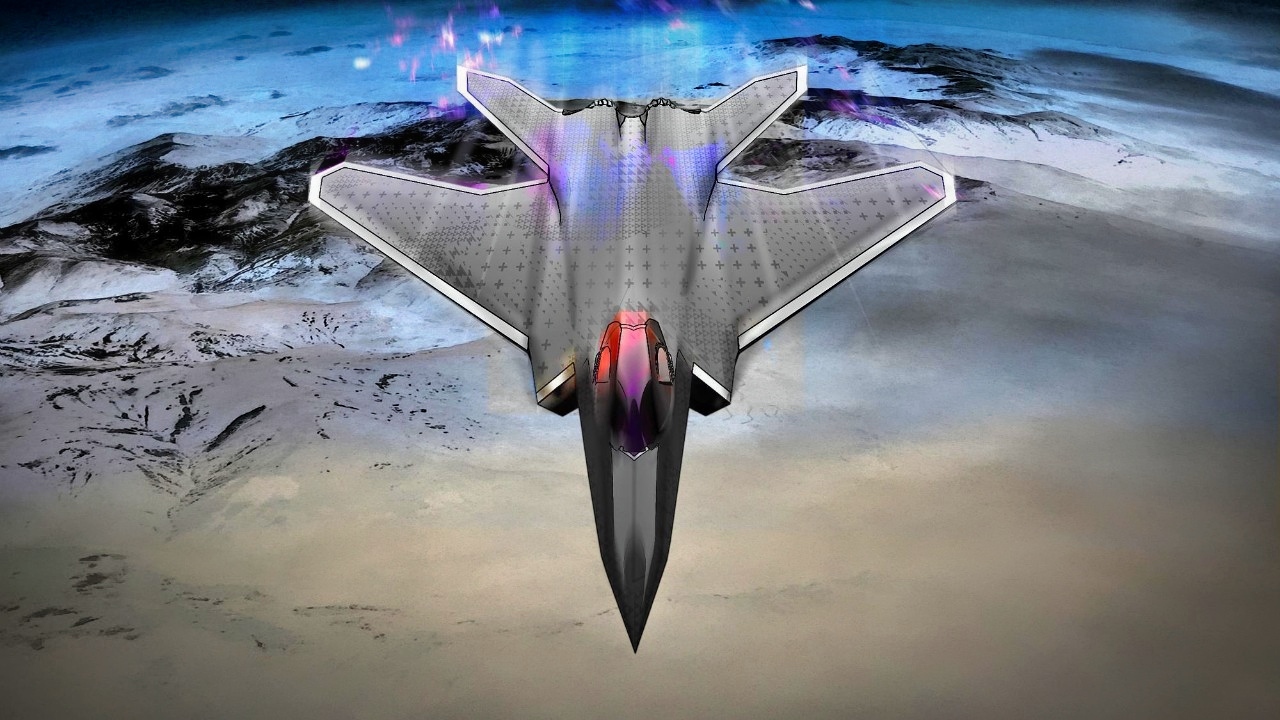
Europe’s flagship Future Combat Air System (FCAS) program may now be heading toward the development of two separate fighter aircraft instead of one unified next-generation European warplane, according to new comments from a senior executive involved in the project. The remarks are the latest sign that the massive Franco-German-Spanish defense effort is drifting further into crisis amid escalating industrial and political disputes between Airbus and Dassault Aviation.
Johannes Bussmann, CEO of German engine manufacturer MTU Aero Engines, said on April 30 that “two aircraft is the likely scenario right now as we see it” while discussing the FCAS program during the company’s first-quarter earnings call. Bussmann added that the emergence of two aircraft could require two different engine designs.
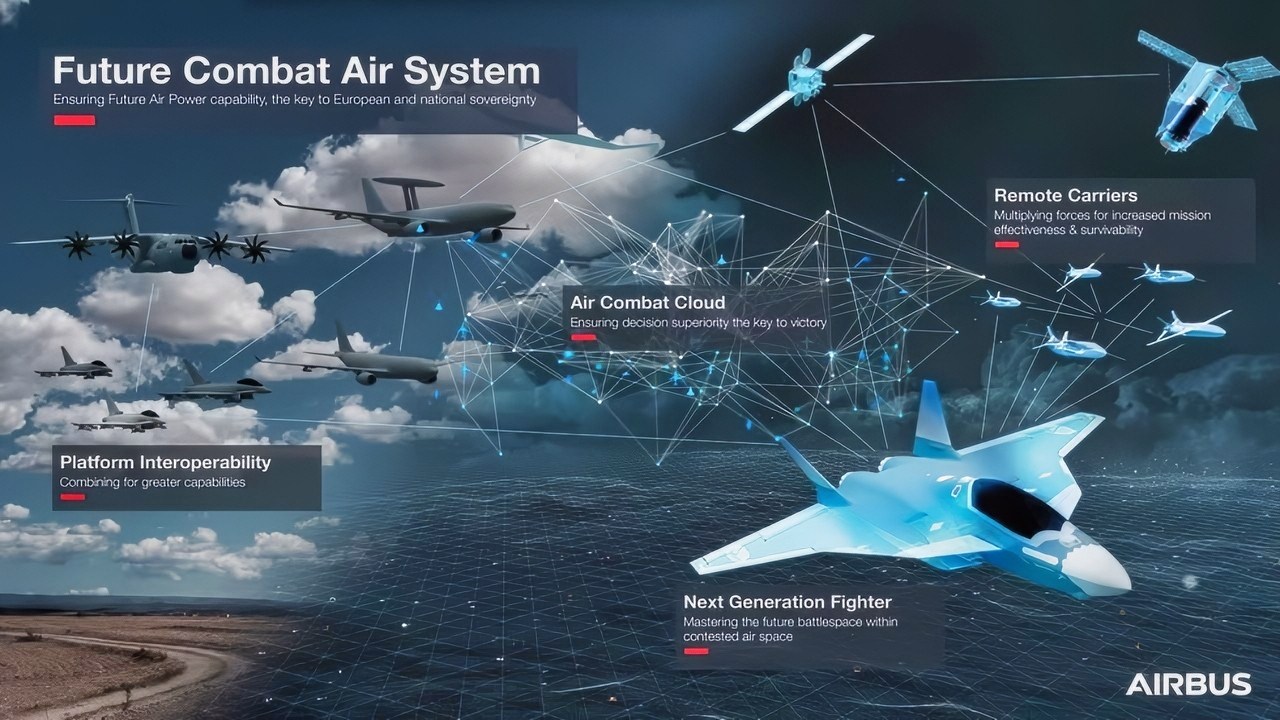
FCAS Graphic. AIRBUS Handout.
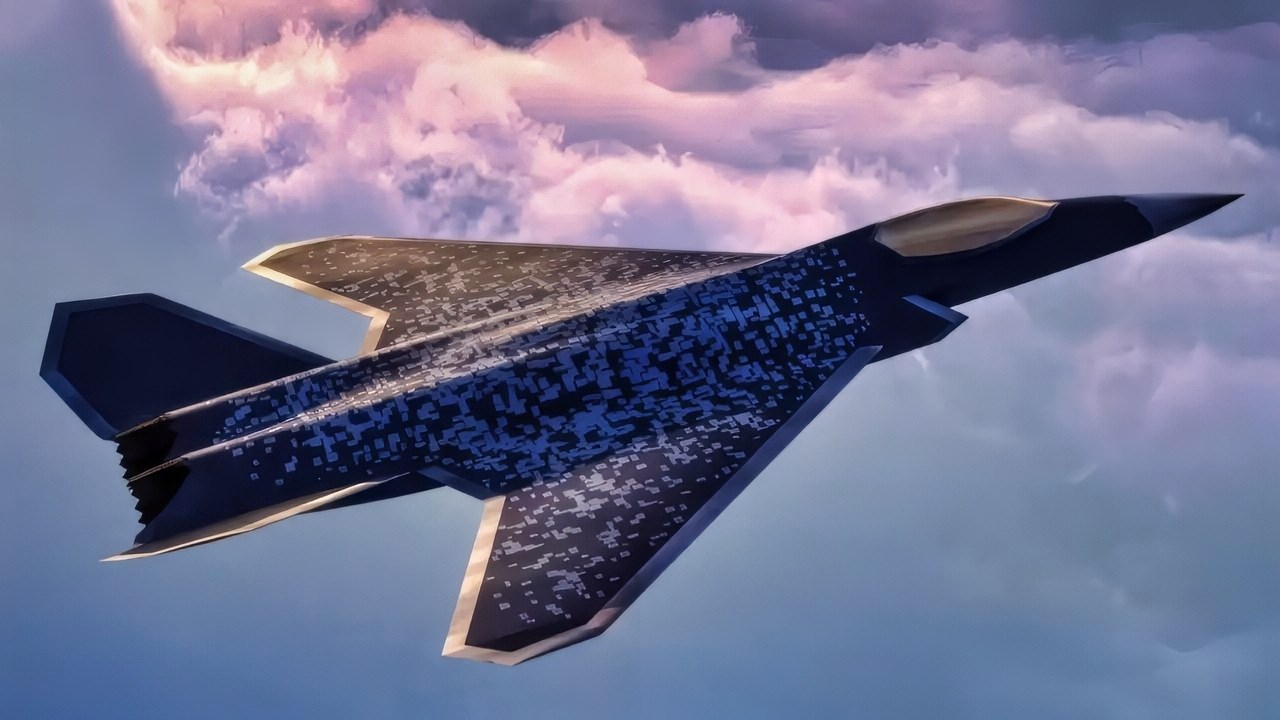
FCAS Artist Photo Creation. Image Credit: Creative Commons.
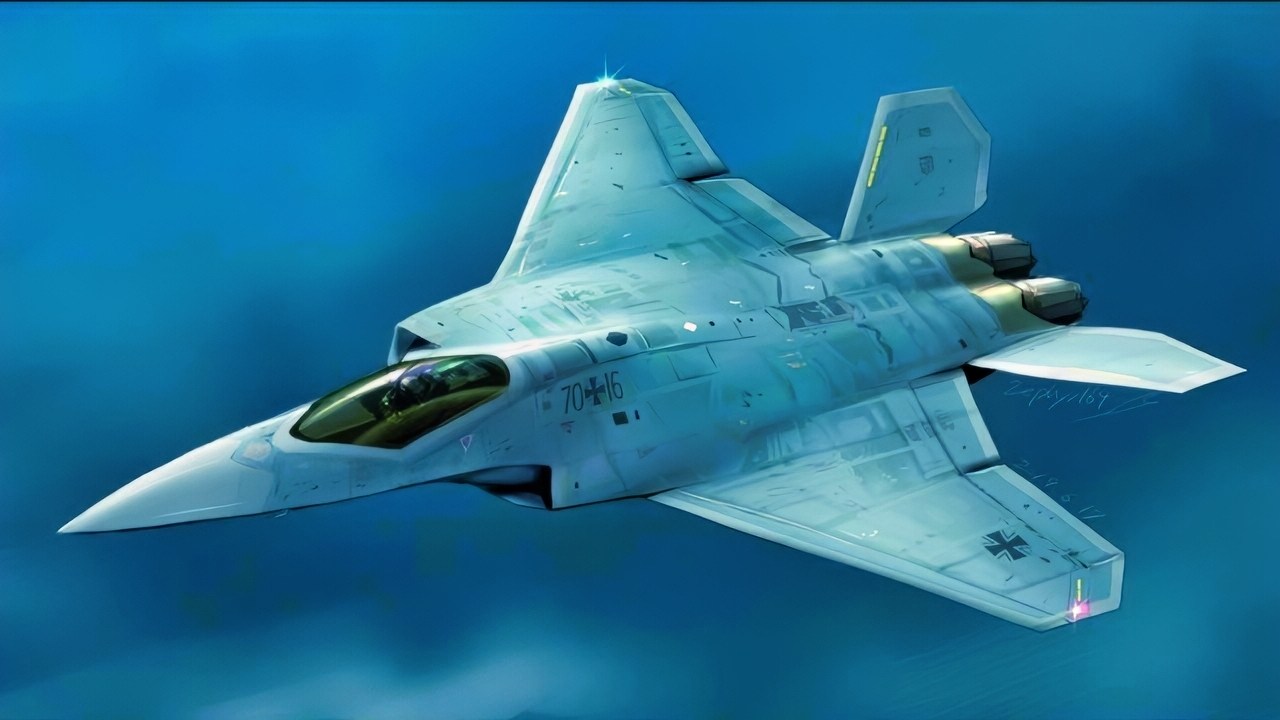
FCAS Photo Artist Image. Image Credit: Creative Commons.

FCAS Fighter Mock Up. Image Credit: Creative Commons.
The FCAS program was launched in 2017 by French President Emmanuel Macron and then-German Chancellor Angela Merkel as Europe’s answer to future American, Chinese, and Russian sixth-generation combat aircraft efforts. The project, now valued at roughly €100 billion, was originally intended to produce a single next-generation fighter aircraft supported by autonomous drones, advanced networking systems, and a so-called combat cloud designed to connect aircraft, sensors, and weapons across the battlefield. Instead, the fighter portion of the project is increasingly threatened by a breakdown between Dassault Aviation and Airbus over project leadership, workshare, intellectual property, and the aircraft’s overall direction.
What FCAS Was Supposed To Be
FCAS is intended to become the backbone of future European airpower beginning around 2040, but it was originally envisioned as a single aircraft. The program’s New Generation Fighter aircraft was intended to replace France’s Rafale fighter and eventually succeed German and Spanish Eurofighters while integrating with uncrewed systems and AI-assisted battle management tools.
Unlike traditional fighter programs that focus solely on the aircraft themselves, and more in line with sixth-generation efforts like the United States’ NGAD and FCAS, FCAS was conceived as a system-of-systems program.
The project includes remote carrier drones, collaborative combat aircraft, advanced sensors, secure data-sharing systems, and a combat cloud architecture that enables different platforms to operate together in real time.
The project also became strategically more important after Britain moved forward with the separate Global Combat Air Program (GCAP) with Japan and Italy – a decision that left FCAS as continental Europe’s primary sixth-generation combat aviation program.
European governments have increasingly pushed the program as part of a larger effort to strengthen defense autonomy and reduce long-term dependence on U.S. military hardware and systems, particularly following Russia’s invasion of Ukraine and growing uncertainty surrounding future American commitments to European defense.
Why Airbus and Dassault Are Fighting
The dispute between the contractors centers around control of the New Generation Fighter (NGF) portion of FCAS. Dassault Aviation, which leads the fighter pillar, argues that successful combat aircraft programs require one clear prime contractor with centralized authority over design and engineering decisions. Airbus, which represents Germany and Spain in the industrial structure, has pushed back against allowing Dassault dominant control over the project.
Dassault CEO Eric Trappier warned in March that the project would be effectively “dead” if Airbus continued refusing cooperation under Dassault leadership.
He also suggested Dassault could theoretically pursue its own fighter development effort independently if required. Airbus, meanwhile, has publicly floated the possibility of a two-fighter solution earlier this year.
In February, Airbus CEO Guillaume Faury said that the deadlock surrounding the fighter “should not jeopardize the entire future of this hi-tech European capability,” which he said would bolster the continent’s collective defense. He also said that Airbus would support a reorganized structure if governments approved it.
But the disagreement is not just industrial. France and Germany also appear to want somewhat different aircraft, with France requiring a carrier-capable fighter able to deliver nuclear weapons as part of its independent nuclear deterrent.
Germany, meanwhile, is prioritizing NATO interoperability and air superiority operations.
It is those competing priorities and requirements that have repeatedly raised doubts about whether a single aircraft can realistically satisfy all participants in the program.
Why MTU’s Comments Matter
Bussmann’s comments are important partly because they came from one of the few major industrial partners in FCAS that has not been publicly involved in the wider Airbus-Dassault dispute. While the aircraft side of the program has become increasingly confrontational, Bussmann stressed that cooperation between MTU and France’s Safran Aircraft Engines on the propulsion side remains stable. The current FCAS engine development phase is scheduled to conclude later this year, when industry partners are expected to present their results from the latest round of demonstrator work.
The recent comments also suggest that suppliers working on the program are actively planning for structural changes rather than treating the political tensions as temporary setbacks. That’s relevant because propulsion systems are among the most difficult elements of any sixth-generation fighter to redesign later in development. All signs point to two aircraft.
About the Author: Jack Buckby
Jack Buckby is a British researcher and analyst specializing in defense and national security, based in New York. His work focuses on military capability, procurement, and strategic competition, producing and editing analysis for policy and defense audiences. He brings extensive editorial experience, with a career output spanning over 1,000 articles at 19FortyFive and National Security Journal, and has previously authored books and papers on extremism and deradicalization.


