

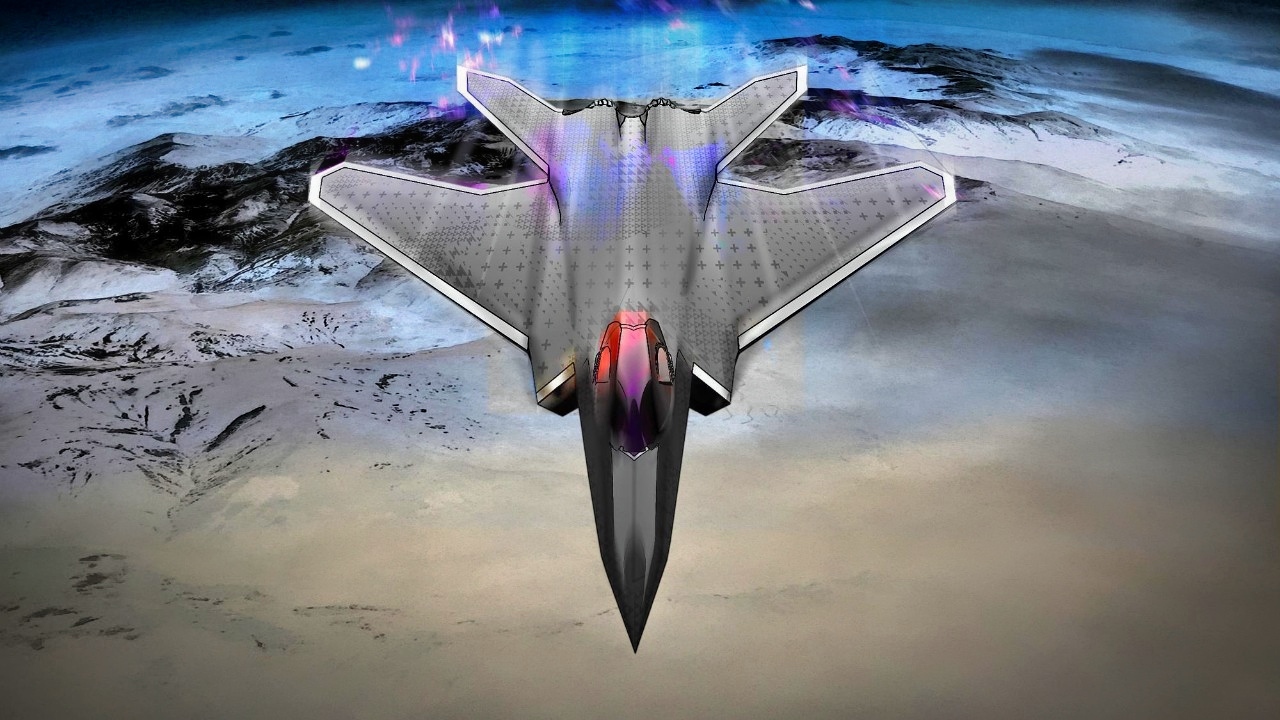
Europe’s flagship fighter jet program might need a reset, or at least Airbus thinks so.
The Future Combat Air System (FCAS), being spearheaded by France, Germany, and Spain, has been described as a “system of systems” built around a New Generation Weapon System.
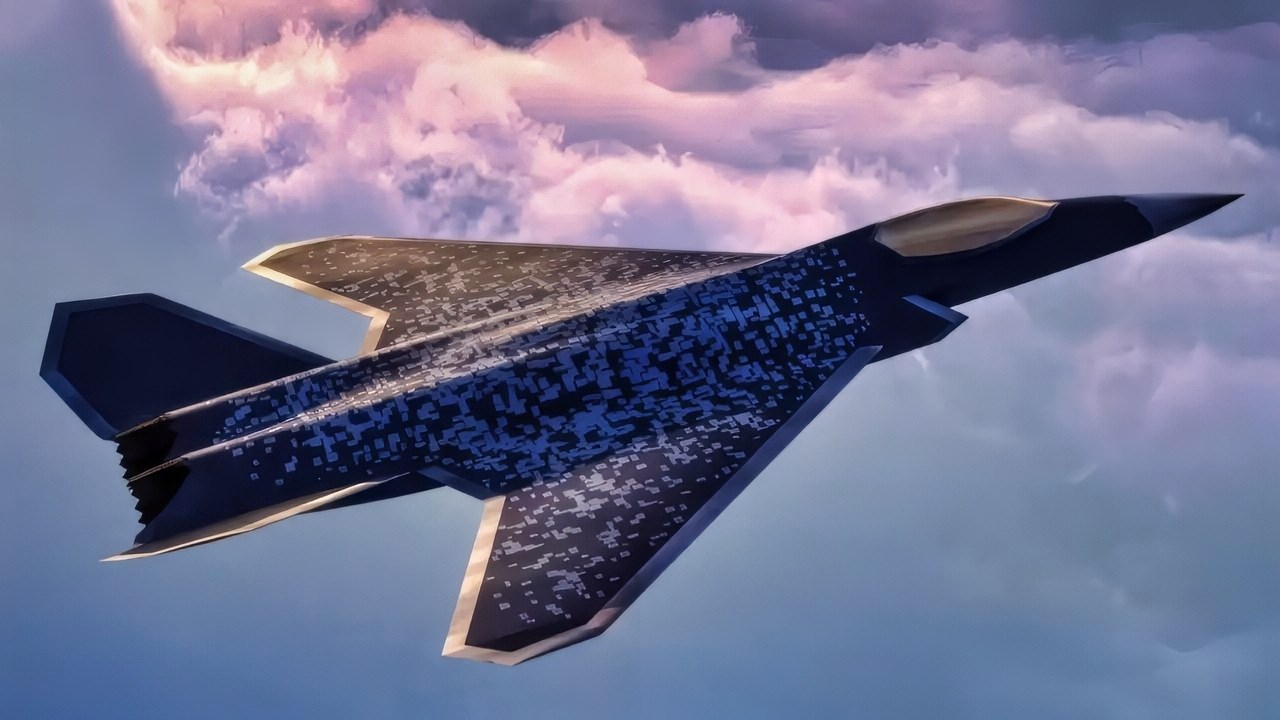
FCAS Artist Photo Creation. Image Credit: Creative Commons.
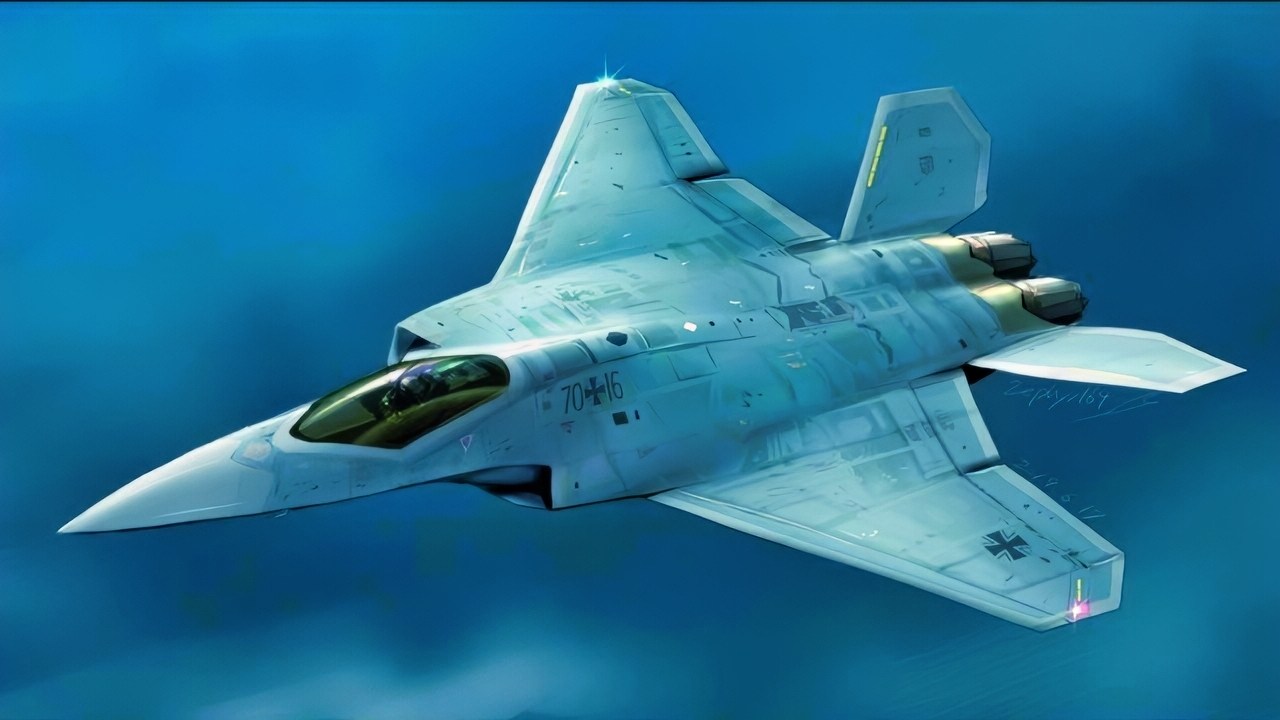
FCAS Photo Artist Image. Image Credit: Creative Commons.
The plans would have crewed fighters, uncrewed remote carriers, and other platforms linked via a secure combat cloud.
The wider concept is intended to connect cutting-edge air, sea, and land assets, along with space and cyberspace ones, for rollout around 2040. But all that could be on the verge of being scrapped.
FCAS: Joint Jet Could Be Scrapped
The planned aircraft at the project center is becoming difficult for the trio of nations involved to agree on.
Online defense magazine Janes reported that Airbus CEO Guillaume Faury told his firm’s Defense Summit in Manching, Germany, this Wednesday that there are “different ways” for the nations to move forward on the New Generation Fighter pillar, including the possibility of developing more than one airframe.
Faury compared the idea to the F-35 program, noting that the American stealth fighter effectively exists in three major variants rather than as a single identical aircraft for all users.

F-35. Image Credit: Lockheed Martin.

U.S. Air Force Capt. Kristin “Beo” Wolfe, F-35A Lightning II Demonstration Team commander and pilot, takes off from Selfridge Air National Guard base for the 2020 London SkyDrive Air Show in Canada Sep. 12, 2020, Harrison Township, Mich. The F-35 Demo Team flew alongside the F-16 Viper, the F-22 Raptor, the A-10 Thunderbolt II, and the Air Force Thunderbirds aerial demonstration teams in London, Ontario, Canada. (U.S. Air Force photo by Capt. Kip Sumner)
Different Countries, Different Needs
The comments come as FCAS partners try to reconcile increasingly diverging requirements.
France needs an aircraft capable of supporting its nuclear mission and operating from aircraft carriers. Germany and Spain are instead much more concerned with building an air dominance platform. What may once have seemed like a difficult but manageable compromise now looks more like a design trap. These incessant delays have even led Spain to open talks with Turkey about opting for its KAAN fifth-generation stealth fighter.
According to FlightGlobal, Mike Schoellhorn, head of Airbus Defense and Space, thinks a one-aircraft solution could be increasingly “less and less achievable.” Schoellhorn said the initial FCAS assumptions were shaped by a less dangerous security environment before Russia’s full-scale invasion of Ukraine. In today’s Europe, armed forces are less willing to accept compromises that could weaken the aircraft they may actually have to use in a major war.
Is FCAS Fit For a Bygone Era?
The program kicked off in 2017, well before the Russian invasion of Ukraine upended Europe’s defense assumptions.
At the time, cost control and industrial cooperation were major concerns. Now, operational performance has tiptoed back to the center. Faury explained that the project began under priorities that are “no longer valid today.”
Reuters has also revealed just how at odds Airbus and Dassault Aviation remain over the FCAS fighter’s next phase. Dassault is leading the core aircraft for France, while Airbus represents Germany and Spain. The wire service cited anonymous defense sources who noted that talks over the Dassault-led fighter have stalled.
Airbus Remains ‘Optimistic’
Airbus has already hinted at dividing the program into two different jets while maintaining a broader combat cloud and systems architecture. Faury attempted to outline a distinction between the troubled fighter pillar and the wider FCAS system. “I am optimistic for FCAS as a system,” Reuters reported.
However, he admitted that the fighter decision should be left to the governments in question. Still, Airbus appears keen to stress that political and industrial partners should salvage FCAS’ connective architecture even if the single-fighter concept is ditched. Indeed, such technology is important, and any future air warfare is unlikely to be decided by a single aircraft. Networks, data-sharing, unmanned systems, electronic warfare, and the ability to coordinate assets across distinct domains.
But there is no sign that a two-aircraft solution would be smooth sailing. Such an idea could be costlier, complicate engine development, and deepen the already fierce industrial rivalries the program was intended to assuage. FlightGlobal noted that Schoellhorn said it was too early to say whether two NGF aircraft would use the same engine, though he suggested they “likely” would not. That raises the possibility of a broader split, not merely two airframes attached to one common system.
FCAS was touted as a forthcoming symbol of Europe’s ability to re-achieve defense sovereignty. But if its main partners cannot even agree on the aircraft at the heart of the project, this is unlikely to inspire confidence or dissuade its rivals
About the Author: Georgia Gilholy
Georgia Gilholy is a journalist based in the United Kingdom who has been published in Newsweek, The Times of Israel, and the Spectator. Gilholy writes about international politics, culture, and education. You can follow her on X: @llggeorgia.


